New Study Says Earth Might Escape Sun’s Red Giant Phase, Mars Could Survive Too
New research challenges the belief that Earth’s destiny is fixed, revealing fresh evidence that our planet’s future may still be uncertain.
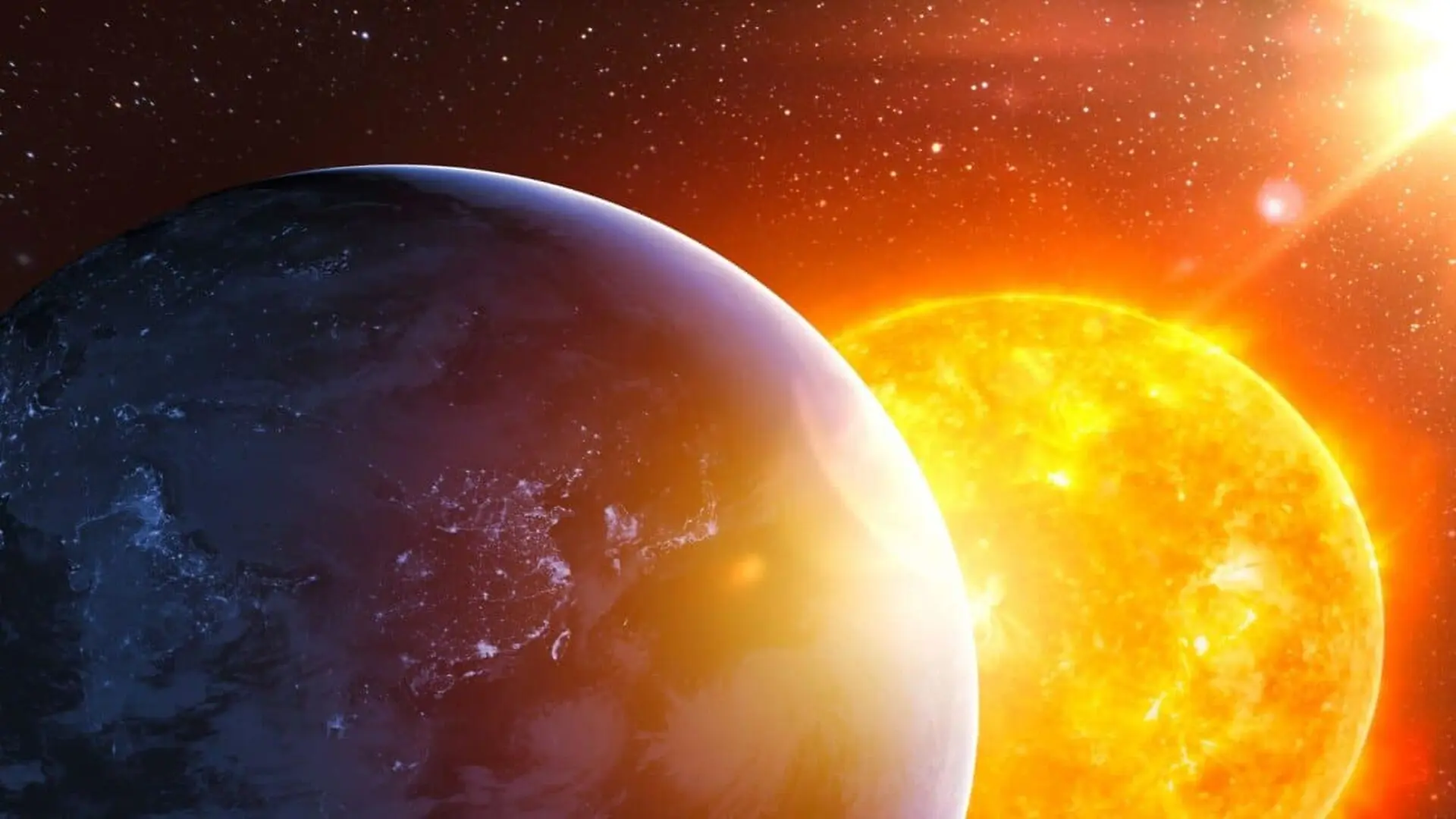
Long‑standing models have predicted that the Sun’s growth will eventually engulf Earth. Fresh calculations, however, indicate that the planet could migrate outward as the Sun ages, potentially sparing it from being swallowed during the star’s final giant stages.
The destiny of our world has been linked to the Sun’s evolution for decades. In roughly five billion years the star will exhaust the hydrogen fuel at its core and embark on a sequence of dramatic transformations that will reshape the whole solar system.
Conventional wisdom held that Earth would not survive this transition. As the Sun swells into a giant, tidal forces were thought to drag the planet inward. A recent study appearing in Astronomy & Astrophysics offers a more complex scenario.
Balancing Tidal Pull and Stellar Mass Loss
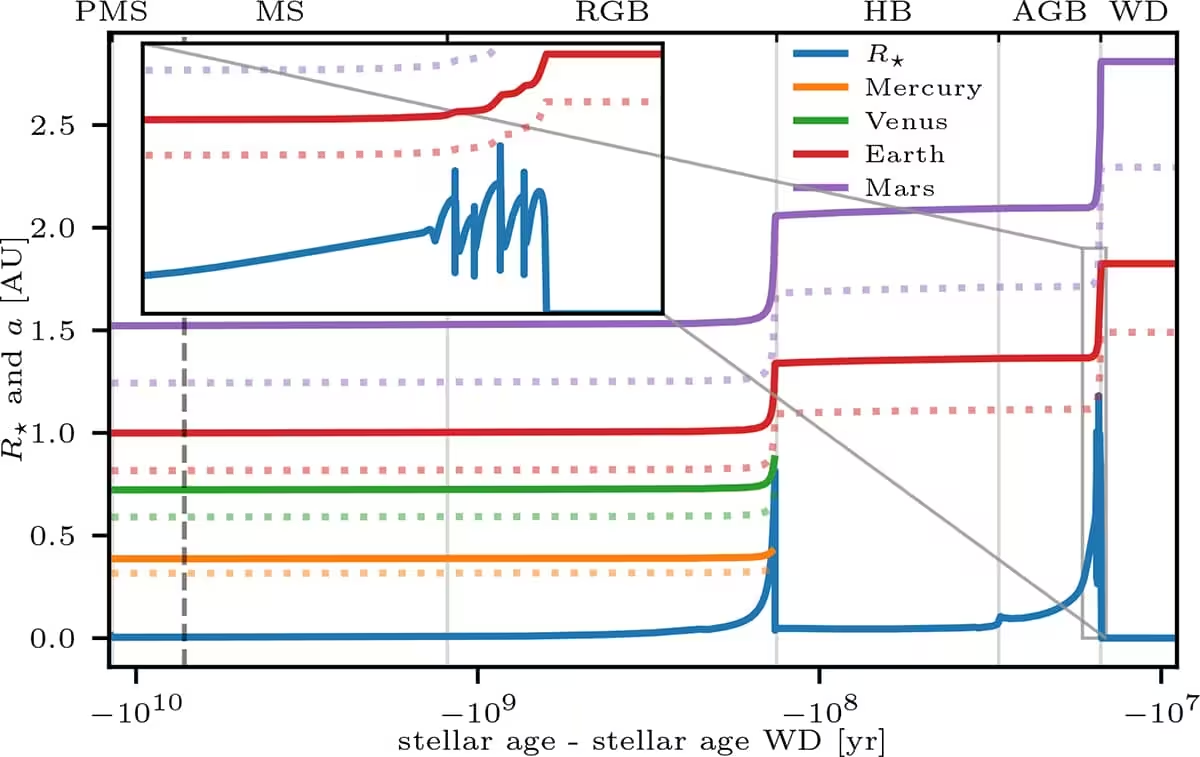
Two opposing mechanisms will dictate Earth’s trajectory. The first involves tidal interactions between the expanding Sun and the planet, which can gradually modify Earth’s orbit and pull it nearer to the star.
The second mechanism works in reverse. As the Sun ages, it will shed a substantial portion of its mass via stellar winds. A lighter Sun exerts a weaker gravitational grip, allowing planets to drift outward.
“Earth’s fate depends on a delicate balance between these two effects,” lead author Mats Esseldeurs of Belgium’s University of Leuven said. “If tidal interactions predominate, Earth is engulfed by the sun. If the sun’s mass loss predominates, Earth escapes into an orbit larger than the radius of its star.”
Earlier investigations tended to favor the tidal‑dominant scenario, leading many astronomers to assume that Earth would be consumed as the Sun’s outer layers stretched deep into the inner solar system.
Refined Tidal Physics Shifts the Balance
The new analysis incorporates recent advances in modeling tidal processes inside giant stars. Previous work relied on simplified descriptions of tidal energy dissipation during the late stages of stellar evolution, which likely overestimated the strength of the tidal drag.
Updated calculations reveal that tidal dissipation is weaker than formerly believed, thereby reducing the inward pull on Earth.
Co‑author Stephane Mathis of CEA Paris‑Saclay explained to AFP that improvements in tidal modeling over the past fifteen years were crucial for the revised outcome. When combined with newer estimates of solar mass loss, the two competing forces tip in favor of orbital expansion.
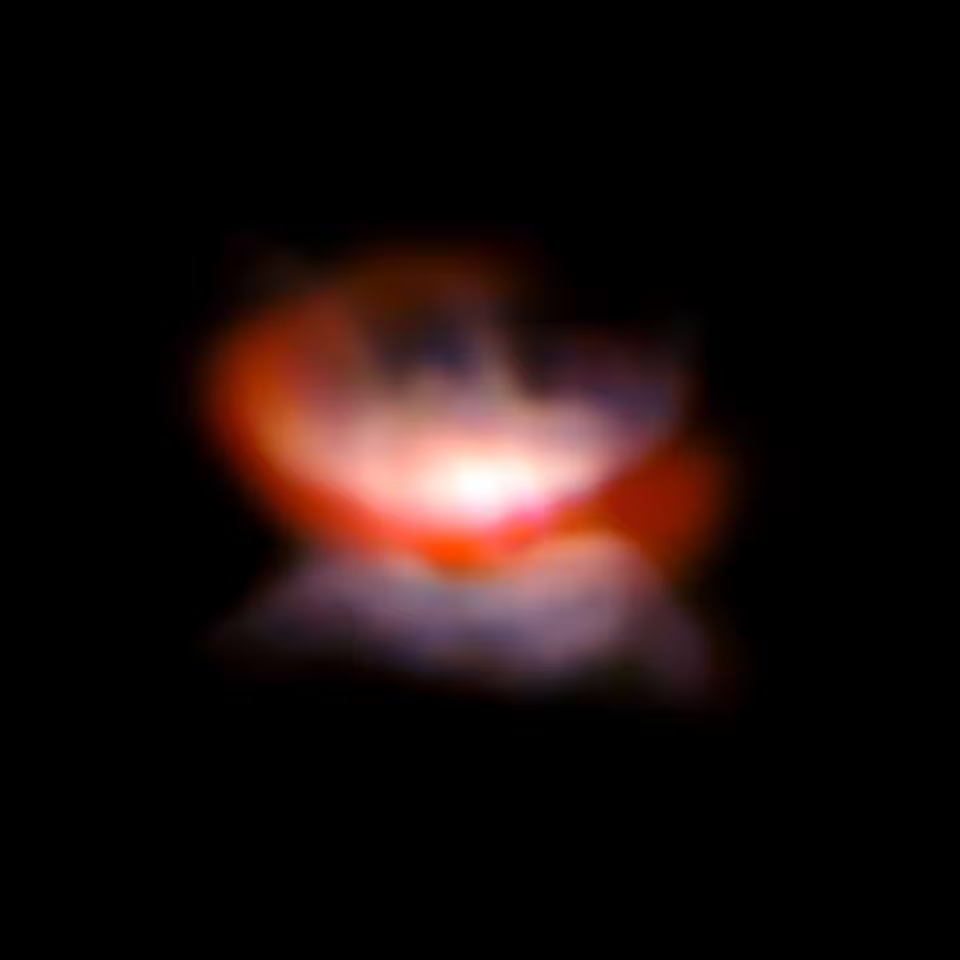
The team also examined L2 Puppis, a nearby evolved star often described as an older sibling of the Sun. Observations of this object helped refine the expected amount of mass the Sun will lose during its giant phases.
Mars May Join Earth in Avoiding the Sun’s Envelope
The revised models indicate that not only Earth but also Mars could evade the Sun’s expanding outer layers. In both cases, the outward drift caused by solar mass loss appears sufficient to counteract the tidal pull.
The outlook remains bleak for the innermost planets. According to the study, Mercury and Venus are still projected to be engulfed as the Sun swells during its giant phases.
This article has been fact checked for accuracy, with information verified against reputable sources. Learn more about us and our editorial process.
Last reviewed on .
Article history
- Latest version
Reference(s)
- Esseldeurs, M.. “The fate of Earth during the Sun’s giant phases - New constraints from ab initio tidal modelling and AGB mass loss.”, vol. 710, June 1, 2026, pp. L26, doi: 10.1051/0004-6361/202660576. <https://www.aanda.org/articles/aa/full_html/2026/06/aa60576-26/aa60576-26.html>.
- “Stéphane Mathis.”, January 1, 2022 CNRS Terre & Univers <https://www.insu.cnrs.fr/fr/personne/stephane-mathis>.
- Uttenthaler, S.. “The evolutionary state of the red giant star L2 Puppis.”, vol. 692, December 1, 2024, pp. A224, doi: 10.1051/0004-6361/202452173. <https://www.aanda.org/articles/aa/full_html/2024/12/aa52173-24/aa52173-24.html>.
Cite this page:
- Posted by Aisha Ahmed