Over 55 Percent of Women in South Asia Exceed Weight Thresholds
New research reveals that standard global health metrics severely underestimate the true scale of the regional metabolic crisis.
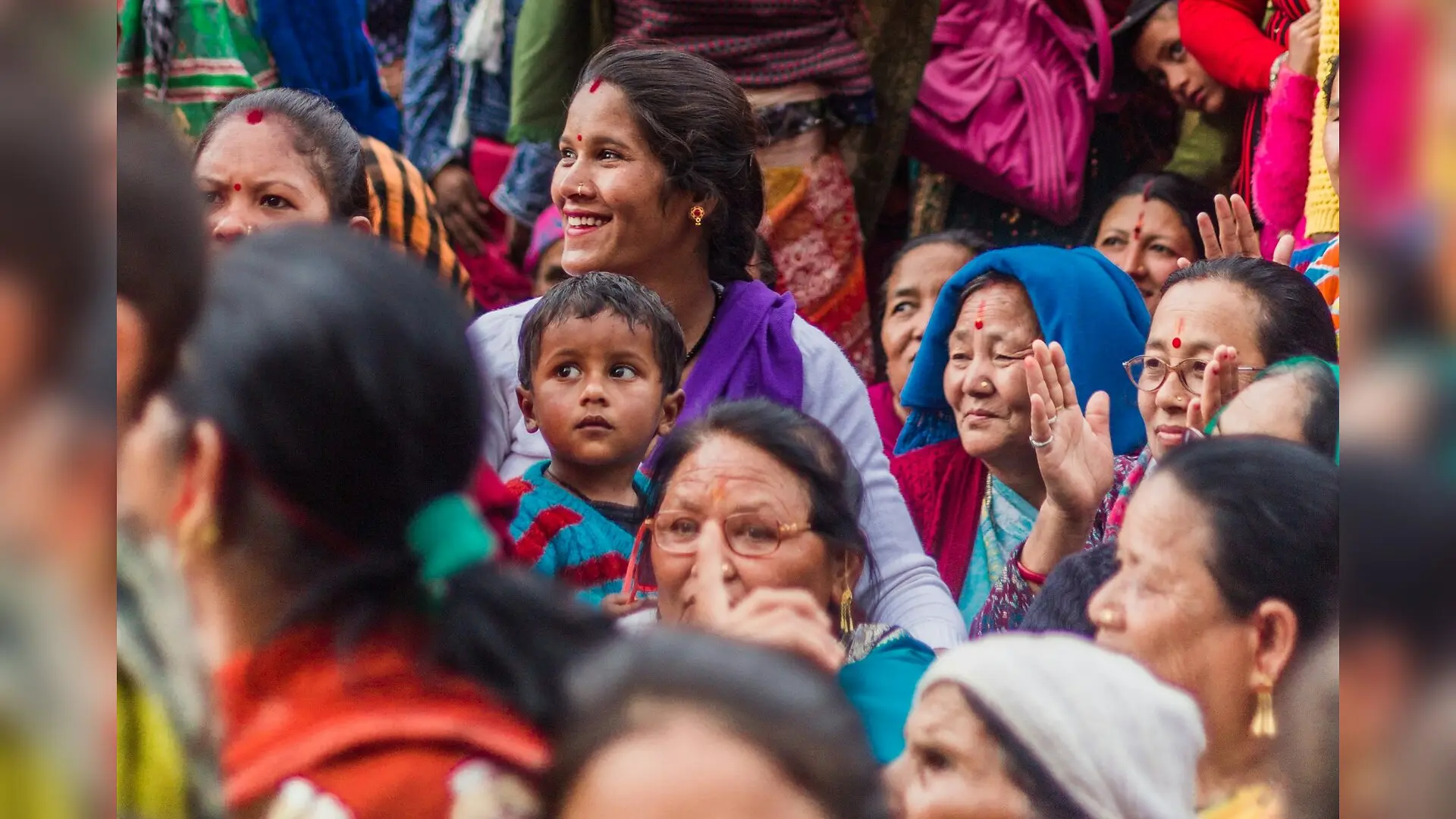
A staggering 55 percent of reproductive-aged women in parts of South Asia exceed standard body weight thresholds when researchers apply region-specific measurements rather than international standards. Across India, Bangladesh, and Nepal, a massive epidemiological shift is unfolding as overnutrition outpaces developed nations by 30 percent, driven by macroeconomic growth and structural urbanization. While the region accounts for 79 percent of the South Asian population and 56 percent of its landmass, a major public health crisis is quietly taking root across urban centers and rural communities alike.
How Localized Body Mass Index Standards Reveal Hidden Metabolic Risks
To uncover the true scale of the epidemic, public health researchers evaluated data from 31 studies encompassing more than 2.5 million participants, as published in PLOS One. The analysis demonstrates a striking contrast between global World Health Organization screening criteria, which set the overweight threshold at a body mass index of 25, and Asian-specific criteria, which set the threshold at 23. Because South Asian populations frequently present a thin-fat phenotype characterized by high body fat, low muscle mass, and high visceral adiposity, metabolic disturbances and cardiovascular diseases manifest at significantly lower body weight thresholds.
When applying standard global thresholds, overweight and obesity prevalence across the region appears deceptively uniform at roughly 21 to 24 percent. However, utilizing the lower Asian-specific cut-offs uncovers a vastly higher and more accurate burden of metabolic risk. Among reproductive-aged women aged 15 to 49 in Bangladesh, prevalence reaches 55.30 percent under localized criteria compared to just 36.50 percent under global standards. Among general adults evaluated with Asian-specific metrics, India exhibits the highest burden at 40.30 percent, followed by Nepal at 31.16 percent and Bangladesh at 22 percent.
A Decade-Long Chronological Escalation Across Bangladesh and Nepal
Longitudinal tracking between 2011 and 2022 highlights an unrelenting upward trajectory in overnutrition across the subcontinent. Utilizing the Asian-specific body mass index cut-off in Bangladesh, overweight and obesity prevalence among reproductive-aged women increased from 26.80 percent in 2011 to 36.40 percent in 2014, 49.30 percent in 2017 to 2018, and 55.30 percent in 2022. This represents an over 100 percent relative increase in localized prevalence in just over a decade. In Nepal, longitudinal tracking indicates that overnutrition among reproductive-aged women climbed from 8.5 percent to 35.2 percent over comparable tracking periods, concentrating heavily in urban corridors.
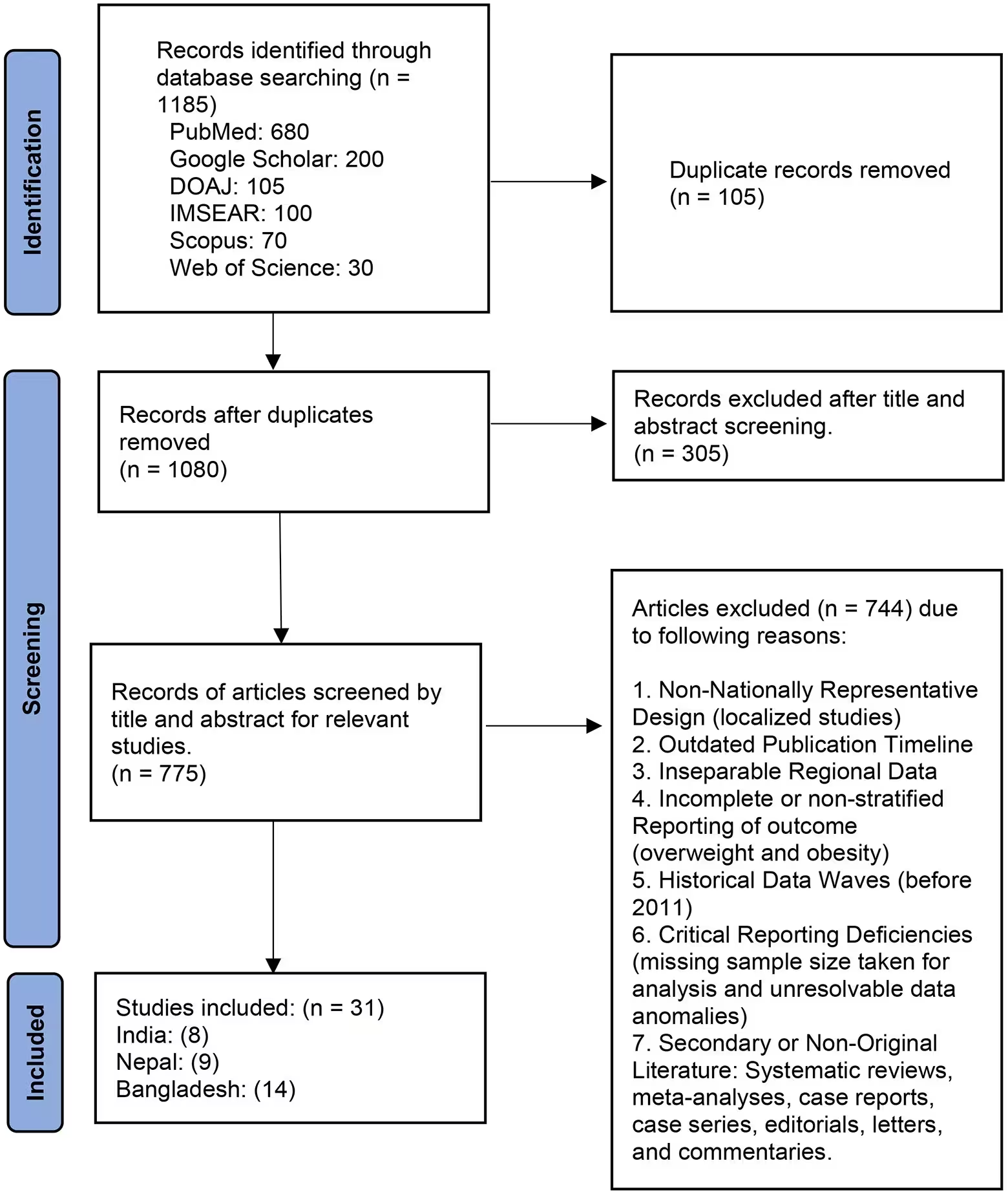
Socioeconomic Shifts and Key Associated Demographic Factors
The systematic review mapped significant associated factors across the three nations, revealing a dominant cluster linking overnutrition to high wealth, higher education, and urban residency. In addition to socioeconomic privilege, researchers identified critical obstetric and sociocultural predictors, including multiparity, cesarean births, hormonal contraception use, concrete housing, and lower geographic elevation. Interestingly, historical data that previously linked higher education universally to excess weight has begun to invert in contemporary datasets, where higher education occasionally functions protectively while shifting the primary burden toward wealthier younger demographics with no formal education.
Methodological Limits and the Urgent Need for Standardized Surveillance
Despite the robust dataset drawn from nationally representative surveys like the Demographic and Health Surveys and the National Family Health Surveys, several limitations shape the findings. Because primary literature relies heavily on cross-sectional surveys, causal relationships cannot be inferred, and findings remain heavily skewed toward women of reproductive age while leaving men and children as critical data gaps. Furthermore, inconsistent adult age floors and variable data-cleaning protocols across identical survey waves precluded a statistical meta-analysis. The authors emphasize that national health agencies must permanently integrate Asian-specific body mass index cut-offs into reporting frameworks and expand anthropometric surveillance across all demographics to prevent millions of individuals from being overlooked by outdated global metrics.
The research was published in PLOS One on November 18, 2026.
This article has been fact checked for accuracy, with information verified against reputable sources. Learn more about us and our editorial process.
Last reviewed on .
Article history
- Latest version
Reference(s)
- Parajuli, Rameshwor., et al. “National macro-surveillance of overweight and obesity in India, Bangladesh, and Nepal: A systematic review of global versus Asian BMI thresholds and associated factors.” PLOS One, vol. 21, no. 11, November 18, 2026, pp. e0363136 Public Library of Science (PLoS), doi: 10.1371/journal.pone.0363136. <https://doi.org/10.1371/journal.pone.0363136>.
Cite this page:
- Posted by Hassan Raza