Scientists Discover Ancient Whale With The Most Asymmetrical Skull Ever Found
Scientists have discovered a new whale species featuring the most asymmetrical skull of any known mammal, offering fresh insights into cetacean evolution.
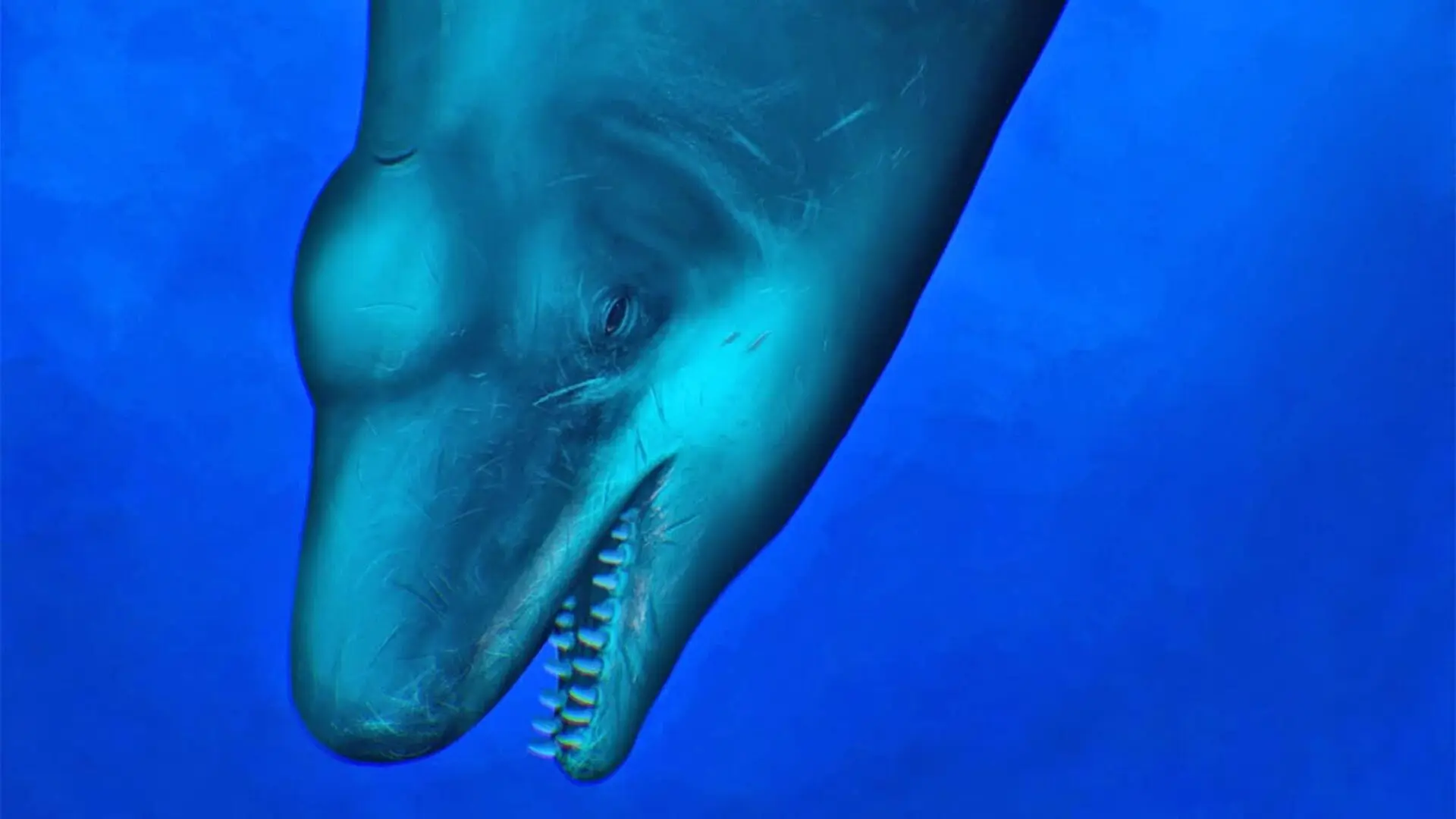
Paleontologists Uncover Ancient Whale With Bizarrely Asymmetrical Skull
Scientists have identified a newly discovered species of extinct dwarf sperm whale that challenges our understanding of mammalian anatomy. Living approximately six million years ago off the coast of present-day Peru, the creature—officially named Scaphokogia huachafo—featured a skull so distorted that it holds the record for the most asymmetrical structure ever documented in a mammal.
While most vertebrates maintain a balanced, symmetrical cranial structure, toothed whales are a notable exception. These marine mammals rely on specialized organs for echolocation, which historically drove the evolution of asymmetrical features to better facilitate sound production and reception. However, the discovery of Scaphokogia huachafo shows that this trait could reach extreme, unexpected proportions.
Researchers detail their findings in Communications Biology, noting that the fossil was initially unearthed in the 1990s within the Pisco Formation. Measuring roughly 2.7 meters in length, the whale possessed a heavily deformed facial structure, with both bony nostrils shifted entirely to the left side of the skull. The distortion extended to the eye sockets and the connection between the skull and the cervical spine, resulting in a distinctively crooked appearance.
Lead author Aldo Benites-Palomino, who conducted the analysis during his doctoral research at the University of Zurich, notes that the species’ name reflects its eccentric morphology. Huachafo is a Peruvian Spanish term used to describe something exaggerated or flamboyant. Rigorous examination confirmed that these features were not the result of fossilization damage or pathological disease, but were instead a hallmark of the species’ natural anatomy.
An Evolutionary Adaptation for Bottom-Feeding
The study provides compelling evidence that the whale’s unusual head shape served a specific ecological purpose. Unlike modern sperm whales that hunt squid in the open ocean, Scaphokogia huachafo appears to have been a highly specialized bottom-feeder. Its snout curved downward at a 31-degree angle, and the bone density in that region was significantly high, effectively shifting the head’s center of gravity forward and downward.
Biomechanical reconstructions of the neck joint indicate that the animal was capable of tilting its head downward by as much as 55 degrees. Coauthor Gabriel Aguirre-Fernández of the University of Zurich explains that the entire skeletal architecture of the head and neck was engineered to focus the snout directly toward the seafloor.
Because the whale lacked the sensory whiskers common in other bottom-dwelling marine species, researchers hypothesize that it relied heavily on sophisticated echolocation to detect prey buried within soft coastal sediments. This specialized feeding strategy likely sustained the population until shifting marine conditions at the end of the Miocene, roughly five million years ago, rendered the species unviable.
This article has been fact checked for accuracy, with information verified against reputable sources. Learn more about us and our editorial process.
Last reviewed on .
Article history
- Latest version
Reference(s)
- Benites-Palomino, Aldo., et al. “Extreme cranial asymmetry in extinct benthic feeding sperm whales.” Communications Biology, vol. 9, no. 1, November 9, 2026 Springer Science and Business Media LLC, doi: 10.1038/s42003-026-11074-2. <https://doi.org/10.1038/s42003-026-11074-2>.
Cite this page:
- Posted by Priya Sharma