Even The Most Resilient Cacti Face Mass Extinction In A Warming World
Over 25% of cactus species could lose at least 80% of their suitable habitat by 2100 due to climate change, according to new research.
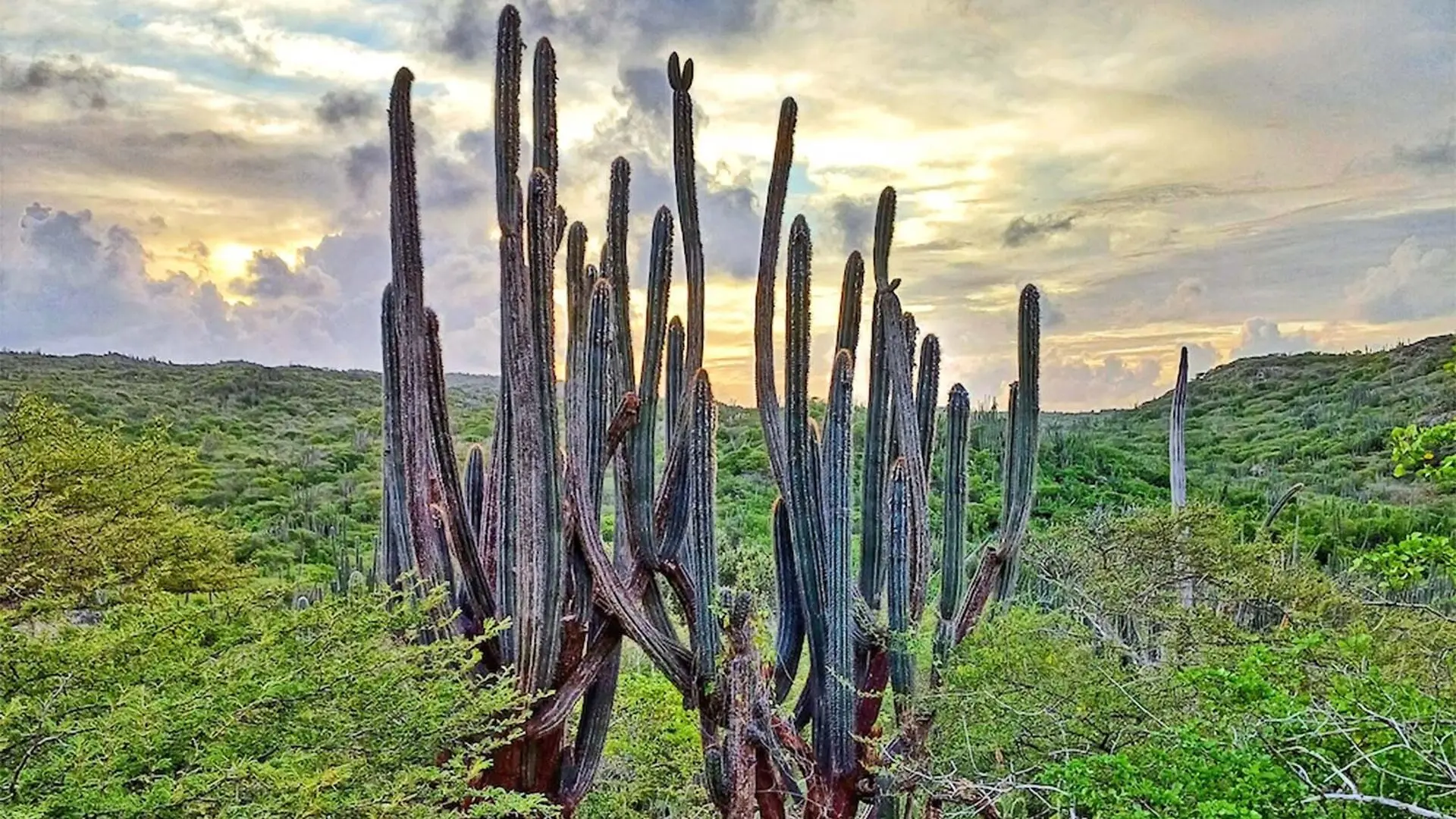
Climate models are missing a major threat: Extreme weather is pushing resilient plants toward extinction
Standard climate change projections consistently underestimate the danger posed to global biodiversity by failing to account for the increasing frequency of extreme weather. A new study, published in the journal Nature, demonstrates that even species traditionally viewed as hardy, such as cacti, face a precarious future when severe drought is integrated into climate impact models.
By analyzing nearly 1,000 cactus species across the Americas, an international research team led by the University of South Florida (USF) and the University of Arizona found that existing habitat forecasts are likely too optimistic. The researchers discovered that more than one-quarter of the species studied could lose at least 80% of their suitable habitat by the end of the century. Such a dramatic range contraction would satisfy the criteria for being classified as Critically Endangered by the International Union for Conservation of Nature (IUCN), potentially doubling the number of cactus species currently occupying that high-risk category.
The findings indicate that the most severe declines are expected in biodiversity hotspots throughout Chile, Peru, and northeastern Brazil. These regions host high concentrations of cactus species that, despite their evolutionary adaptations to arid environments, may lack the resilience to survive the intensifying, prolonged droughts expected in a warming world.
“Climate change makes extreme events more frequent, but such events are typically excluded from large-scale forecasts,” explains Michiel Pillet, the study’s lead author and a post-doctoral researcher at USF St. Petersburg. “For this study, we integrated severe drought projections into models, which is quite novel, and extrapolated that at large scales with a plant family that is adapted to drought conditions. Our findings indicate that these adaptations may not be sufficient in a future with longer and more intense droughts.”
Traditional distribution models typically rely on long-term averages for temperature and precipitation. However, these averages mask the lethal impact of acute weather events like sudden cold snaps, hurricanes, or extreme, extended dry spells. To correct this, the research team synthesized global drought projections with extensive biodiversity databases, field observations, and community science data gathered via iNaturalist.
The team initially approached the results with skepticism, according to coauthor Brian Maitner, an assistant professor of integrative biology at USF St. Petersburg. However, field reports from cactus experts across North and South America confirmed that the models were accurately reflecting the real-world ecological distress already observed on the ground. Brian Enquist, a professor of plant ecology at the University of Arizona and senior author of the study, notes that while cacti have evolved an astonishing array of survival strategies, the data suggests that these mechanisms are being overwhelmed by the current pace of climatic shifts.
The implications extend well beyond the cactus family. The authors suggest that many other plant groups, currently excluded from high-risk categories in climate assessments, may face similar threats once extreme weather variables are properly accounted for. This is particularly concerning given that more than 30% of cactus species are already threatened by factors such as habitat destruction and illegal poaching.
“What we are seeing on the ground are some cacti populations that are already experiencing reductions in habitat and nearing extinction risks due to this combination of climate and extreme events,” says Pablo Guerrero, a botany professor at the Universidad de Concepción in Chile and coauthor of the research. “The data and modeling allow us to reveal the extent of this surprising development across geographic scale and hopefully inform how we proceed in conserving and protecting what we can.”
The research, which involved scientists from across the Americas and institutions like the Desert Botanical Garden and the IUCN Species Survival Commission, underscores the urgent need to refine conservation strategies. As the team works to incorporate these findings into updated IUCN Red List assessments, they warn that the future for these plants is increasingly grim. According to Pillet, the data provides a clear warning that the impacts of a warming planet are already limiting plant ranges today, necessitating a shift in how researchers model biodiversity loss to prevent widespread ecological collapse.
This article has been fact checked for accuracy, with information verified against reputable sources. Learn more about us and our editorial process.
Last reviewed on .
Article history
- Latest version
Reference(s)
- Pillet, Michiel D.., et al. “Severe drought and warming increase the extinction risk of cacti.” Nature, November 11, 2026 Springer Science and Business Media LLC, doi: 10.1038/s41586-026-11265-1. <https://doi.org/10.1038/s41586-026-11265-1>.
Cite this page:
- Posted by Priya Sharma