Rhetorical Persuasion Tricks Backfire More on Climate Facts Than Falsehoods
A massive European study reveals that manipulative language undermines trust in scientific truths while failing to boost falsehoods.
When common persuasion strategies such as appeals to authority or false dilemmas are woven into climate change falsehoods, they do not necessarily make people more likely to believe the claims. Instead, a massive multi-country experiment published in PLOS One reveals that these rhetorical devices primarily backfire on factual information, eroding public agreement with true statements while leaving falsehoods largely unscathed.
Researchers evaluated responses from 5,121 participants across Germany, France, Ireland, Italy, and Poland to understand how manipulative language influences public perception. The team tested seven widely used persuasive tactics identified in online media databases, including name-calling, thought-terminating clichés, and bandwagon appeals. While global risk assessments consistently rank disinformation as a top societal threat, the actual psychological mechanics of how stylistic tricks alter human belief remain fiercely debated among behavioral scientists.
How Rhetorical Tricks Shape Public Belief
To isolate the causal power of these linguistic devices, the study utilized a within-subject experimental design where participants evaluated eight distinct climate change claims. Half of the claims were scientifically accurate, while the other half represented common denialist or misleading narratives. Each statement was presented either neutrally or infused with one of seven specific persuasion techniques, allowing investigators to measure shifts in agreement and perceived persuasiveness.
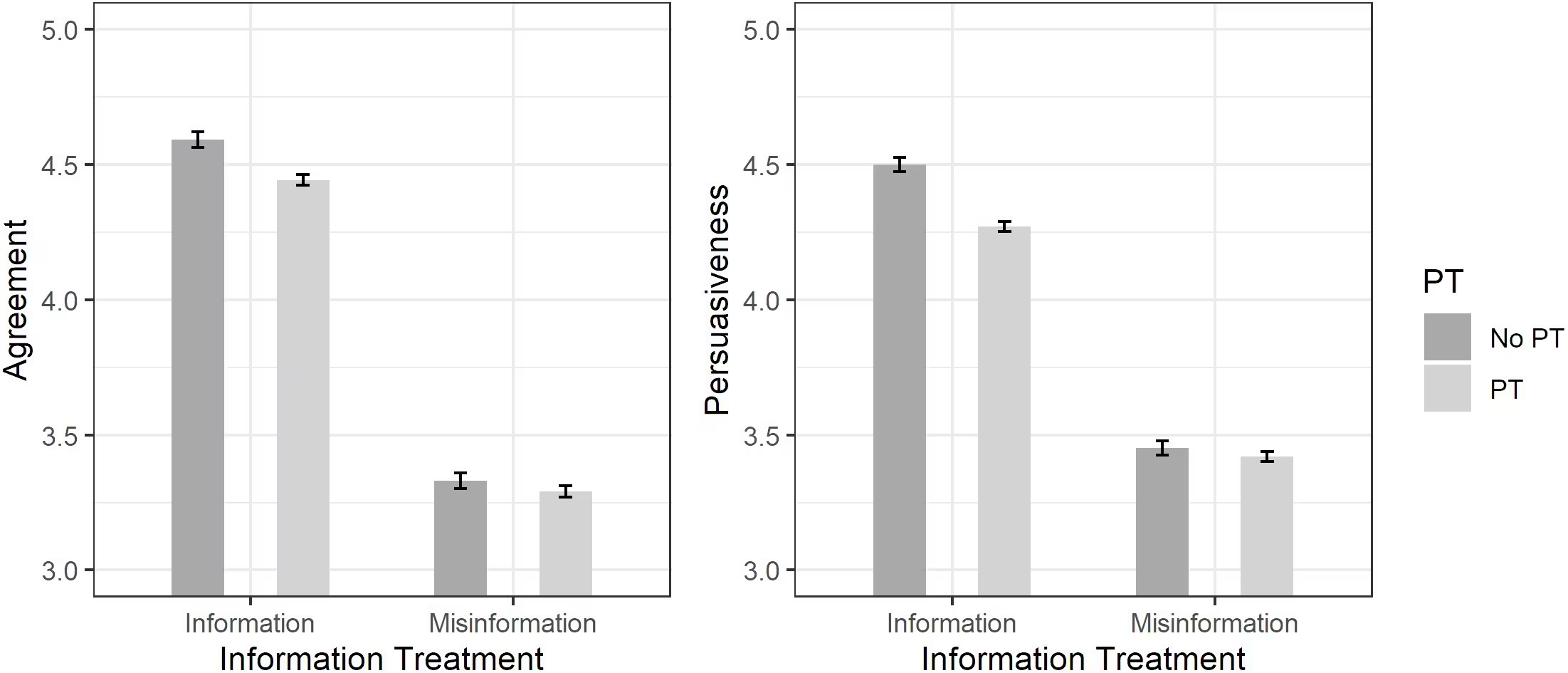
Surprisingly, the presence of persuasion techniques did not universally boost acceptance of false claims. Across the board, statements containing these rhetorical devices elicited slightly lower agreement and lower persuasiveness ratings overall compared to neutral statements. The average effect size for these techniques was relatively small, hovering around a Cohen’s d of minus 0.06 for agreement, whereas the fundamental veracity of the information carried a much stronger statistical weight.
The Unexpected Toll on Fact-Based Statements
The analysis uncovered a striking asymmetry when comparing true and false claims. Persuasion techniques significantly suppressed agreement with factually correct statements, yet showed no statistically significant main effect on false statements. In other words, dressing up accurate scientific information in manipulative or emotionally charged language made people trust it less, whereas applying those same tricks to misinformation did little to make the falsehoods more palatable.
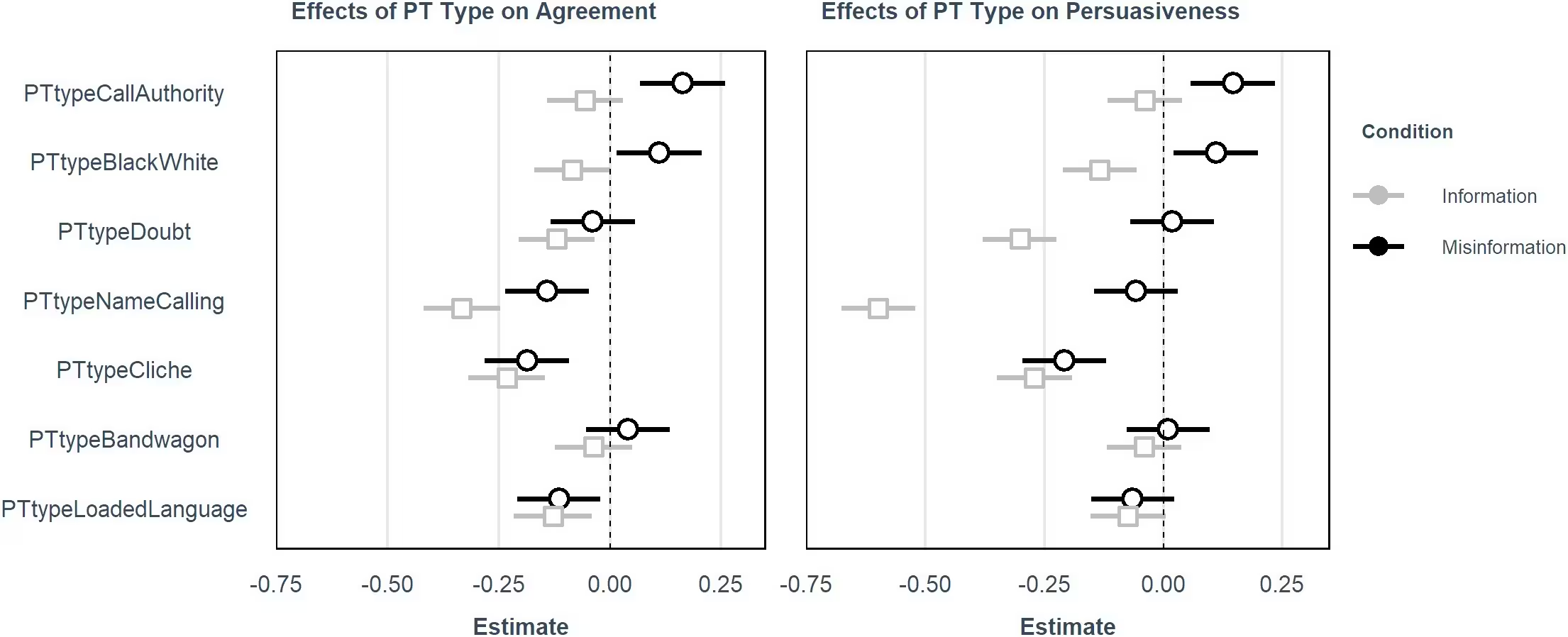
Certain techniques proved far more damaging than others. Name-calling and thought-terminating clichés produced the strongest negative reactions, heavily depressing agreement across the board. However, appeals to authority and black-and-white fallacies demonstrated a dangerous exception, exhibiting conditional effects that specifically increased agreement when attached to false statements.
Individual Vulnerabilities and Broader Implications
The data also highlighted how personal cognitive traits and baseline convictions shape susceptibility to manipulation. Participants who already held strong climate change beliefs displayed better overall discernment between facts and falsehoods. At the same time, individuals situated at the extreme ends of the belief spectrum, including both dedicated advocates and staunch skeptics, proved more strongly influenced by persuasion techniques overall than those with moderate views.
These insights carry direct consequences for the design of digital literacy campaigns and prebunking educational games. Rather than attempting to debunk an endless stream of individual misinformation narratives, public defense strategies can achieve greater resilience by teaching citizens to instantly recognize specific structural manipulation tactics, such as false dichotomies and deceptive authority framing, before those tricks distort public discourse.
The research was published in PLOS One on November 18, 2026.
This article has been fact checked for accuracy, with information verified against reputable sources. Learn more about us and our editorial process.
Last reviewed on .
Article history
- Latest version
Reference(s)
- Bruns, Hendrik., et al. “Understanding the impact of persuasion techniques in climate change mis- and disinformation.” PLOS One, vol. 21, no. 11, November 18, 2026, pp. e0360549 Public Library of Science (PLoS), doi: 10.1371/journal.pone.0360549. <https://doi.org/10.1371/journal.pone.0360549>.
Cite this page:
- Posted by Vikram Desai