First-Time Fathers Find Feeding Toddlers Emotionally Stressful
Interviews with Swedish dads reveal how growth charts and unpredictable toddler appetites trigger deep anxiety during mealtimes.

First-time fathers on paternity leave experience feeding their 10-to-24-month-old children as an emotionally demanding balancing act between trusting a child’s natural appetite and trying to control how much food actually gets eaten.
While mothers have long been the primary focus of parenting research, fathers remain strikingly underrepresented, appearing in as few as one percent of observational studies on children’s eating habits. To understand this overlooked perspective, a team of researchers investigated the lived experiences of 21 first-time fathers living in Sweden, a nation known for its gender-equal parental leave policies. The qualitative study is published in PLOS One.
Anxious Spoonfuls and Variable Appetites
The authors conducted in-depth, semi-structured interviews lasting between 40 and 75 minutes with 21 biological fathers. The participants were living with the children’s mothers and had taken or were currently taking paid parental leave with their toddlers, whose ages ranged from 10 to 24 months with a mean age of 15 months. Most of the participants held a university degree.
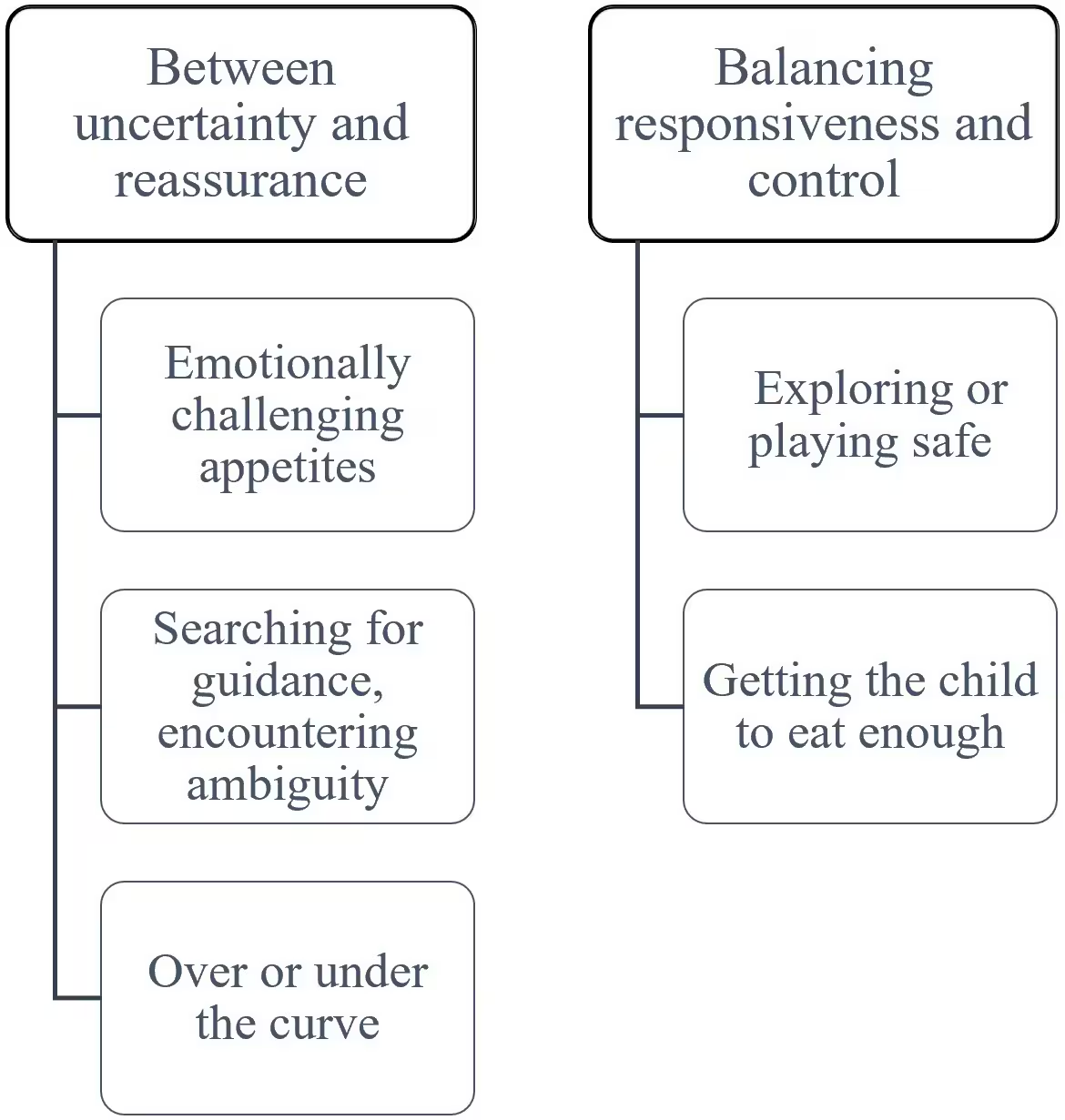
Through reflexive thematic analysis, the researchers identified two primary themes in the interview transcripts: Between uncertainty and reassurance and Balancing responsiveness and control. Fathers frequently reported feeling stressed when trying to decode their infant or toddler’s fluctuating appetite. Unlike breastfeeding, which partners often relied on as a flexible fallback, managing solid foods left men feeling uniquely responsible for ensuring their child consumed adequate nutrition.
The Psychological Weight of Growth Charts
Growth curves provided by child health centers served as major psychological anchors for the fathers, acting as objective validations of their caregiving competence. Fathers whose children tracked steadily along or above the median growth curve reported feeling calm and confident. Conversely, those whose children experienced slower weight gain or dipped below standard percentiles described heightened anxiety and second-guessed their feeding strategies.
This anxiety often pushed fathers away from responsive feeding practices, such as trusting a child’s internal hunger and fullness cues. Instead, worried fathers frequently resorted to coercive or compensatory strategies, such as sneaking extra spoonfuls while the child was distracted, offering calorie-dense evening porridges to make up for daytime refusals, or repeatedly falling back on familiar safe options like pasta with cheese and meatballs to guarantee the child ate something.
Navigating Conflicting Advice and Structural Gaps
Fathers expressed frustration with the guidance they received, noting that routine child health center appointments often featured rigid time constraints and generic, protocol-driven advice. When they sought out additional information online, they encountered conflicting messages and untrustworthy social media content that heightened their doubts about portion sizes and food ingredients.
The authors note limitations in the study, including a homogeneous sample size composed primarily of highly educated individuals living in urban areas, which reflects broader demographic trends in long-term paternity leave uptake in Sweden. The findings suggest that child health services could better support families by expanding father-focused guidance past infancy and into the toddler years, specifically addressing normal appetite variations and practical responsive feeding techniques.
The research was published in PLOS One on November 18, 2026.
This article has been fact checked for accuracy, with information verified against reputable sources. Learn more about us and our editorial process.
Last reviewed on .
Article history
- Latest version
Reference(s)
- Törner Le Priol, Ylva., et al. “Feeding as a first-time father: A qualitative study with fathers of children aged 10–24 months in Sweden.” PLOS One, vol. 21, no. 11, November 18, 2026, pp. e0360628 Public Library of Science (PLoS), doi: 10.1371/journal.pone.0360628. <https://doi.org/10.1371/journal.pone.0360628>.
Cite this page:
- Posted by Priya Sharma