Mysterious Cosmic Explosion Leaves Behind A Strange 10 Minute X Ray Beacon
Astronomers are baffled by a mysterious cosmic explosion that refused to fade, defying our current understanding of how these short-lived bursts behave.
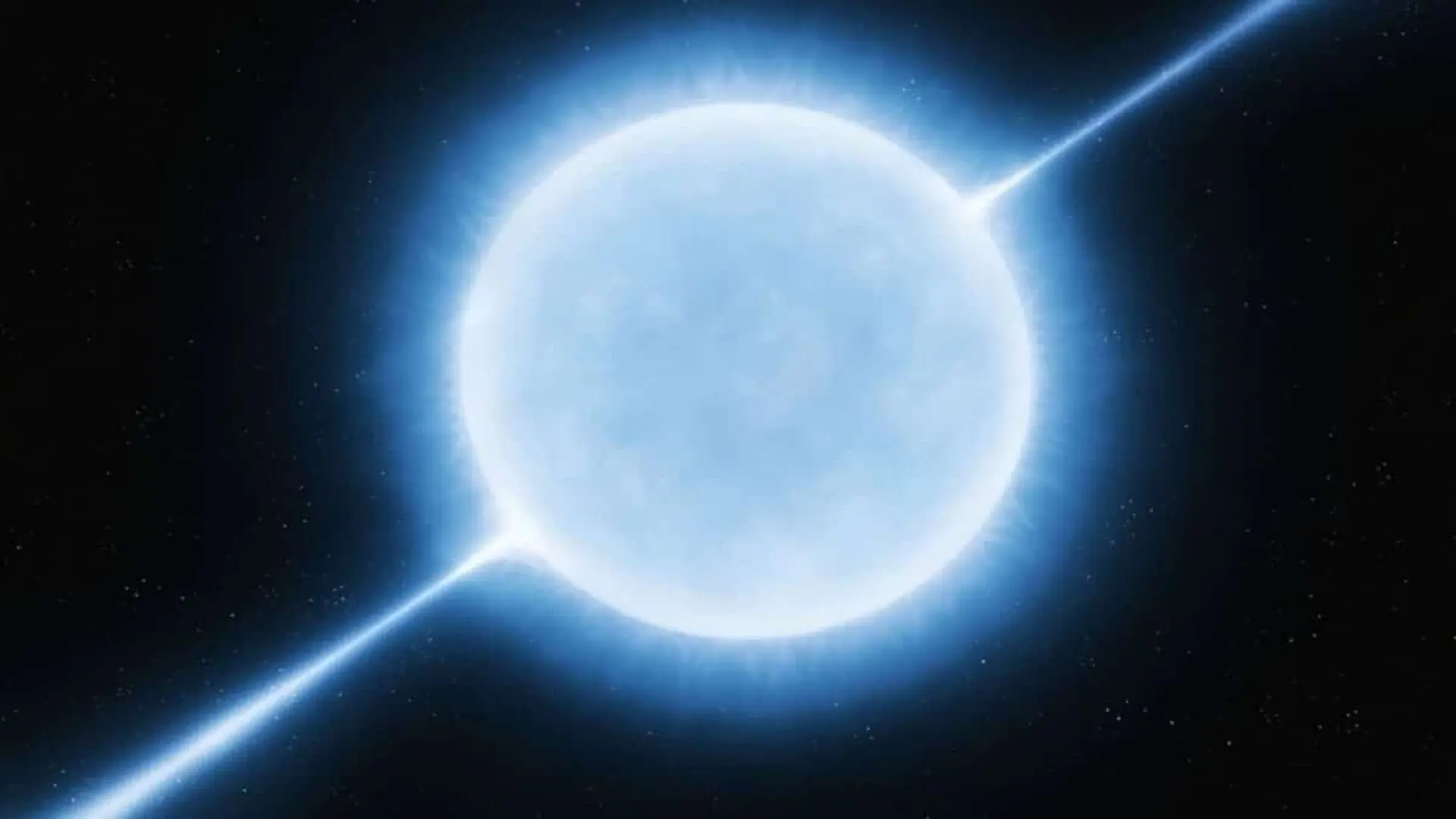
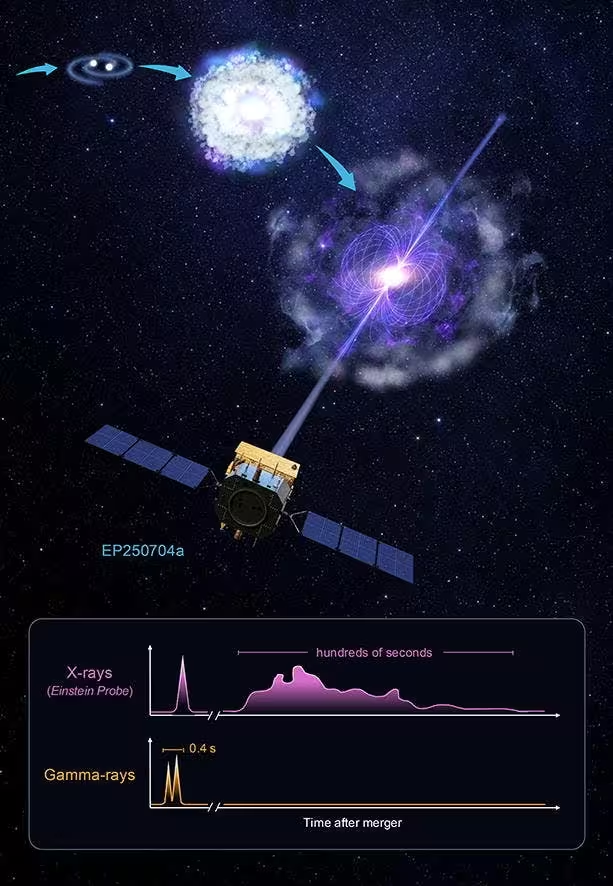
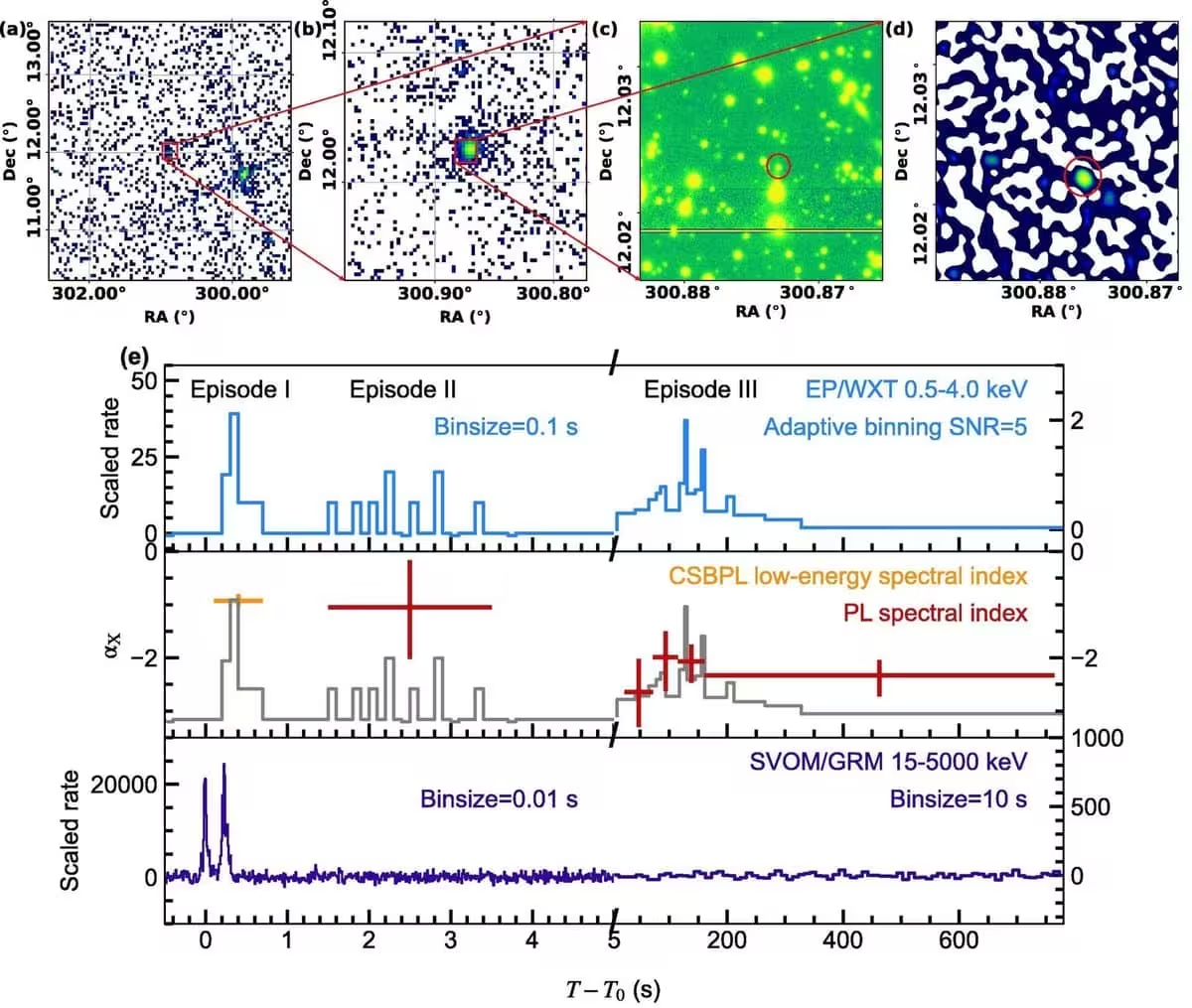
On July 4, 2025, astronomers recorded an extraordinary cosmic explosion that challenges our understanding of what remains after two neutron stars collide. The event, cataloged as EP250704a (also known as GRB 250704B), began with a typical, fleeting gamma-ray burst lasting just 0.4 seconds. However, it was followed by a persistent, soft X-ray glow that endured for nearly 10 minutes, a duration unseen in similar celestial phenomena.
The research, published in Science Bulletin, suggests that this prolonged emission may signal the birth of a magnetar—a highly magnetized neutron star—rather than the immediate formation of a black hole, which is the expected outcome of such high-energy mergers.
Observing the Unusual Glow
The discovery was a collaborative effort involving several observatories, including the Space Variable Objects Monitor and Insight-HXMT. While these instruments captured the initial high-energy flash, the Einstein Probe was critical in documenting the mysterious X-ray tail. While the gamma-ray burst concluded in under half a second, the probe tracked a steady X-ray signal for approximately 560 seconds, a massive discrepancy compared to the rapid fade usually associated with short-duration gamma-ray bursts.
The Case for a Transient Magnetar
Neutron stars are among the densest objects in the universe, packing the mass of our Sun into a volume roughly the size of a city. When they orbit each other, they eventually lose orbital energy to gravitational waves and merge. While these collisions are known to synthesize heavy elements like gold and platinum, the fate of the resulting remnant is a subject of intense scientific inquiry.
The data from EP250704a indicates that the merger likely created a transient magnetar. These objects possess magnetic fields trillions of times stronger than those on Earth. As this newly formed magnetar rotates rapidly, it releases a tremendous amount of stored magnetic energy into the surrounding debris, effectively powering the X-ray afterglow that persisted long after the gamma-ray burst vanished.
“When (magnatars) dump their magnetic power into the surroundings, they can make any explosion brighter and longer-lasting,” notes Eleonora Troja of the University of Rome Tor Vergata, a co-corresponding author of the study.
Redefining Post-Merger Dynamics
Traditional models of short gamma-ray bursts describe an afterglow generated by the collision of ejecta with the interstellar medium. However, the findings published in the study suggest that the emission from EP250704a defies this standard interpretation. The sheer duration of the X-ray signal indicates a sustained energy injection, providing a rare window into the physics of the immediate post-merger environment.
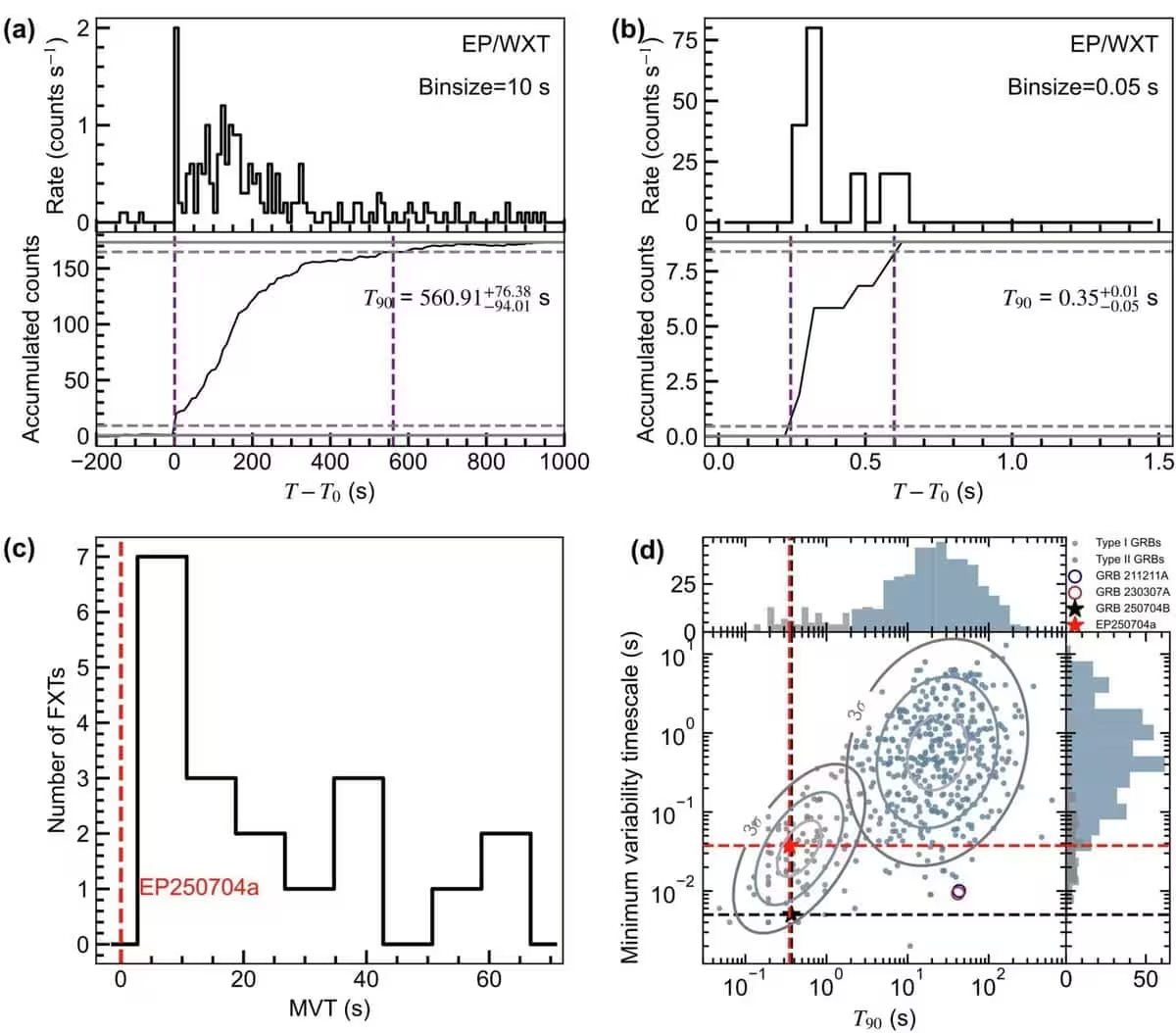
By capturing such an outlier, researchers now have a template for future observations. EP250704a demonstrates that the transition from a binary neutron star system to a stable (or collapsing) remnant is more complex than previously assumed, positioning the event as a landmark case in high-energy astrophysics.
This article has been fact checked for accuracy, with information verified against reputable sources. Learn more about us and our editorial process.
Last reviewed on .
Article history
- Latest version
Reference(s)
- “Home - Einstein Probe - Cosmos.” Einstein Probe <https://www.cosmos.esa.int/web/einstein-probe>.
- Li, An., et al. “Minutes-long soft X-ray prompt emission from a compact object merger.” Science Bulletin, vol. 71, no. 18, September 1, 2026, pp. 4657-4664. Elsevier BV, doi: 10.1016/j.scib.2026.08.021. <https://www.sciencedirect.com/science/article/abs/pii/S209592732600887X?via%3Dihub>.
Cite this page:
- Posted by Aisha Ahmed