Solitary Wasps Juggle Nine Nests At Once And Reveal How Animal Societies Evolved
New genetic and behavioral data from heath sand-wasps challenge long-held theories about the origin of insect social castes.
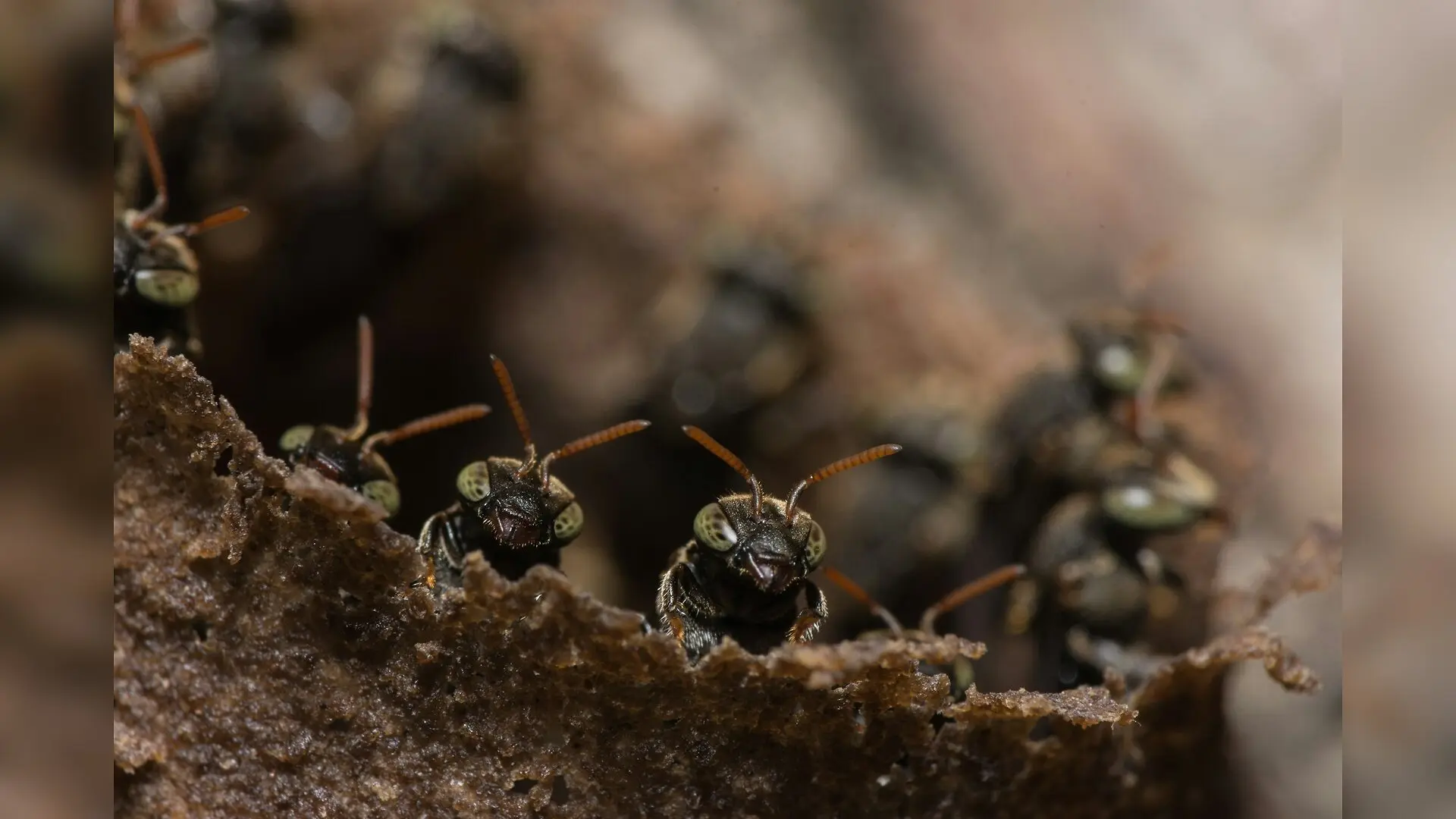
Heath sand-wasp mothers maintain up to nine underground nurseries at once, juggling multiple larvae in a complex parenting balancing act that challenges long-held ideas about how insect societies first evolved.
Scientists have long debated whether the complex division of labor seen in social insects like ants and bees arose by splitting apart the solitary reproductive and maternal cycles of their ancestors. This idea, known as the decoupling hypothesis, suggests that solitary insects alternate between distinct physiological states of egg production and brood care. An alternative theory points to progressive provisioning, where mothers continuously revisit and feed developing offspring over time, as a crucial behavioral stepping stone toward social living.
To test these competing evolutionary theories, researchers investigated the solitary digger wasp Ammophila pubescens. The work is published in Royal Society open science, detailing how the researchers combined field observations of 277 wasps with behavioral assays, dissections of 34 ovaries, and brain transcriptomics. The team sequenced the wasp genome, which spans 446 megabase pairs, to analyze genetic activity across four distinct phases of the nesting cycle.
The Surprising Biology of Multi-Nest Mothers
Female heath sand-wasps construct single-cell shallow burrows, hunt and paralyze lepidopteran caterpillars, lay an egg, and seal the nest. Every two to three days, the mother returns to open the burrow and inspect the offspring before deciding whether to supply more food or abandon the nest.
When researchers offered paralyzed caterpillars to wasps at different nesting stages, the responses revealed that feeding decisions depend entirely on information gathered during nest inspection rather than fixed internal states. Wasps rejected extra food during excavation but accepted it 91 percent of the time after completing a burrow. During the inspection phase, mothers initially rejected offered caterpillars 22 out of 25 times, yet readily accepted them less than a minute later after checking the nest.
Testing the Decoupling and Progressive Provisioning Hypotheses
If the decoupling hypothesis were correct, reproductive phases like egg-laying and nest-founding should share distinct physiological and genetic signatures that separate them from brood-care phases. However, anatomical measurements showed no significant differences in the size of the largest oocytes across any of the nesting phases, with average egg lengths remaining steady whether the wasp was founding a nest, laying an egg, inspecting, or actively provisioning.
Furthermore, brain gene expression profiles across 34 individual wasp brains showed no sharp division between reproductive and caregiving states. Instead, principal component analysis revealed that females undergoing inspection visits formed a tight, isolated cluster that accounted for the vast majority of differentially expressed genes.
Cognitive Demands of Brood Inspection
Inspecting females upregulated genes heavily enriched for neuronal processes, learning, memory, cognition, and mushroom body development. These molecular changes reflect the intense cognitive load required to remember the location, status, and precise nutritional needs of multiple underground nests distributed across space and time.
The findings offer little support for the decoupling hypothesis while pointing toward the simultaneous progressive provisioning hypothesis. By maintaining a constant state of reproductive readiness and relying on rapid, information-dependent brain adjustments during inspections, these solitary wasps demonstrate cognitive innovations that may have served as evolutionary precursors for the cooperative behavior seen in social insect societies.
The research was published in Royal Society open science on November 18, 2026.
This article has been fact checked for accuracy, with information verified against reputable sources. Learn more about us and our editorial process.
Last reviewed on .
Article history
- Latest version
Reference(s)
- Oi, Cintia A.., et al. “Deconstructing the nesting cycle of a progressive provisioning wasp provides insights into the mechanisms regulating maternal care.” Royal Society Open Science, vol. 13, no. 11, November 18, 2026 The Royal Society, doi: 10.1098/rsos.261733. <https://doi.org/10.1098/rsos.261733>.
Cite this page:
- Posted by Hassan Raza