Forensic Analysis of 5,000 Year Old Skulls Finally Solves Ancient Egyptian Sacrifice Mystery
New forensic analysis of ancient skulls stored at Cambridge for a century has finally revealed secrets that eluded archaeologists for decades.
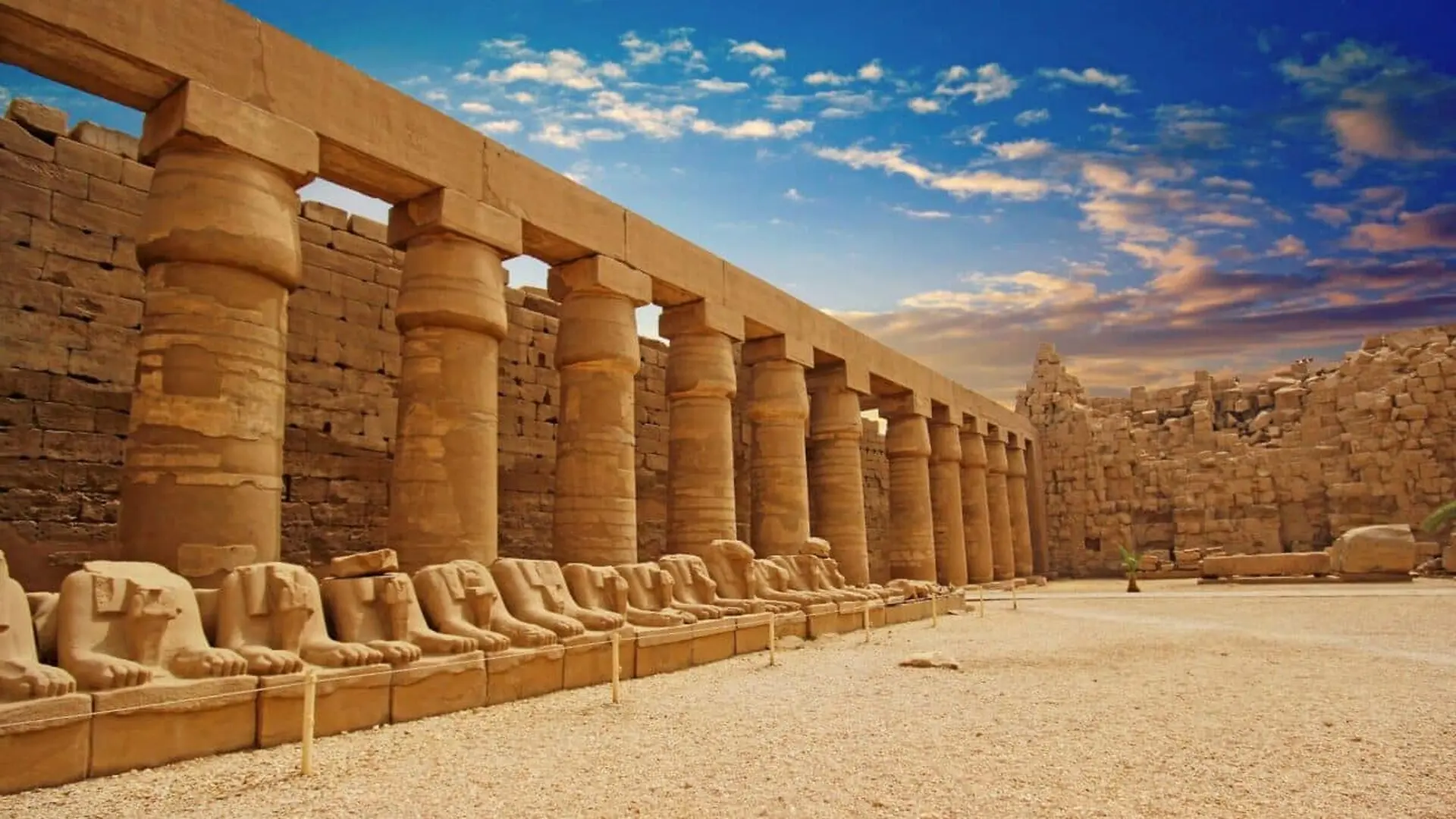
A rigorous re-examination of 5,000-year-old human remains has provided compelling evidence to support a long-debated theory in Egyptology: that royal attendants were indeed put to death during the First Dynasty to accompany their pharaohs into the afterlife. By applying modern forensic techniques to skulls excavated nearly a century ago, researchers have identified clear patterns of fatal trauma that had previously been overlooked or misidentified.
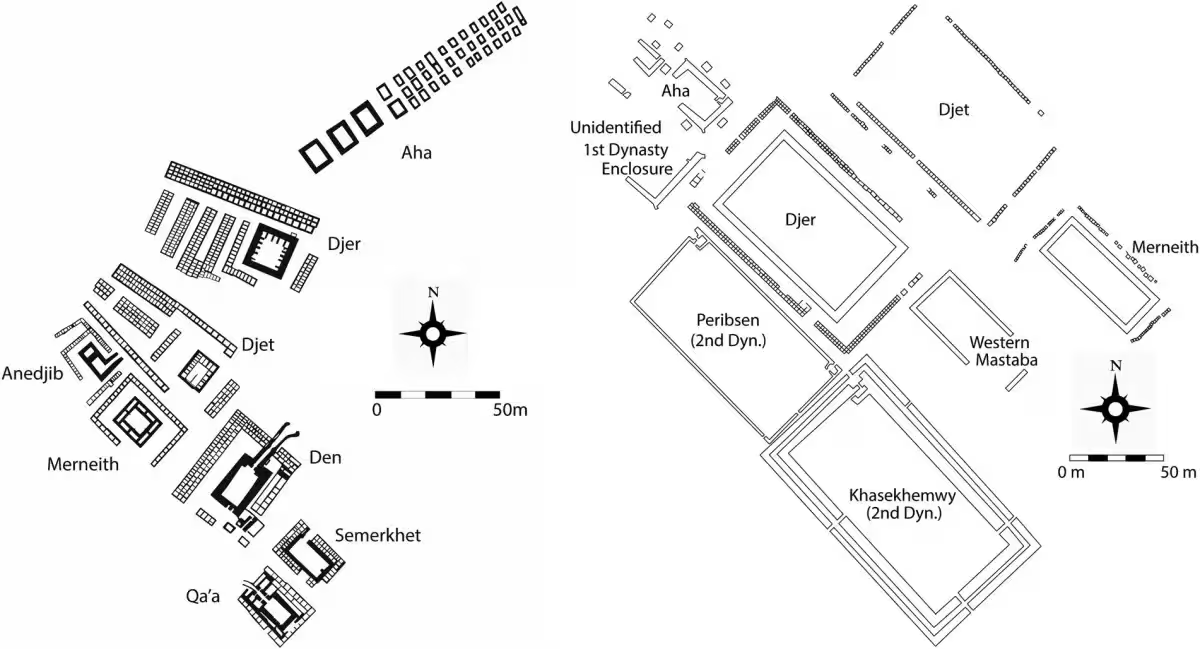
The practice of retainer sacrifice occurred during a narrow window in Egyptian history, roughly between 3100 and 2900 BCE. While such accounts were often dismissed as hyperbole, the presence of these burials alongside at least five First Dynasty rulers suggests a deliberate, ritualized effort to reinforce social hierarchies and ensure the monarch remained surrounded by a loyal retinue in the next world. However, direct physical proof of how these individuals met their ends remained elusive for decades.
Deciphering a Century-Old Mystery at Abydos
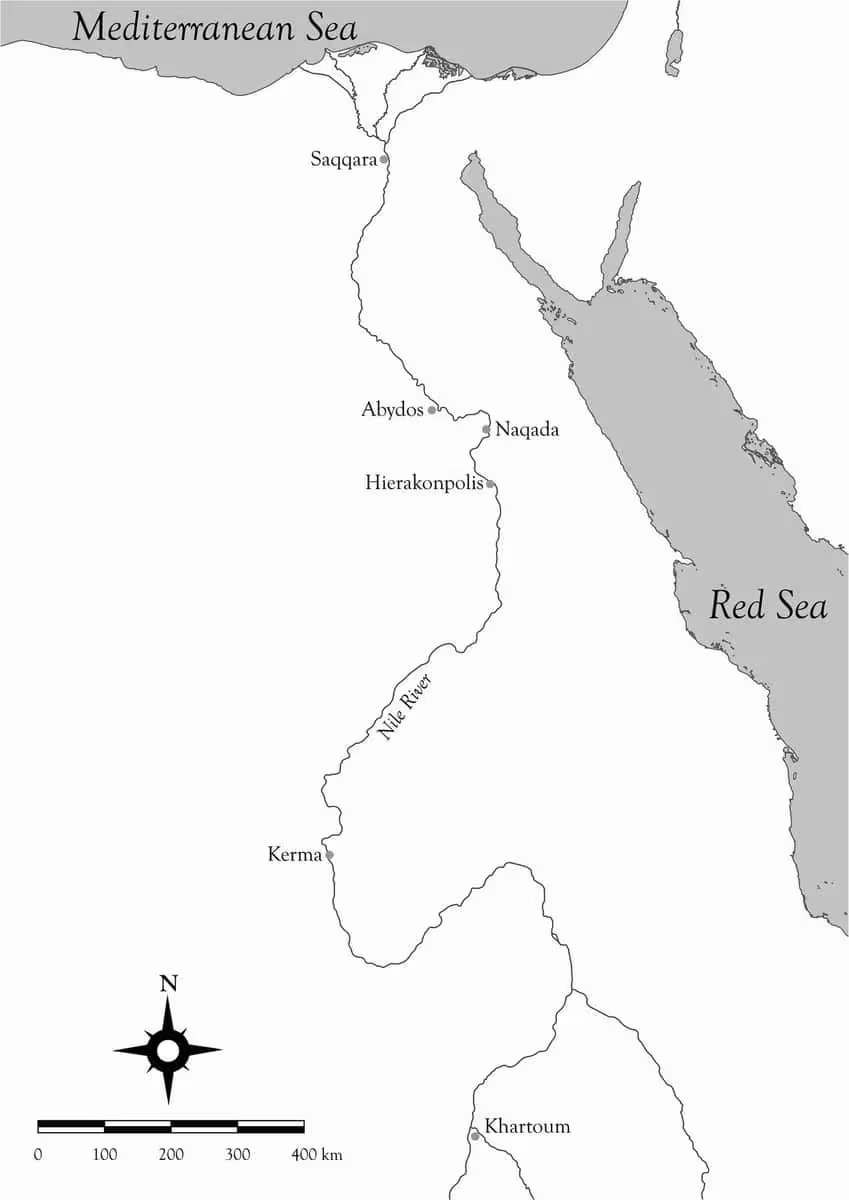
The investigation centers on findings first made in the 1920s by British archaeologist Flinders Petrie. While excavating a series of funerary complexes at the site of Abydos in eastern Egypt, Petrie uncovered the primary tombs of pharaohs surrounded by hundreds of secondary graves. Though he hypothesized that these individuals were victims of state-sanctioned sacrifice, the lack of visible injury on the remains left the scientific community skeptical. Many of these skulls were subsequently transported to Cambridge University, where they remained largely untouched in storage for nearly a century.
Forensic Breakthroughs Reveal New Details
Purdue University archaeologist Roselyn Campbell revisited this collection with advanced forensic tools, analyzing 46 individuals from the site. Her findings, published in Frontiers in Environmental Archaeology, reveal that 18 of those individuals bore unmistakable signs of lethal violence. These injuries, which Petrie had likely mistaken for natural degradation, include distinct linear fractures indicative of forceful, intentional strikes.
“The injuries on the preserved crania are generally linear fractures, which would likely cause rapid unconsciousness, internal bleeding, and death,” Campbell noted in a recent statement.
Beyond the linear fractures, the analysis identified further evidence of violent trauma, including sharp-force wounds and, in one particularly graphic instance, a chopping injury near the ocular cavity.
Lingering Questions and Future Directions
Despite the forensic progress, the exact nature of the weaponry used remains a point of academic debate. While the injuries suggest the use of a broad, flat implement, these markings do not align perfectly with traditional depictions of royal mace-wielding in Egyptian iconography. Furthermore, because Petrie reburied the majority of the skeletal remains during his initial excavations, researchers are limited to the few specimens that made it to modern collections. This leaves the status of the other attendants unclear; some may have died by means that left no permanent mark on the skeleton, or they may have passed away from natural causes.
For Campbell, the investigation highlights the immense value of returning to legacy datasets with a contemporary lens. While she expressed an interest in locating the reburied remains for further study, she emphasizes that current results already clarify long-standing ambiguities regarding the early history of the Egyptian state.
This article has been fact checked for accuracy, with information verified against reputable sources. Learn more about us and our editorial process.
Last reviewed on .
Article history
- Latest version
Reference(s)
- projects, Contributors. “British Egyptologist (1853–1942).”, April 26, 2003 Wikimedia Foundation, Inc. <https://en.wikipedia.org/wiki/Flinders_Petrie>.
- “Roselyn Campbell - College of Liberal Arts - Purdue University.” <https://www.cla.purdue.edu/directory/profiles/roselyn-campbell.html>.
- Campbell, Roselyn. “New data from old bones: using bioarchaeology and forensics to reassess legacy data from ancient Abydos, Egypt.” Frontiers in Environmental Archaeology, vol. 5, October 5, 2026, pp. 1858940 Frontiers, doi: 10.3389/fearc.2026.1858940/full. <https://www.frontiersin.org/journals/environmental-archaeology/articles/10.3389/fearc.2026.1858940/full>.
- <https://www.eurekalert.org/news-releases/1145704>.
Cite this page:
- Posted by Vikram Desai