Massive Medieval Cemetery With Over 500 Graves Uncovered During Canal Construction In France
Archaeologists have unearthed hundreds of medieval graves in a quiet French field, but mysterious evidence in the deepest burials is complicating the story.
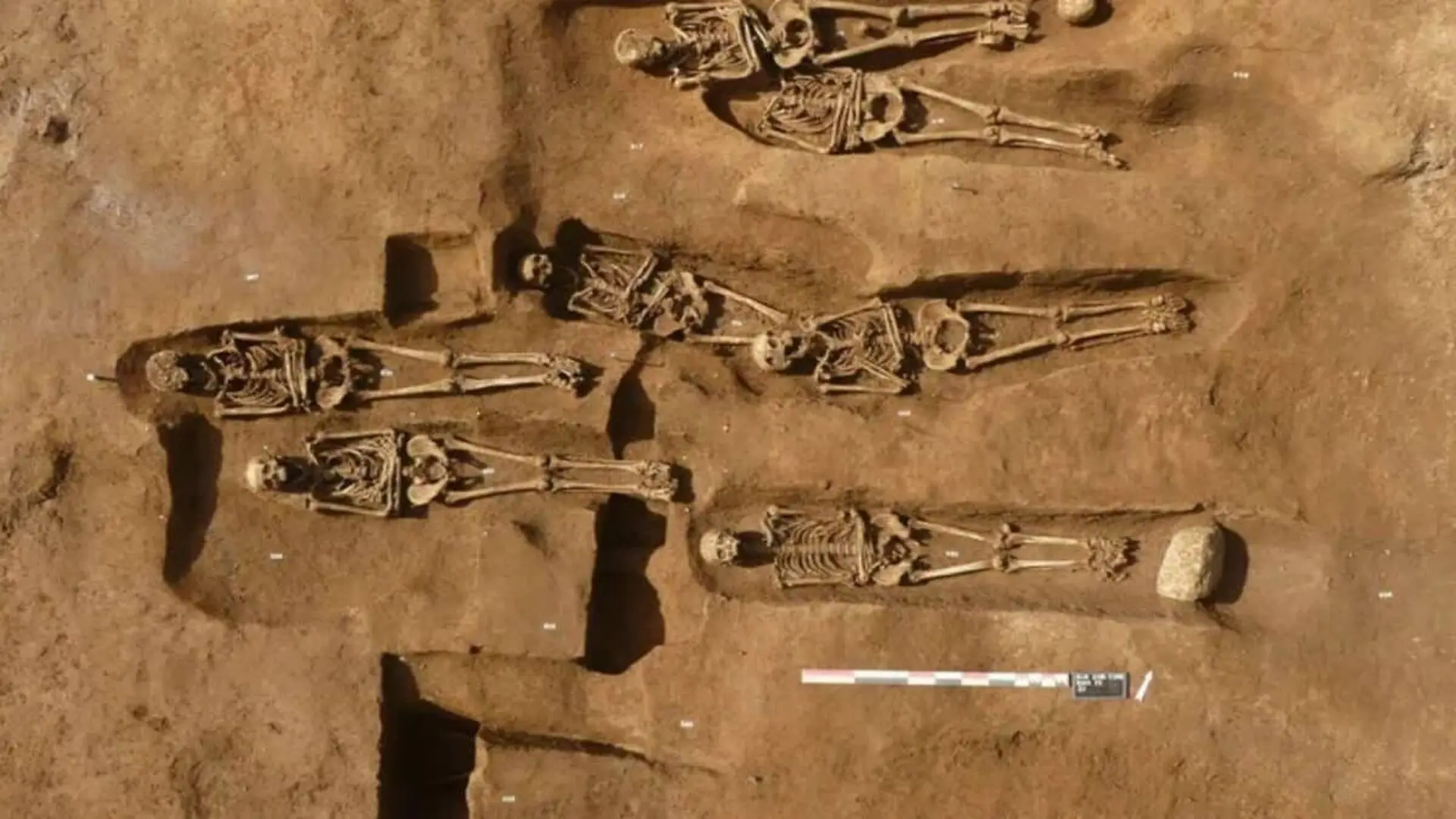
Infrastructure development for France’s Seine-Nord Europe Canal has led to the discovery of a significant medieval burial ground at Beaurains-lès-Noyon. Archaeologists have cataloged 546 graves to date, though the high density of remains in a rural setting continues to spark debate among researchers regarding the site’s true purpose.
While the canal project team anticipated archaeological finds, the scale of the site—spanning approximately 30,000 square feet—was unexpected. The density of the graves suggests a community of considerable size or specific historical circumstances that remain under investigation.
Excavating a Hidden Medieval Necropolis
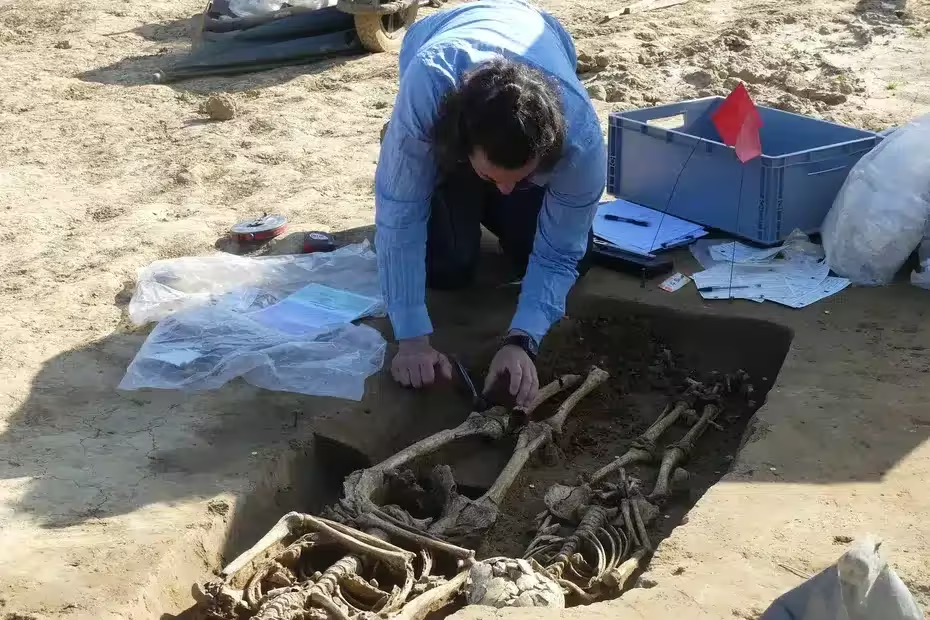
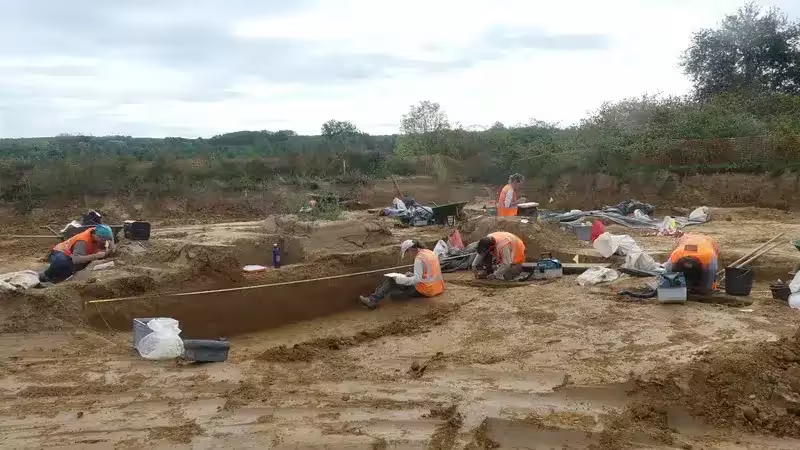
The site was initially identified during preliminary assessments conducted in 2024 by the Regional Directorate of Cultural Affairs, which detected human remains along the canal’s path. Subsequent excavations, carried out between January and September by the private firm Éveha, revealed that many burials lie just beneath the topsoil. According to France Info, lead archaeologist Élodie Wermuth emphasized that the volume of burials is unusually large for such a rural environment, particularly given that the full extent of the site has not yet been unearthed.
Vertical Stratification and Settlement Patterns
The layout of the cemetery features a centralized building, now stripped of its masonry, with graves clustered around it. The site appears to have been in active use between the 11th and 14th centuries. Wermuth noted that the cemetery follows the typical organizational standards of the High and Late Middle Ages, though the spatial management is striking. To conserve space, bodies were stacked in layers, with researchers identifying up to five distinct levels of burials in some sectors.
Historical context for the site remains limited, though experts posit the existence of a settlement at Bas-Beaurains. The architectural maturity of the nearby Noyon cathedral by the 11th century suggests the region was capable of supporting a significant population during that era.
Investigating the Origins of the Remains
Initial hypotheses regarding the site were fueled by the presence of pathological lesions on some of the earlier remains, prompting speculation that the area might have served as a leprosarium. However, the lack of an associated hospital facility and the discovery of a diverse demographic—including men, women, and children—have led researchers to consider whether this was simply a standard parish cemetery.
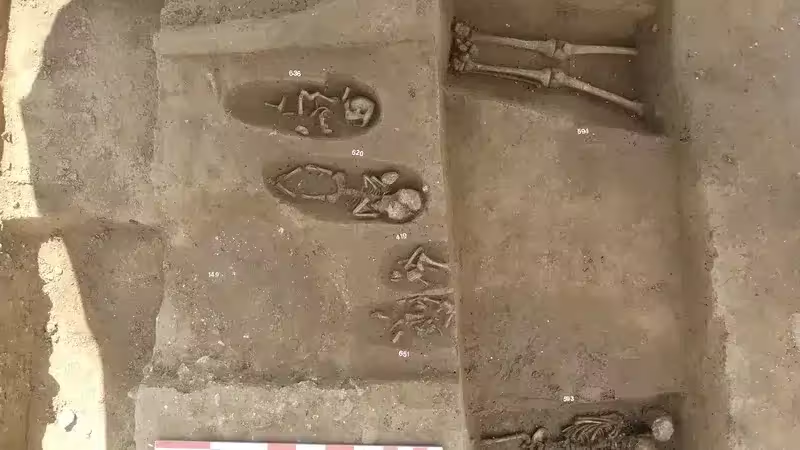
The discovery of individuals with severe medical conditions in the deepest, and likely earliest, graves adds a layer of complexity to the interpretation. As excavation efforts continue alongside construction preparations, the team plans to utilize radiocarbon dating and further bioarchaeological analysis of burial goods to better define the timeline and social function of the Beaurains-lès-Noyon site.
This article has been fact checked for accuracy, with information verified against reputable sources. Learn more about us and our editorial process.
Last reviewed on .
Article history
- Latest version
Reference(s)
- Gorgeu, Guillaume. “546 sépultures, datant du Moyen Âge, découvertes dans le cadre des travaux du canal Seine-Nord Europe : "c'est.”, September 19, 2026 France 3 Hauts-de-France <https://france3-regions.franceinfo.fr/hauts-de-france/oise/546-sepultures-datant-du-moyen-age-decouvertes-dans-le-cadre-des-travaux-du-canal-seine-nord-europe-c-est-beaucoup-pour-un-contexte-rural-3413540.html>.
- <https://otmed.academia.edu/%C3%89lodieWERMUTH>.
Cite this page:
- Posted by Vikram Desai