Ancient Freeze-Dried Potatoes Unearthed, Proof of Inca’s Empire-Wide Food Supply
Archaeologists uncovered two 500‑year‑old potatoes in a broken pot, revealing the Inca Empire’s ingenious food‑storage trick.
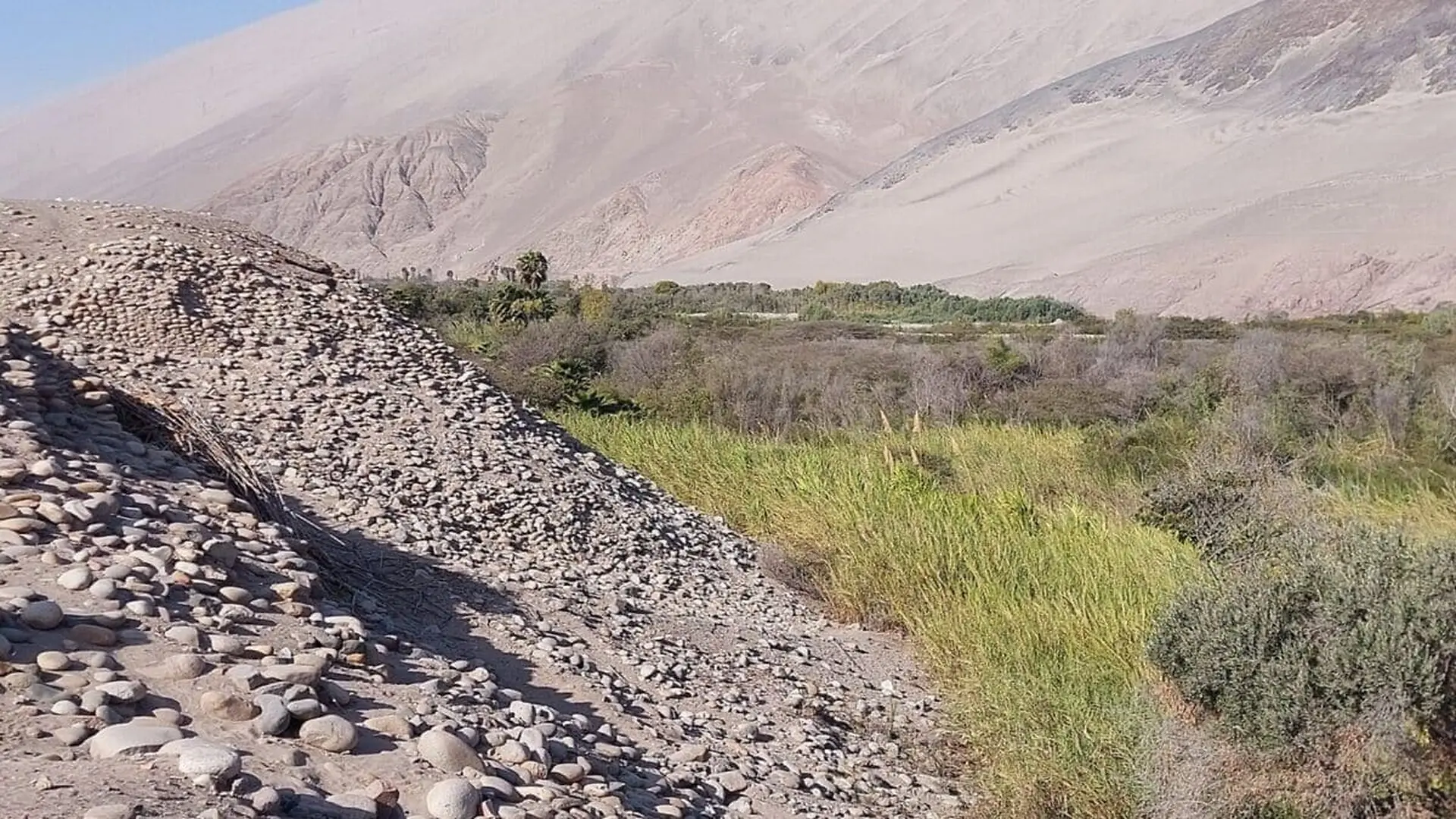
Archaeologists excavating a former Inca administrative hub on Peru’s dry southern coast have uncovered two exceptionally intact potatoes that date to roughly five centuries ago. The find, recovered from a historic storage chamber, represents only the second instance in which researchers have secured tangible proof of chuño— the freeze‑dried potato staple that once fed the Inca Empire.
Because chuño seldom survives the test of time, the newly reported specimens provide concrete evidence that the Incas managed an elaborate network for producing, moving, and safeguarding food over long distances, long before modern refrigeration existed.
Uncovering the Ancient Tubers
The artifacts emerged during the 2024 field campaign at Tambo Viejo, an Inca provincial center situated in the Acarí Valley. After years of work at the site, the team uncovered a modest storage room that housed a clay pot embedded in the earthen floor, its upper portion broken away.
When excavators cleared the sediment from the vessel’s interior, they reached its base and discovered two freeze‑dried potato fragments. Lead investigator Lidio Valdez, an adjunct professor at the University of Calgary, recounted to Live Science that the samples were presented to him and he instantly recognized them as chuño. Adjacent finds—a shard of Inca pottery and a broken spindle whorl used for turning fiber into thread— helped confirm the potatoes’ placement within the Inca era.
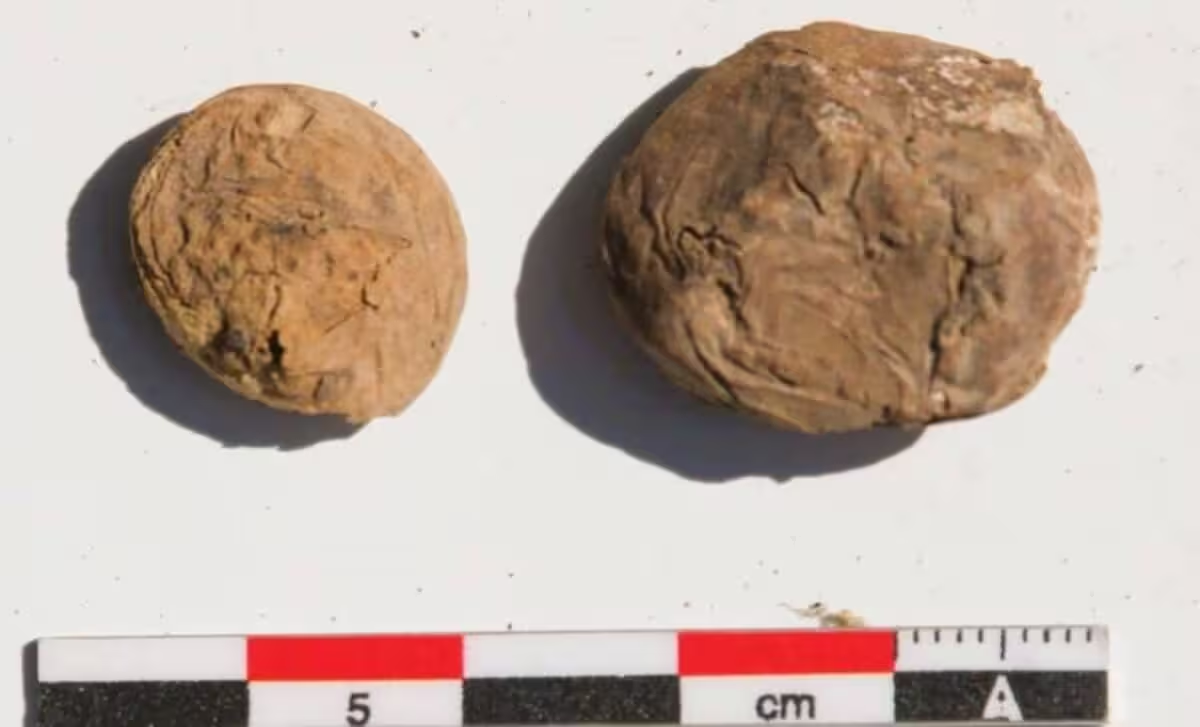
The potatoes survived because the Acarí Valley’s arid climate dramatically slows the breakdown of organic matter. Valdez’s earlier investigations at the same location had also revealed naturally mummified guinea pig remains preserved under similar conditions.
How Chuño Was Made and Transported
Chuño is created by repeatedly exposing potatoes to bitter cold at night and then to intense sunlight during the day until nearly all moisture evaporates. The resulting lightweight product can be stockpiled for years, unlike fresh tubers that contain about 80 percent water and spoil within days at lower, warmer altitudes.
The freeze‑drying cycle requires high elevations—generally above 11,800 feet—where nightly frost is reliable. As detailed in the study, the Tambo Viejo potatoes could not have been produced locally on the coast; they must have traveled downhill from the Andes, most likely via llama caravans that followed the Inca road system.
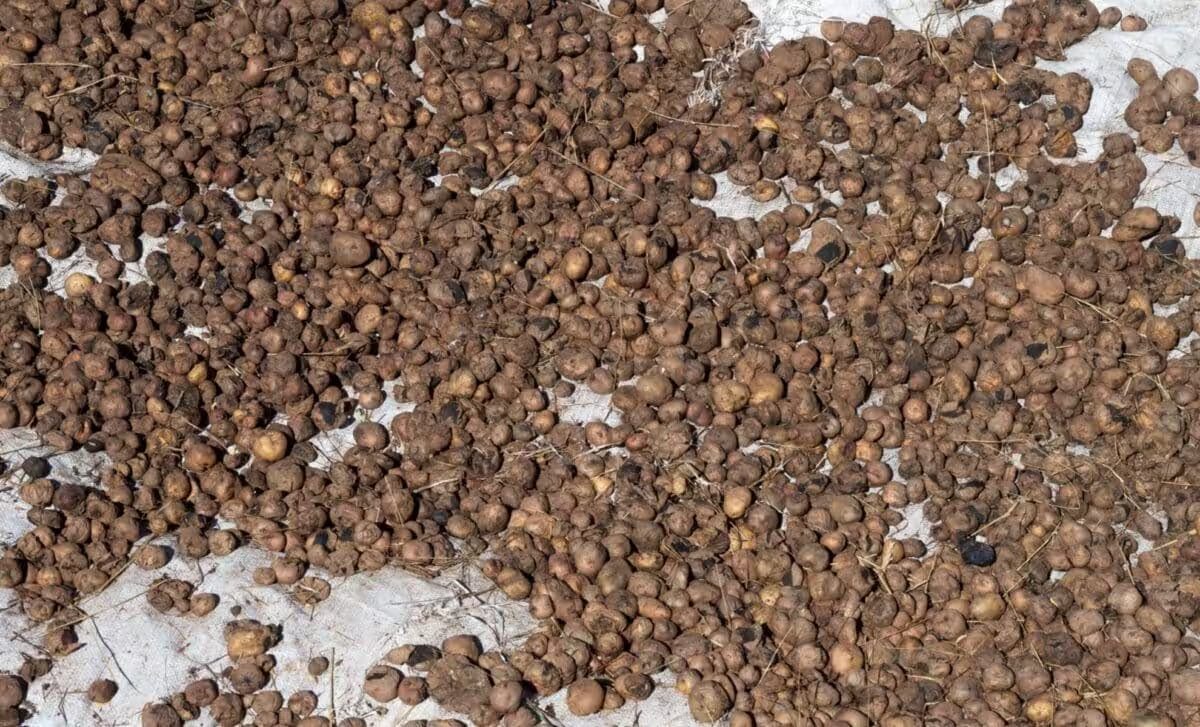
Valdez speculated that the technique may predate the Inca state, perhaps originating when early growers noticed that potatoes left out in frosty weather remained edible after drying. He also highlighted that the same principle was applied to meat, producing “charki,” the ancestor of the English word “jerky.”
According to the researchers, chuño production functioned as a safeguard against food loss while enabling the empire to amass reserves for large‑scale projects. Valdez added that few coastal Inca sites have been thoroughly investigated, suggesting that additional chuño remnants and associated supply routes could still be uncovered in future digs.
This article has been fact checked for accuracy, with information verified against reputable sources. Learn more about us and our editorial process.
Last reviewed on .
Article history
- Latest version
Reference(s)
- <https://profiles.ucalgary.ca/lidio-valdez-cardenas-0>.
- Maule, Olivia. “500-year-old freeze-dried potato snacks discovered in Inca storage room in Peru.”, June 30, 2026 Live Science <https://www.livescience.com/archaeology/500-year-old-freeze-dried-potato-snacks-discovered-in-inca-storage-room-in-peru>.
- Valdez, Lidio M.., et al. “Inka Freeze-Dried Potatoes from Tambo Viejo, Acarí Valley, Perú.” Journal of Field Archaeology, vol. 51, no. 5, May 1, 2026, pp. 378-387. Informa UK Limited, doi: 10.1080/00934690.2026.2658319. <https://www.tandfonline.com/doi/full/10.1080/00934690.2026.2658319>.
Cite this page:
- Posted by Vikram Desai