Forgotten Staircase Under Dijon Church Uncovers 400-Year-Old Vault and Ancient Tombs
Repairing a cracked floor in a French church uncovered a hidden staircase, an ancient vault and a mysterious past that runs far deeper than imagined.
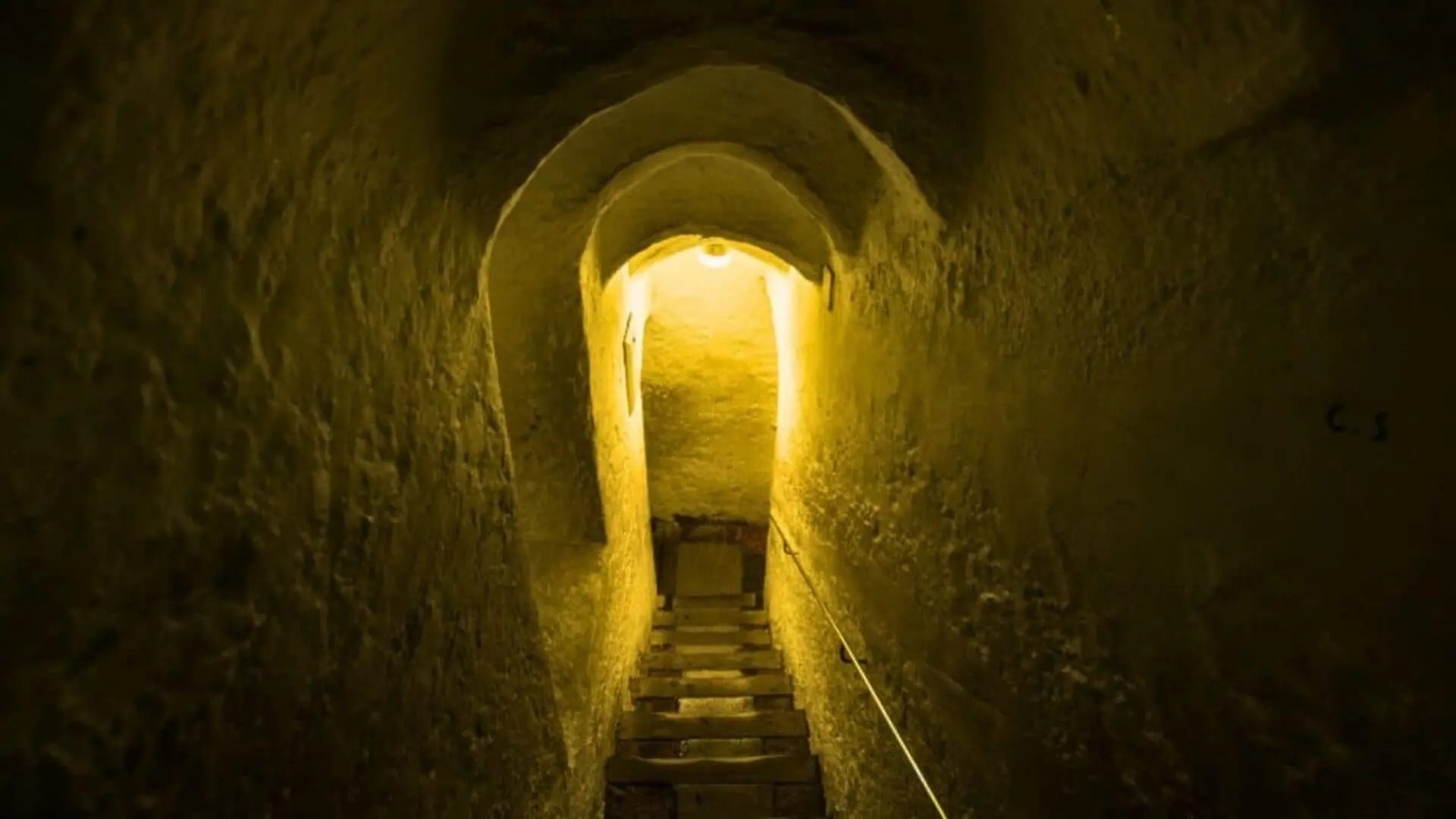
During floor repairs at the historic Saint‑Philibert church in Dijon, France, workers lifted a stone slab and uncovered a hidden staircase that was absent from any existing plans. The steps descended into a sealed burial vault that had remained untouched for at least four centuries, and further excavation revealed multiple layers of tombs, sarcophagi and ancient walls extending back more than a millennium.
The Romanesque edifice, dating from the latter half of the 12th century, is the sole surviving example of its type in Dijon. The floor work was not intended as an archaeological probe; it was commissioned to address structural damage linked to a poorly executed renovation in the 1970s. That very repair exposed the concealed staircase.
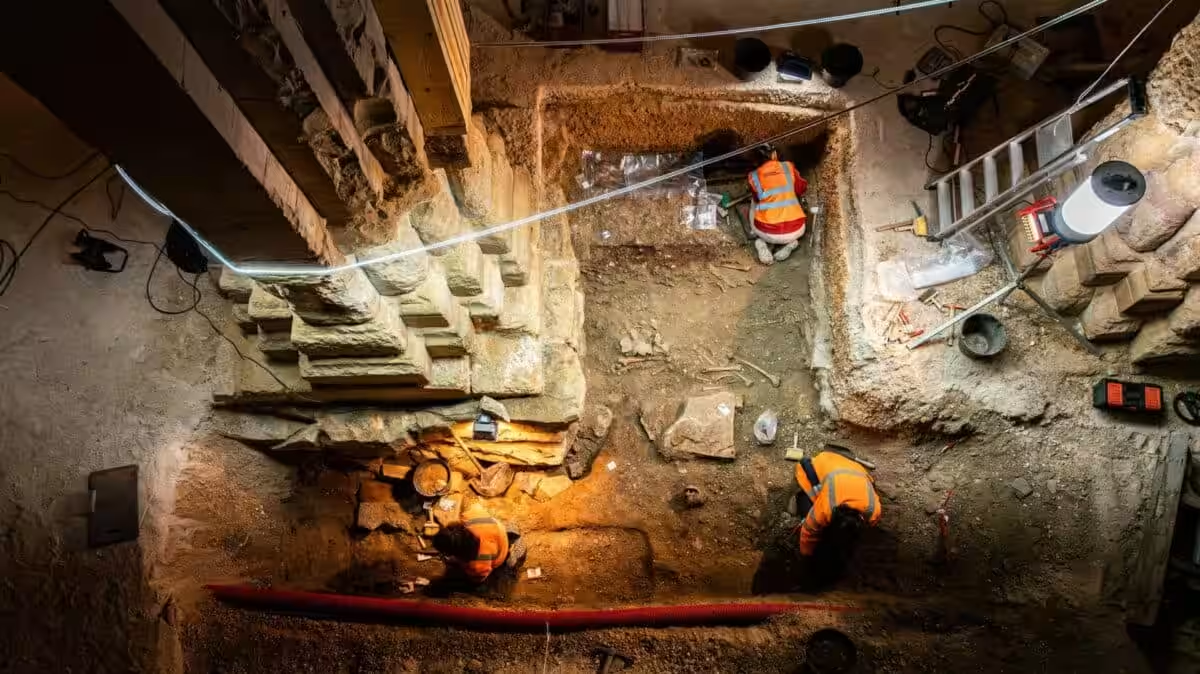
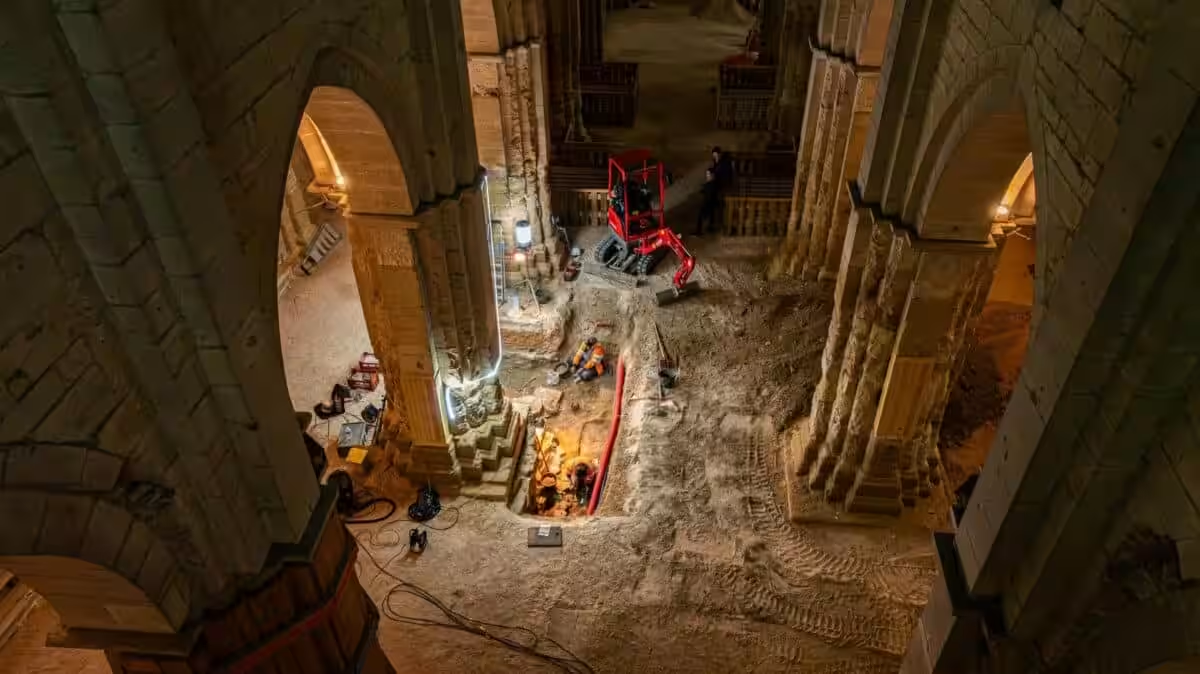
When the hidden stairwell was discovered, specialists from the French National Institute for Preventive Archaeological Research (INRAP) were called in. What began as a structural assessment quickly turned into a full‑scale excavation, with plans to investigate up to three metres below the church floor.
Salt‑Soaked Walls Triggered Decades of Damage
After the French Revolution, Saint‑Philibert was deconsecrated and later repurposed as a salt warehouse in the 18th and 19th centuries. Heavy salt deposits permeated the stonework during that period. The situation worsened after a 1970s renovation that installed a heated concrete slab; the heat caused the trapped salt to migrate upward through capillary action into the supporting piers. Although the slab was eventually removed and mitigation measures were applied, the stone continued to crack and crumble over subsequent decades, prompting the floor lift that revealed the staircase.
A 15th‑16th Century Vault Holds Hundreds of Interments
The concealed stairwell opened onto a burial vault in the transept that INRAP dated to the 15th and 16th centuries. Inside, wooden coffins contained the remains of children and adults. Researchers noted that each coffin had been emptied along its sides to accommodate successive burials, a practice typical of communal vaults of the era. Most of the deceased were adult individuals wrapped in shrouds, with very few accompanying artifacts; only a handful of rare coins and two rosaries were recovered.
The vault’s floor lay roughly nine feet below the present surface, and six sarcophagi were recovered from the broader site. The concentration of burials has led some scholars to suggest a possible link to a pandemic or famine, though INRAP stresses that this remains a hypothesis pending further osteological analysis.
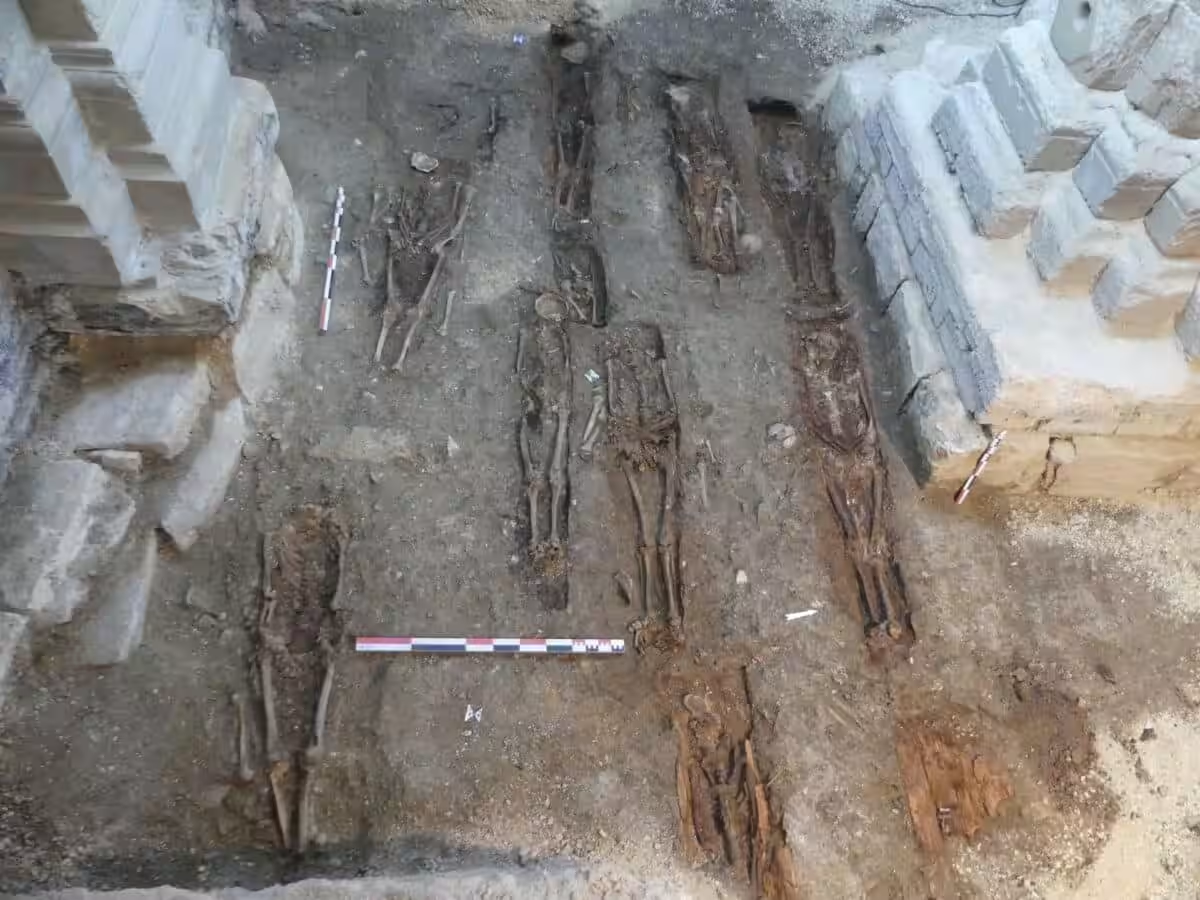
Additional coffins uncovered in the nave span the 14th through 18th centuries and are arranged in a consistent east‑to‑west orientation, again with minimal grave goods. Together with the transept vault, these findings confirm that Saint‑Philibert served as an active burial ground for several hundred years before its deconsecration.
Earlier Tombs Reveal Pre‑Romanesque Churches on the Site
Beneath the 15th‑16th century burials, archaeologists identified slab tombs dating from the 11th to 13th centuries, suggesting a predecessor church existed on the location. An 11th‑century apse was first recorded nearby in 1923, and the surrounding slab tombs are thought to belong to that earlier cemetery.
Further down, excavators uncovered two walls constructed with opus spicatum, a herringbone masonry technique associated with the Early Middle Ages. INRAP interprets this as evidence of a north‑west corner of a yet‑earlier church, likely founded around the 10th century, marking the first confirmed architectural remains from that period at the site.
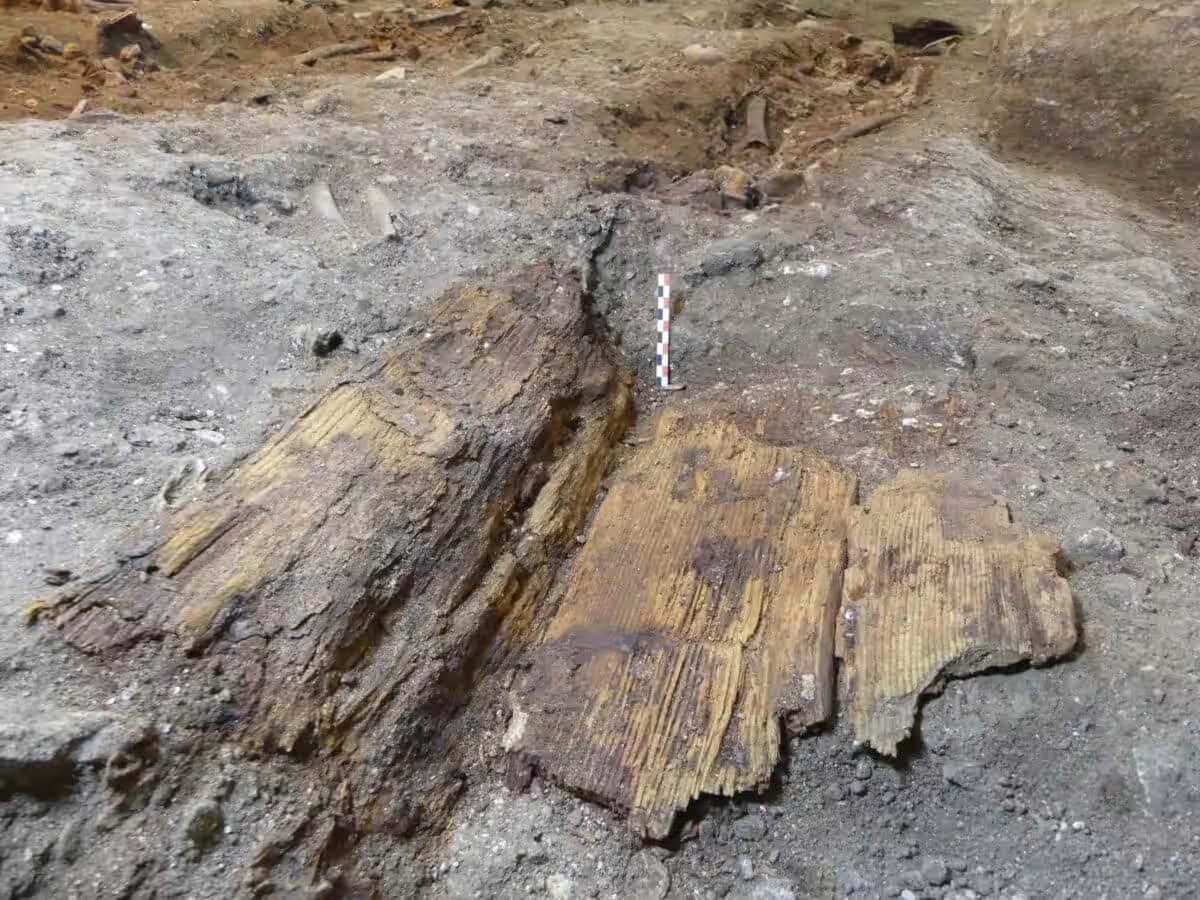
Below those walls, six sarcophagi emerged. Two belong to the Merovingian period (6th‑8th centuries) and rest atop four Late Antiquity sarcophagi, one of which features a sculpted lid. INRAP suggests these coffins were placed within one or more structures that bridged the transition from Antiquity to the Middle Ages, although the exact function of those buildings remains uncertain.
The excavation, intended to reach a depth of three metres, thus uncovered a continuous sequence of burial practices from Late Antiquity through the modern era within a compact footprint beneath the church. The project was directed by INRAP scientific director Clarisse Couderc, with archaeo‑anthropologist Carole Fossurier contributing, under the scientific guidance of the regional archaeology department for Bourgogne‑Franche‑Comté.
This article has been fact checked for accuracy, with information verified against reputable sources. Learn more about us and our editorial process.
Last reviewed on .
Article history
- Latest version
Reference(s)
- “Actualité | Sous les piliers de l’église Saint-Philibert de Dijon (Côte-d’Or).”, December 18, 2024 Inrap <https://www.inrap.fr/sous-les-piliers-de-l-eglise-saint-philibert-de-dijon-cote-d-or-19729>.
Cite this page:
- Posted by Vikram Desai