New Cargo Ship Docks at International Space Station Carrying Three Tons of Vital Supplies
A Russian Progress spacecraft has successfully docked with the International Space Station, delivering vital supplies for the Expedition 75 crew.
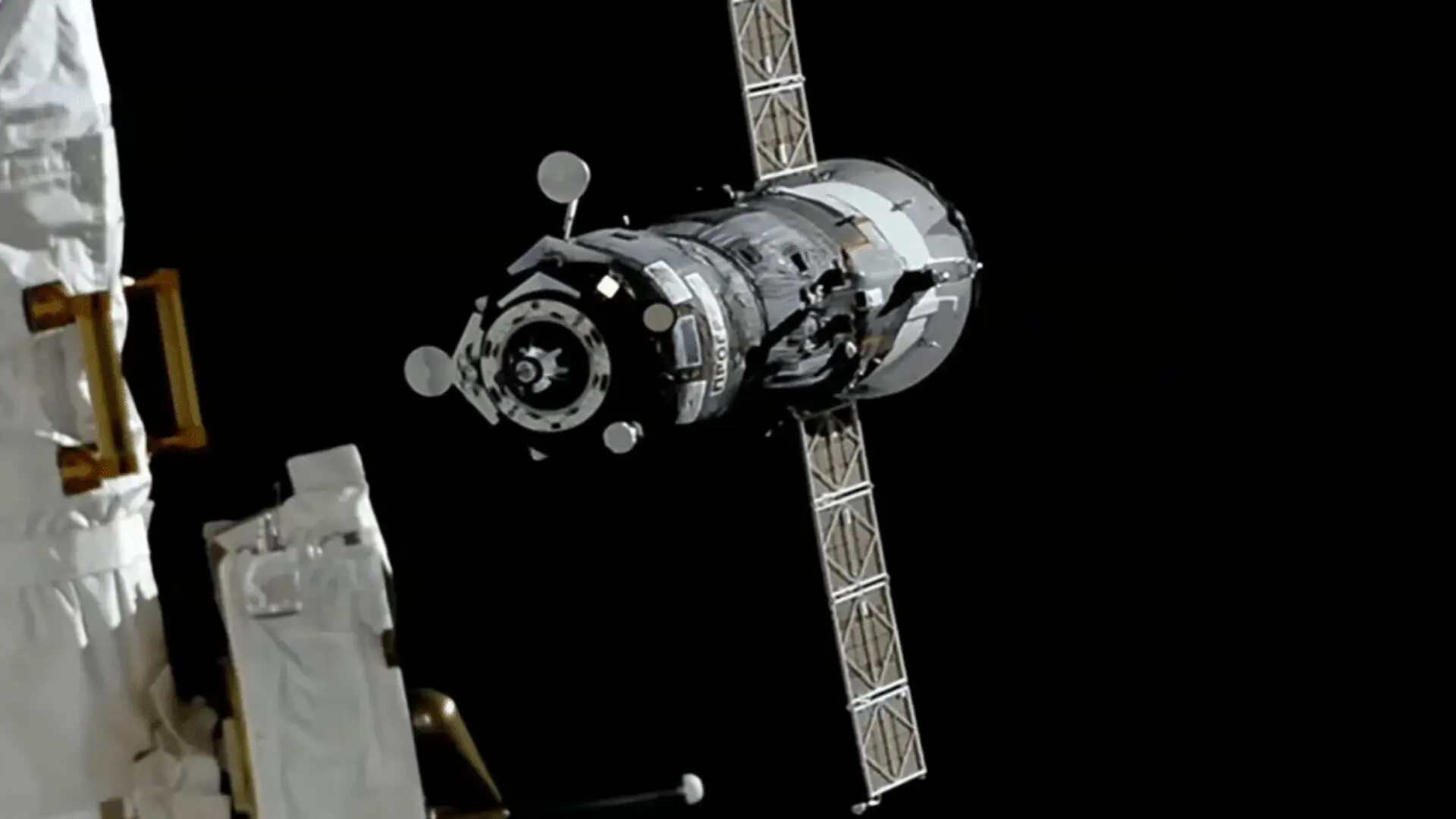
The International Space Station (ISS) received a vital delivery of supplies on September 19, as the Russian Progress 96 cargo spacecraft successfully completed its automated docking. According to NASA, the vehicle connected with the space-facing port of the station’s Poisk module at 9:44 a.m. EDT, bringing approximately three tons of food, fuel, and critical equipment to support the ongoing work of the Expedition 75 crew.
Logistics in Low Earth Orbit
The mission originated from the Baikonur Cosmodrome in Kazakhstan on September 16, where the Progress 96 craft launched atop a Soyuz rocket at 9:33 a.m. EDT. Following its ascent into orbit, the spacecraft executed a series of precise maneuvers to intercept the laboratory, utilizing automated rendezvous technology that allows for docking without manual intervention from the crew on board.
LIVE: After lifting off on Sept. 16, the Progress 96 cargo spacecraft is arriving at the @Space_Station with food, fuel, and supplies. It is scheduled to dock at 9:46am ET (1346 UTC). https://t.co/yduxA7HufN
— NASA (@NASA) September 19, 2026
This resupply run is part of a long-standing logistical framework that sustains the station as a premier microgravity research facility. With the ISS hosting continuous human presence for over two decades, the reliability of the Progress fleet has remained essential for providing the hardware and life-support materials necessary for scientific research and daily operations.
Extended Mission Profile and Disposal
The spacecraft is slated to remain docked to the orbiting laboratory for the next five months. During this tenure, the station crew will transfer the essential cargo, repurposing the vessel as a storage module. Once its utility is exhausted, the Progress 96 will be undocked to perform a controlled, destructive re-entry into Earth’s atmosphere.
This disposal method is a standard operating procedure for the Progress line, effectively managing the removal of waste and non-essential materials from the station. By integrating these logistics into the station’s operational rhythm, ground teams ensure that the Expedition 75 crew maintains a consistent supply chain for their experiments and habitat maintenance, reinforcing the international collaborative effort that keeps the station functional.
This article has been fact checked for accuracy, with information verified against reputable sources. Learn more about us and our editorial process.
Last reviewed on .
Article history
- Latest version
Reference(s)
- Garcia, Mark. “Progress 96 Cargo Spacecraft Docks to Station to Resupply Crew - NASA.”, September 19, 2026 NASA <https://www.nasa.gov/blogs/spacestation/2026/09/19/progress-96-cargo-spacecraft-docks-to-station-to-resupply-crew/>.
- “https://twitter.com/i/broadcasts/1NxaroVmRBNKj.” <https://t.co/yduxA7HufN>.
Cite this page:
- Posted by Karan Das