NASA Just Discovered a Massive New Crater on the Moon That Defies Typical Lunar Impacts
NASA scientists are investigating a mysterious new crater on the Moon discovered after a routine check of orbital imagery revealed an unexpected change.
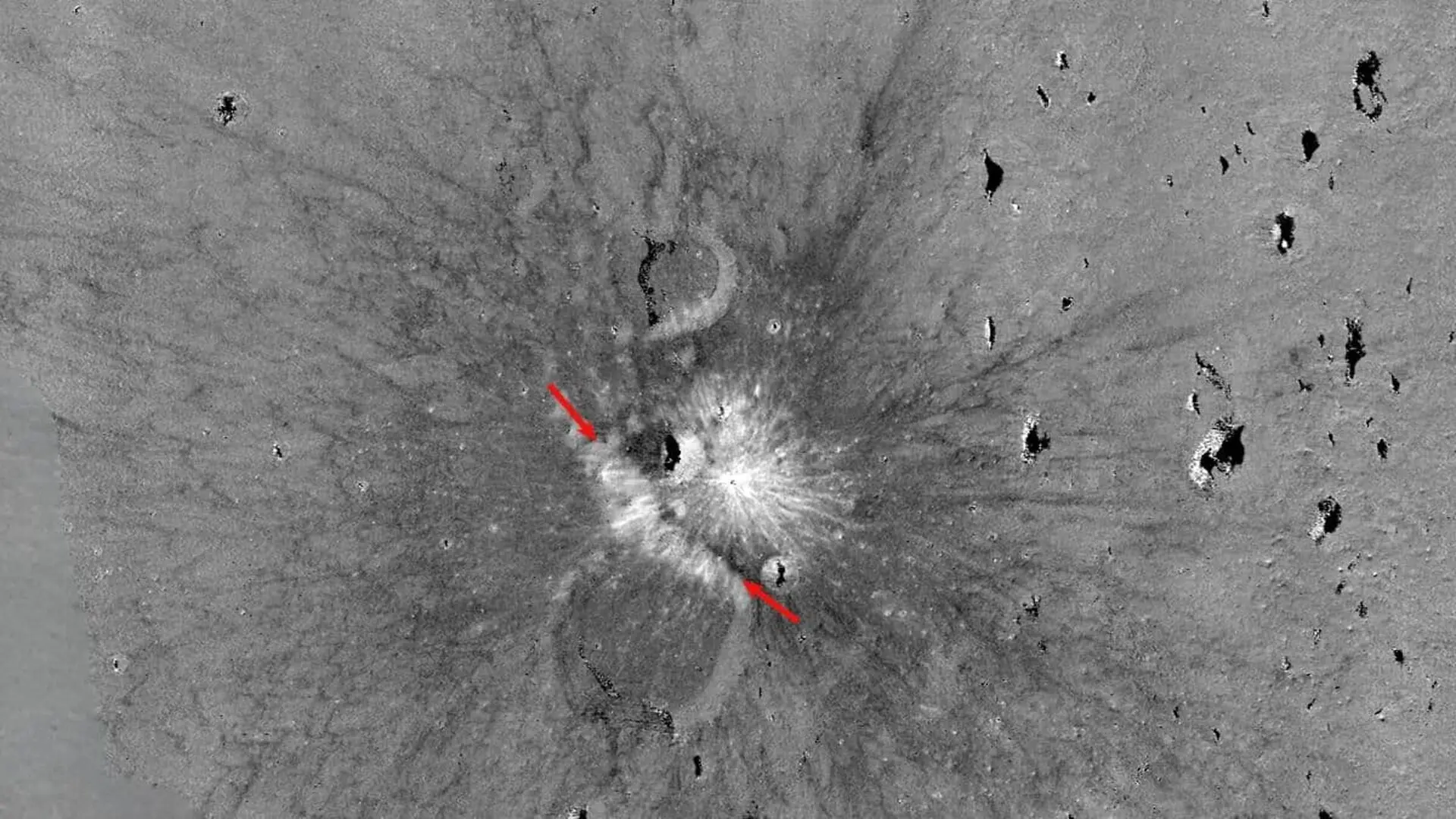
NASA scientists have identified the largest fresh impact crater ever recorded on the Moon, a discovery made possible by more than 17 years of continuous orbital surveillance. The crater, officially dubbed McGetchin, appeared after a significant celestial body—estimated to be the size of a three- to six-story building—slammed into the lunar surface sometime between April 11 and May 22, 2024.
The impact site, located on the Moon’s eastern edge, spans 728 feet in diameter and reaches a depth of 141 feet. For scale, the crater is wide enough to accommodate two football fields and deep enough to swallow three school buses stacked vertically. The finding was documented in the journal Science Advances.
A Routine Scan Reveals a Significant Lunar Scar
The discovery was made by Robert Wagner, an image-processing specialist at Intuitive Machines who works with data from the Lunar Reconnaissance Orbiter Camera (LROC). While systematically reviewing global maps of the Moon to identify surface changes, Wagner spotted a distinct, bright feature surrounded by a dark halo—the telltale signature of an explosive collision that had disrupted the lunar regolith.
“I just stopped, dropped everything, and started looking into what that spot was,” Wagner said.
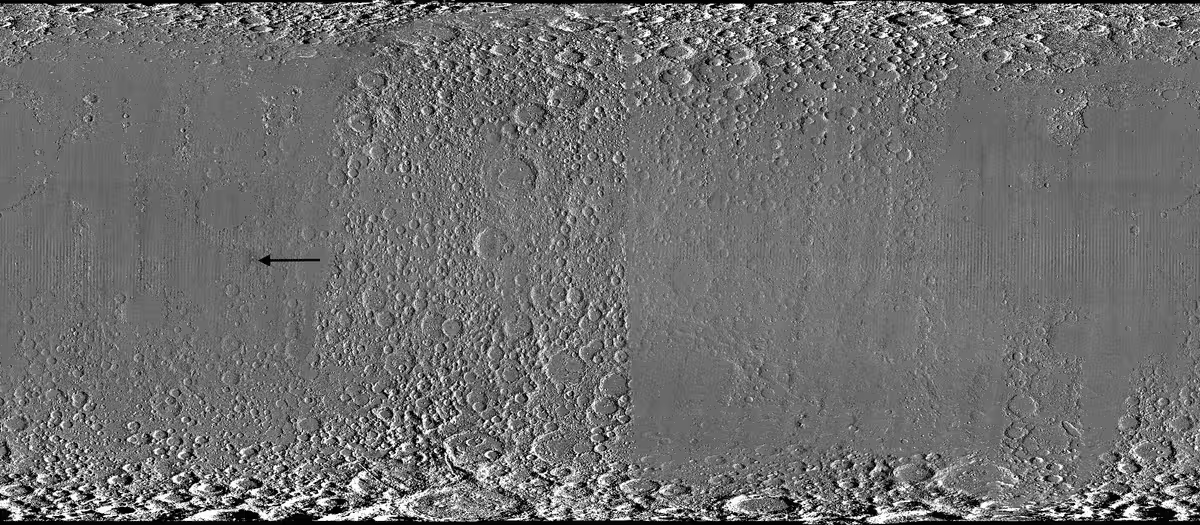
Events of this magnitude are rare, occurring roughly once every century or more. Since its launch, NASA’s Lunar Reconnaissance Orbiter (LRO) has tracked at least 1,000 new impact craters and roughly 100,000 other modifications to the lunar surface, though most are far smaller than McGetchin.
Thermal Anomalies Extend the Impact’s Reach
Beyond the physical crater, the collision significantly altered the surrounding environment. Using the LRO’s Diviner thermal radiometer, researchers discovered that the ground for about four miles around the impact site stays roughly 16 degrees Fahrenheit cooler at night than the surrounding terrain. This thermal anomaly suggests that the impact churned and reduced the density of the regolith, effectively diminishing its capacity to trap heat after the lunar sunset.
This discovery highlights how impacts can reshape the lunar landscape at a scale much larger than the crater itself, a factor that may prove crucial for future surface exploration and equipment deployment.
A Legacy of Persistent Surveillance
The ability to spot such an event relies on the LRO’s precise, ongoing mapping mission. Orbiting roughly 60 miles above the surface, the spacecraft’s instruments have provided enough resolution to catalog everything from seismic faults and landslides to historical landing sites and potential lava tubes.
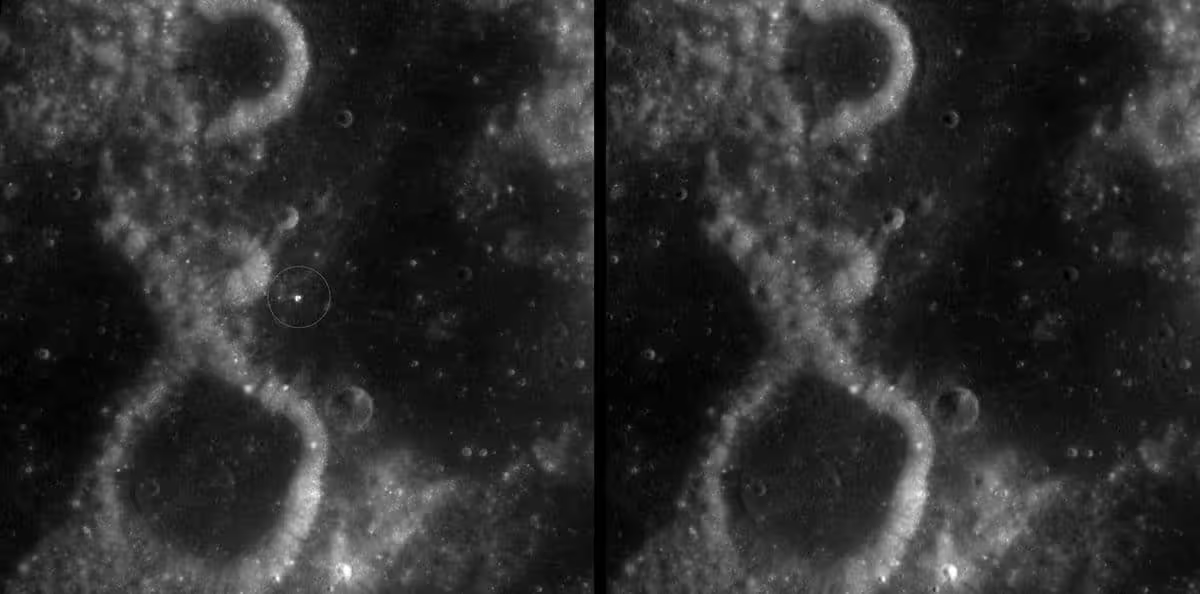
Wagner discovered the McGetchin site on October 24, 2025, by using automated software to compare historical frames from the LRO’s Wide-Angle Camera. Because the software often flags lighting variations as false positives, the final verification required a meticulous manual review.
“It was by far the most obvious impact debris pattern I’ve ever seen in one of these images,” Wagner noted.

Once the initial anomaly was flagged, the team utilized the LROC’s Narrow-Angle Camera to capture high-resolution imagery, achieving a detail level of approximately three feet per pixel to confirm the scale of the destruction.
This article has been fact checked for accuracy, with information verified against reputable sources. Learn more about us and our editorial process.
Last reviewed on .
Article history
- Latest version
Reference(s)
- Robinson, Mark S.., et al. “A new 222-m diameter lunar crater.” Science Advances, vol. 12, no. 38, September 18, 2026 American Association for the Advancement of Science (AAAS), doi: 10.1126/sciadv.aeh7812. <https://www.science.org/doi/10.1126/sciadv.aeh7812?__cf_chl_tk=QSsgOAh1ba3ZIu3iRROxvrJY4VkvgUw2VOma9WTGauk-1789651319-1.0.1.1-HE50af7LucfUqY.Urpy09pjgizNUL4pXtajbYrPuU9M>.
- Barry, Caela. “Lunar Reconnaissance Orbiter - NASA Science.”, November 29, 2017 NASA <https://science.nasa.gov/mission/lro/>.
- “Diviner - Moon Instruments - NASA Jet Propulsion Laboratory | NASA Jet Propulsion Laboratory (JPL).” <https://www.jpl.nasa.gov/missions/diviner-lunar-radiometer-experiment-dlre/>.
- <https://www.si.edu/object/camera-wide-angle-lroc:nasm_A20160055000>.
Cite this page:
- Posted by Karan Das