ESA Reveals Stunning Purple Landscapes Hidden at the Martian South Pole
Scientists have uncovered unexpected hues on Mars, revealing a rare purple ice world hidden near the planet’s southern pole in new spacecraft data.
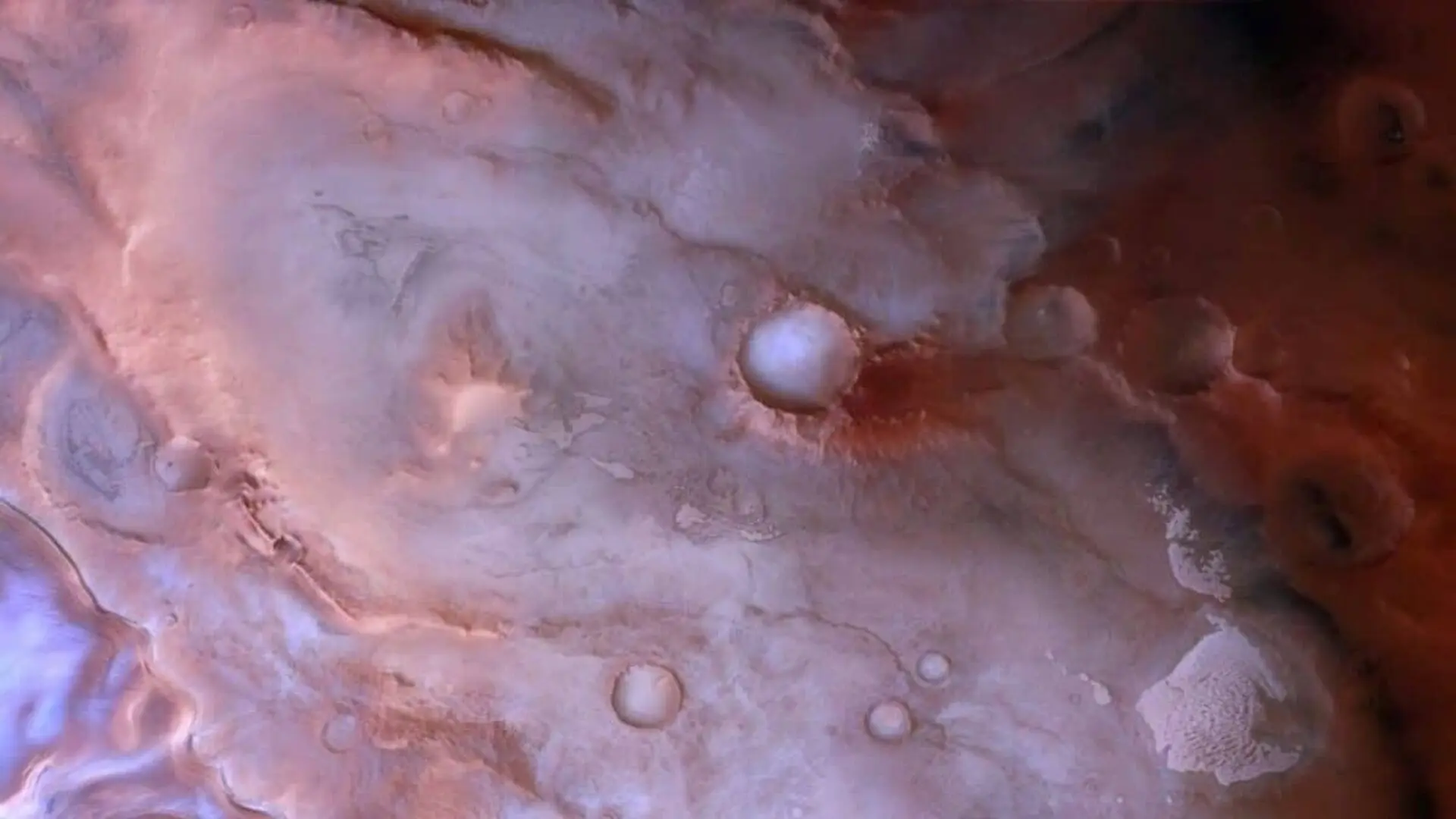
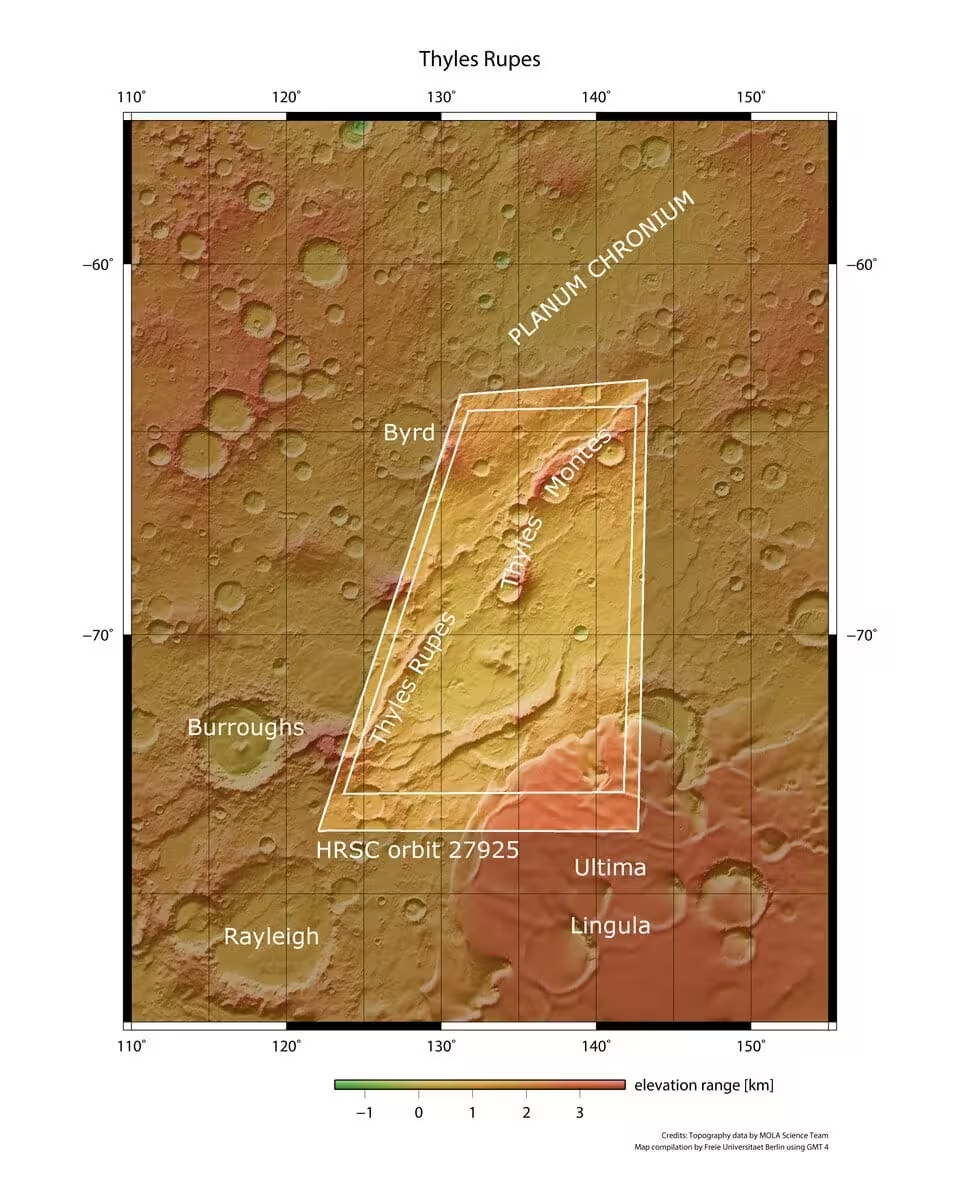
The European Space Agency’s Mars Express orbiter has captured a striking, vibrant view of the Martian south pole, revealing a landscape that defies the planet’s standard rusty-red reputation. New imagery from the spacecraft’s High Resolution Stereo Camera (HRSC) highlights a region known as Thyles Rupes, where the surface is painted in unexpected hues of pink, purple, and deep red.
While the iconic crimson color of Mars is largely the result of oxidized iron scattered across its plains, the planet’s true mineralogical diversity is far more complex. Recent data from the mission underscore that the surface is a mosaic of volcanic materials, shifting dust, and seasonal ice deposits.
An Unforeseen Spectrum of Color
ESA researchers note that the unique violet and rose tones observed at Thyles Rupes are not the signature of a single pigment. Instead, they arise from the interplay between low-angle morning sunlight, atmospheric dust, and thin layers of frost. These berry-like colors are particularly prominent where frost and dust have become intimately mixed across the rugged terrain, as observed by the Mars Express mission.
Darker patches within the frame provide a glimpse into the planet’s volcanic heritage. These areas are rich in mafic minerals such as pyroxene and olivine, materials typically sequestered within Earth’s mantle rather than exposed on its surface. Conversely, the brighter, pale regions visible near the base of the image represent frozen carbon dioxide and glacial remnants connected to the southern polar cap, which remain evident during the Martian spring.
Ancient Tectonics Etched in Stone
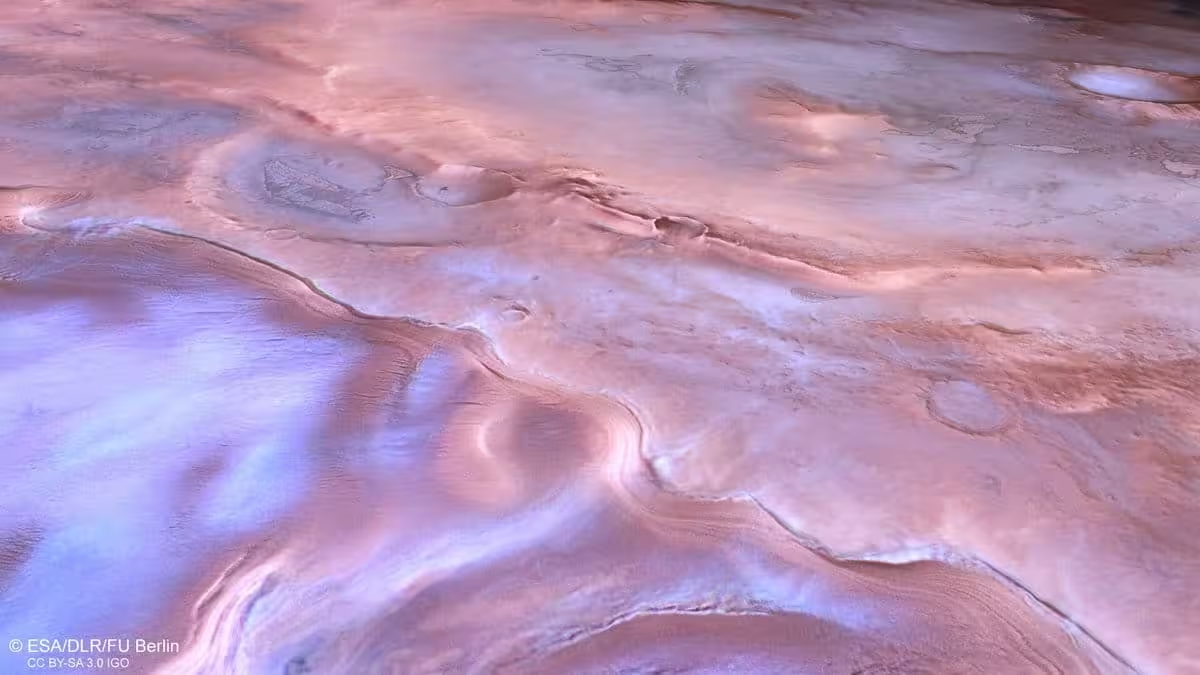
Beyond its colorful veneer, the Thyles Rupes cliff system serves as a geological archive of the Red Planet’s volatile history. These steep escarpments, which soar more than 1 kilometer above the surrounding southern highlands, were forged by internal stresses billions of years ago. As the planet’s interior cooled and its crust contracted, segments of the surface were forced upward, creating these massive structural features.
The surrounding landscape is heavily cratered, offering a timeline of the region’s development. Some impact sites are bisected by the cliffs, indicating that these craters predate the geological uplift, while others sit undisturbed atop the formations, suggesting they were formed long after the tectonic activity had subsided.
Mapping the Martian Surface
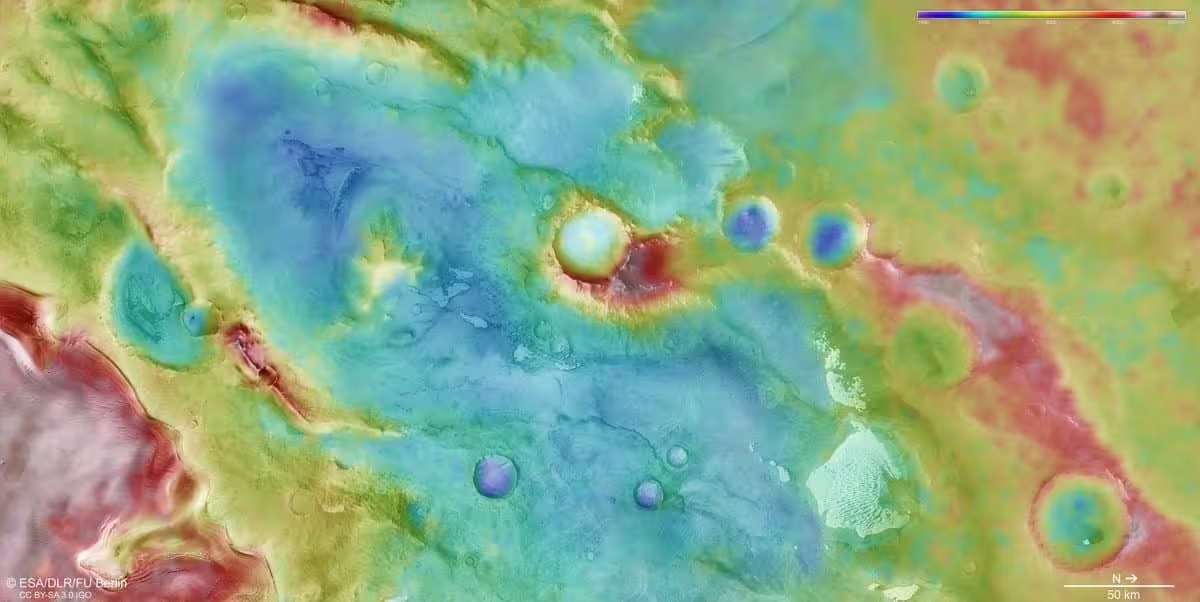
The mission, which has been operational since 2003, continues to utilize the High Resolution Stereo Camera to build high-fidelity, three-dimensional maps of the surface. Recent scans of the Thyles Rupes area also reveal extensive aeolian activity, with wind patterns carving out a variety of sand dunes, including longitudinal forms and complex, curved barchanoid ridges.
By capturing these diverse landscapes, Mars Express has redefined our understanding of the planet as a geologically dynamic world. These detailed observations—ranging from volcanic sands to clay and sulfate deposits—continue to challenge and refine our models of how Mars evolved over eons.
This article has been fact checked for accuracy, with information verified against reputable sources. Learn more about us and our editorial process.
Last reviewed on .
Article history
- Latest version
Reference(s)
- “Purple swirls on the Red Planet.” <https://www.esa.int/Science_Exploration/Space_Science/Mars_Express/Purple_swirls_on_the_Red_Planet>.
- <https://www.esa.int/ESA_Multimedia/Images/2026/09/The_Thyles_Rupes_region_of_Mars_in_3D>.
- “1567253672047 NeukemWeb.” <https://sci.esa.int/documents/33745/35957/1567253672047-NeukemWeb.pdf>.
Cite this page:
- Posted by Karan Das