Astronomers Just Discovered the Youngest Planet Ever Seen and It Challenges Our Models
Astronomers have discovered Elias 2-24 b, the youngest planet ever detected, offering groundbreaking new insights into the complex process of world formation.
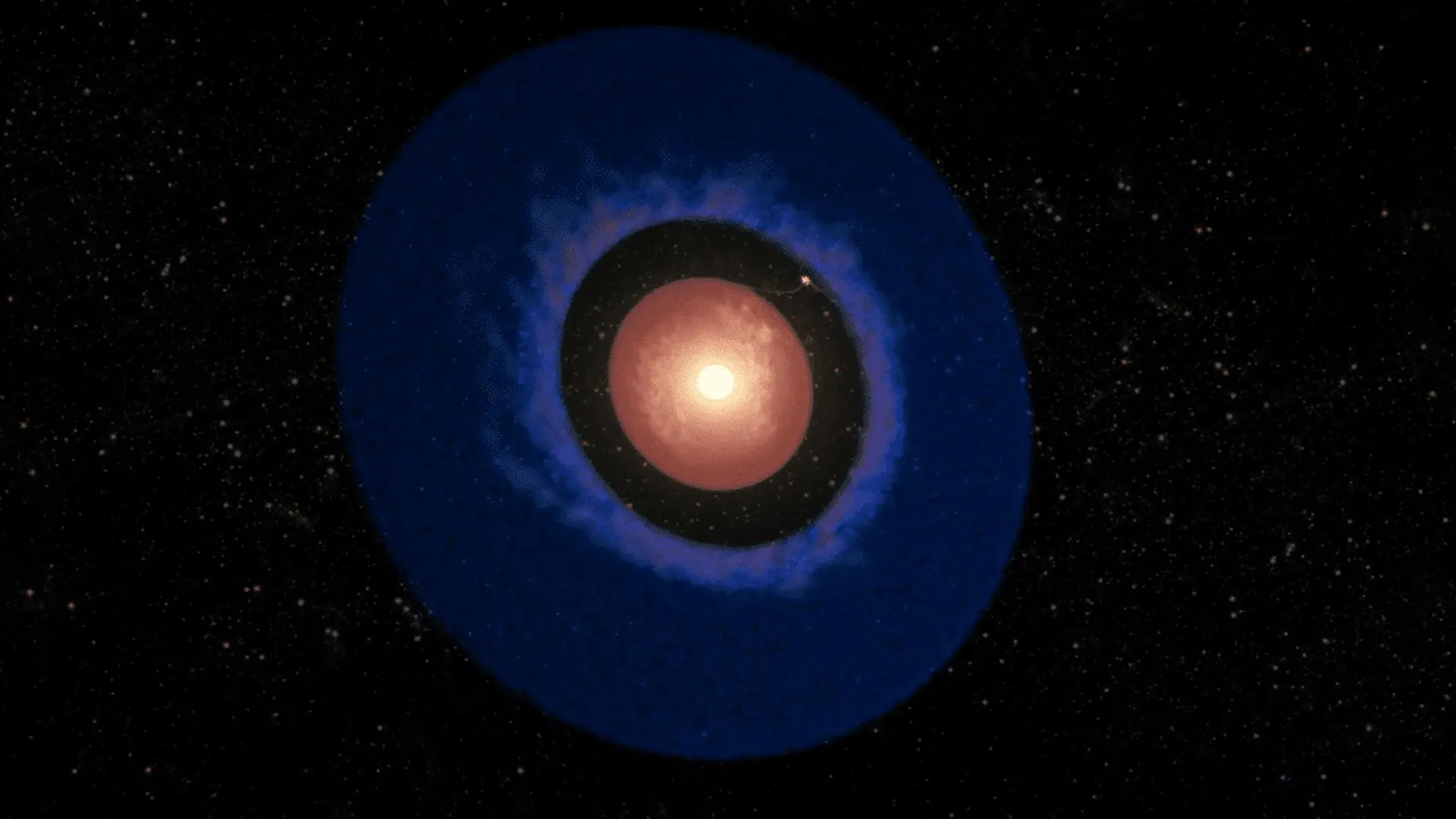
Astronomers have identified a newborn world, designated Elias 2-24 b, which currently holds the title for the youngest planet ever discovered. According to findings published in The Astrophysical Journal Letters, this nascent planet offers an unprecedented glimpse into the chaotic and rapid processes that govern how planetary systems originate around host stars.
A Glimpse Into the Cradle of Planets
Located within the ρ Ophiuchi star-forming region, the planet is still deeply embedded in the dense, swirling nursery of gas and dust from which it emerged. The entire stellar system is estimated to be approximately 1 million years old, a mere blink of an eye in cosmic terms. This age makes Elias 2-24 b significantly younger than previous record-holders, providing researchers with a unique opportunity to study the early stages of planetary evolution.
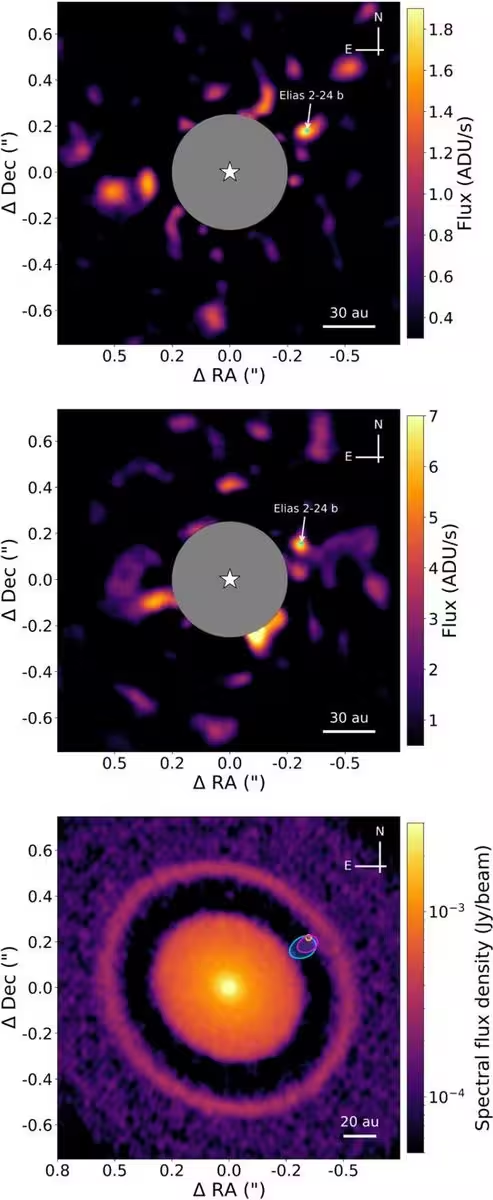
The discovery was achieved by synthesizing data from multiple advanced observational facilities. By examining the protoplanetary disk surrounding the young star, researchers identified clear gaps and rings within the debris. These structures are classic signatures of a massive body sweeping through the disk, gathering material as it orbits. The placement of Elias 2-24 b within one of these identified gaps confirmed that the planet is actively carving its path through the surrounding gas and dust.
“The planets should be found within the gaps, since they are carving them,” noted Bernardi, one of the study’s researchers. “And that’s exactly where we found Elias 2-24 b.”
Challenging Current Astrophysical Models
The existence of such a young planet presents a significant challenge to established theories of planet formation. Standard models have long suggested that the process of aggregating dust into a substantial, disk-shaping planet requires millions of years. Even the previous record-holders—planets orbiting the stars PDS 70 and WISPIT 2—are over 5 million years old, and their existence already strained existing simulations.
“Elias 2-24 b shows us that even our best planet-formation models are still missing some important processes,” explained Lucas Cieza, a co-author of the study and professor at the Instituto de Estudios Astrofísicos in Chile. The findings suggest that planet-building may occur far more efficiently than previously understood, likely involving complex interactions between gas flows and dust that current simulations have yet to fully capture.
Cieza highlighted the difficulty of the task, noting that while the galaxy is constantly producing new systems, the “baby” phase of a planet’s life remains largely obscured from modern sensors. “We are mostly blind to these baby planets right now,” he said.
The Next Generation of Planetary Discovery
While Elias 2-24 b sits at the very limit of current technological detection, its discovery signals a shift in how astronomers approach the search for infant worlds. The team emphasized that the collaboration between multiple telescopes was essential to confirming the find, a strategy that will become increasingly vital as researchers push further into the “blind spots” of star formation.
The upcoming deployment of NASA’s Nancy Grace Roman Space Telescope is expected to further revolutionize this field. With its superior sensitivity and wide-field imaging capabilities, the observatory should be able to identify a larger population of young, embedded planets. This expanded catalog will allow scientists to move beyond individual case studies and begin to understand the diversity of planetary systems at their moment of birth.
“This is just the beginning of a new era of discovery,” Cieza concluded. “It’s incredible that with modern technology, we are actually able to see planet formation in action, and Roman will take planet hunting to the next level.”
This article has been fact checked for accuracy, with information verified against reputable sources. Learn more about us and our editorial process.
Last reviewed on .
Article history
- Latest version
Reference(s)
- Bernardi, Andrea., et al. “Searching for Embedded Protoplanets with the Keck/NIRC2 Vortex Coronagraph: Confirmation of a Core-accretion Planet in the Narrow Gap of the Elias 2-24 Disk.” The Astrophysical Journal Letters, vol. 1009, no. 1, September 16, 2026, pp. L3 American Astronomical Society, doi: 10.3847/2041-8213/ae9bb6. <https://iopscience.iop.org/article/10.3847/2041-8213/ae9bb6>.
Cite this page:
- Posted by Karan Das