China Is Nearing a Historic Mars Sample Return Mission That Could Beat NASA
A new space race for Mars is heating up as China accelerates its sample return mission while NASA’s plans face growing uncertainty.
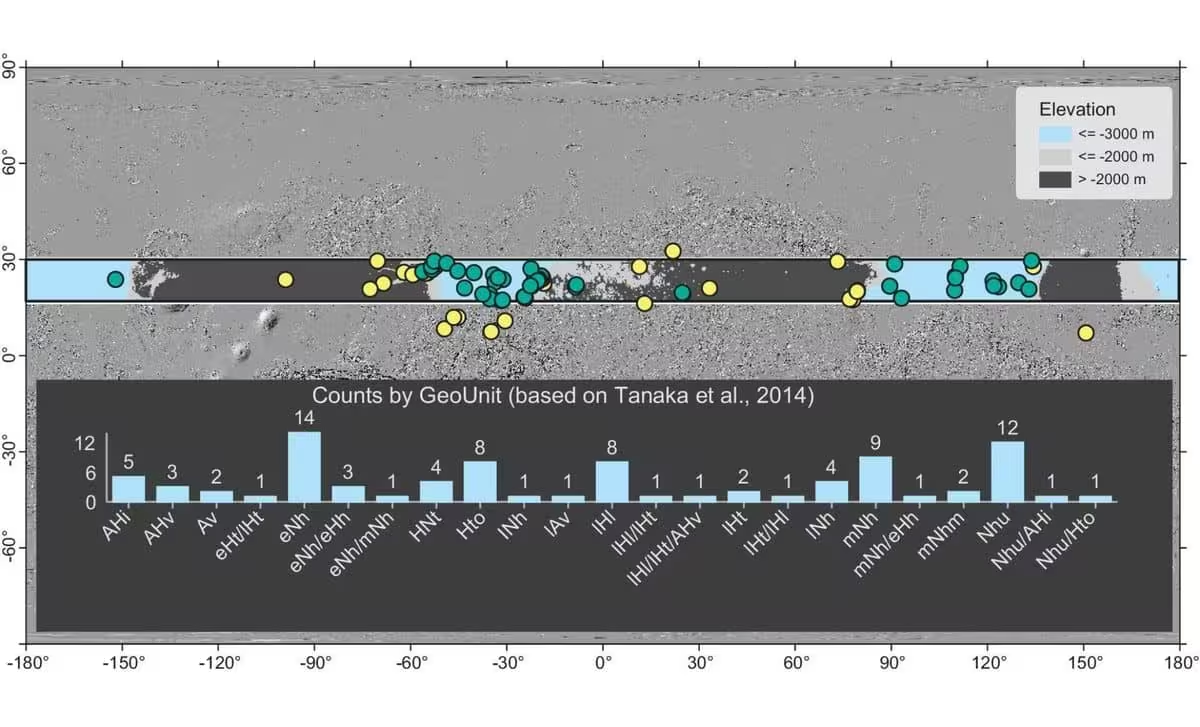
China is moving into the final phase of site selection for its ambitious Tianwen-3 mission, a bold effort to retrieve Martian soil and rock samples for analysis back on Earth. By narrowing down a massive field of 86 potential locations to a shortlist of eight, engineers and scientists are setting the stage for a mission currently targeted for a 2028 launch, with a high-stakes return trip scheduled for 2031.
The mission represents a potential turning point in planetary science. While orbital reconnaissance and robotic rovers have provided invaluable data, bringing physical samples to terrestrial laboratories would allow for a level of analytical precision that is impossible to replicate with remote instrumentation. The success of this endeavor would provide unprecedented insights into the Red Planet’s geological history and potential habitability.
Refining the Search for Martian Secrets
The selection process for a landing zone is driven by a complex set of scientific criteria and technical constraints. Researchers are meticulously evaluating candidate sites based on their age, evidence of past liquid water, and the structural integrity of the terrain. A major focus for the team is the identification of clay-rich minerals, which are highly regarded for their ability to preserve organic compounds and long-lost biological signatures.
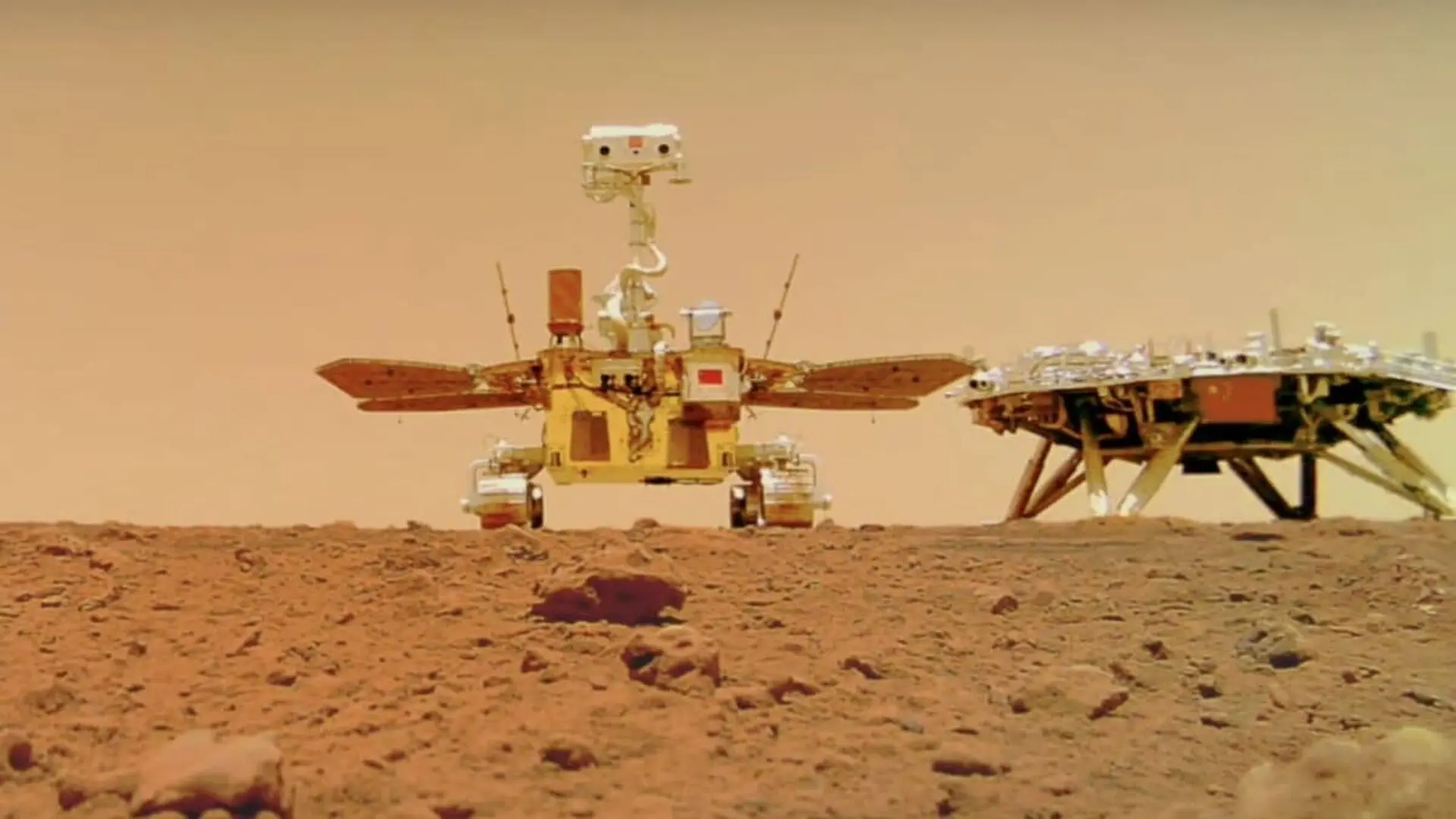
Geographical factors play an equally vital role in the planning. Because Mars possesses a thin atmosphere, the landing system requires sufficient air density to ensure a safe touchdown. This technical requirement has already sidelined several scientifically alluring regions. Historically, Chinese planners have looked toward the northern lowlands, including Amazonis Planitia, Chryse Planitia, and Utopia Planitia—the latter of which served as the successful touchdown site for the Zhurong rover during the Tianwen-1 campaign in 2021. A definitive site choice is expected by the end of 2026.
Deep Sampling and Complex Logistics
Tianwen-3 is designed to penetrate beneath the harsh, radiation-exposed surface of Mars, which frequently destroys organic molecules over geological timescales. The lander will be equipped with a sophisticated drill capable of reaching depths of approximately two meters. By accessing these protected subsurface layers, scientists hope to recover pristine material that has been shielded from the planet’s oxidizing environment.
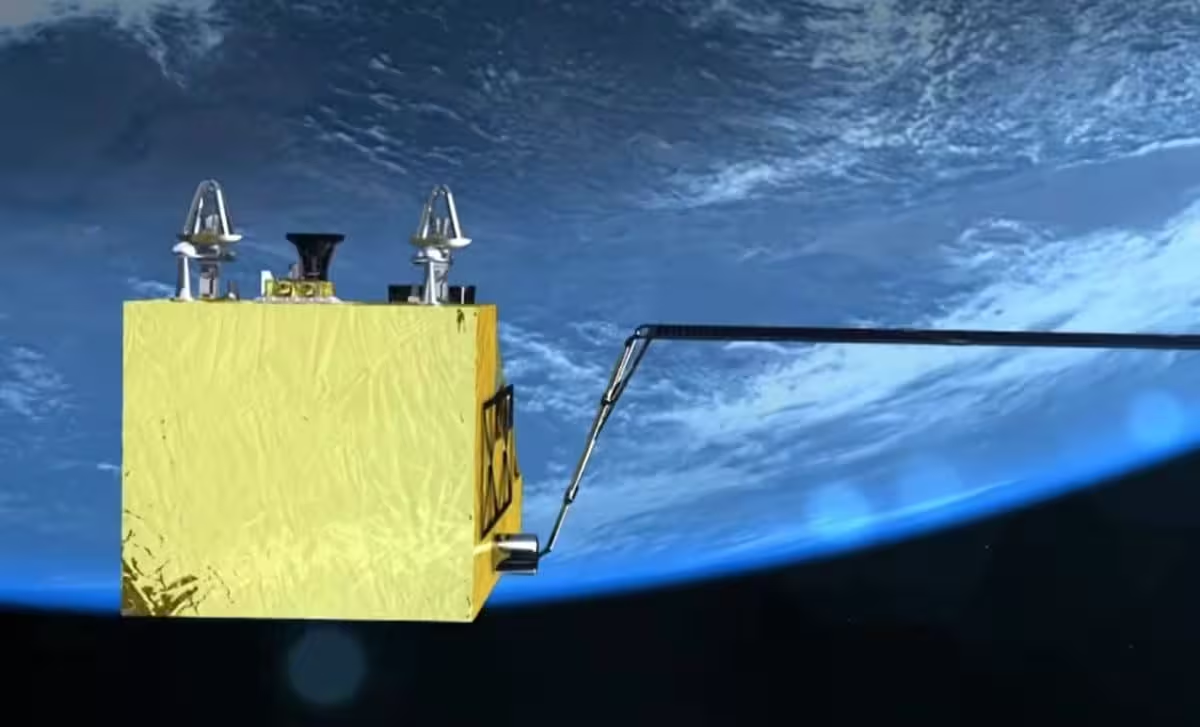
Beyond the lander, the mission will utilize a small drone to extend the scope of exploration, allowing for the collection of samples across a wider geographic range. This multi-layered approach requires a significant logistical feat: the use of two Long March 5 heavy-lift rockets launched from the Wenchang Space Launch Site. One launch will deliver the landing and ascent hardware, while the second will position the orbiter and Earth-return vessel. This complex choreography is timed to coincide with the orbital alignment of Earth and Mars, opening a launch window between December 2028 and January 2029.
International Competition and the Search for Life
The rapid advancement of the Chinese program has highlighted a disparity in international efforts, particularly concerning NASA’s own Mars Sample Return project. Currently, the US initiative remains in a state of flux, lacking a confirmed launch schedule for retrieving samples already gathered by the Perseverance rover. Scott Hubbard, formerly of NASA’s Mars program, has suggested that if China maintains its current trajectory, it could trigger a “Sputnik moment” for the United States.
While the search for microbial signatures remains a primary goal, researchers are keeping an open mind regarding the possibility of exotic life forms that might fundamentally differ from Earth’s biological framework. Global interest in Mars remains at an all-time high; the European Space Agency is also preparing to send its Rosalind Franklin rover to the clay-rich Oxia Planum in October 2028. However, with clear milestones set through 2031, China appears intent on winning the race to bring the first-ever Martian surface samples back to Earth.
This article has been fact checked for accuracy, with information verified against reputable sources. Learn more about us and our editorial process.
Last reviewed on .
Article history
- Latest version
Reference(s)
- Cermak, Alicia. “Amazonis Planitia - NASA Science.”, March 1, 2007 NASA <https://science.nasa.gov/resource/amazonis-planitia/>.
- Cermak, Alicia. “Chryse Planitia Surfaces - NASA Science.”, December 30, 2007 NASA <https://science.nasa.gov/resource/chryse-planitia-surfaces/>.
- Alanis, Rafael. “Utopia Planitia - NASA Science.”, June 5, 2002 NASA <https://science.nasa.gov/photojournal/utopia-planitia/>.
- Laboratory, Jet. “The Zhurong Rover Explores Utopia Planitia | NASA Jet Propulsion Laboratory (JPL).” <https://www.jpl.nasa.gov/images/pia24914-the-zhurong-rover-explores-utopia-planitia/>.
- Society, The. “Tianwen-1 and Zhurong, China's Mars orbiter and rover.”, April 19, 2020 The Planetary Society <https://www.planetary.org/space-missions/tianwen-1>.
Cite this page:
- Posted by Karan Das