Scientists Just Successfully Fired a Deep Space Laser After 9 Years of Silence
After years of silence, the BepiColombo mission’s BELA laser has successfully fired, paving the way for a detailed 3D map of Mercury’s mysterious surface.
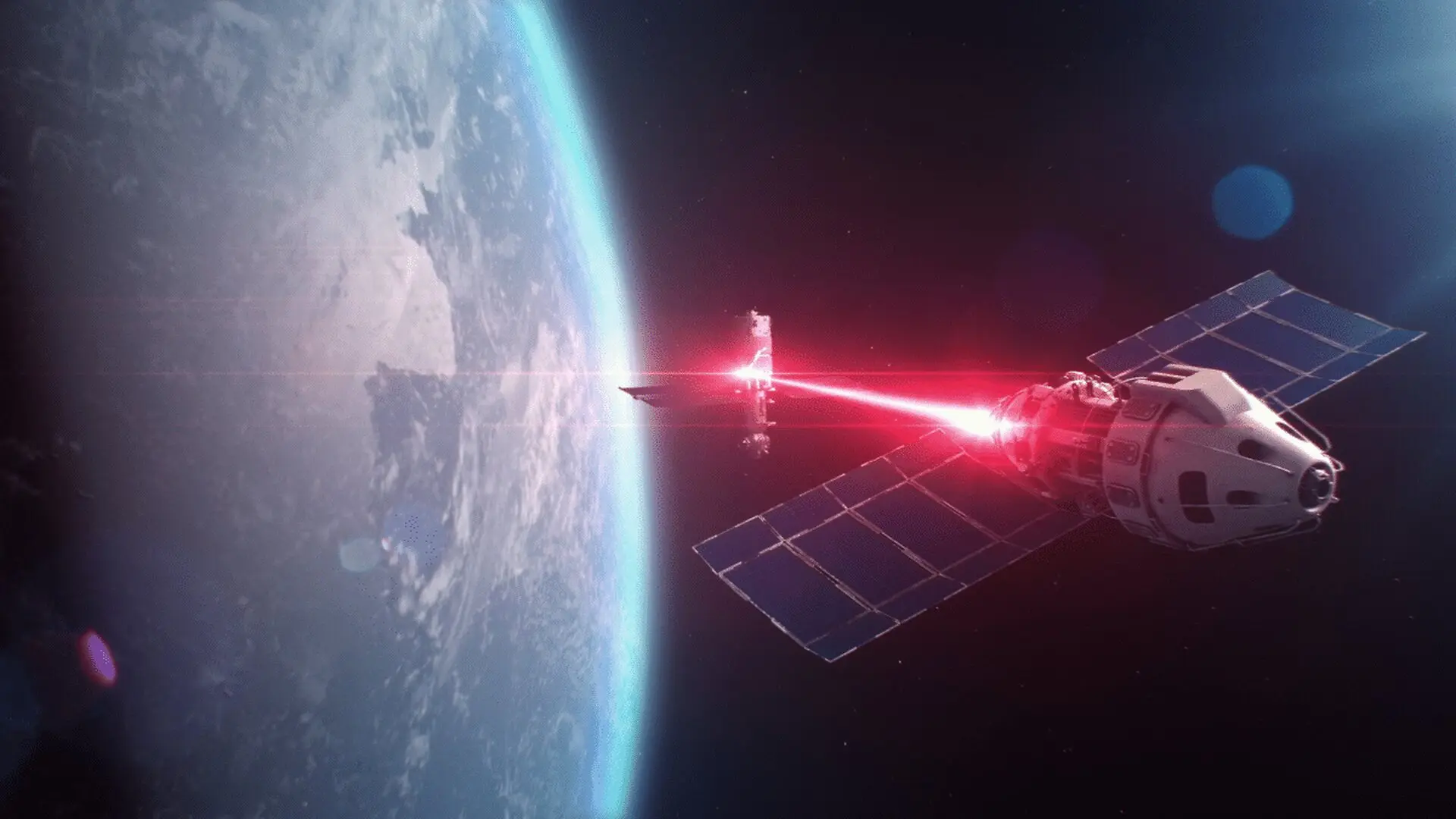
After a decade of dormancy, a critical piece of technology designed to map Mercury in three dimensions has roared back to life. The BepiColombo Laser Altimeter (BELA) was successfully activated on September 14, 2026, marking a pivotal milestone for the joint European and Japanese BepiColombo mission. Following years of interplanetary travel, the instrument has confirmed its health and readiness to begin its high-stakes task of surveying the innermost planet of our solar system.
A Long-Awaited Activation
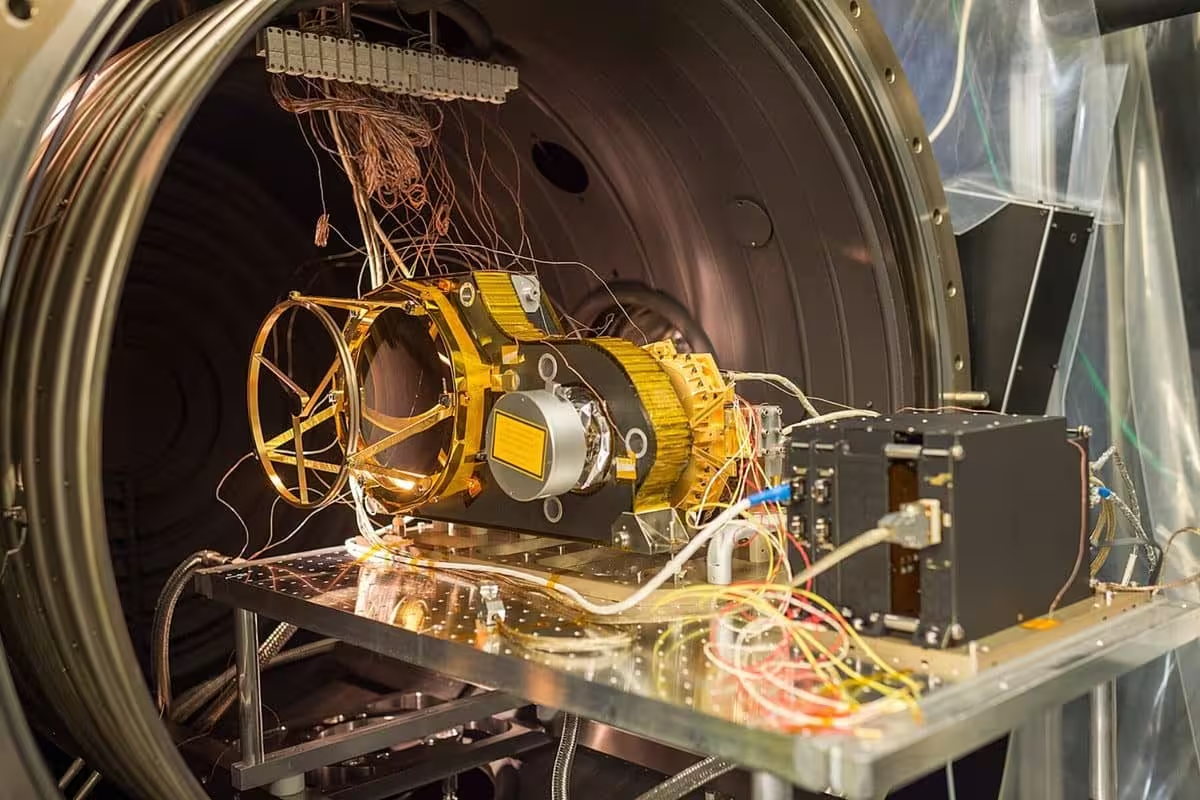
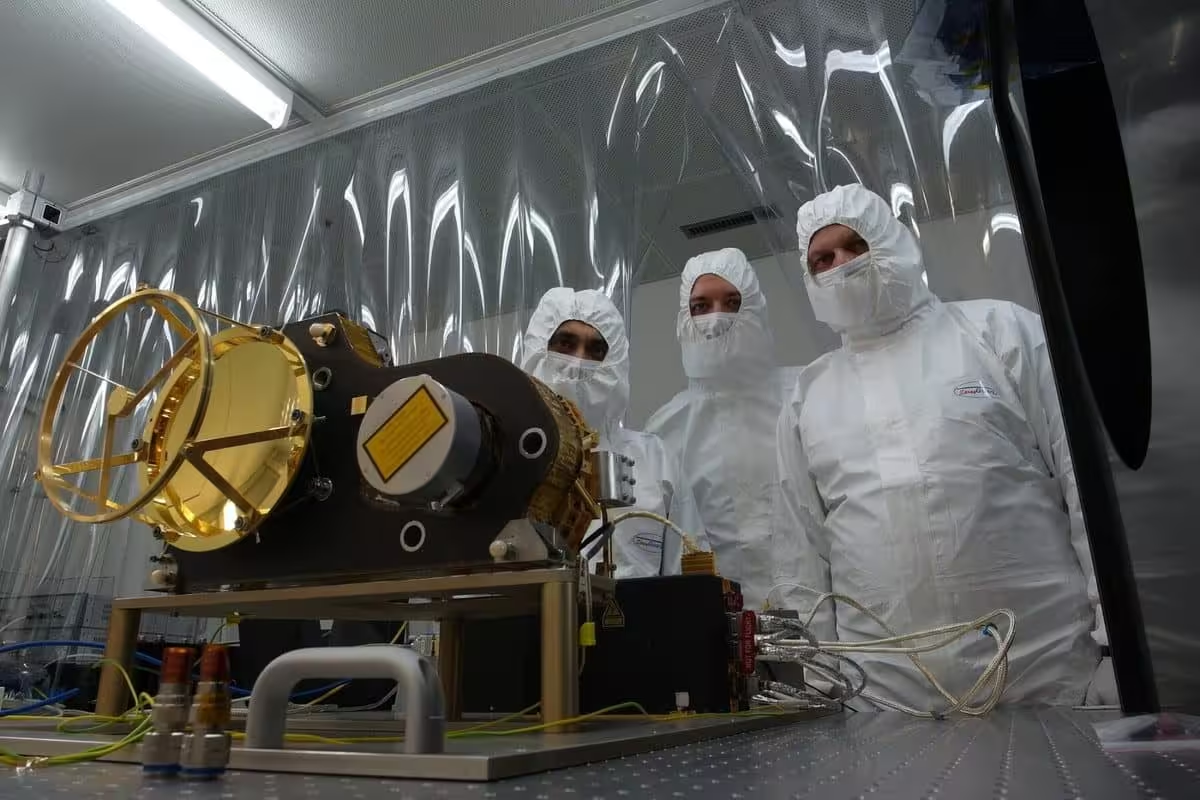
The successful test provided a sigh of relief for the international team of engineers and scientists behind the instrument, which was developed by a consortium led by the University of Bern and the German Aerospace Center (DLR), alongside partners from the Max Planck Institute for Solar System Research and the Institute of Astrophysics of Andalusia (IAA-CSIC). BELA last saw a full functional test in a laboratory setting in 2016, shortly before it was integrated with the European Space Agency’s (ESA) Mercury Planetary Orbiter (MPO). Having survived the rigors of launch and eight years of travel through the harsh conditions of the inner solar system, the instrument’s reawakening was far from a routine task.
Testing Systems in the Void
To verify the integrity of the laser system, operators opted for a cautious, tiered activation approach. Positioned roughly 200 million kilometers from Earth, the spacecraft fired a 10-second burst of more than 100 infrared pulses into the vacuum of space. While these pulses were not directed at Mercury, they allowed the team at the University of Bern to verify that the laser could effectively characterize its own performance after nearly a decade of silence. Once the data returned, confirming nominal operation, the team escalated the tests to include a 10-minute operation and, eventually, a cycle lasting over an hour.
“Commissioning is meant to be undramatic,” noted Dr. Liliane Burkhard, an instrument scientist at the University of Bern’s Physics Institute. The staged approach allowed the team to monitor for potential issues without risking the instrument’s longevity. These tests were essential for gauging the system’s thermal behavior, ensuring that the laser remains stable as it prepares for the extreme temperature fluctuations of the Mercurian environment.
Unlocking Mercury’s Geological Secrets
Once the BepiColombo mission officially commences its scientific phase, BELA will shift from testing to exploration. By firing infrared pulses at the planet’s surface and measuring the return time with extreme precision, the altimeter will create a high-fidelity 3D map of Mercury’s topography. This data will allow researchers to analyze impact craters, mountain ranges, and other surface features in ways previously impossible. As noted by Antoine Pommerol, co-principal investigator for BELA, the instrument aims to provide a “three-dimensional representation of Mercury with unprecedented accuracy,” serving as a key tool in deciphering the planet’s complex geological history.
The Final Approach
This success comes at a critical juncture for BepiColombo, which has been in transit since its October 2018 launch. The mission is currently undergoing the complex transition from a cruise stack—comprising the Mercury Transfer Module, the MPO, and the Japanese Magnetospheric Orbiter (Mio)—into its final orbital configuration. As reported by Phys.org, the activation of the heaviest instrument on the MPO is a strong signal that the hardware is ready for the challenges ahead.
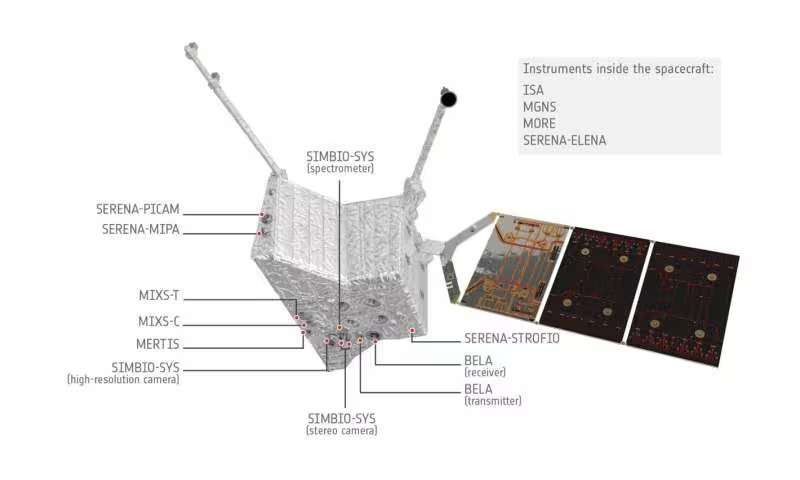
The mission timeline is set to accelerate in the coming months. The JAXA-led Mio orbiter is slated for deployment on December 9, 2026, followed by the MPO’s insertion into its final science orbit in March 2027. Routine science operations are scheduled to begin in earnest on April 6, 2027. For now, the successful firing of the laser serves as a quiet victory, proving that a device built to withstand a decade of uncertainty is ready to turn its lens toward the surface of the solar system’s most enigmatic terrestrial neighbor.
This article has been fact checked for accuracy, with information verified against reputable sources. Learn more about us and our editorial process.
Last reviewed on .
Article history
- Latest version
Reference(s)
- “BepiColombo Laser Altimeter - BELA.” BepiColombo Laser Altimeter - BELA <https://www.bela.space.unibe.ch/>.
- <https://phys.org/news/2026-09-laser-altimeter-bela-ready-explore.html>.
Cite this page:
- Posted by Karan Das