Archaeologists Discover 13 Ancient Mummies With Gold Tongues Designed for the Afterlife
Archaeologists have discovered a forgotten burial chamber featuring gilded masks on the deceased alongside an array of extraordinary ancient paintings.
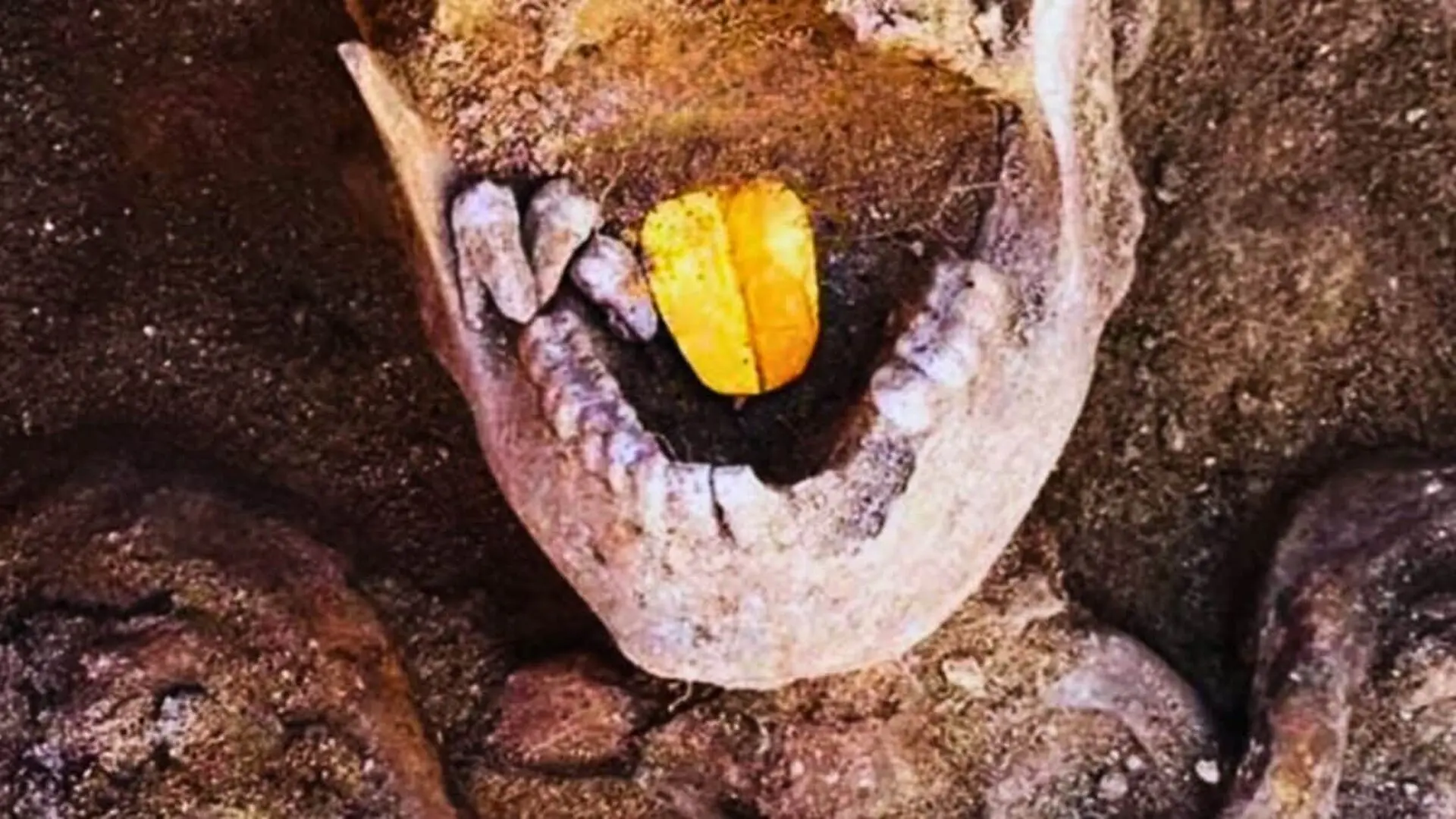
Archaeologists working in the Minya Governorate of Middle Egypt have unearthed a cache of mummies featuring a peculiar and symbolic funerary practice: gold tongues. During a recent excavation of a subterranean burial complex at the site of Oxyrhynchus, a joint mission from the University of Barcelona and the Institute of the Ancient Near Eastern Studies discovered 13 mummified remains, each fitted with a thin, tongue-shaped piece of gold where their natural organ once sat.
The Egyptian Ministry of Tourism and Antiquities confirmed that the interments date to the Ptolemaic period, spanning from 304 to 30 B.C. While gold tongues have been identified in previous excavations, the concentration found at this specific location suggests a consistent, perhaps even routine, practice for the embalmers working in this necropolis.
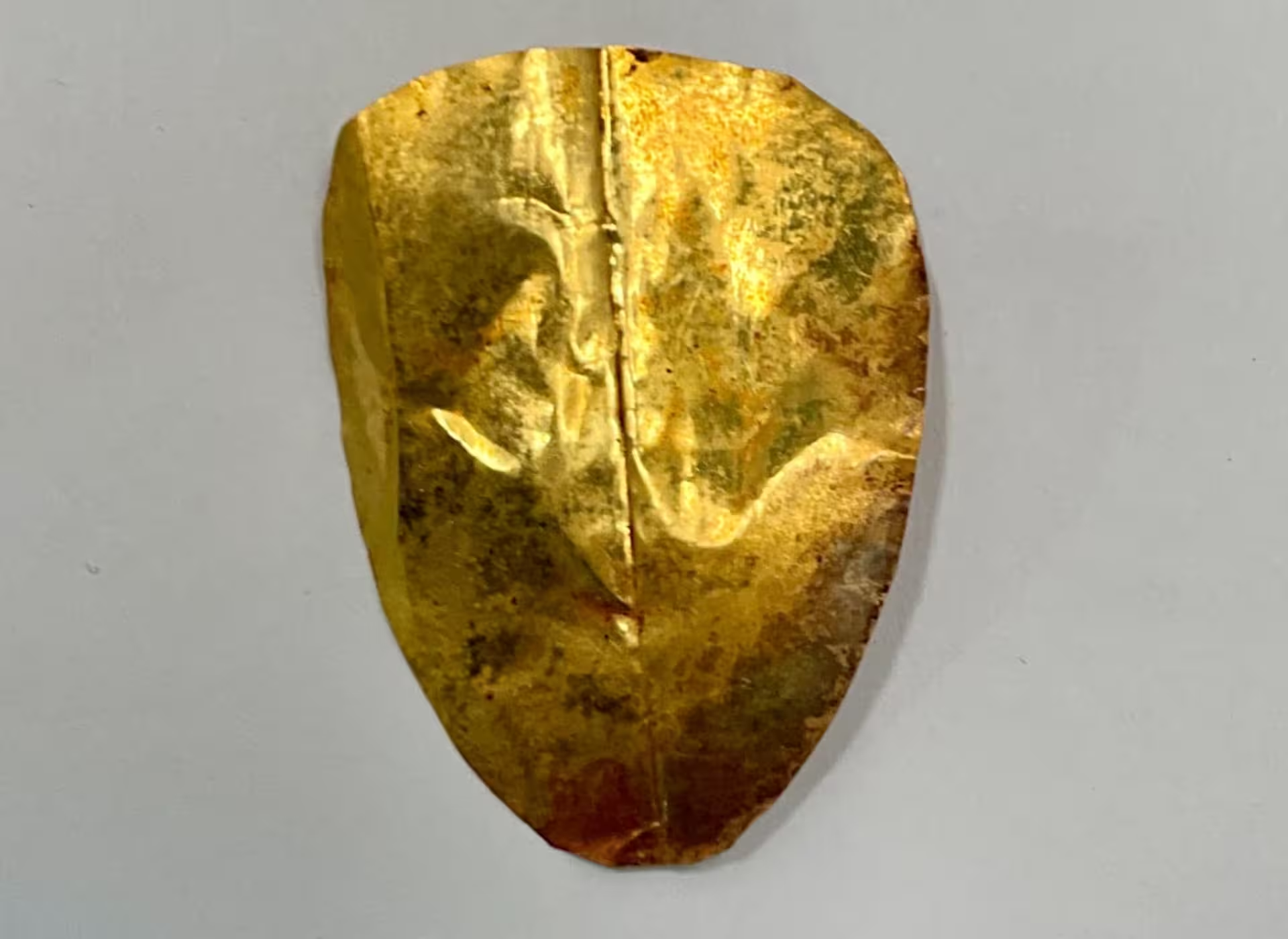
The placement of gold within the mouth held profound significance in Egyptian cosmology. Jennifer Houser Wegner, a curator at the Penn Museum, explains that the metal was prized for its eternal luster and resistance to decay. Because the ancient Egyptians believed gold represented the flesh of the gods, these artifacts were intended to grant the deceased the power of speech, allowing them to communicate effectively when facing Osiris in the afterlife.
Salima Ikram, an Egyptology professor at the American University in Cairo, noted that the high frequency of these artifacts at Oxyrhynchus is particularly revealing. She suggests the deceased may have been members of an elite class tied to local temples or animal cults, though she does not rule out the possibility that the ritual was simply a standard service offered by the local workshop. This latest discovery adds to the 16 gold tongues previously recovered at the same site by the same archaeological team.
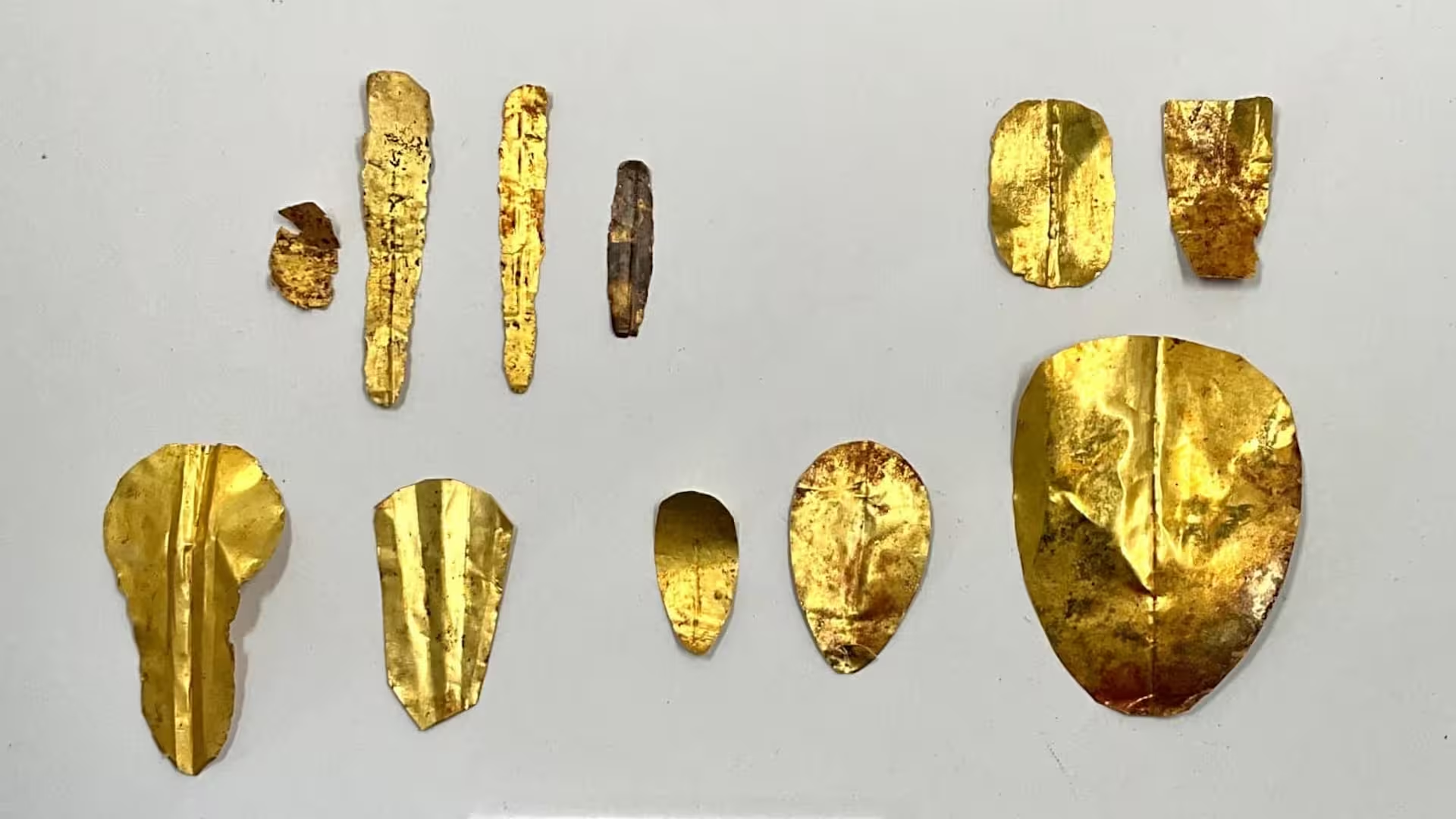
Beyond the tongues, the team recovered gold nails used on the fingers and toes of the deceased, which were thought to provide spiritual protection against malevolent forces and prevent the physical corruption of the body. The Ministry of Tourism and Antiquities reported that 29 protective amulets were also found in the vicinity, including scarabs honoring deities such as Isis, Thoth, and Horus, alongside a heart scarab discovered within one of the mummies.
New Revelations in Funerary Art
A second burial shaft nearby contained chambers decorated with remarkably preserved wall paintings, which Egyptologist Francesco Tiradritti described as having exceptional clarity and pigment quality. One mural depicts the tomb owner, a man named Wen Nefer, making offerings to a pantheon of gods, including Anubis and Osiris. Another section of the ceiling features the goddess Nut, depicted in white against a deep blue backdrop, surrounded by celestial imagery and sacred vessels.
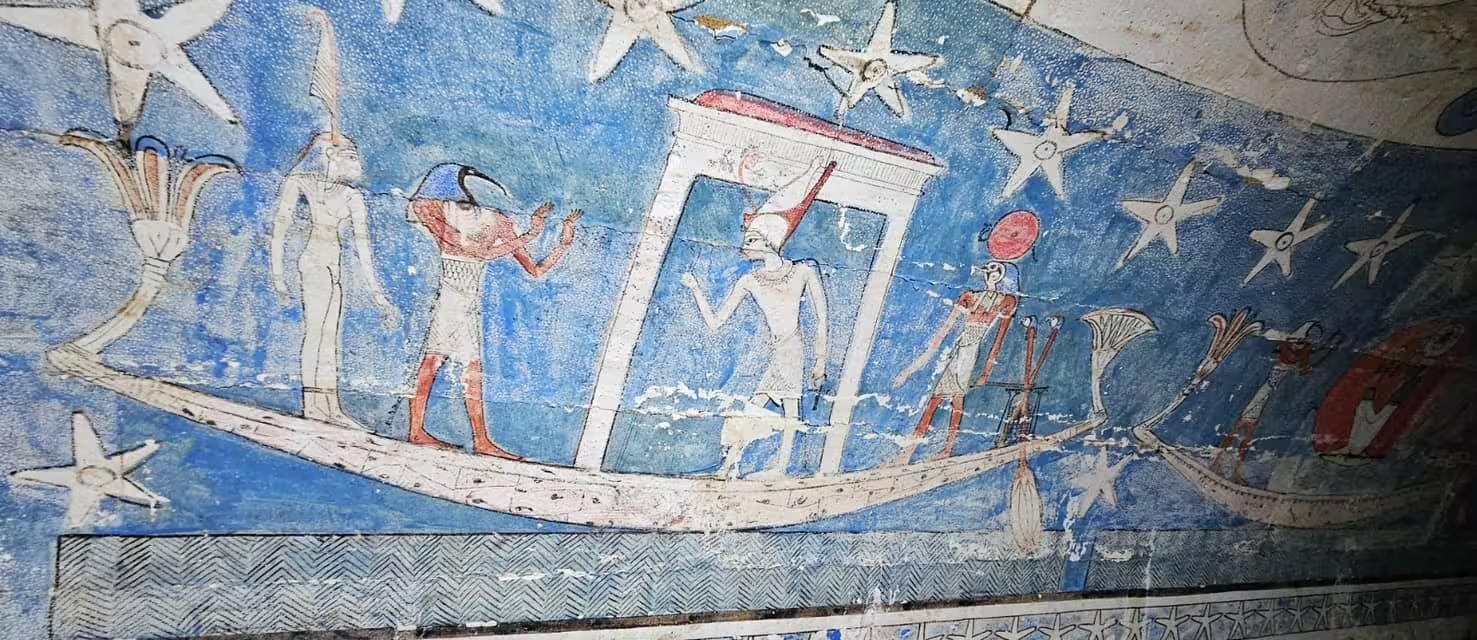
According to the research team, scenes portraying the tomb owner and his family alongside the gods are unprecedented in the Al-Bahnasa region. These chambers, which also housed four limestone sarcophagi, provide a rare look into the artistic traditions of the era.
Archaeologist Kathleen Martinez emphasized that the site continues to challenge our limited understanding of the Greco-Roman period in Egypt. With the team having already identified remnants from the Saite, Greek, and Roman eras—including a basilica and an Osirion temple—the ongoing excavation at Oxyrhynchus remains a high-priority effort to unlock the remaining secrets of this ancient landscape.
This article has been fact checked for accuracy, with information verified against reputable sources. Learn more about us and our editorial process.
Last reviewed on .
Article history
- Latest version
Reference(s)
- “NewsDetails.” <http://www.antiquities.gov.eg/DefaultAr/pages/NewsDetails.aspx?newsid=2457>.
Cite this page:
- Posted by Karan Das