NASA Just Revealed Earth Is Shifting In A Way We Previously Got Wrong
New research using Earth observation data has revealed a significant shift in our understanding of how the planet’s center of mass moves each year.
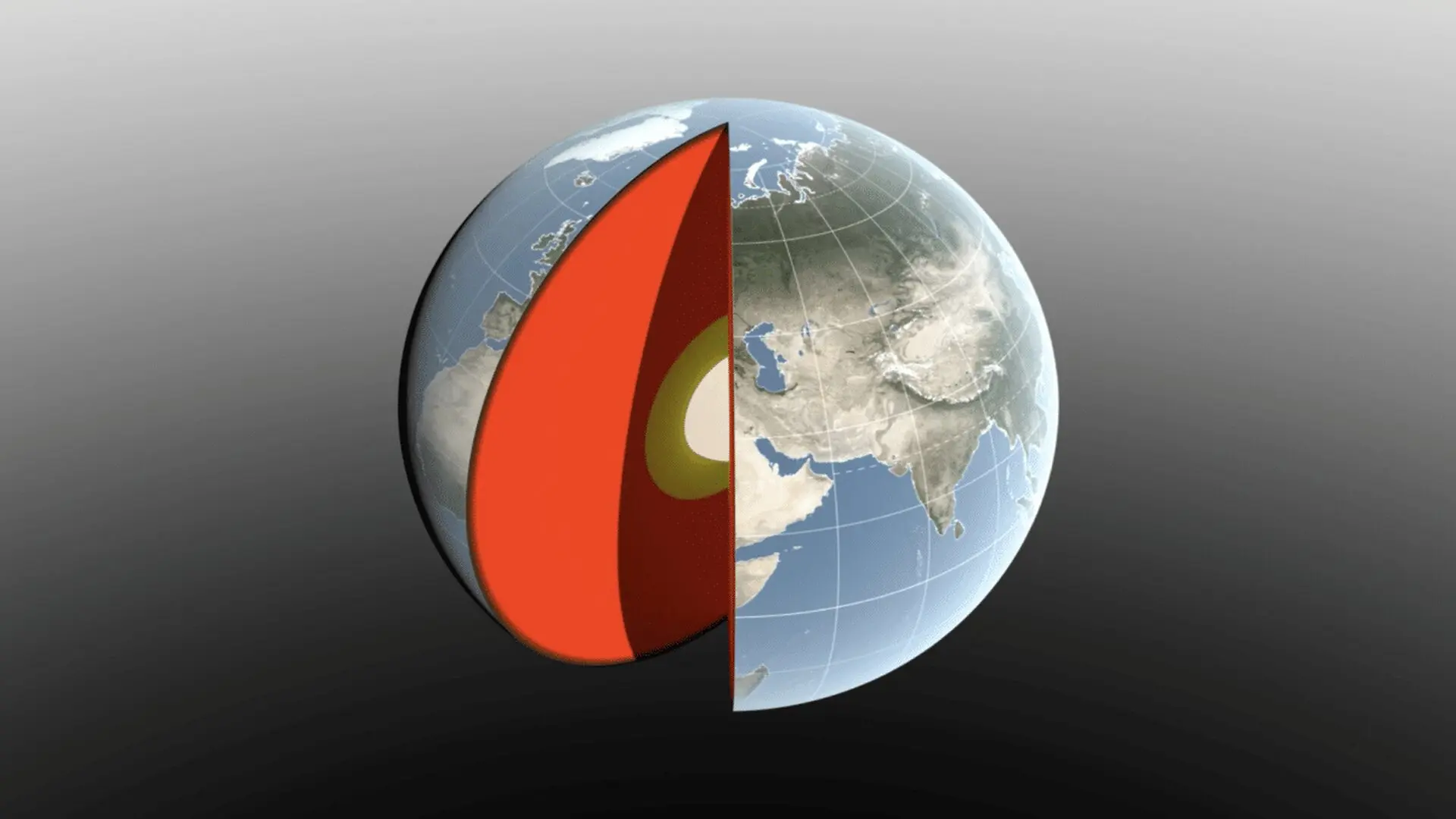
New analysis of long-term NASA observational data has yielded a refined understanding of how Earth’s center of mass shifts annually, revealing that these oscillations are significantly smaller than previously assumed. These findings, published in the Geophysical Journal International, offer a clearer picture of the complex interplay between the planet’s atmospheric and hydrological systems.
The Earth does not rotate around a static point. Because the distribution of water, ice, and atmospheric gases is in constant flux, the planet’s center of mass—and its center of figure—continually oscillate. By tracking these subtle variations, researchers are able to calibrate satellite missions and global positioning systems with greater accuracy, providing a more reliable foundation for monitoring planetary changes.
Revising the Scale of Planetary Wobble
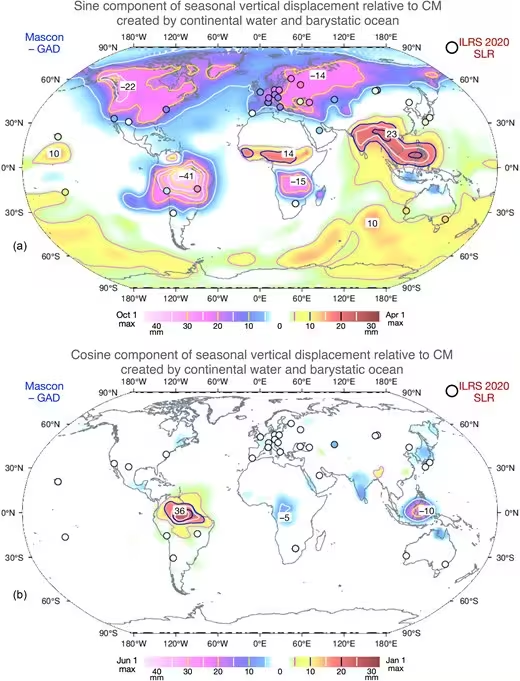
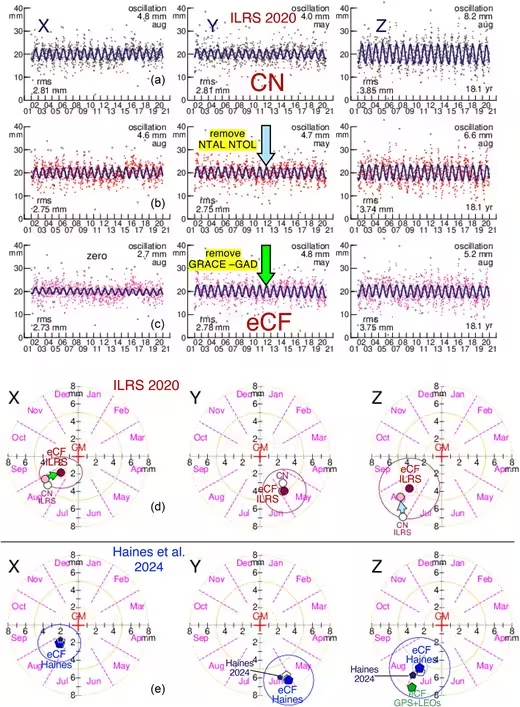
By synthesizing decades of data from global observation networks, the research team determined that the annual movement of the Earth’s center of mass is roughly half of what was estimated just eight years ago. This discrepancy does not suggest that the planet’s physical processes have undergone a sudden shift, but rather highlights the increased precision of contemporary geodetic modeling.
“We’re now estimating the size of the movement of Earth’s mass center back and forth each year to be about half of what we believed it to be eight years ago,” said Argus. “Our findings suggest that the mass of Earth’s water and air moving between the hemisphere is smaller than previously thought.”
The study suggests that earlier models likely overestimated the impact of seasonal mass transfers, such as the movement of water and air between the Northern and Southern Hemispheres. Through more granular data analysis, scientists have now constrained these estimates, confirming that while these systems exert influence on Earth’s balance, the magnitude of the displacement is less pronounced than previous literature indicated.
Implications for Global Monitoring Systems
Understanding how the planet’s interior and surface behave in tandem is essential for modern earth sciences. Because ocean currents, shifting seasonal rainfall, and atmospheric circulation patterns redistribute mass, they create tiny, measurable perturbations in the gravitational field and rotational dynamics of the planet.
Precision in this field is vital for geodetic measurements, which serve as the backbone for sea-level monitoring, climate modeling, and satellite navigation. By identifying these smaller-than-expected oscillations, the researchers have provided a more accurate reference frame for future climate studies, ensuring that environmental models can better distinguish between natural seasonal variations and long-term, human-induced shifts.
This article has been fact checked for accuracy, with information verified against reputable sources. Learn more about us and our editorial process.
Last reviewed on .
Article history
- Latest version
Cite this page:
- Posted by Karan Das