New Magnetic Shield Idea Could Safeguard Astronauts From Deadly Solar Storms
Researchers examine if permanent magnets can provide lightweight shielding against hazardous solar storms for future deep‑space missions.
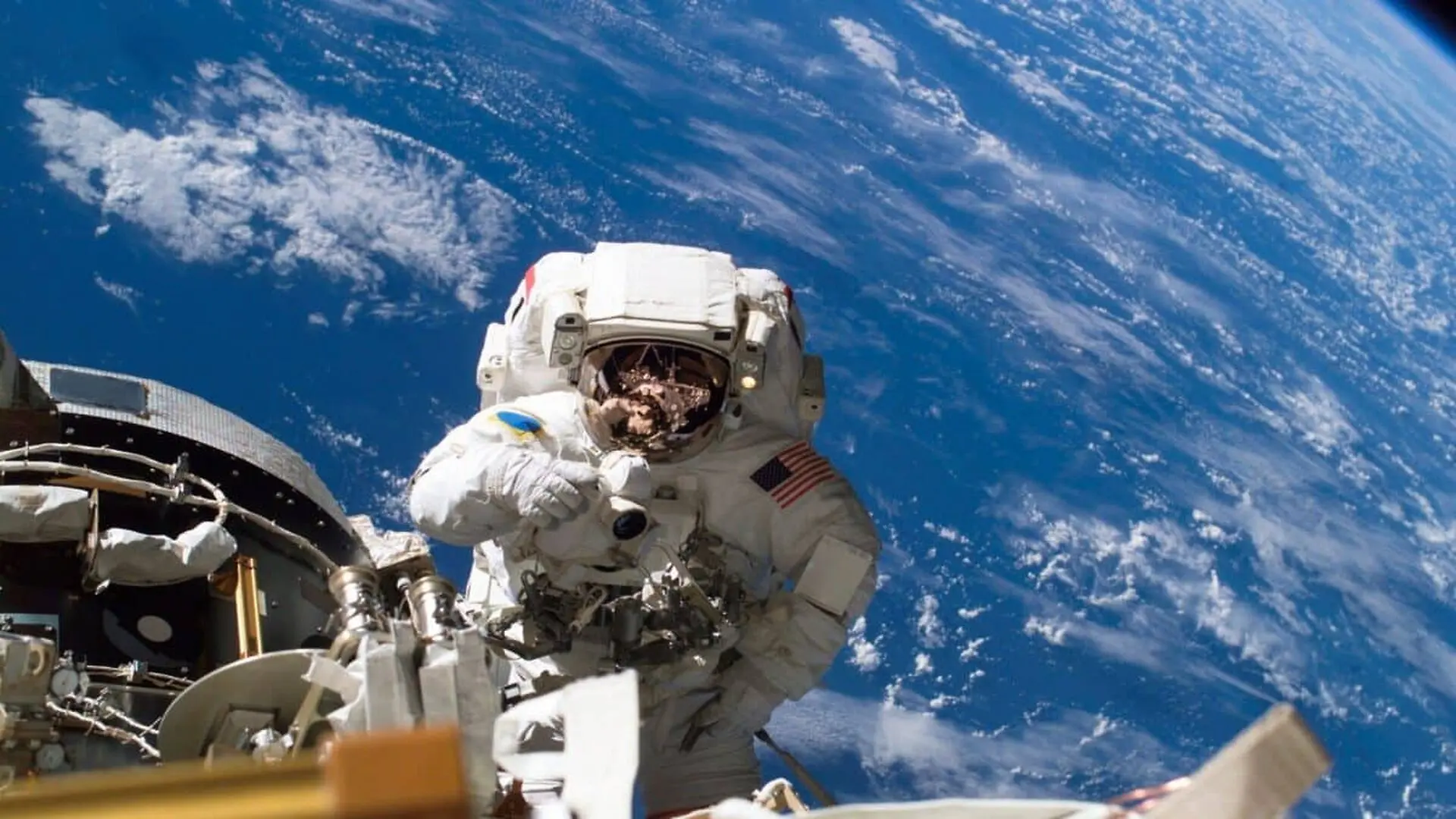
Long‑duration voyages to the Moon, Mars and farther destinations will subject crew members to radiation levels far exceeding those encountered in low‑Earth orbit. Conventional approaches rely on massive shielding blocks, which drive up launch weight and cost. A recent paper posted on arXiv proposes an alternative: arrays of strong permanent magnets that could steer charged particles away from a spacecraft, reducing the need for bulky material barriers.
Solar Storms Remain a Major Threat for Deep‑Space Crews
When the Sun erupts, it hurls clouds of energetic ions toward the Solar System, creating brief but intense spikes in radiation exposure. Astronauts traveling to the Martian surface or operating in cislunar orbit are at risk from these solar particle events as well as the constant background of galactic cosmic rays. Even the best‑protected spacecraft can only attenuate the most severe storms, because practical shielding thickness is limited by launch mass constraints.
High doses of ionizing radiation raise the probability of cancer, damage to the nervous system, cataract formation, and heart disease, while extreme bursts can induce acute radiation syndrome. Mission planners rely on solar monitoring and forecasting tools to mitigate exposure, yet prediction alone cannot erase the hazard. As humanity eyes missions that may last months or years, engineers are searching for protection methods that add safety without imposing prohibitive weight penalties.
Exploring a Magnetic Deflection Strategy
The study, accessible via arXiv, evaluates whether configurations of modern permanent magnets could generate fields strong enough to divert a sizable fraction of incoming charged particles. Unlike active magnetic shields that require superconducting coils and continuous power, permanent magnets produce a static field without drawing electricity, an attractive feature for power‑limited spacecraft.
Researchers modeled a variety of magnet layouts, field intensities, and geometric arrangements to gauge how many particles could be steered clear of crew habitats. Because charged particles follow curved paths in magnetic fields, a well‑designed system might lower the number that actually reaches occupants. The analysis indicates that lower‑energy particles typical of solar particle events are especially susceptible to deflection, whereas the most energetic galactic cosmic rays remain difficult to shield.
Potential Benefits Over Traditional Bulk Shielding
Conventional protection relies on dense materials—such as aluminum, polyethylene, or water—to absorb radiation, a strategy that quickly adds mass. Permanent magnets propose a different approach: preventing many particles from ever reaching the vessel. Recent advances in rare‑earth magnet technology have yielded much stronger permanent magnets than were available a decade ago, opening the possibility of meaningful protection without the power draw of active systems.
A hybrid architecture could embed magnetic structures within existing spacecraft frames, supplementing rather than replacing standard material shields. This layered defense would address the competing demands of mass efficiency, reliability, and power budgeting that shape future exploration designs.
Technical Obstacles Still to Overcome
Turning the concept into flight‑ready hardware will require solving several engineering challenges. The magnetic field must be large enough to cover an entire crew module while keeping the magnet assembly lightweight enough to compete with conventional shielding solutions. Additionally, designers must verify that strong fields do not interfere with onboard electronics, scientific instruments, or crew activities.
Because space radiation spans a broad spectrum of energies, no single method can guarantee complete protection. While permanent magnets may be effective against certain solar‑origin particles, the highest‑energy galactic cosmic rays are likely to pass through unaffected. Further work will need to assess long‑term durability, manufacturability, integration pathways, and overall cost‑benefit analysis. Extensive simulations, ground‑based experiments, and eventual orbital tests will be essential before mission planners can rely on magnetic shielding for crew safety.
Towards Safer Journeys Beyond Earth
As agencies and commercial partners chart more ambitious paths to the Moon, Mars and beyond, radiation mitigation remains a pivotal design driver. The arXiv paper adds to a growing portfolio of innovative concepts aimed at reducing the health risks posed by space radiation.
Permanent magnets are unlikely to replace traditional shielding entirely, but they could become a valuable component of a multi‑layered protection strategy that also includes passive materials, operational safeguards, and improved space‑weather forecasting. Incremental advances in any of these areas expand the envelope of feasible mission durations and destinations, bringing the vision of human exploration throughout the Solar System closer to reality.
This article has been fact checked for accuracy, with information verified against reputable sources. Learn more about us and our editorial process.
Last reviewed on .
Article history
- Latest version
Reference(s)
- Parisi, Valerio. “A First-Order Assessment of Permanent Magnet Deflection for Space Radiation Protection.” arXiv.org, doi: 10.48550/arxiv.2607.00759. <https://dx.doi.org/10.48550/arxiv.2607.00759>.
Cite this page:
- Posted by Karan Das