The Moon Could Be Hiding Ancient Alien Technology In Its Soil
Could evidence of alien technology be hidden in plain sight? Scientists suggest searching the Moon’s dust for signs of ancient extraterrestrial visitors.
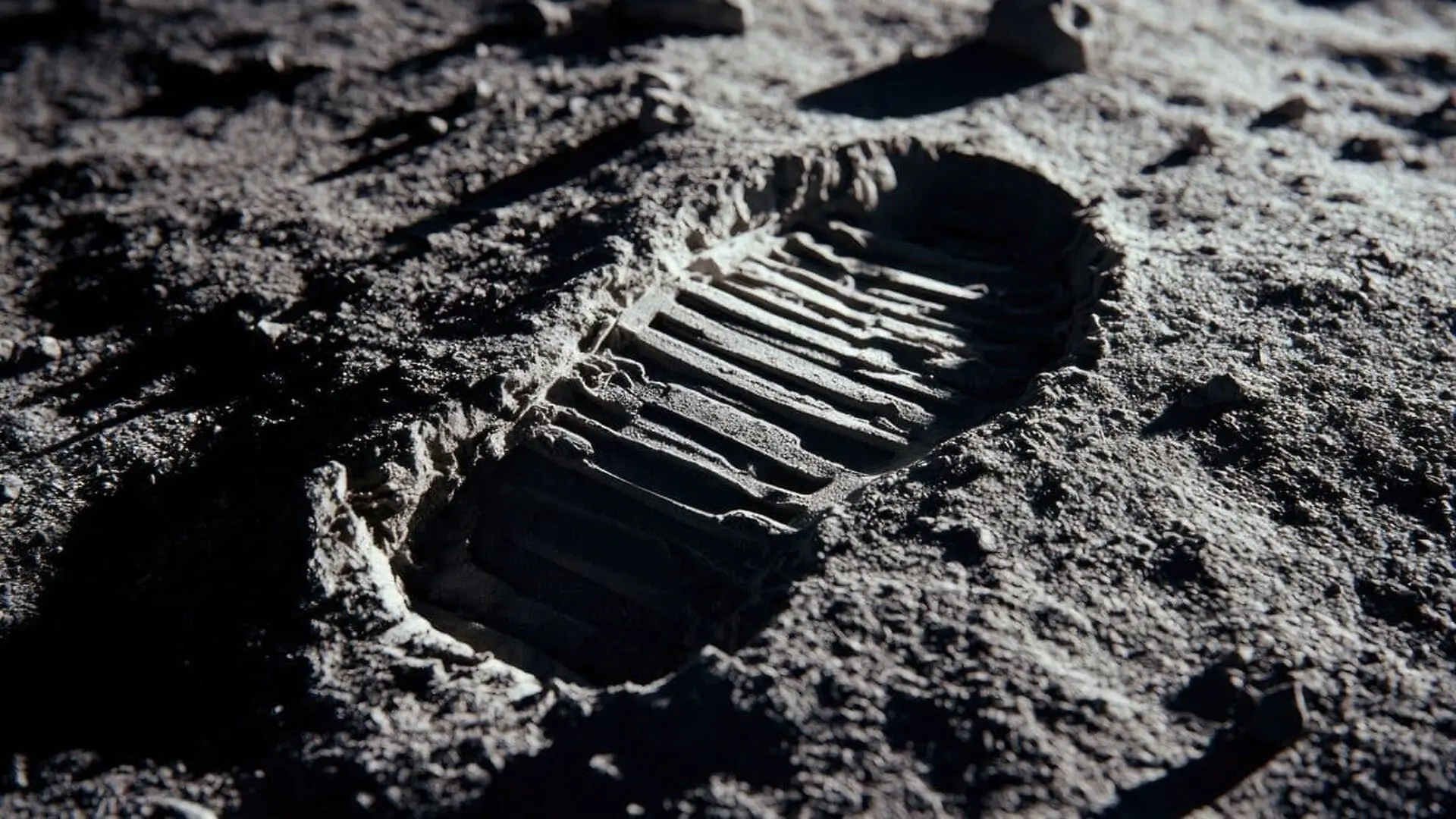
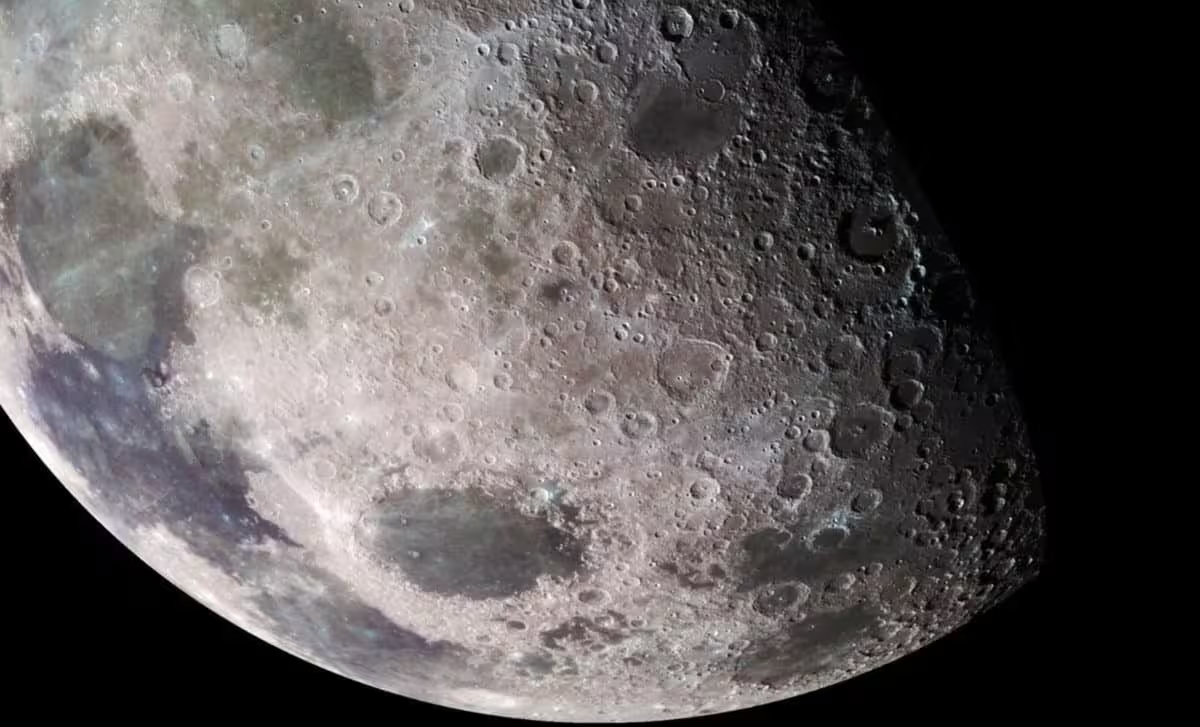
Scientists Think Tiny Pieces of Alien Technology Could Be Hidden in Moon Dust - | Shutterstock
A provocative new proposal suggests that the key to finding extraterrestrial life might not lie in listening for radio signals from distant stars, but in examining the dust beneath our feet on the Moon. Researchers are currently investigating whether microscopic remnants of ancient, advanced technologies could have drifted through the Milky Way and settled into the lunar regolith, remaining preserved for eons.
The study, which is currently undergoing peer review after appearing as a preprint on arXiv, argues that the Moon acts as a stable, long-term repository for interstellar debris. While planetary surfaces like Earth are constantly reshaped by tectonic activity, erosion, and biological processes, the lunar surface has remained geologically quiet for billions of years, potentially trapping a record of whatever has impacted it over cosmic timescales.
Collecting the cosmic breadcrumbs of extinct civilizations
The team is not hunting for gargantuan alien monoliths or crashed starships. Instead, they are looking for what they call Arkhipov particles—microscopic fragments generated by the natural aging, collisions, or disintegration of interstellar technology. Named after astrophysicist Alexey Arkhipov, who pioneered the concept in the 1990s, these particles could be small enough to be carried across the galaxy by stellar winds and gas flows.
Modeling by the researchers suggests that refractory particles around 0.3 micrometers in diameter could survive in the harsh environment of interstellar space for as long as a billion years. While most such particles would strike the Moon at velocities too high to survive impact, the authors note that solar radiation pressure could slow a small percentage, allowing them to land gently enough that their structural integrity might remain intact.
The challenge of separating alien tech from lunar rubble
Confirming an extraterrestrial origin for a microscopic grain would be a daunting analytical feat. The lunar soil is already a complex mixture of meteorite fragments and native lunar soil, not to mention the legacy of contamination left behind by decades of human space exploration. Identifying a candidate would require advanced laboratory techniques, such as scanning electron microscopy, ion-mass spectrometry, and three-dimensional nanoscale imaging, to differentiate artificial alloys or non-natural isotope ratios from the surrounding geological clutter.
The scale of the search is equally challenging. With only a few hundred kilograms of lunar samples currently available for study, researchers would need to be highly selective. The authors suggest that an initial pilot program might focus on screening roughly 0.1 cubic meters of material—a massive task, yet one that is significantly more manageable than a wholesale survey of the lunar surface.
The next breakthrough in SETI may come not from a radio telescope, but from a microscope.
Researchers propose searching lunar soil for microscopic engineered particles—potential traces of technologies that could have existed billions of years ago.
Even a negative result would carry scientific weight. A comprehensive study that yielded no evidence of artificial particles would effectively place strict constraints on the amount of durable technology that past civilizations might have dispersed into the the galaxy. While it would not definitively rule out the existence of other civilizations, it would suggest that the universe is not as cluttered with the debris of long-lost empires as some extreme models predict.
While some experts, such as Penn State astronomer Jason Wright, praise the study for breathing life into a formerly obscure concept, others like co-author Ian Crawford caution that it remains a classic “needle in a haystack” problem. Nevertheless, the proposal marks a distinct shift in the Search for Extraterrestrial Intelligence (SETI), moving the conversation from theoretical radio signals toward the physical, tangible search for artifacts within our own Solar System.
Fact Checked
This article has been fact checked for accuracy, with information verified against reputable sources. Learn more about us and our editorial process.
“SETI Institute (@setiinstitute.bsky.social).”, September 8, 2026 Bluesky Social <https://bsky.app/profile/did:plc:egpjeq4etdp6pkxqutll5wsd/post/3muzpicdpxp2r?ref_src=embed>.
Das, Karan. “The Moon Could Be Hiding Ancient Alien Technology In Its Soil.” BioScience. BioScience ISSN 2521-5760, 21 September 2026. <https://www.bioscience.com.pk/en/subject/space-science/scientists-think-tiny-pieces-of-alien-technology-could-be-hidden-in-moon-dust>.
Das, K. (2026, September 21). “The Moon Could Be Hiding Ancient Alien Technology In Its Soil.” BioScience. ISSN 2521-5760. Retrieved September 21, 2026 from https://www.bioscience.com.pk/en/subject/space-science/scientists-think-tiny-pieces-of-alien-technology-could-be-hidden-in-moon-dust
Das, Karan. “The Moon Could Be Hiding Ancient Alien Technology In Its Soil.” BioScience. ISSN 2521-5760. https://www.bioscience.com.pk/en/subject/space-science/scientists-think-tiny-pieces-of-alien-technology-could-be-hidden-in-moon-dust (accessed September 21, 2026).