Gold Hunter Spent Years Trying To Smash A Rock That Was Actually A 4.6 Billion Year Old Meteorite
After failed attempts to break open a mysterious red rock with tools and acid, researchers discovered it held a long-hidden, ancient cosmic secret.
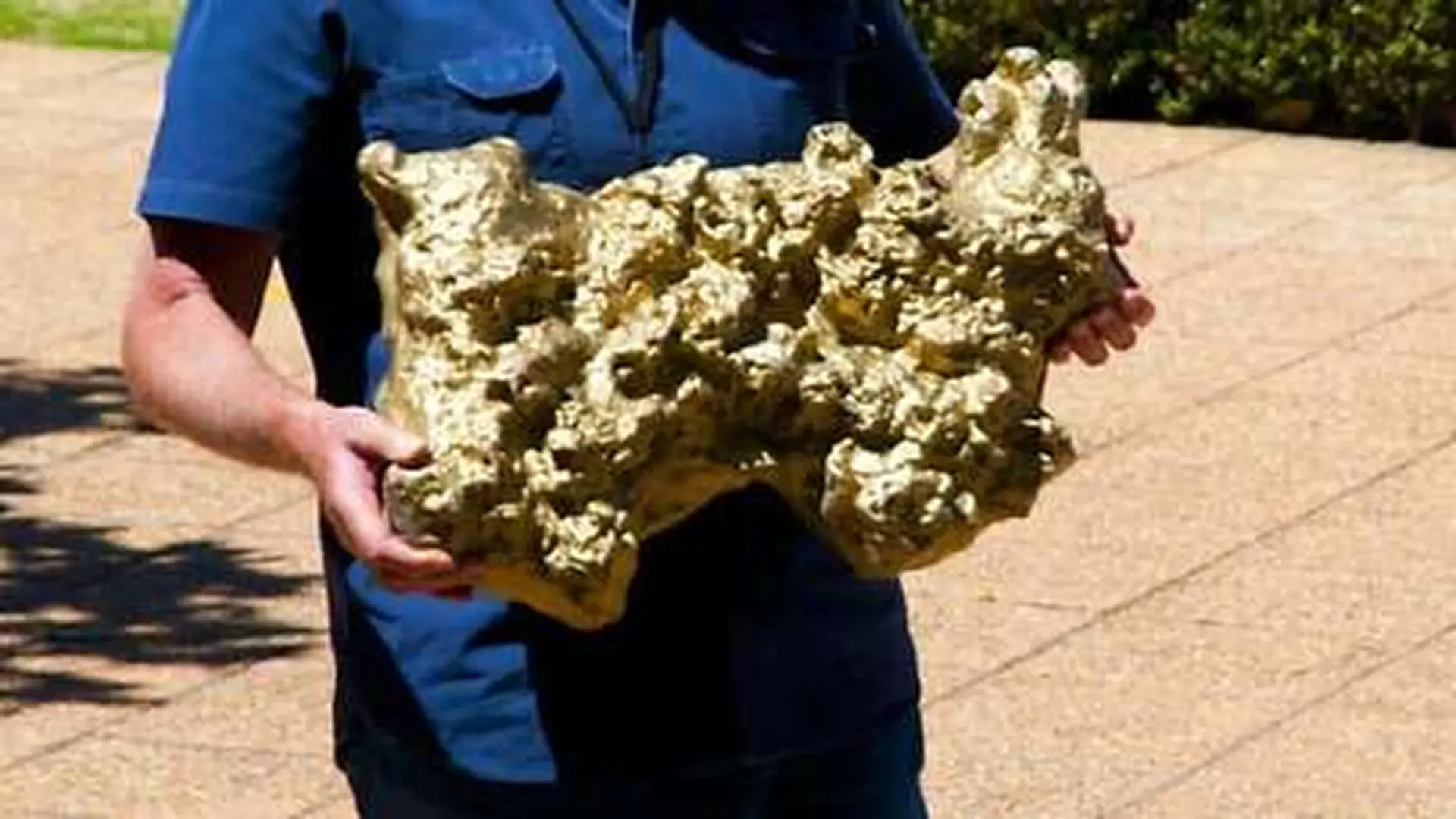
When David Hole began sweeping the clay-rich soils of Maryborough Regional Park with a metal detector in 2015, he was hoping for the glint of gold that has defined the Victorian landscape for over a century. Instead, he unearthed a heavy, dimpled, reddish rock that proved far more scientifically significant than the precious metals he was hunting. For three years, the 17-kilogram object sat on his property, resisting every attempt to identify it, including failed efforts with rock saws, angle grinders, and even a sledgehammer.
A Relic from the Dawn of the Solar System
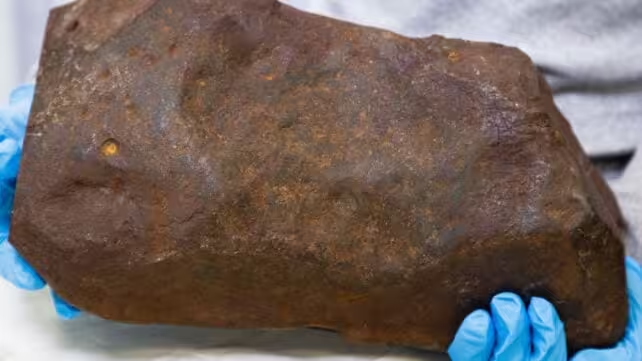
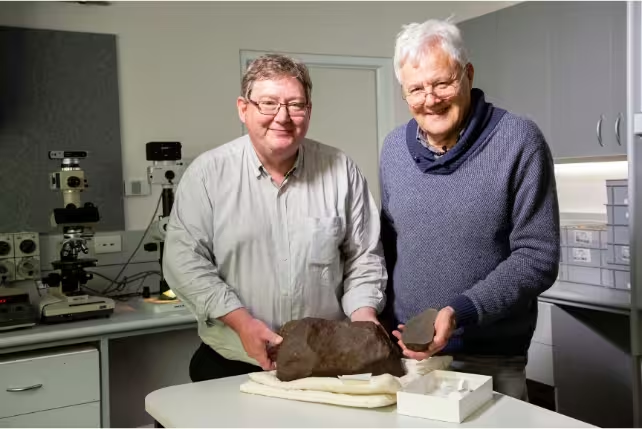
It was not until 2018 that Hole brought the specimen to the Melbourne Museum. Geologist Dermot Henry, who has spent nearly four decades evaluating rocks brought in by the public, immediately recognized the unique surface texture. The rock was covered in regmaglypts—distinctive, sculpted depressions created as the object’s outer layer melted during its high-velocity transit through Earth’s atmosphere. Coupled with its unusual density, the object stood out as a clear candidate for a meteorite.
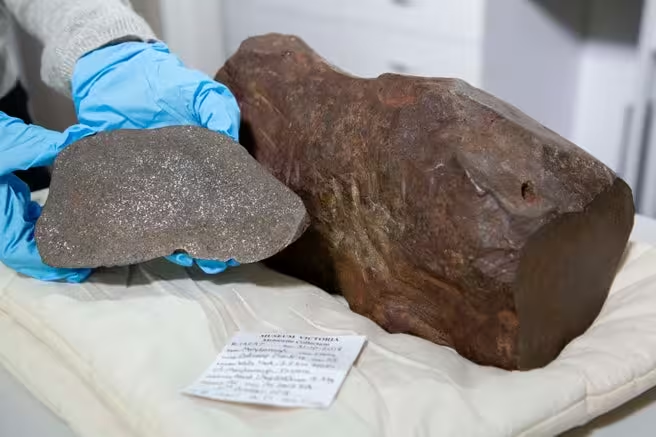
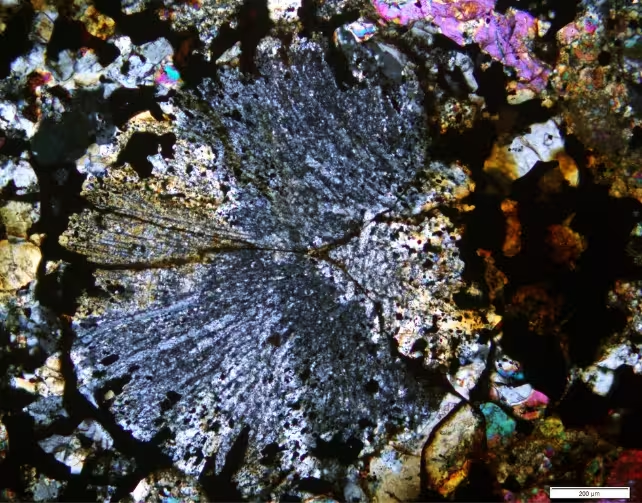
To confirm the origin of the 17-kilogram mass, researchers utilized a diamond saw to penetrate the hardened exterior. Inside, they found evidence that clearly distinguished it from terrestrial geology. The cross-section revealed chondrules—spherical mineral grains that formed in the microgravity of the early solar system—as well as significant concentrations of iron-nickel alloys, specifically kamacite and taenite. The presence of these metallic components explains why the object triggered Hole’s metal detector so effectively.
Decoding the History of an H5 Chondrite
Published in the Proceedings of the Royal Society of Victoria in 2019, the study classified the specimen as an H5 ordinary chondrite. The “H” designation highlights its high iron content, while the “5” indicates that the rock underwent significant thermal metamorphism on its parent asteroid before entering our orbit. Geological analysis suggests the meteorite dates back approximately 4.6 billion years, effectively serving as a time capsule from the era when Earth was still forming.
Cosmogenic isotope analysis conducted at the University of Arizona suggests the meteorite arrived on our planet within the last 100 to 1,000 years. While historical records from the region contain reports of atmospheric phenomena that could correlate with such an arrival, scientists have not definitively linked the stone to a specific historical event.
A Rare Find in the Heart of Gold Country
The Maryborough meteorite stands as the 17th specimen ever recorded in the state of Victoria. While the region is world-renowned for its vast historical output of gold nuggets, these celestial rocks remain remarkably elusive. For researchers like Henry, the meteorite offers an invaluable opportunity for discovery without the need for expensive space missions.
The meteorite is now part of the State Collection at Museums Victoria, where it is currently on public display at the Melbourne Museum. It sits alongside a vast array of geological samples, preserved for future study as a testament to the chaotic and violent history of our solar neighborhood.
This article has been fact checked for accuracy, with information verified against reputable sources. Learn more about us and our editorial process.
Last reviewed on .
Article history
- Latest version
Reference(s)
- Birch, William D.., et al. “Maryborough, a new H5 meteorite find from Victoria, Australia.” Proceedings of the Royal Society of Victoria, vol. 131, no. 1, July 17, 2019, pp. 18-23. CSIRO Publishing, doi: 10.1071/RS19002. <https://doi.org/10.1071/RS19002>.
Cite this page:
- Posted by Karan Das