NASA Finds “Collective Attention” Is the Key to Surviving Mars Delays
A NASA-backed study finds that keeping teams aligned on a shared focus is crucial for the success of deep‑space missions.
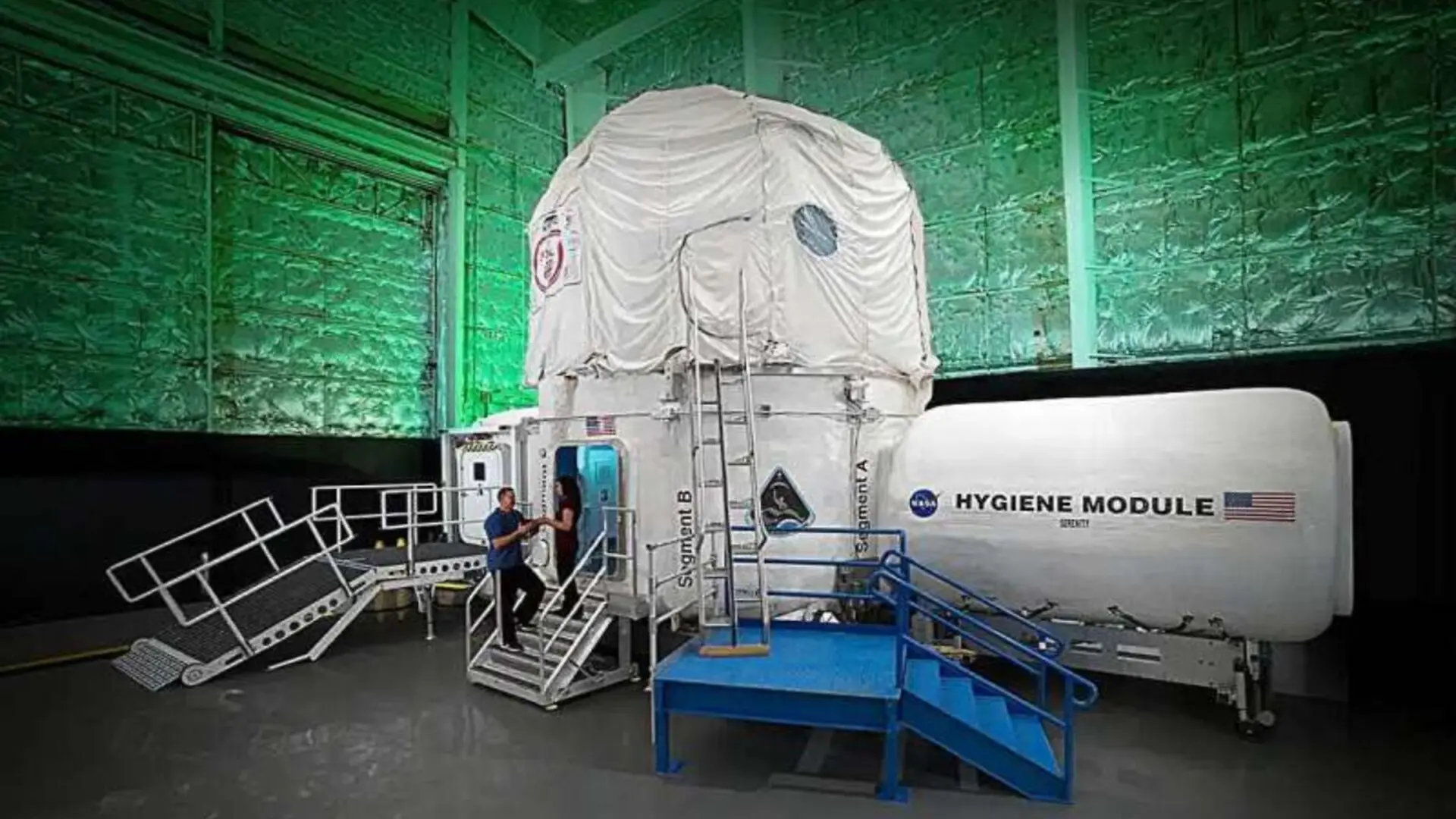
A NASA‑backed investigation has pinpointed a decisive factor for upcoming deep‑space missions: the capacity of large, distributed teams to keep a unified focus despite the inevitable lag in communications. The study, appearing in Personnel Psychology, introduces “collective attention” as the mechanism that enables complex, multi‑team operations to stay coordinated when crews are separated by millions of kilometres, offering fresh guidance for future lunar, Martian and interplanetary endeavors.
Why Shared Focus Is Critical for Off‑World Crews
Discussions about sending humans to Mars often centre on rockets, habitats, life‑support hardware and spacecraft design. Yet the human factor may prove just as decisive. Astronauts will be operating far from Earth, where signal delays can range from several minutes to nearly an hour depending on planetary alignments. In crisis scenarios—equipment failures, scientific tasks, or medical emergencies—instantaneous conversation will no longer be an option.
A team from Michigan State University examined how these delays influence coordination between crew members and Mission Control. Their focus extended beyond single teams to the broader network of specialists that will support a long‑duration voyage. Dorothy R. Carter, an associate professor of management at MSU, highlighted the scale of the challenge. “NASA realized that a long‑duration mission, such as a crewed flight to Mars, involves collaboration far beyond the people aboard the spacecraft. Astronauts must continue to work with many people on Earth,” Carter explained. “Achieving that requires a large, collaborative—or ‘multiteam’—system.”
The research indicates that mission success will hinge not only on hardware but also on the ability of numerous expert groups—engineers, scientists, flight directors, medical staff and the crew—to stay aligned around shared priorities. When communication is delayed, preserving that common understanding becomes far more challenging, exposing a gap that traditional teamwork models have not fully addressed.
Recreating Mars‑Era Delays in a Ground‑Based Simulator
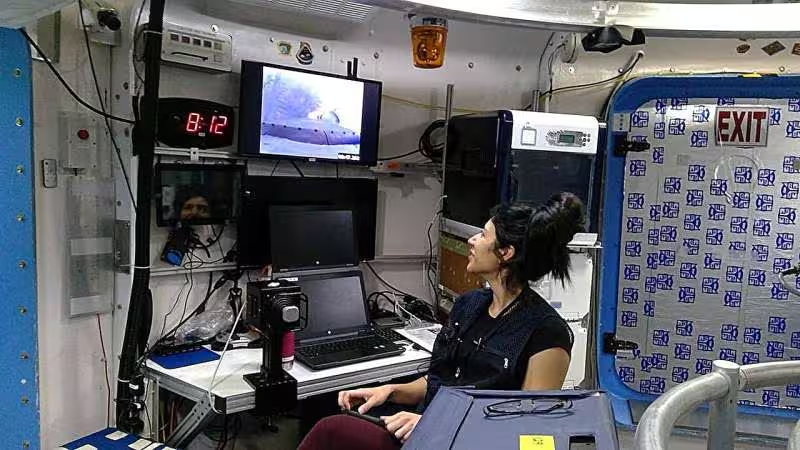
To explore the issue, investigators ran experiments inside NASA’s Human Exploration Research Analog (HERA) at the Johnson Space Center. The facility replicates key aspects of spaceflight, housing volunteers who act as astronauts while MSU researchers simulate Mission Control from a separate location.
During the drills, the team introduced communication lags that mirrored those expected on deep‑space journeys. Interaction patterns between the “crew” and the “ground” team were recorded and fed into computational models to predict how larger multiteam systems might behave under comparable constraints.
Credit: NASA
Analysis revealed a clear trend: performance was less dependent on the volume of information exchanged or the speed of transmission, and more on whether the different groups could concentrate on the same issue simultaneously. The researchers labeled this phenomenon “collective attention,” describing it as a shared alignment of priorities across multiple teams working toward a unified goal.
Published in Personnel Psychology, the paper is among the first to centre collective attention in the discussion of how communication delays affect team efficacy. The insight could reshape preparation strategies for operations where real‑time dialogue cannot be guaranteed.
Beyond Inconvenience: The Real Cost of Lagged Signals
Delays do more than slow conversations; they can cause divergent assumptions, shifting priorities and mismatched interpretations of unfolding events. Minor misunderstandings may snowball into substantial coordination breakdowns.
Carter emphasized that this disruption strikes at the heart of teamwork. “Communication delays disrupt collective attention dramatically. It’s just more difficult for us to focus on the same thing at the same time when we can’t communicate with one another in real time,” she said.
The impact is especially acute in high‑pressure scenarios where rapid adaptation is essential. On a Mars expedition, crews might confront unexpected equipment failures, hazardous conditions or medical emergencies while Earth‑based specialists analyse data and formulate recommendations. If the two groups are fixated on different aspects of the problem, decision‑making can become sluggish or fragmented.
Tactics for Preserving Unity Across Light‑Years
While the study highlights a significant hurdle, it also offers concrete countermeasures. Carter and her colleagues identified several interventions that could sustain collective attention even when delays are unavoidable.
“Based on our research, there are many different interventions that we think could help support collective attention, even during periods of communication delay,” Carter noted.
The authors stress three overarching domains: boosting individual competence, sharpening message clarity, and strengthening relational ties among team members. Together, these steps can curb confusion and increase the odds that disparate groups remain focused on shared objectives.
Examples include building trust between Mission Control and the crew before launch, training participants to speak concisely and plainly, implementing structured debriefing routines and communication protocols, and mapping each member’s strengths to assign responsibility in critical moments.
Implications for the Next Generation of Human Spaceflight
As NASA, Artemis partners and other agencies gear up for more ambitious missions beyond low Earth orbit, the human dimension of exploration is gaining prominence. The upcoming return to the Moon and eventual crewed journeys to Mars will place unprecedented demands on coordination between astronauts and ground teams.
The collective attention framework provides a roadmap for meeting those demands. By ensuring that distributed groups keep a shared focus despite distance and delay, future missions stand to improve both safety and operational efficiency.
“Teams should be prepared to think clearly, communicate in simple ways and build strong connections with each other. These steps help everyone stay focused on the same goals, even when communication is broken up or delayed,” Carter said. “These ideas also help us better understand how teams work across time and distance and provide a starting point for helping them succeed in challenging, high‑pressure environments.”
The findings suggest that mission triumph will rely as much on human coordination as on engineering prowess. As humanity ventures deeper into the solar system, staying connected may be less about transmitting data and more about ensuring that every participant, no matter how far apart, is attending to the same priority at the same moment.
This article has been fact checked for accuracy, with information verified against reputable sources. Learn more about us and our editorial process.
Last reviewed on .
Article history
- Latest version
Reference(s)
- Carter, Dorothy., et al. “Collective Attention in Virtual Teams: A Pathway for Mitigating Communication Delays.” Personnel Psychology, vol. 79, no. 2, March 2, 2026, pp. 191-221. Wiley, doi: 10.1111/peps.70024. <https://onlinelibrary.wiley.com/doi/10.1111/peps.70024>.
Cite this page:
- Posted by Karan Das