NASA’s DAPHNE Twin‑Sat Mission to Uncover Hidden Triggers of Space Weather
NASA’s DAPHNE mission will deploy twin satellites to study how Earth’s atmosphere influences space weather and impacts vital technologies.
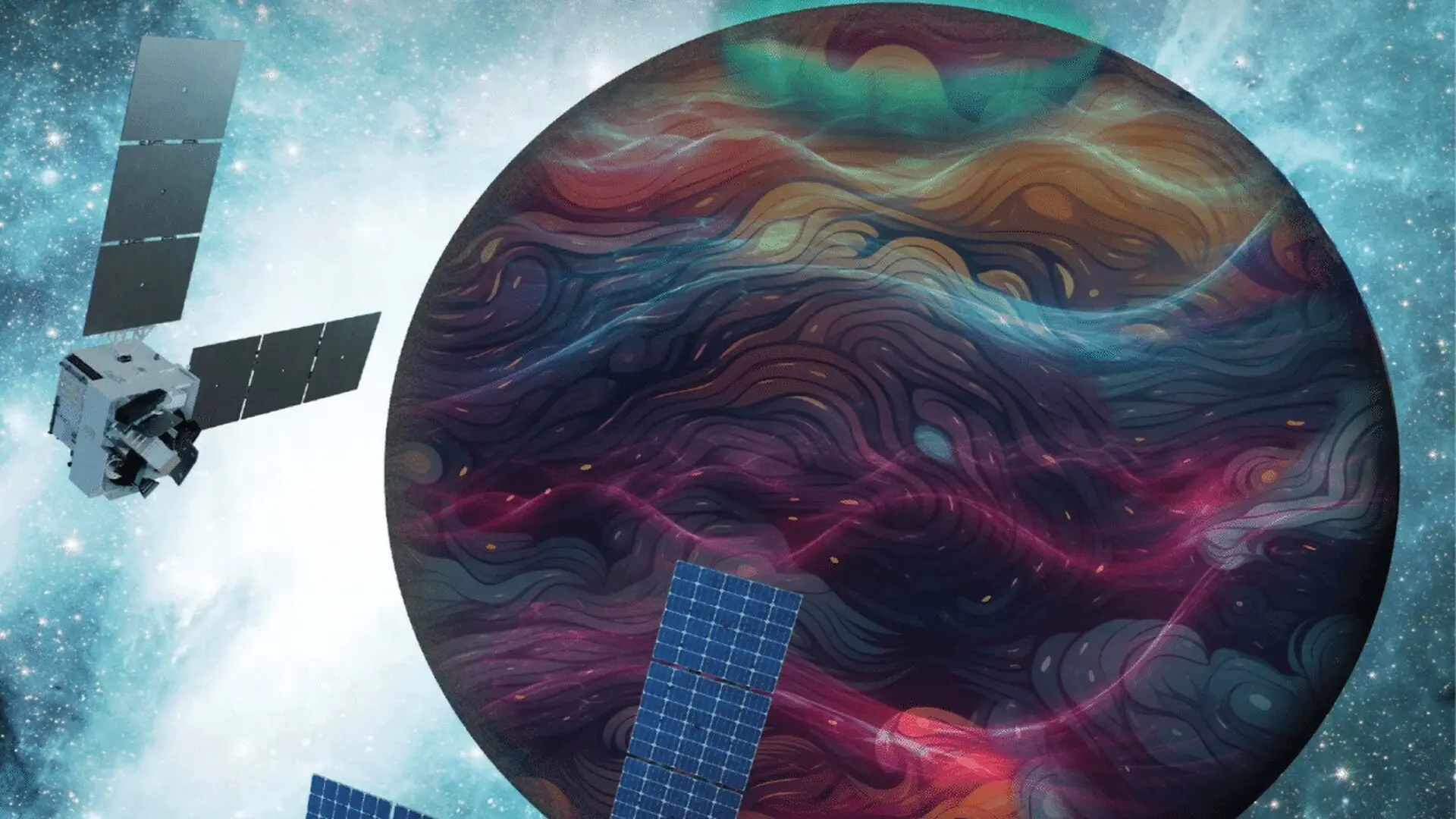
NASA has approved a new mission concept aimed at sharpening humanity’s ability to anticipate space‑weather disturbances and safeguard the technologies that modern life depends on. The Dynamic Atmosphere‑Ionosphere Explorer (DAPHNE) will study how variations in Earth’s lower atmosphere shape conditions high above the planet, where solar storms can disrupt satellites, communications, navigation and crewed spaceflight.
Beyond Solar Flares: Why Earth’s Upper Atmosphere Matters
For decades, researchers have linked space weather chiefly to solar eruptions, charged‑particle streams and solar‑wind fluctuations. Recent work, however, shows that processes occurring much lower in the atmosphere also play a pivotal role. The zone where Earth’s neutral gases merge into the plasma‑filled environment of space is constantly reshaped by both solar inputs and atmospheric dynamics from below.
DAPHNE’s dual‑satellite platform will capture neutral‑wind speeds, temperature shifts and compositional changes throughout the thermosphere. By obtaining synchronized measurements from two points in orbit, scientists can trace how energy and motion travel upward and eventually modify the ionosphere—a layer essential for radio links, GPS navigation and satellite control.
The practical implications extend far beyond pure research. Modern infrastructure relies on near‑Earth space: GPS guides transportation networks, satellites deliver weather data and communications, and crewed missions venture into ever more demanding environments. Even modest alterations in the upper atmosphere can tweak satellite paths, degrade signal quality and raise operational hazards. By pinpointing the atmospheric mechanisms behind these effects, DAPHNE could lay the groundwork for a new suite of predictive tools that issue earlier and more dependable alerts.
A Forecast‑Focused Approach to Space Weather
Current space‑weather predictions lean heavily on solar observations, yet they remain uncertain because the response of Earth’s atmosphere to solar inputs is not fully mapped. DAPHNE intends to fill that knowledge gap by feeding lower‑atmospheric energy data into the models that describe the near‑Earth space environment.
NASA selected the concept as a low‑risk, high‑return option because it tackles a scientific question with direct practical outcomes. Understanding how atmospheric dynamics drive changes in the ionosphere and thermosphere could sharpen forecasts of conditions that affect low‑Earth‑orbit satellites, navigation grids, communication networks and human space‑flight operations.
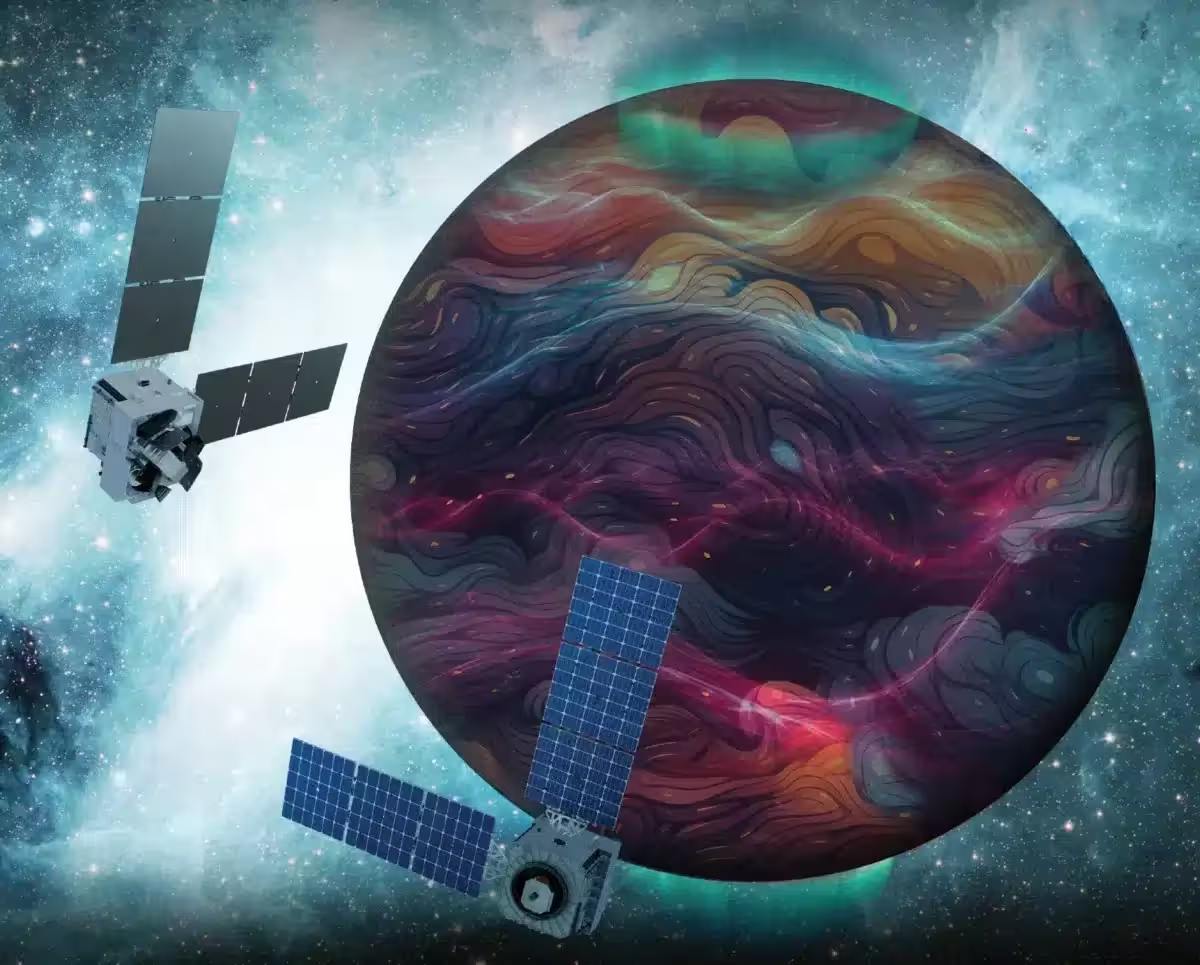
As NASA broadens its objectives beyond low‑Earth orbit, the urgency of accurate space‑weather forecasting intensifies. Future lunar and Martian missions will place astronauts in environments where solar and space‑weather hazards pose significant threats. More reliable forecasts could help planners schedule activities, shield spacecraft components and limit crew exposure to dangerous conditions.
Reflecting the mission’s broader relevance, Nicky Fox, associate administrator for NASA’s Science Mission Directorate, said:
“NASA is advancing the United States’ leadership as a space weather‑ready nation, and by providing new insights into Earth’s atmosphere we can better predict and prepare for impacts in our daily lives on Earth and in space.”
Fox added that the data gathered by DAPHNE will support exploration beyond Earth’s magnetic shield, noting:
“As NASA sends astronauts beyond Earth’s magnetic protection to the Moon, Mars, and beyond, DAPHNE will join the NASA science fleet strategically located across the solar system to provide data that will help mission planners predict and mitigate the effects of space weather for the benefit of all.”
Led by Aimee Merkel at the University of Colorado Boulder, the DAPHNE mission is a key step toward protecting astronauts on their journeys to the Moon, Mars, and beyond while improving space weather forecasting here on Earth. pic.twitter.com/TSSCf64IKB
— NASA Science (@NASAScience_) June 18, 2026
Twin Spacecraft to Uncover Hidden Atmospheric Links
Deploying two identical satellites lies at the core of DAPHNE’s scientific plan. Atmospheric phenomena span large regions and evolve continuously, making it hard for a single platform to separate spatial movement from genuine environmental change. By operating a pair of spacecraft simultaneously, researchers can compare data from distinct locations and assemble a more complete three‑dimensional picture of atmospheric behavior.
The probes will explore the thermosphere and ionosphere, where Earth’s neutral gases gradually transition into ionized plasma. This boundary acts as a dynamic interface between the planet and space, reacting to solar influences from above while also being shaped by waves, tides and energy that originate in lower atmospheric layers.
Scientists anticipate that the mission will clarify how disturbances generated much closer to Earth’s surface travel upward and affect conditions hundreds of kilometres aloft. Such findings could reshape our understanding of atmospheric coupling processes and refine the physical models that underpin space‑weather forecasting. The resulting dataset is likely to become one of the most valuable resources for studying interactions between Earth’s atmosphere and the surrounding space environment.
Upcoming Milestones and Timeline
The project now moves into Phase B, a stage dedicated to detailed planning, engineering design and preparation for flight operations. This transition marks a key milestone, shifting the effort from concept selection toward a potential launch.
Before proceeding, DAPHNE must clear a formal confirmation review slated for 2027. During that evaluation, NASA will assess technical progress, mission readiness and funding status. If approved, the mission’s total estimated cost—excluding launch expenses—will stay below $250 million in FY 2023 dollars.
Leadership of the effort rests with Aimee Merkel of the Laboratory for Atmospheric and Space Physics at the University of Colorado Boulder. Oversight and financing are provided through NASA’s Solar Terrestrial Probes Program at the Goddard Space Flight Center in Maryland. Assuming development follows the current schedule, launch could occur no earlier than 2029.
This article has been fact checked for accuracy, with information verified against reputable sources. Learn more about us and our editorial process.
Last reviewed on .
Article history
- Latest version
Reference(s)
- “NASA Mission to Study Space Weather Impacts of Earth’s Atmosphere - NASA.” NASA <https://www.nasa.gov/news-release/nasa-mission-to-study-space-weather-impacts-of-earths-atmosphere/>.
- “https://twitter.com/NASAScience_/status/2067725963916365866/video/1.” <https://t.co/TSSCf64IKB>.
Cite this page:
- Posted by Karan Das