NASA Tests High‑Speed, Self‑Adapting Ernest Rover for Future Moon and Mars Missions
NASA’s ERNEST rover tests showcase ultra-fast, autonomous robots set to reshape upcoming Moon and Mars missions.
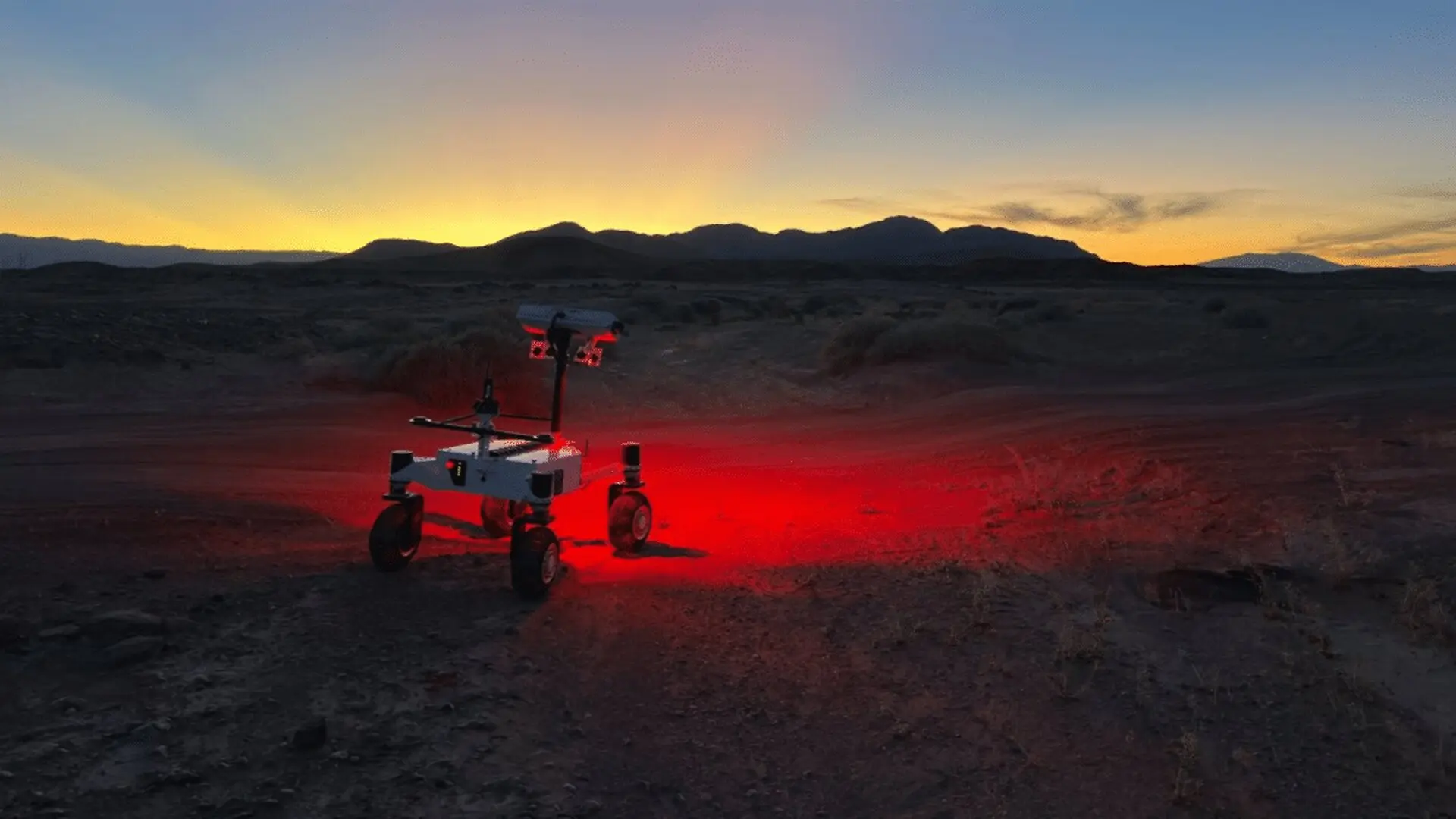
NASA’s Jet Propulsion Laboratory has unveiled a prototype rover that could change how future missions traverse the Moon and Mars. The vehicle, called ERNEST (Exploration Rover For Navigating Extreme Sloped Terrain), demonstrated rapid movement, self‑directed navigation, and terrain‑responsive mobility during a series of desert field tests, hinting at a new generation of more independent planetary explorers.
Desert Trials Reveal High‑Speed, Adaptive Capability
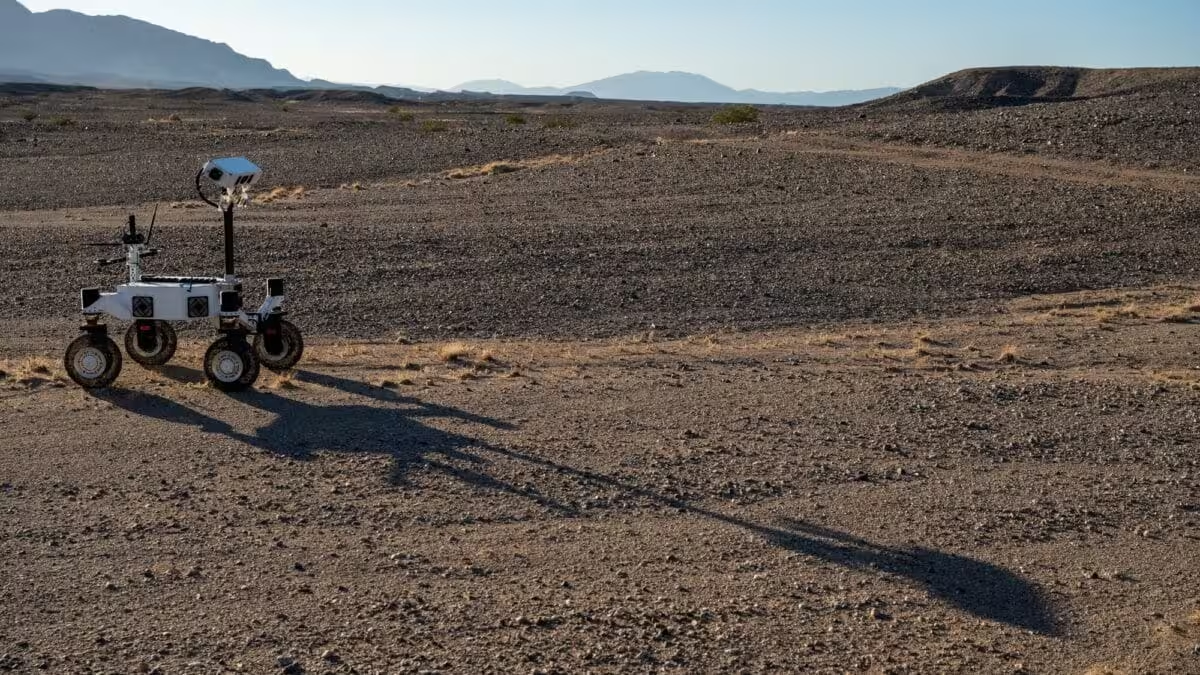
Engineers took ERNEST to the Colorado Desert to assess its performance on uneven, rocky ground with only minimal human oversight. The compact machine, roughly 1.2 meters long, covered about 16 miles (26 kilometers) of challenging terrain while operating largely on its own, a milestone for the rover’s navigation software. Its novel suspension and wheel assembly let the chassis shift its posture on the fly, allowing it to climb obstacles that would stop current Mars rovers such as Curiosity and Perseverance.
The test campaign also simulated long‑duration runs, mirroring the endurance needed for future lunar missions that require extensive range. Researchers gathered data on how the rover handled steep inclines, loose regolith, and unpredictable surface geometry, building a dataset to refine both hardware and onboard decision‑making algorithms.
Speed and Autonomy Redefine Planetary Travel
Unlike the cautious pace of previous Mars surface operations, ERNEST achieved top speeds of roughly 0.6 mph (1 km/h), a notable increase over existing rovers. NASA officials note that this testing supports broader plans for missions that must cover large, scientifically diverse areas quickly. The rover’s active suspension can redistribute weight and adjust wheel placement in real time, offering multiple locomotion modes suited to varying terrain conditions.
“This testing is helping us refine the mobility hardware and autonomy software to navigate extreme distances across a wide range of terrain and lighting conditions anticipated on the Moon,” said Issa Nesnas, a principal technologist at JPL who led the recent testing as head of autonomy for a NASA mission concept for a potential future long‑range lunar rover.
Active Suspension Meets Machine Learning
Traditional planetary rovers rely on rocker‑bogie systems that prioritize stability but limit speed and flexibility. ERNEST replaces that architecture with an active suspension that lets each wheel move independently, enabling lateral shifts, “walking” over obstacles, and adaptive climbing. Engineers iterated through dozens of configurations, using both physical mock‑ups and high‑fidelity simulations to evaluate performance across hundreds of terrain scenarios.
“You could do a science road trip across the Moon — or Mars — with this vehicle,” said James Keane, a JPL planetary scientist working on lunar missions.
The rover also incorporates reinforcement learning, allowing it to improve its driving tactics through simulated experience before deployment. A digital environment created by JPL’s simulation team exposed ERNEST to thousands of virtual driving hours, sharpening its ability to make on‑the‑spot decisions when confronted with unexpected surface features. This blend of AI‑driven autonomy and mechanical innovation lies at the heart of NASA’s roadmap for future exploration.
From Lab Concept to Field Validation and Future Missions
The ERNEST project began as an internal JPL research effort before gaining NASA funding across several exploration programs. Early prototypes were tested with lunar‑soil simulants to gauge performance on different slopes and textures. As the design matured, larger rover models equipped with additional articulation and advanced control software were trialed in JPL’s Mars Yard and desert sites, confirming that simulated behaviors translated into real‑world capability.
“We started by postulating that we could do better in designing a planetary surface robotic mobility system,” said Hari Nayar, a JPL principal technologist leading the ERNEST team. “While the rocker‑bogie system has been very successful over the past 30 years, there’s been a lot of research in that time on mobility and understanding terrain interaction.”
NASA indicates that these advancements aim to open up regions of the Moon and Mars that are currently out of reach for existing rovers, such as steep cliffs, rocky valleys, and extended traverses. By marrying mechanical breakthroughs with AI‑enhanced autonomy, ERNEST serves as a testbed for the next generation of planetary explorers.
This article has been fact checked for accuracy, with information verified against reputable sources. Learn more about us and our editorial process.
Last reviewed on .
Article history
- Latest version
Cite this page:
- Posted by Karan Das