Geologist Spots Mysterious Circle on Google Earth Leading to Stunning Decade Long Discovery
In 2007, a geologist spotted a mysterious circle in the Australian outback via satellite. It took a decade to uncover the truth behind this hidden structure.
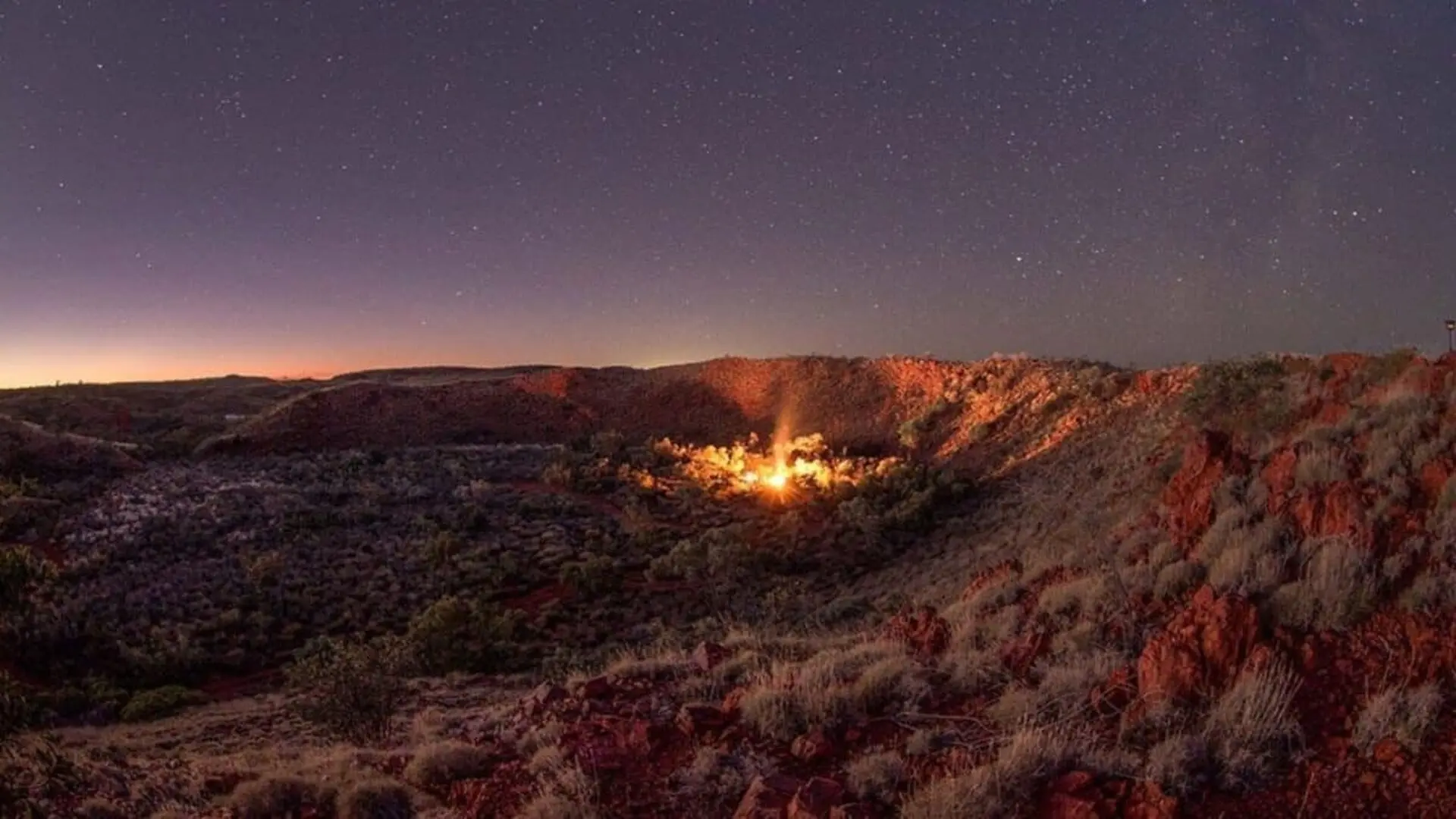
Back in 2007, Australian geologist Arthur Hickman was engaged in the mundane task of reviewing satellite imagery to identify potential iron ore deposits. While scouring the remote landscape of Western Australia’s Ophthalmia Range, his focus shifted to an anomaly that defied the natural geological patterns of the region: a near-perfect circle embedded in the rugged terrain.
What began as a routine industrial survey evolved into a decade-long scientific endeavor to confirm the existence of a hidden impact crater. Though Hickman, then with the Geological Survey of Western Australia, was never searching for cosmic debris, his technical expertise allowed him to recognize that the feature was fundamentally out of place.
From Desktop Discovery to Field Validation
As noted in reports by the Times of India, the discovery highlights the growing utility of platforms like Google Earth in modern geology. While these digital tools provide a powerful vantage point, Hickman emphasized that such sightings require professional verification.
“I wasn’t looking for it,” Hickman recounted regarding the moment he identified the structure. “I was high up in Google Earth when I spotted this little circular structure which struck me as odd.”
Rather than relying solely on the imagery, Hickman coordinated with Dr. Andrew Glickson of the Australian National University. A subsequent field investigation by Glickson confirmed the site as a preserved impact crater—a remarkable oversight given that the surrounding area had been previously mapped by the Survey decades earlier.
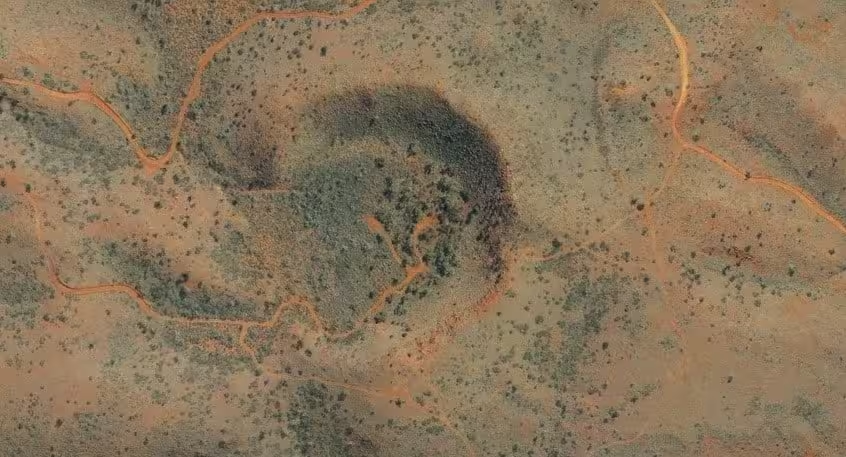
Located approximately 16 kilometres northeast of the Hope Downs 4 Mine and 35 kilometres north of Newman, the crater sits in a landscape that obscures its violent origins to the casual observer.
Anatomy of an Ancient Impact
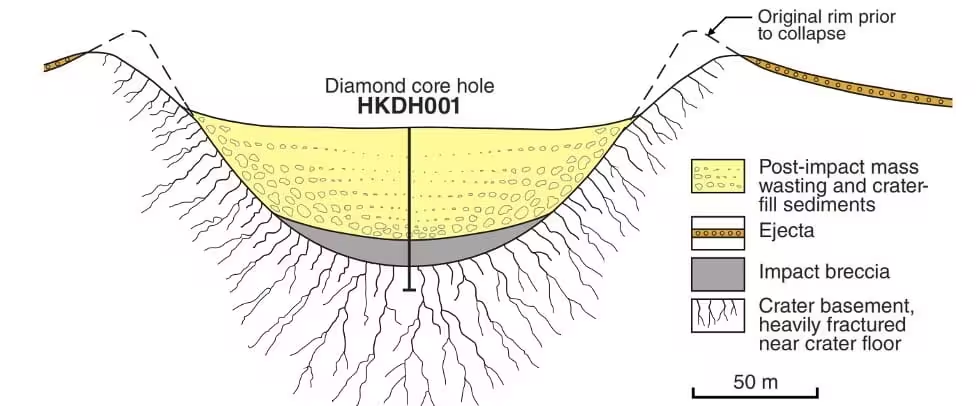
Measuring roughly 260 metres (850 feet) in diameter and descending to a depth of about 30 metres, the site is a relatively small but highly significant geological feature. While initial estimates placed its age within a broad Pleistocene window, more recent analysis suggests the impact occurred approximately 50,000 years ago.
Researchers suggest the event was triggered by an iron-nickel meteorite, estimated to have been between 10 and 15 metres wide at the time of impact. Despite its modest size, the energy released was sufficient to create a lasting geological scar in the outback.
Scientific Confirmation Through Drilling
The definitive proof of the crater’s extraterrestrial nature arrived in 2012, when a collaboration between the Geological Survey of Western Australia and Atlas Iron Ltd conducted subsurface drilling. The results, presented at a Geoscience Research workshop in 2017, confirmed the presence of elevated iridium and palladium levels—chemical signatures indicative of meteoritic material.
Today, the site is formally known as the Hickman Crater, serving as a testament to both the power of geological serendipity and the sharp eye of the observer who first brought it to light.
This article has been fact checked for accuracy, with information verified against reputable sources. Learn more about us and our editorial process.
Last reviewed on .
Article history
- Latest version
Reference(s)
- Desk, TOI. “In 2007, an Australian geologist browsing Google Earth spotted an 850-foot circle in the outback; drilling later confirmed an iron-meteorite crater.”, September 20, 2026 The Times Of India <https://timesofindia.indiatimes.com/world/rest-of-world/in-2007-an-australian-geologist-browsing-google-earth-spotted-an-850-foot-circle-in-the-outback-drilling-later-confirmed-an-iron-meteorite-crater/articleshow/134351897.cms>.
- “Haines 2014 Hickman Crater Drilling.” <https://www.polandmet.com/wp-content/uploads/2024/01/Haines-2014-Hickman-Crater-drilling.pdf>.
- Staff, AG. “Hickman Crater in Western Australia.”, June 12, 2015 Australian Geographic <https://www.australiangeographic.com.au/news/2015/06/hickman-crater-in-western-australia/>.
Cite this page:
- Posted by Karan Das