Hidden Telescope Glitches Are Creating Phantom Exoplanets in Space Data
A new mathematical filter reveals how spacecraft scanning patterns trick astronomers into seeing ghost worlds and fake black holes.
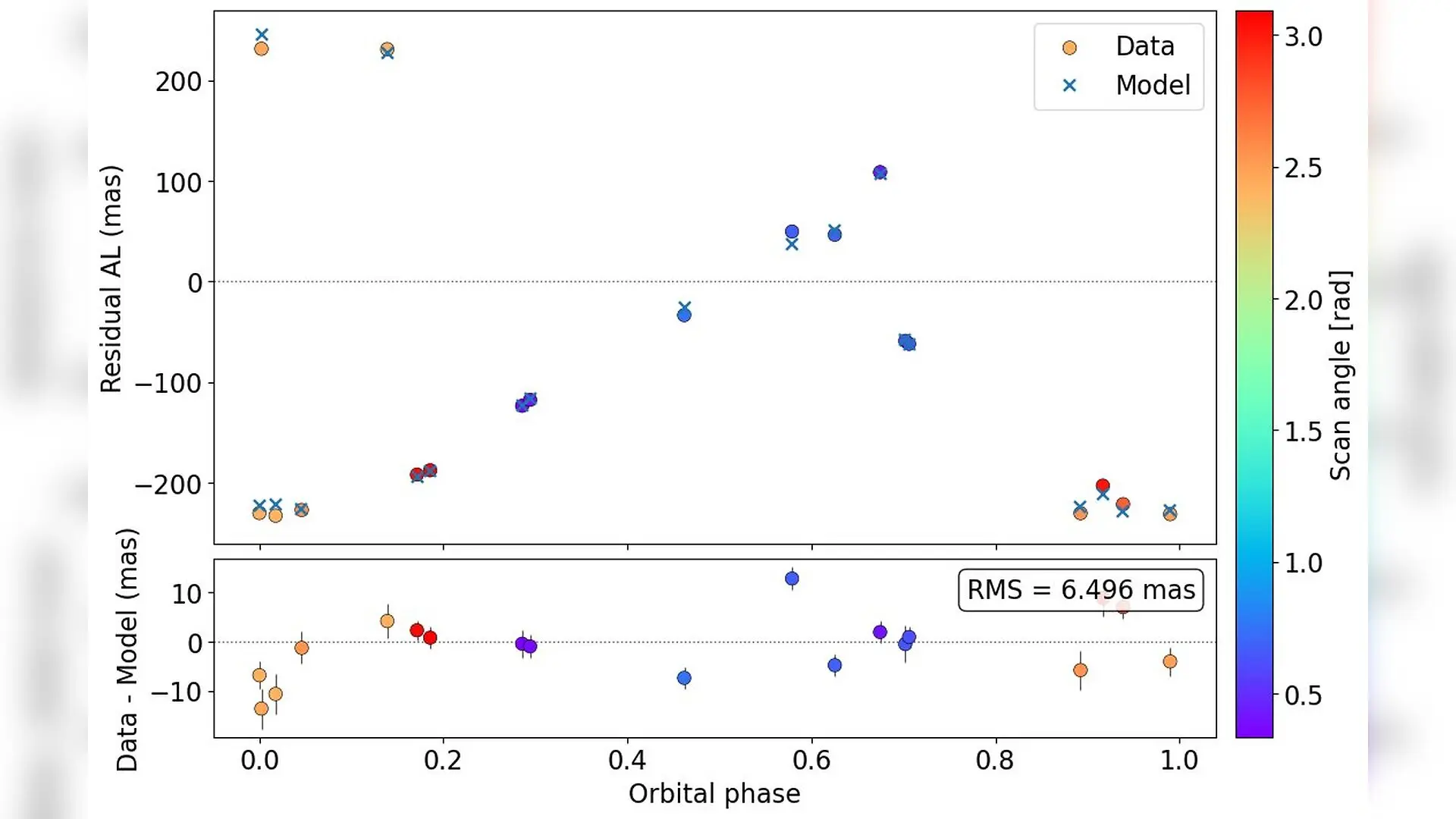
A new statistical method has exposed how subtle telescope pointing patterns can trick astronomers into seeing phantom alien worlds and ghost black holes in space data. Space observatories scan the sky in complex one-dimensional sweeps, creating hidden mathematical echoes that look remarkably like real orbiting planets.
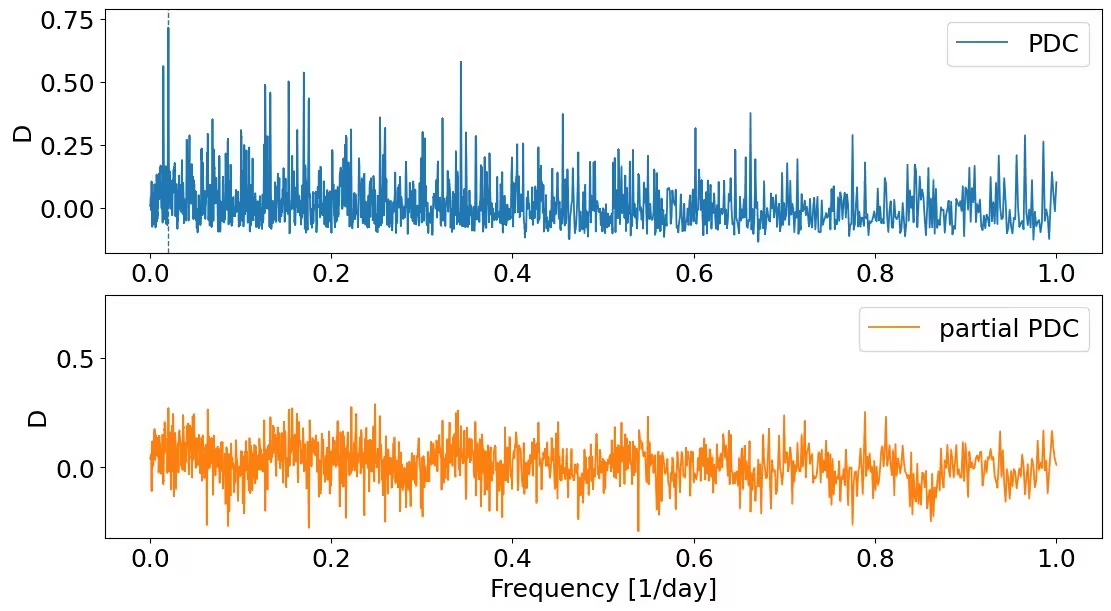
Astronomers Avraham Binnenfeld, Sahar Shahaf, Richard I. Anderson, H.-W. Rix, and Shay Zucker developed a diagnostic tool published in arXiv to clean up these scanning-law artifacts. Their mathematical approach builds upon the phase-distance correlation periodogram, which is a specialized statistical tool designed to search for repeating periodic signals without assuming a specific orbital shape. By adding a partial distance correlation matrix that explicitly measures how much an observation depends on its scanning angle, the authors successfully isolated genuine astrophysical motions from mechanical telescope fingerprints.
How Space Telescopes Generate False Planet Signals
Both the historical Hipparcos spacecraft and the modern Gaia observatory do not capture full two-dimensional snapshots of stars during every single observation. Instead, they sweep across the sky along changing angles, coupling observation times directly with telescope geometry. This creates an uneven sampling problem analogous to the classic spectral window dilemma in time-series analysis, where the instrument’s own rhythm imprints itself onto the target star.
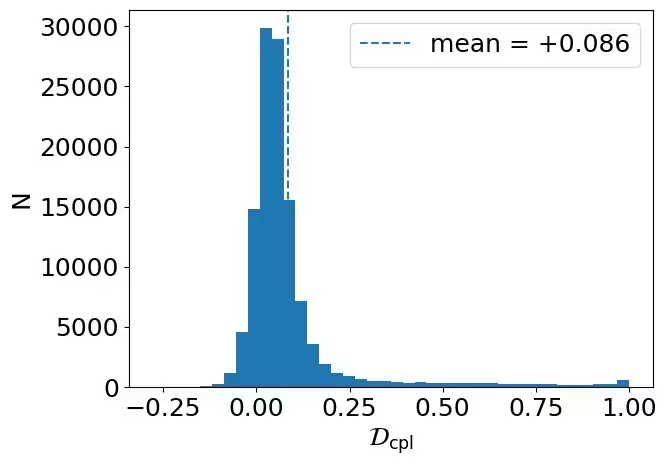
When researchers ran standard period searches on 120,000 Hipparcos stars, recurring false signals popped up at roughly 28 days, 49 days, and 82 days. These repeating timescales tie directly back to the 57-day precession cycle of the Hipparcos scanning law and yearly orbital modulations. For instance, a star named HIP 29616 displayed a strong 49-day signal that, under a naive Keplerian analysis, pointed toward an extremely eccentric, short-period binary orbit with a separation of just a few stellar radii. The new scan-angle-controlled statistic revealed that this alarming orbital solution was actually an instrumental ghost born from the scanning geometry rather than a real companion.
Testing the Method on Prerelease Gaia Data
Moving beyond historical archives, the team applied their technique to early epoch astrometry from the upcoming Gaia Data Release 4, which provides precise measurements for 12 selected stars. Among nine prerelease sources lacking prior orbital classifications, eight exhibited a strong spurious peak clustered tightly between 53.51 and 54.03 days. This matched a known scanning artifact previously identified in Gaia investigations.
When the authors applied their partial distance correlation filter, that 54-day feature was heavily suppressed across all eight targets. At the same time, genuine orbital signals remained fully detectable. For a system known as Gaia-4, the standard periodogram pointed to a confusing high-frequency peak, but the scan-corrected method successfully recovered the true 571.3-day orbital frequency.
Why Filtering Space Data Matters for Future Discoveries
Uncovering these hidden observational traps is essential as Gaia expands its mission scope toward finding thousands of exoplanets and dormant black holes. Because these rare discoveries rely on very faint, subtle orbital wobbles hidden inside sparse time series, even tiny instrumental echoes can easily trigger false alarms and misinterpretations.
The authors caution that their scan-aware statistic functions strictly as a diagnostic tool for geometric dependence rather than an automatic classifier of physical origin. Genuine astrophysical signals coupled tightly to the scanning angle might occasionally get suppressed, while instrumental noises that do not depend on scan angles could potentially linger. Nevertheless, the framework gives astronomers a powerful lens to double-check whether a newfound exoplanet or dead star is genuinely orbiting in the cosmos or simply riding the scanning rhythm of the telescope.
The study was posted to the arXiv preprint server on November 5, 2026.
This article has been fact checked for accuracy, with information verified against reputable sources. Learn more about us and our editorial process.
Last reviewed on .
Article history
- Latest version
Reference(s)
- Binnenfeld, A.., et al. “Mitigating scanning-induced systematics in Hipparcos andimplications for Gaia astrometry.” Astronomy & Astrophysics, October 28, 2026 EDP Sciences, doi: 10.1051/0004-6361/202661484. <https://doi.org/10.1051/0004-6361/202661484>.
Cite this page:
- Posted by John Williams