ESA’s Juice Spacecraft Is Returning to Earth for a Crucial Gravity Boost Toward Jupiter
ESA’s Juice spacecraft is preparing for a critical Earth gravity assist, a key maneuver shaping its long-term journey to explore the moons of Jupiter.
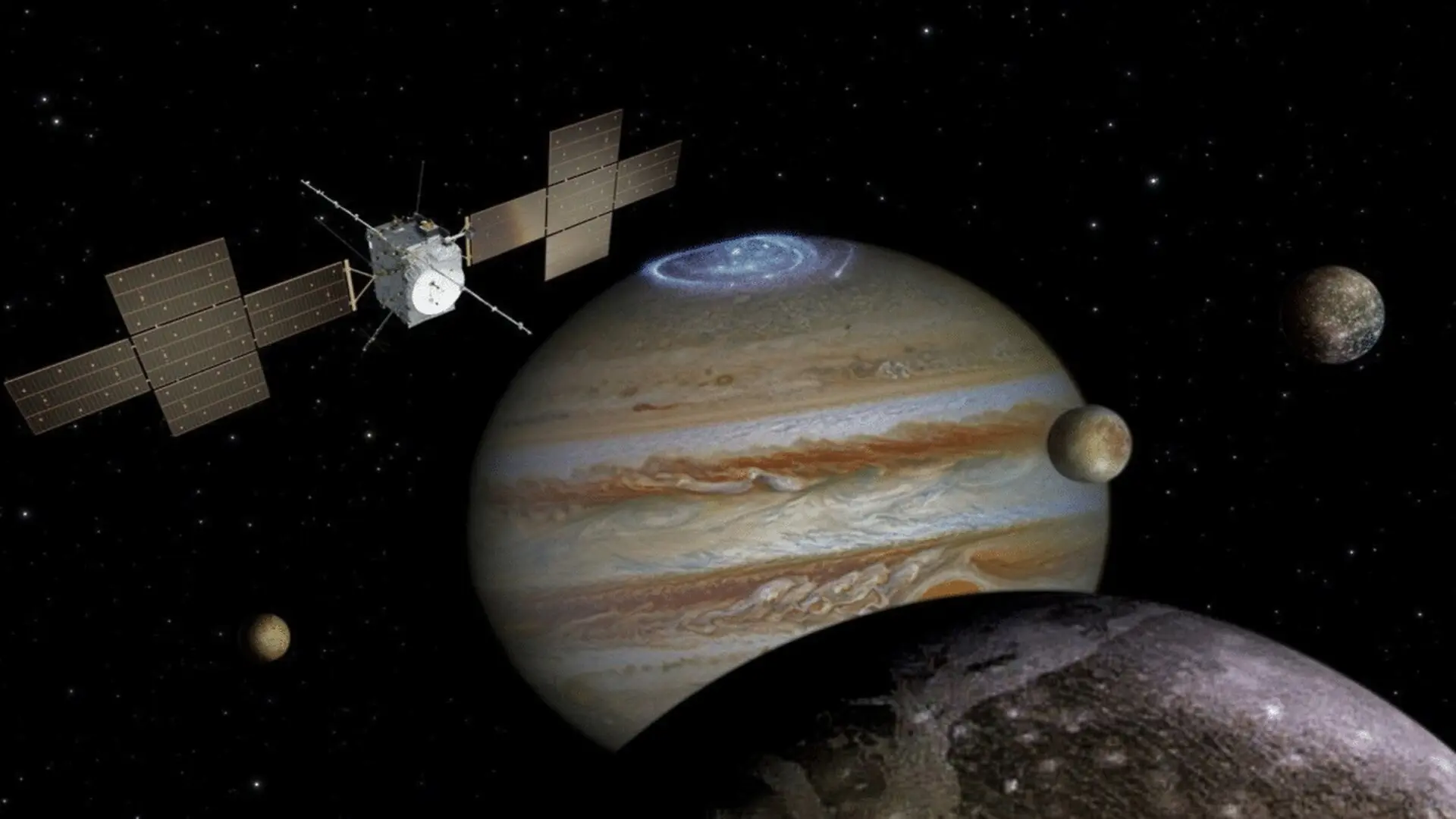
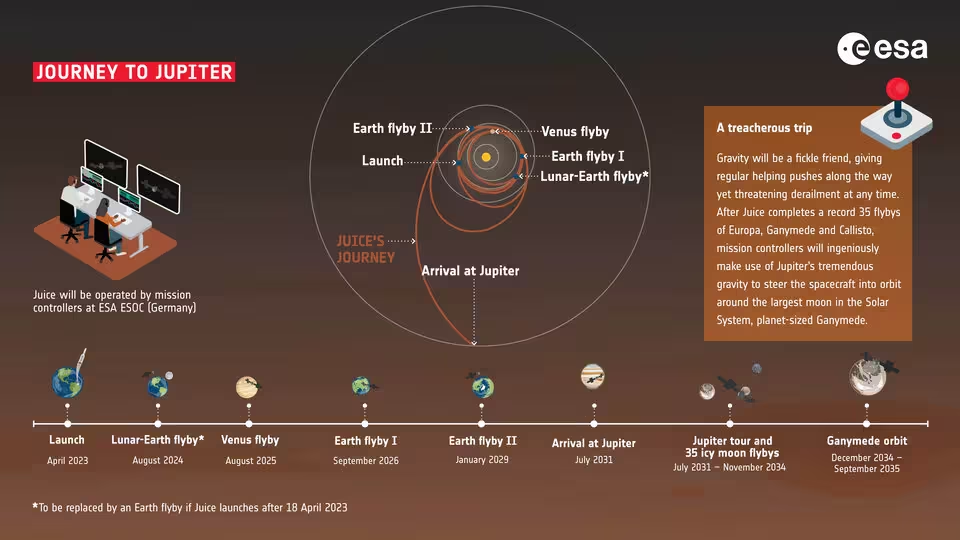
The European Space Agency’s Jupiter Icy Moons Explorer (JUICE) is closing in on Earth for a critical gravitational maneuver scheduled for September 28. This upcoming flyby serves as a pivotal stage in the spacecraft’s multi-year trek across the solar system, utilizing the momentum of our home planet to refine its trajectory toward the Jovian system.
Gravity as a Tool for Deep Space Transit
To reach the outer reaches of our solar neighborhood with limited onboard propellant, engineers rely on gravity assists, a technique that leverages the gravitational pull of planets to alter a spacecraft’s velocity and flight path. By performing this precise flyby, the JUICE mission optimizes its fuel consumption, ensuring the probe retains enough energy for its primary objectives once it reaches its destination.
Success depends on pinpoint navigation. The flight dynamics team has already executed a key maneuver four weeks prior to the encounter, ensuring the probe is correctly positioned for its rendezvous with Earth. Angela Dietz, the mission’s spacecraft operations manager, noted that this small but highly effective adjustment was essential for setting the spacecraft on the right course for the flyby.
Validating Scientific Instruments Through Terrestrial Targets
Beyond the orbital mechanics, the Earth flyby presents a valuable scientific opportunity. Researchers intend to use the proximity of Earth and the Moon to calibrate the suite of instruments onboard JUICE. Because our planet and its satellite are well-understood environments, they serve as the perfect benchmark to confirm that the spacecraft’s sensors are functioning as expected before they are tasked with observing the distant, icy moons Ganymede, Callisto, and Europa.
According to project scientists, the flyby will allow for flexible maneuvering, enabling the team to point the probe’s instruments in various directions to capture data on Earth and the Moon. This calibration is vital for the mission’s eventual goal of investigating the subsurface oceans of Jupiter’s moons, which are considered prime candidates in the search for potentially habitable environments elsewhere in the solar system.
Navigating Complex Orbital Mechanics
While the September 28 maneuver is a routine part of the mission’s design, it remains a high-stakes operation. Project Scientist Claire Vallat emphasizes that while all gravity assists carry inherent risks, this particular event is more straightforward than the complex lunar-Earth flyby performed in 2024, which required a delicate, back-to-back sequence of two gravitational encounters.
Following the September 28 event, mission control will verify the success of the trajectory change before moving into the next phase of the cruise to Jupiter. Launched in 2023 on an Ariane 5 rocket, the spacecraft is currently on track for a 2031 arrival at the gas giant.
Charting a Path Toward Ocean Worlds
The mission represents a significant achievement in modern orbital mechanics and space exploration. Each gravity-assisted turn of the spacecraft brings it closer to probing the mysteries of Jupiter’s largest moons and understanding the potential for life in icy worlds. As JUICE continues its multi-year journey, these careful planetary encounters remain the heartbeat of a mission designed to push the boundaries of our knowledge regarding the outer solar system.
This article has been fact checked for accuracy, with information verified against reputable sources. Learn more about us and our editorial process.
Last reviewed on .
Article history
- Latest version
Cite this page:
- Posted by Karan Das