NASA Asteroid Samples Reveal Jupiter Played A Surprising Role In The Birth Of Our Solar System
NASA’s analysis of samples from asteroid Bennu reveals a surprising origin story linked to Jupiter’s early movements and the formation of our solar system.
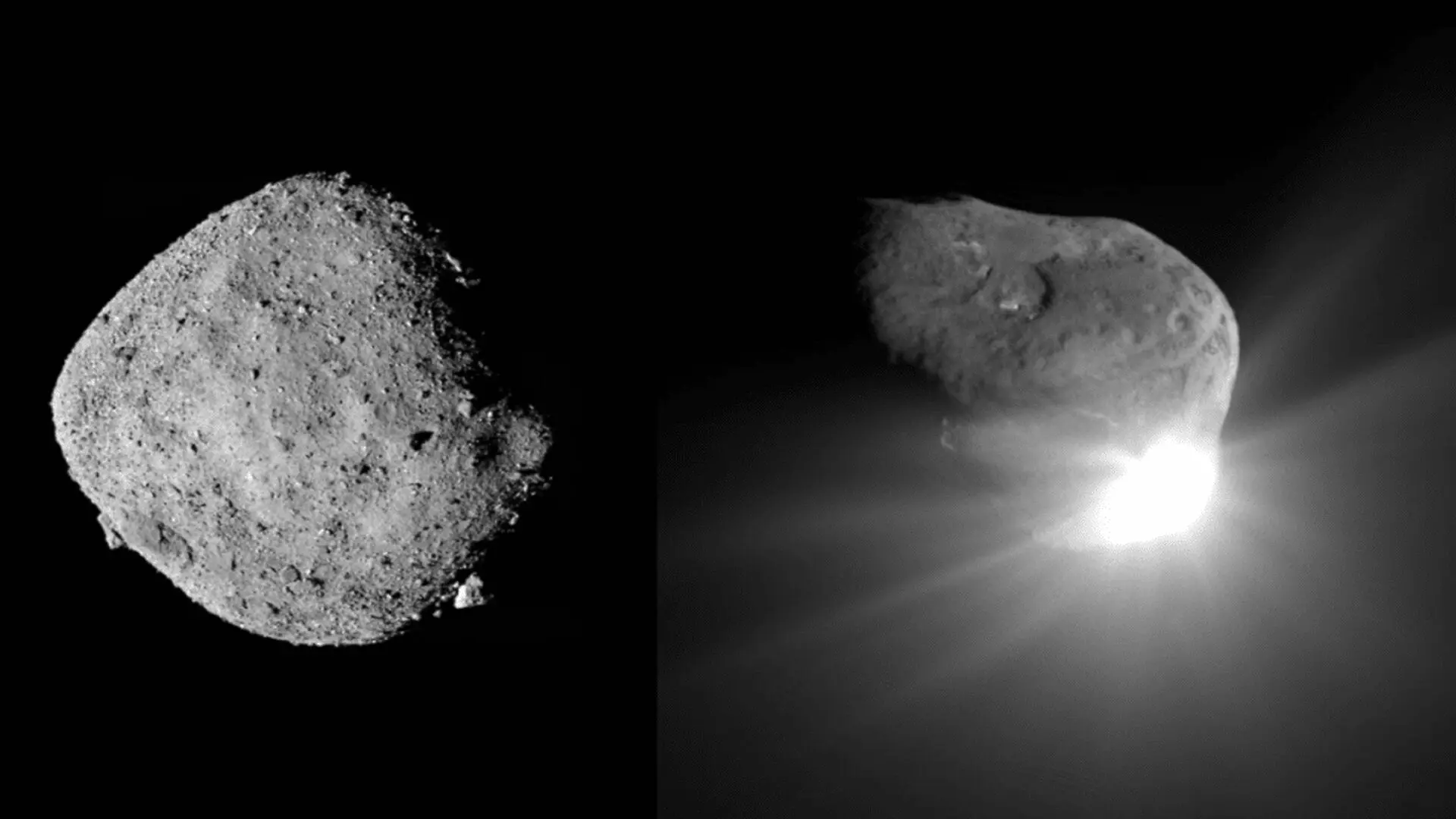
New analysis of extraterrestrial material returned by NASA’s OSIRIS-REx mission has provided a window into the turbulent environment of the infant solar system. According to research published in Science Advances, the asteroid Bennu acts as a chemical time capsule, revealing that the building blocks of our planetary neighborhood were far more mobile than previously assumed.
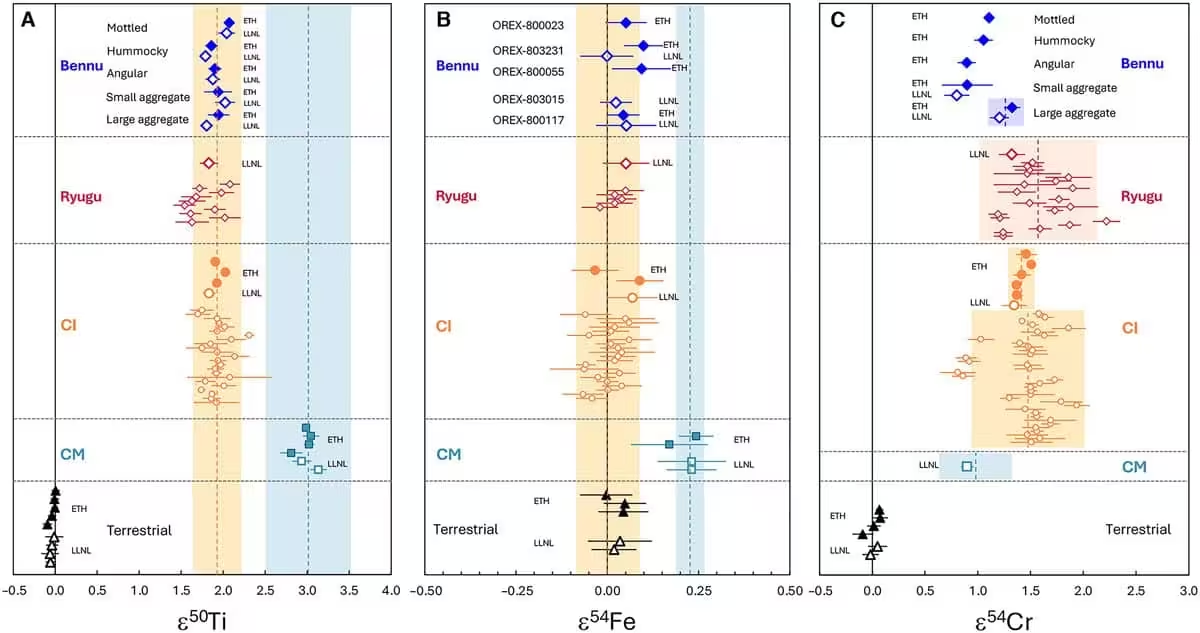
By studying a fraction of the 120 grams of surface material brought back to Earth in 2023, a team at ETH Zurich identified unique isotopic signatures within the asteroid’s mineralogy. Their examination of iron, titanium, and chromium isotopes revealed a striking chemical consistency, linking Bennu not only to the asteroid Ryugu but also to rare CI meteorites found on Earth. This suggests that these distinct bodies share a common lineage, originating from the same primordial reservoir of cosmic dust.
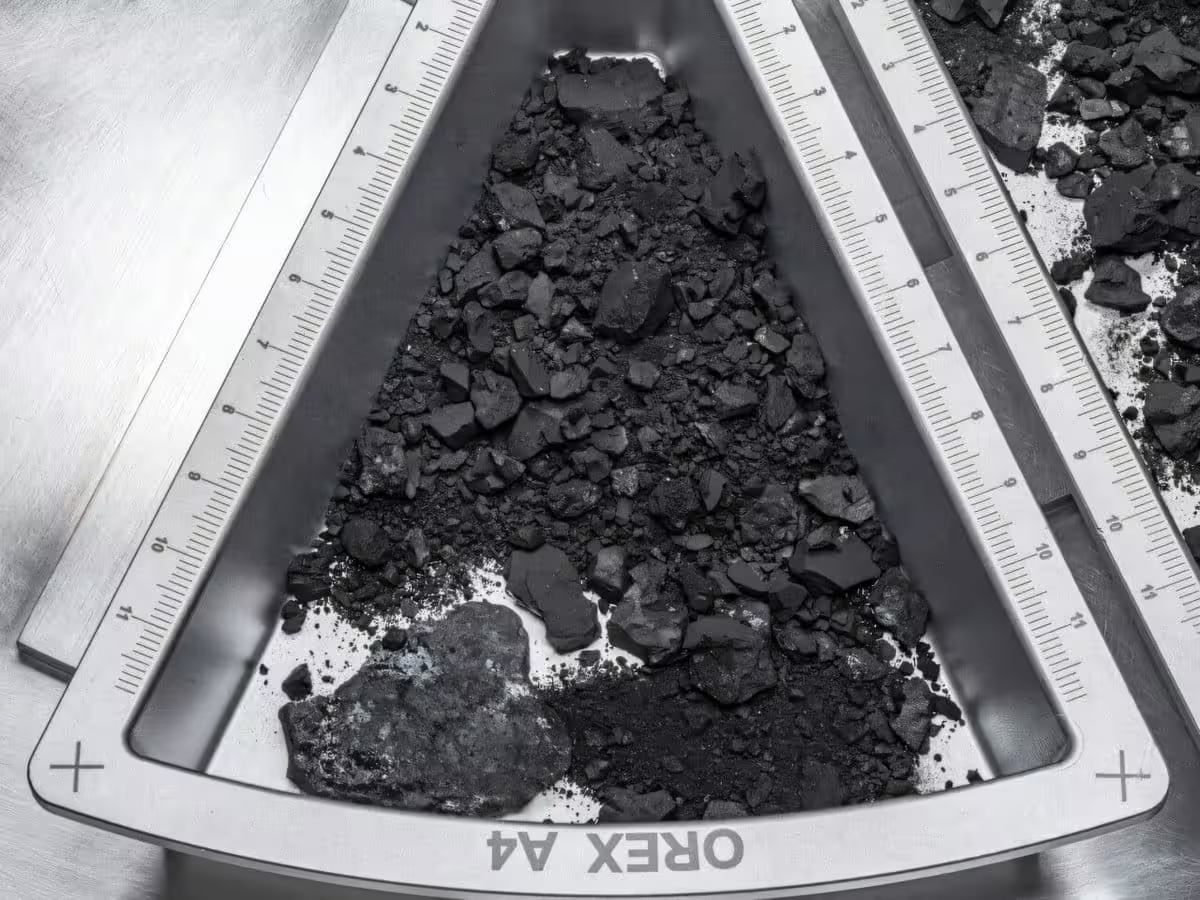
A Hybrid Origin Story
The isotopic data effectively challenges the long-held notion that solar system material was sequestered into isolated zones during the planet-forming era. Instead, the findings suggest a dynamic mixing process, where material from disparate regions of the early protoplanetary disk coalesced. Researcher Schönbächler describes Bennu as a hybrid object, noting that its composition defies easy categorization into either inner or outer solar system origins.
This hybrid nature points toward a formation site near the water-ice line—the critical boundary roughly 4.5 billion years ago where temperatures became low enough for water vapor to transition into ice. Researchers believe that fine dust and icy components converged here, creating the raw materials that eventually coalesced into Bennu.
The Influence of a Growing Gas Giant
The study suggests that Jupiter, having formed within the first million years of the Sun’s life, likely dictated this distribution. By acting as a gravitational gatekeeper, the gas giant may have hindered the movement of larger particles while permitting fine-grained, diverse materials to drift and blend near the water-ice boundary.
Because Bennu has remained largely geologically inactive since its formation, it provides a pristine record of these early conditions. As Schönbächler explains, the asteroid may offer the most accurate glimpse available into the original chemical mix that served as the foundation for the terrestrial planets. This understanding of how water-rich, organic-bearing materials were distributed is critical for deciphering how life-essential ingredients were delivered to nascent worlds like Earth.
Expanding the Cosmic Census
With these results published in Science Advances, the scientific community is now looking to determine if this isotopic signature is a universal feature of ancient asteroids or a specific anomaly. Future investigations, including JAXA’s upcoming mission to sample Phobos—the moon of Mars—are expected to provide more data points by 2031.
Comparing these future samples with the data gathered from Bennu will be essential for reconstructing the complex, chaotic sequence of events that transformed a simple disk of dust and ice into the structured solar system observed today.
This article has been fact checked for accuracy, with information verified against reputable sources. Learn more about us and our editorial process.
Last reviewed on .
Article history
- Latest version
Reference(s)
- Schönbächler, Maria., et al. “Nucleosynthetic constraints on the origin of Bennu and CI-like asteroids.” Science Advances, vol. 12, no. 39, September 25, 2026 American Association for the Advancement of Science (AAAS), doi: 10.1126/sciadv.aei9107. <https://www.science.org/doi/10.1126/sciadv.aei9107>.
Cite this page:
- Posted by Karan Das