Stunning 520 Million Year Old Fossil Found With Brain And Nervous System Still Intact
A 500-million-year-old fossilized larva has revealed its internal organs, defying expectations and offering a rare glimpse into ancient biological evolution.
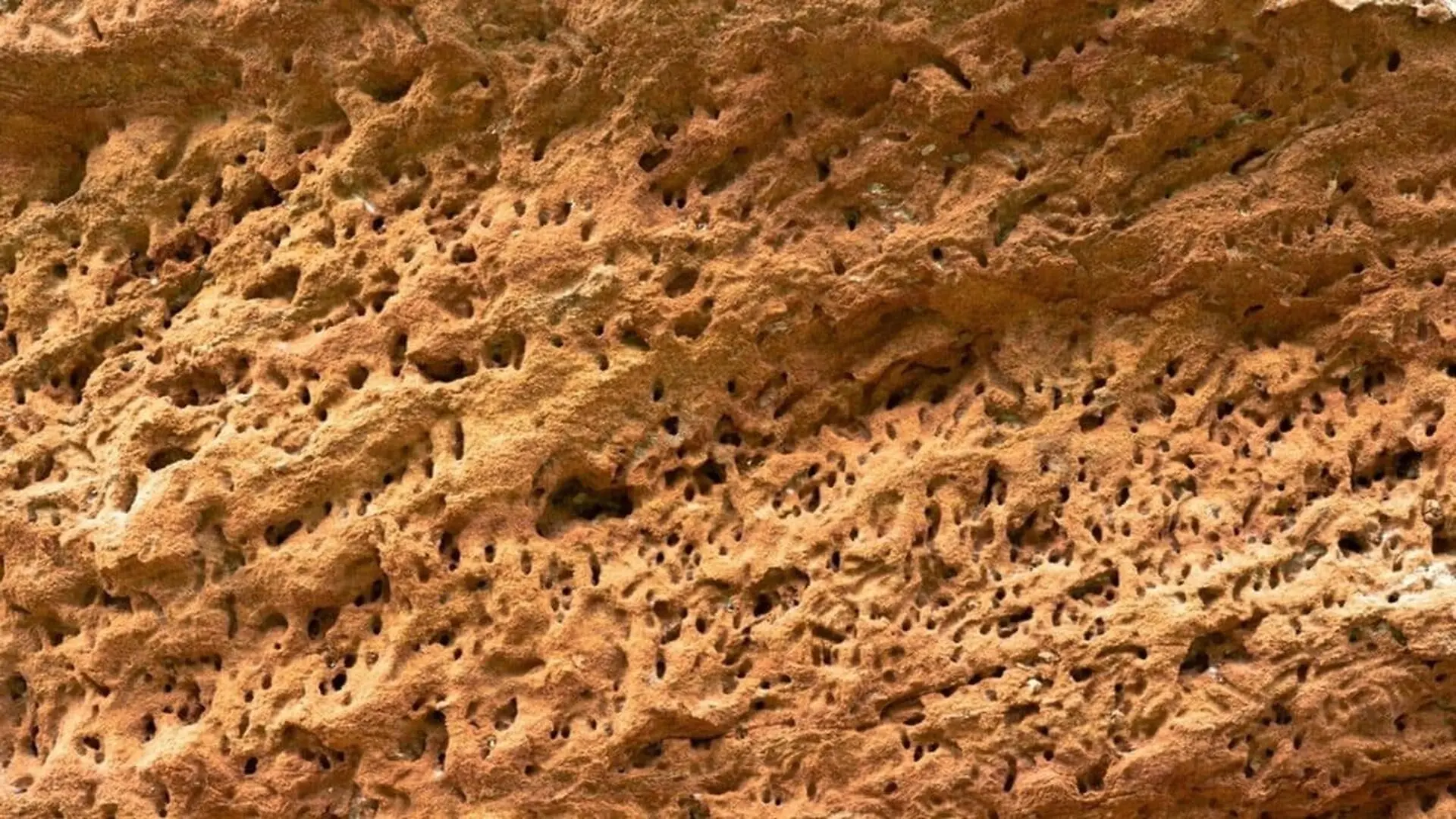
Paleontologists have uncovered an extraordinary relic from the Cambrian period, a 520-million-year-old larva that defies the typical limitations of the fossil record. While fossilization usually preserves only the rigid, mineralized structures of an organism, this ancient arthropod ancestor has defied the odds, keeping its internal anatomy—including a brain and digestive tract—intact.
The discovery represents a significant leap in our understanding of early animal development. As a precursor to modern arthropods, such as insects, crabs, and lobsters, this specimen offers a rare, high-resolution snapshot of how life was organized during the Cambrian Explosion, a pivotal era when the ancestors of most major animal groups first emerged.
Defying the Laws of Decay
Lead researcher Martin Smith noted that the likelihood of finding such a fragile, soft-bodied larva in the fossil record was essentially nonexistent. Because larvae are composed of delicate tissues that typically decompose long before mineral replacement can occur, their internal structures are almost never preserved.
Upon examining the specimen, Smith expressed profound surprise at the level of detail still visible after half a billion years. “When I saw the amazing structures preserved under its skin, my jaw just dropped – how could these intricate features have avoided decay and still be here to see half a billion years later?” he said in a statement.
Revealing Anatomy Through Synchrotron Imaging
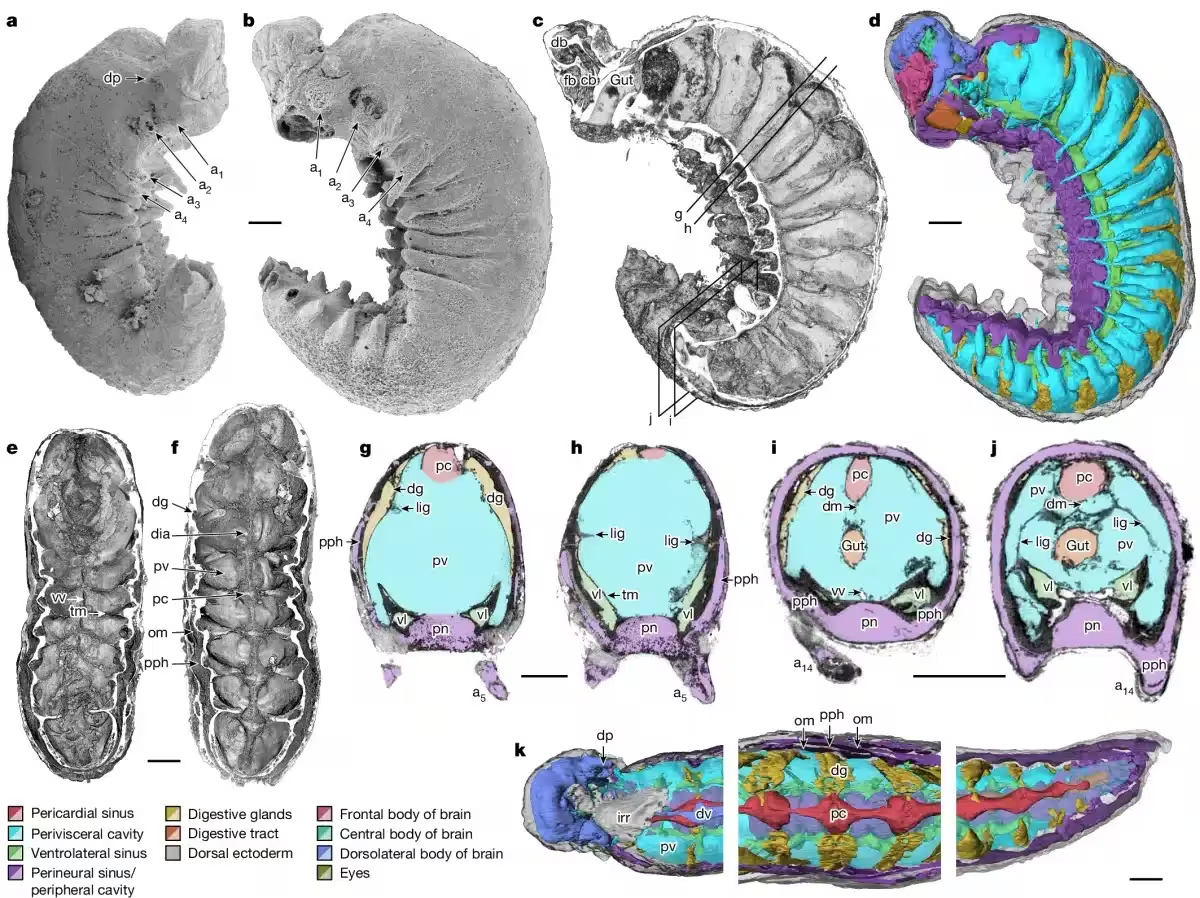
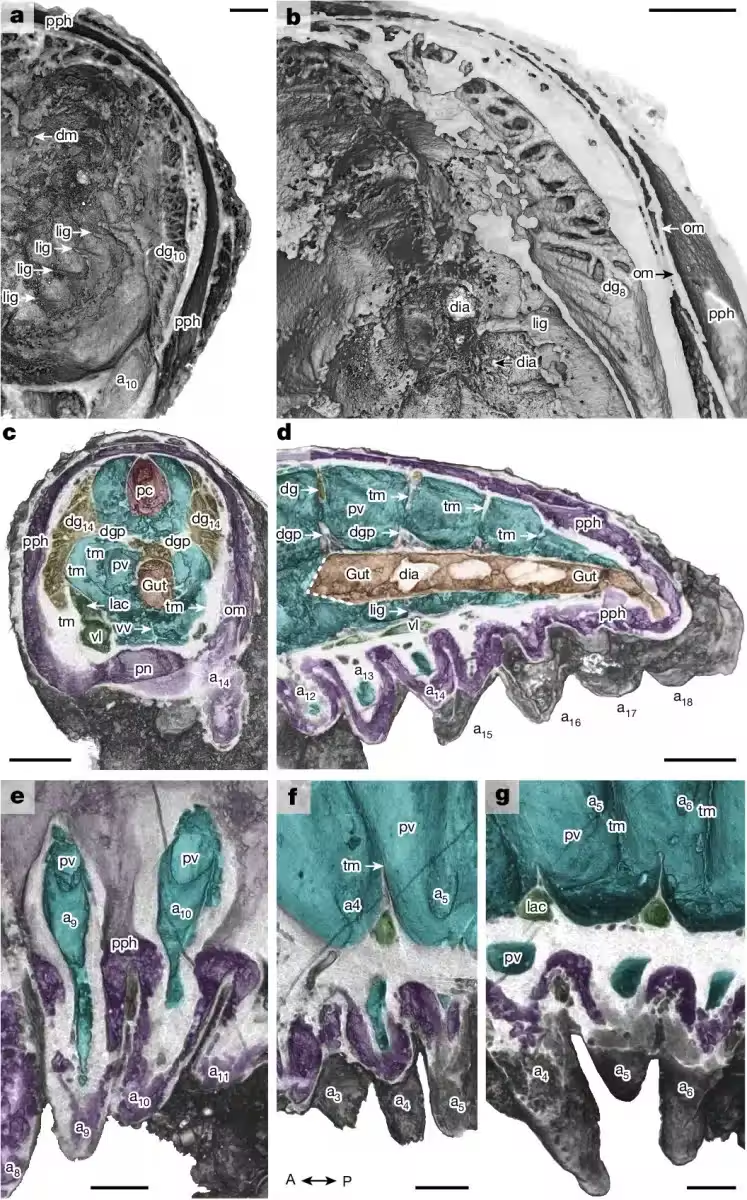
To analyze the specimen without damaging it, the research team utilized synchrotron X-ray tomography. This advanced imaging technology allowed the scientists to reconstruct the larva in 3D, peering beneath its exterior to reveal a complex internal architecture. The scans highlighted a preserved brain, digestive glands, a primitive circulatory system, and the delicate nerve fibers that once connected to the creature’s limbs and eyes.
“It’s always interesting to see what’s inside a sample using 3D imaging, but in this incredible tiny larva, natural fossilisation has achieved almost perfect preservation,” noted co-author Katherine Dobson.
A New Perspective on Evolutionary Complexity
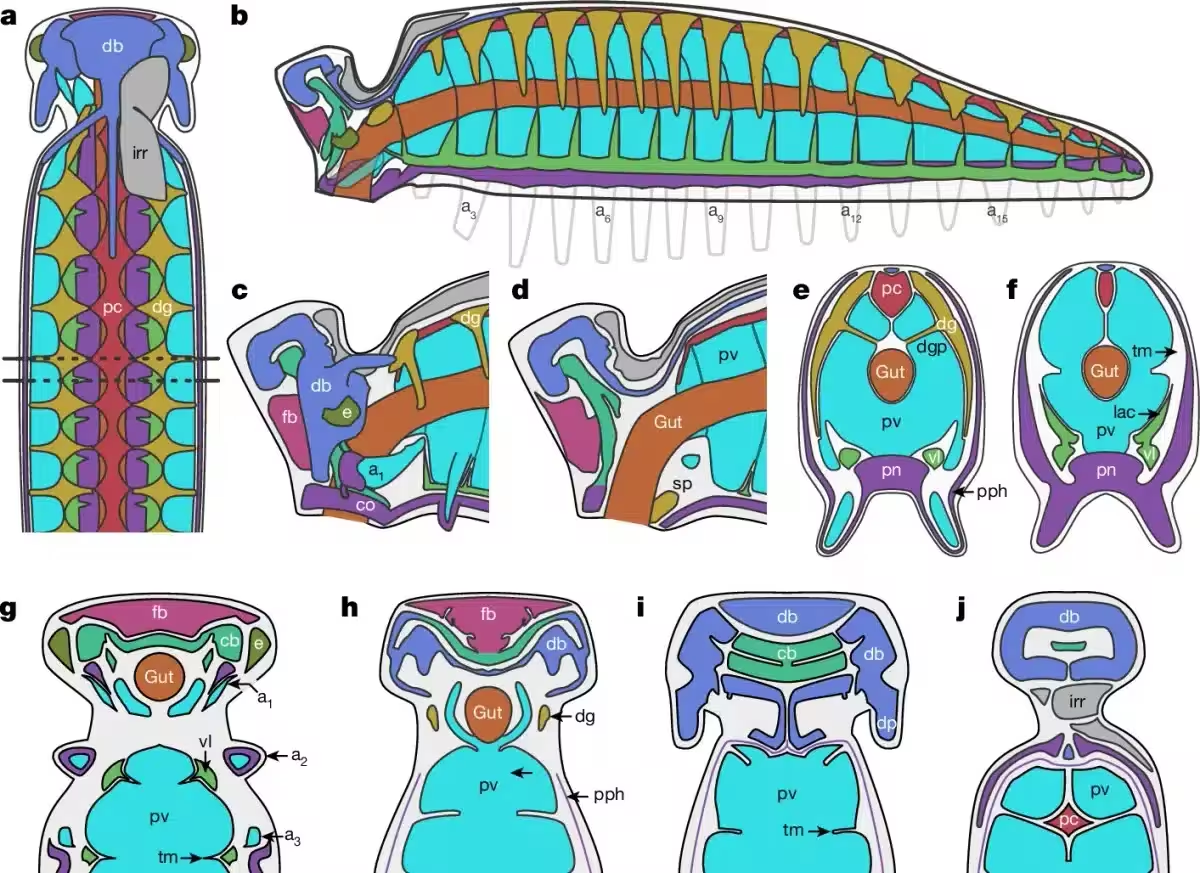
The findings, detailed in the journal Nature, indicate that early arthropods possessed a higher degree of anatomical complexity than previous models suggested. By identifying specific brain structures, such as the protocerebrum, researchers were able to draw a direct evolutionary line to the anatomical features found in modern arthropod heads.
This critical brain region is believed to have played a major role in the group’s success, providing the sensory integration necessary for arthropods to thrive in virtually every ecosystem on Earth, from the deep ocean floor to the harsh climate of Antarctica. For the researchers, this fossil is more than just an ancient curiosity; it is a vital key to unlocking the developmental timeline of one of the most successful animal phyla in history.
This article has been fact checked for accuracy, with information verified against reputable sources. Learn more about us and our editorial process.
Last reviewed on .
Article history
- Latest version
Reference(s)
- “ORCID.” <https://orcid.org/0000-0001-5660-1727>.
- <https://www.eurekalert.org/news-releases/1052858>.
- “Dr Katherine Dobson | University of Strathclyde.” <https://www.strath.ac.uk/staff/dobsonkatherinedr/>.
- Smith, Martin. “Organ systems of a Cambrian euarthropod larva - Nature.”, vol. 633, no. 8028, pp. 120-126. Nature, doi: 10.1038/s41586-024-07756-8. <https://www.nature.com/articles/s41586-024-07756-8>.
Cite this page:
- Posted by Hassan Raza