Scientists Discover 57 New Species in Massive Underwater Canyon Deep Beneath the Atlantic
Scientists exploring a deep-sea canyon off the coast of South America have discovered dozens of previously unknown species in the ocean’s midnight zone.
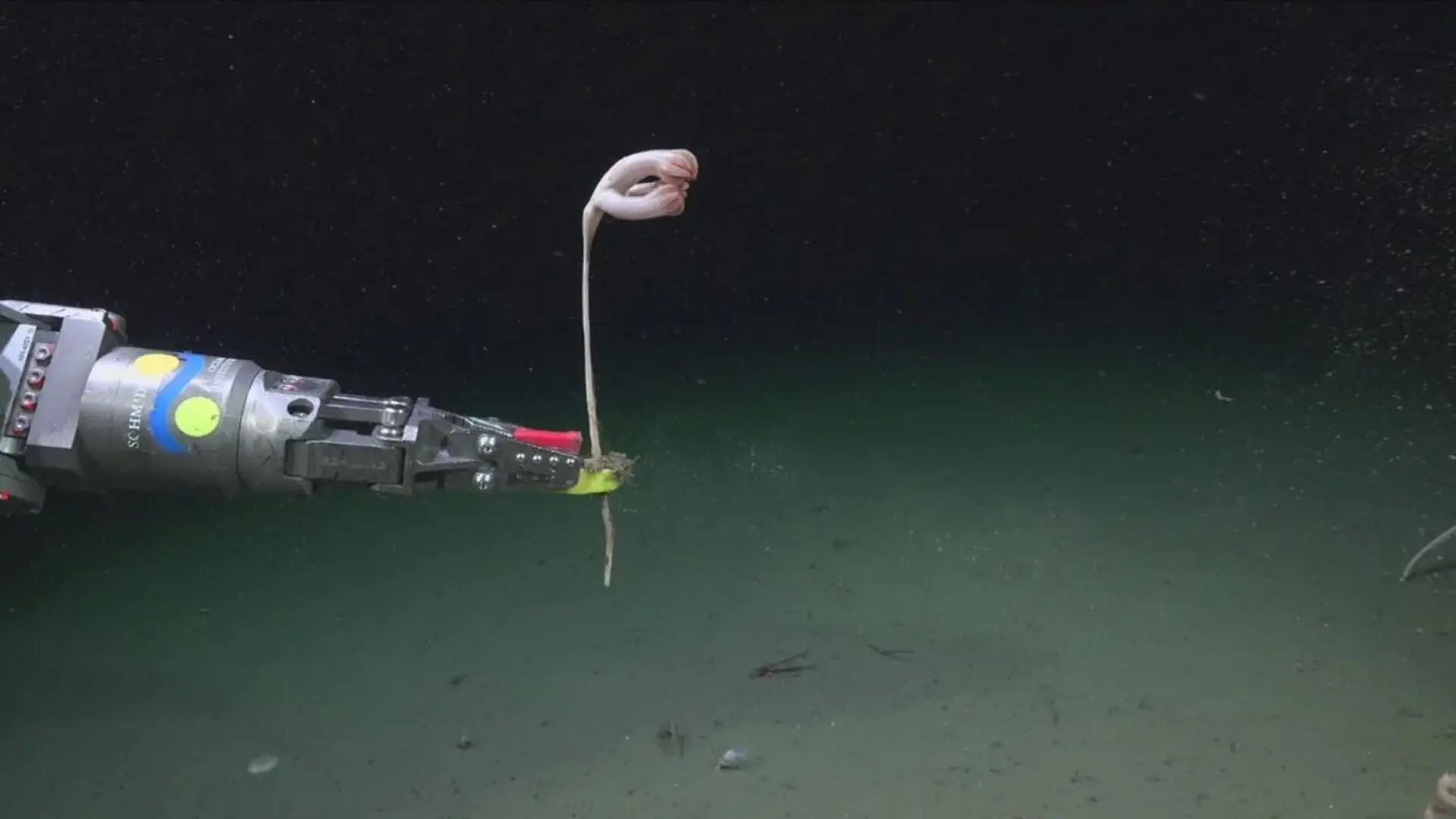
Marine biologists have unveiled a trove of previously undocumented biodiversity from the depths of the South Atlantic, identifying 57 new species and five new genera within the Mar del Plata Canyon off the coast of Argentina. The findings, which span a diverse array of life from microscopic crustaceans to complex corals, underscore the vast, untapped biological wealth hidden within the ocean’s twilight and midnight zones.
The discovery is the result of the Underwater Oases of the Mar del Plata Canyon expedition, conducted during the summer of 2025 aboard the research vessel Falkor (too). Investigators specifically targeted the Brazil-Malvinas Confluence, a dynamic oceanic region where warm subtropical currents collide with cold, nutrient-dense waters from the south, creating a highly productive environment that supports unique deep-sea ecosystems.
A Deep-Sea Taxonomic Breakthrough
Following the expedition, a cohort of 20 taxonomists and early-career researchers from across Europe and Latin America convened in July 2026 for a rigorous Species Discovery Workshop. The team analyzed specimens gathered during the 2025 mission alongside archived samples from Argentina’s earlier Talud Continental I-III surveys conducted in 2012 and 2013. The collective effort confirmed the discovery of:
- 20 new species of copepods
- 22 new species of echinoderms, including sea cucumbers and crinoids
- 14 new species of cnidarians, such as sea pens and stony corals
- One new species of scaphopod mollusc
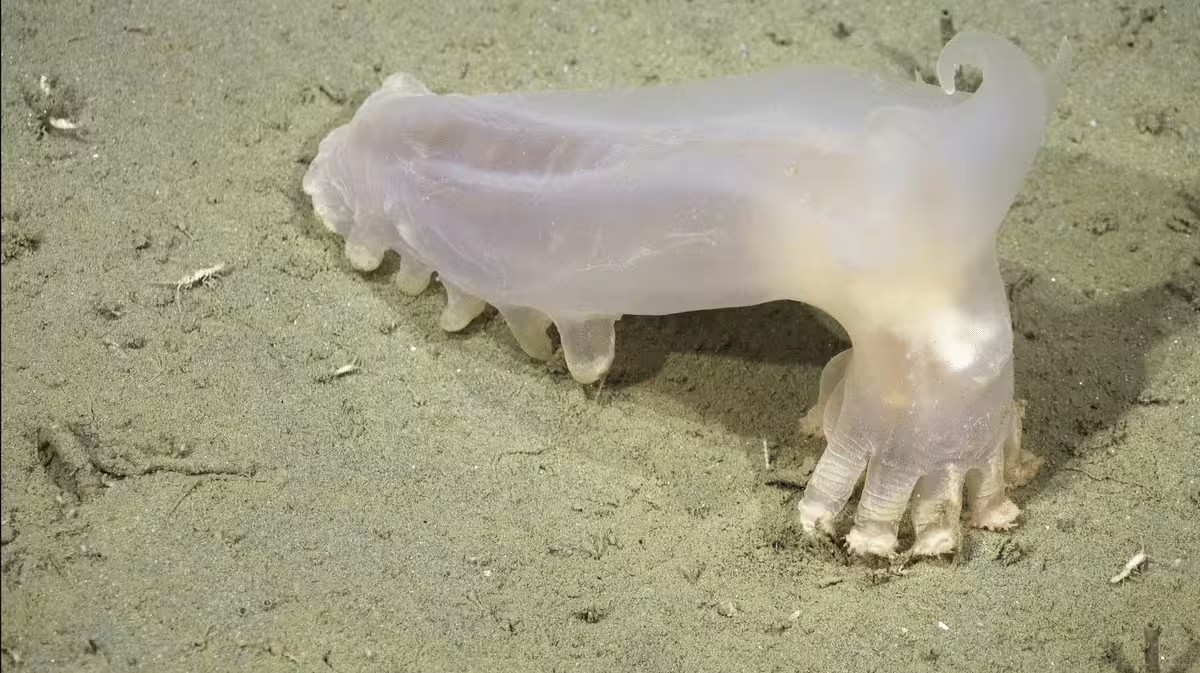
Among the most striking finds was a new species of sea cucumber, affectionately dubbed Loki (Peniagone sp.), distinguished by the horn-like appendages on its body. Copepods also proved to be a major source of discovery; although researchers have processed only about 10 percent of the collected samples, every individual examined to date represents a species previously unknown to science.
Exploring the Abyss
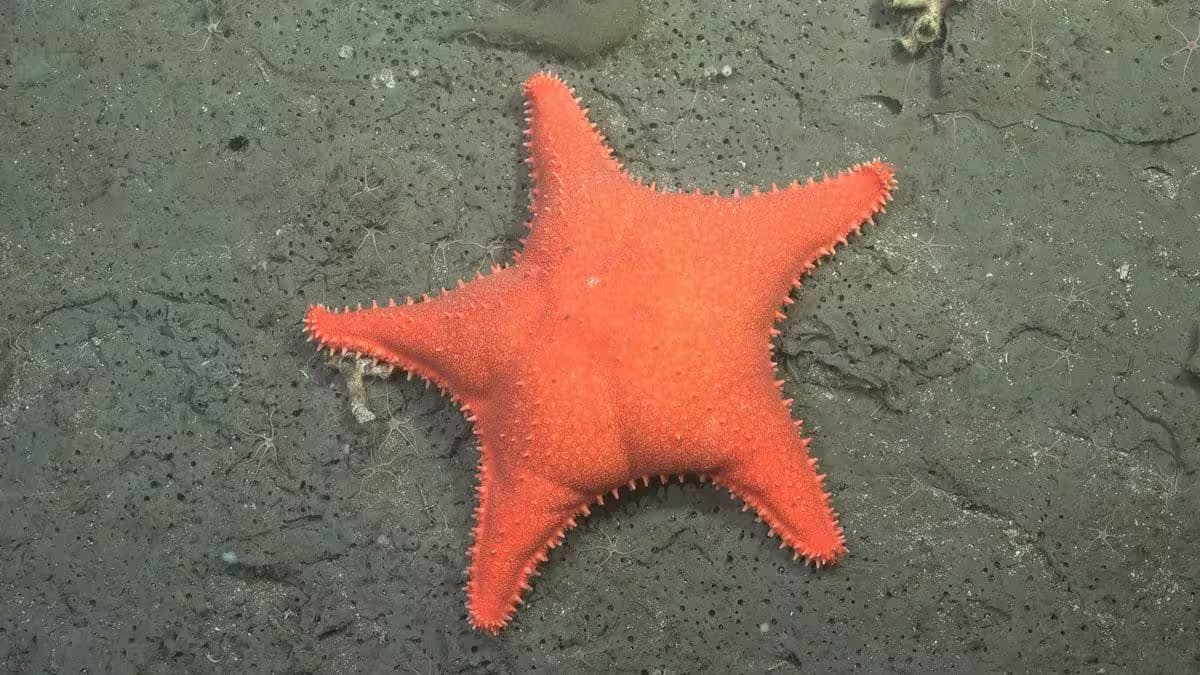
The mission utilized the remotely operated vehicle (ROV) SuBastian to descend into a submarine canyon reaching depths exceeding 3,500 meters—a chasm significantly deeper than the Grand Canyon. The vehicle provided a window into these remote habitats, broadcasting live feeds that captivated an audience of over four million people, who observed everything from delicate mushroom coral fields to a vibrant, orange starfish that bore a striking resemblance to a cartoon icon.
Other notable specimens recovered by the ROV include a bright red-orange Orstomisis octocoral observed at nearly 2,000 meters and various rare sea pens, which were carefully collected for further study.
Collaborative Taxonomy in the Digital Age
The project was spearheaded by the Schmidt Ocean Institute and the Nippon Foundation-Nekton Ocean Census, utilizing a high-efficiency framework to catalog new findings. Data and classifications were uploaded directly to Ocean Census NOVA, an open-access repository designed to streamline the documentation of marine life.
Principal investigator Daniel Lauretta noted that the initiative served as both a scientific expedition and a training ground for early-career researchers, emphasizing the necessity of international collaboration in fields where specialists are few. Dr. Michelle Taylor, head of science at Ocean Census, echoed this sentiment, stating that the rapid identification of 57 species in just two weeks is a testament to the effectiveness of collaborative taxonomic efforts.
The physical specimens are slated to be housed in Argentine scientific institutions, most notably the Museo Argentino de Ciencias Naturales “Bernardino Rivadavia” in Buenos Aires. Research in the region is scheduled to expand in 2027, with future expeditions targeting neighboring submarine canyons to further map the biodiversity of the South Atlantic seafloor.
This article has been fact checked for accuracy, with information verified against reputable sources. Learn more about us and our editorial process.
Last reviewed on .
Article history
- Latest version
Reference(s)
- Mock-Bunting, Logan. “57 New Marine Species Discovered in Argentina’s Submarine Canyons.”, October 1, 2026 Schmidt Ocean Institute <https://schmidtocean.org/57-new-marine-species-submarine-canyons/>.
- “Schmidt Ocean Institute.”, August 11, 2015 Schmidt Ocean Institute <https://schmidtocean.org/person/daniel-lauretta/>.
Cite this page:
- Posted by Hassan Raza