Famous Ancient Fossil Lizzie Was Not A Lizard After All High Tech Scans Reveal
Long thought to be a milestone in land evolution, the fossil known as Lizzie has finally revealed its hidden secrets through advanced imaging technology.
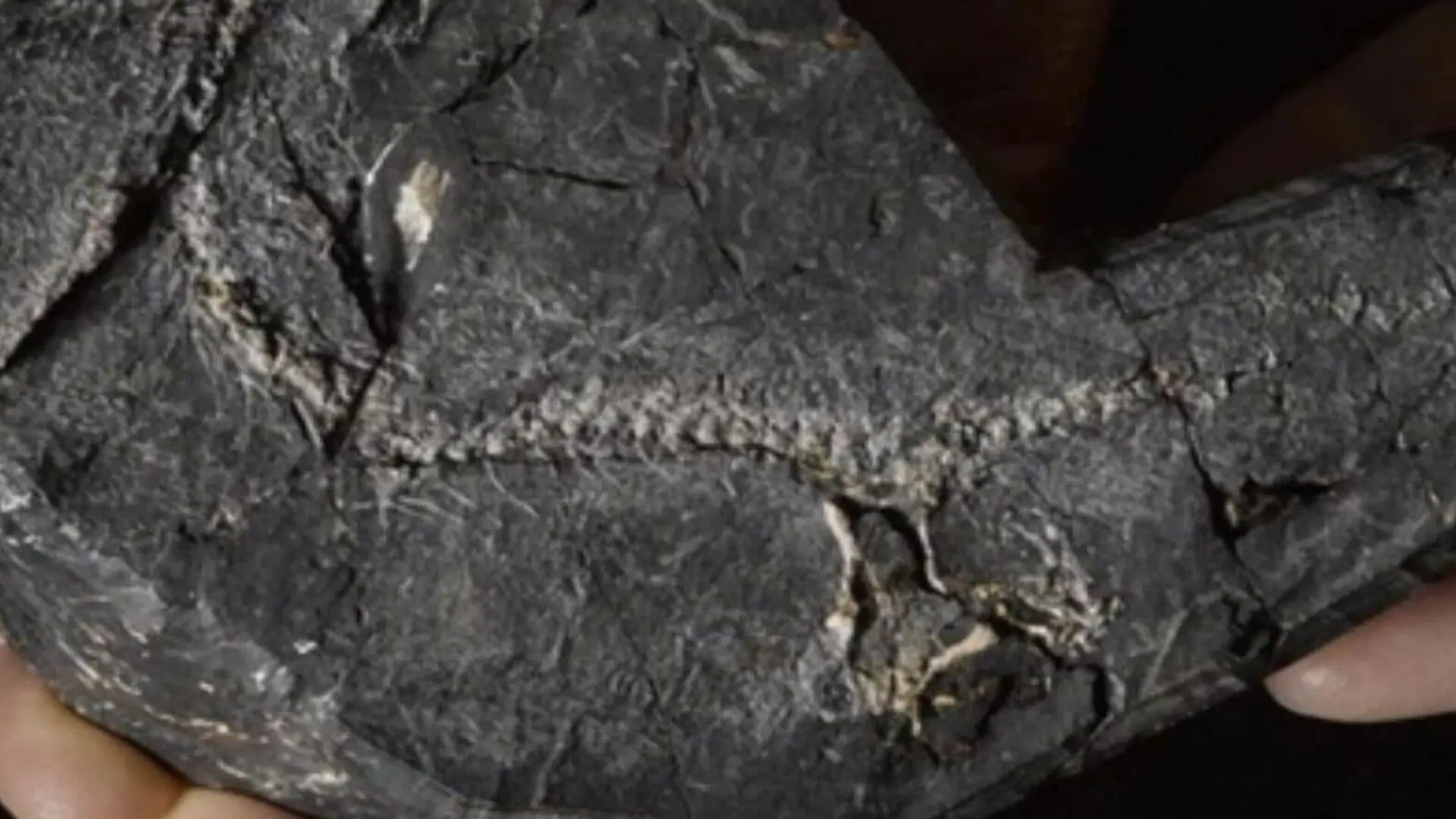
A seminal Scottish fossil long revered as the earliest known land-dwelling amniote has undergone a rigorous high-tech reassessment, revealing that the creature was not a reptile at all. Westlothiana lizziae, affectionately dubbed “Lizzie” since its discovery in 1990, possesses a fish-like mouth, a primitive cranial structure, and evidence of internal gills—all hallmarks of an amphibious lifestyle rather than a terrestrial one.
For decades, Lizzie served as a cornerstone of evolutionary history. Because of its lizard-like appearance and its discovery in Scotland, researchers initially categorized it as the oldest representative of the amniotes, the diverse group that includes all mammals, birds, and reptiles. It was widely viewed as a pivotal ancestor that had successfully transitioned from aquatic life to the terrestrial world.
Challenging Historical Assumptions
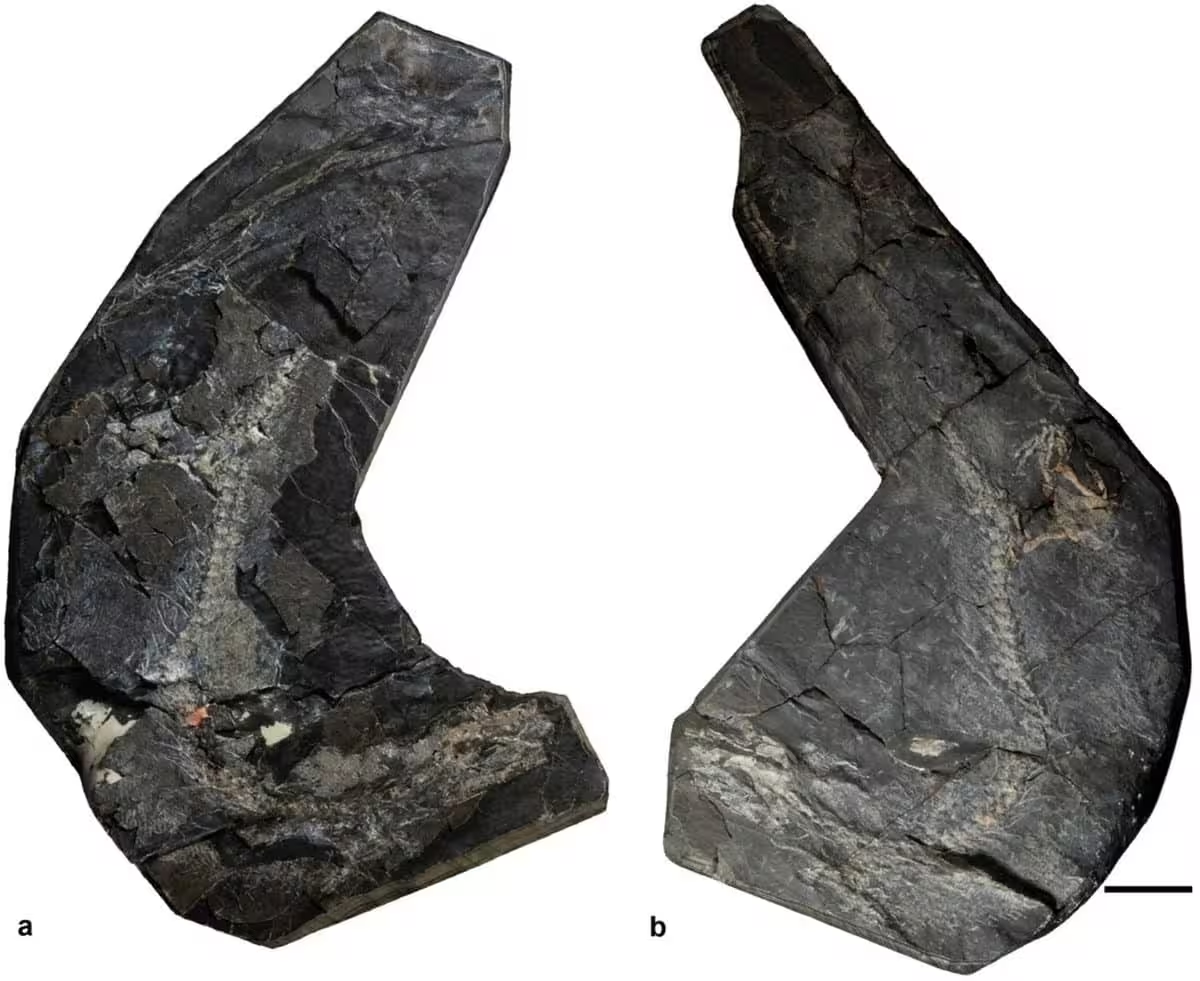
The original classification was hampered by the preservation of the specimen, which is trapped within two fragile, crushed slabs of stone. Because physically removing the fossil from its matrix would have destroyed the bones, paleontologists were forced to rely on superficial observations, specifically its four limbs and claw-tipped digits.
To gain a clearer perspective, Dr. Xavier Jenkins of the American Museum of Natural History and his colleagues utilized high-powered X-rays at the European Synchrotron Radiation Facility to produce a detailed 3D reconstruction of the remains.
“Lizzie has been an icon for the early evolution of amniotes for decades,” Jenkins stated. “But when we were finally able to see inside the fossil, we found an animal that looked very different from what we expected.”
Decoding the Anatomy
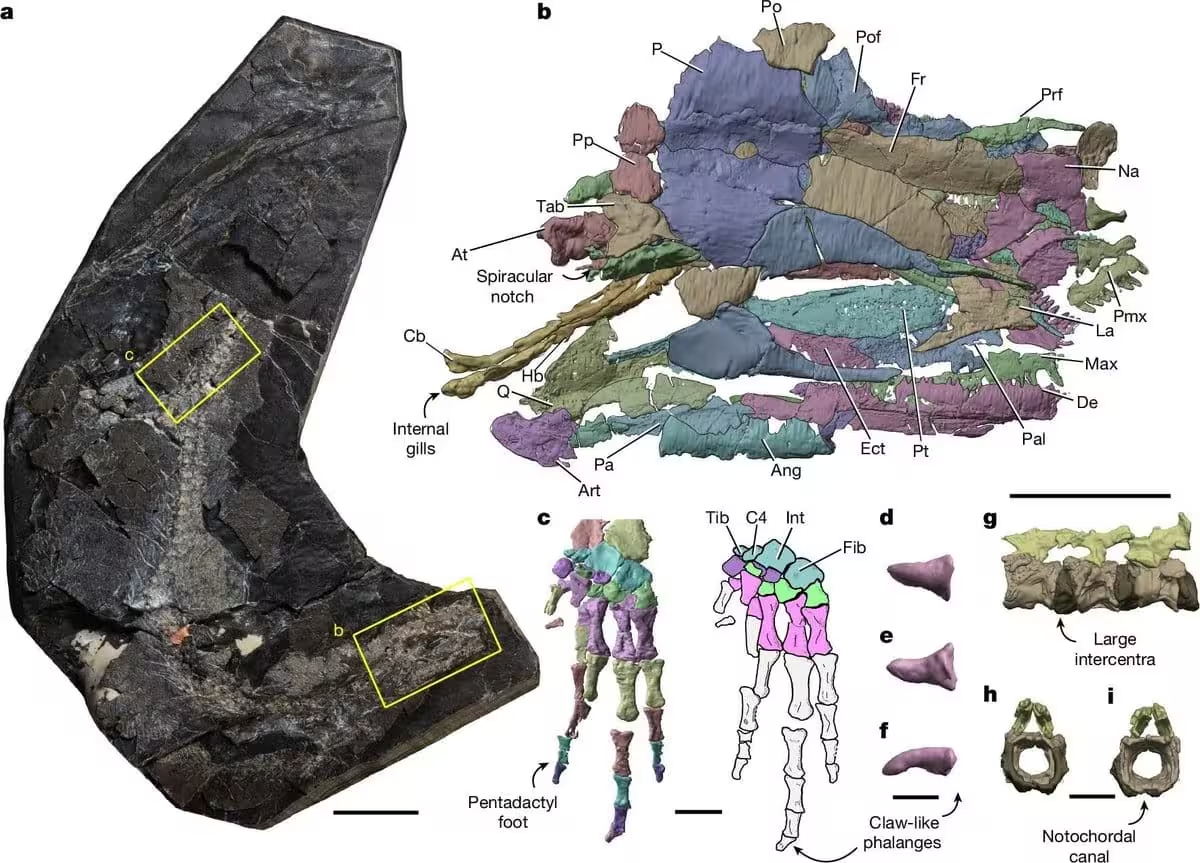
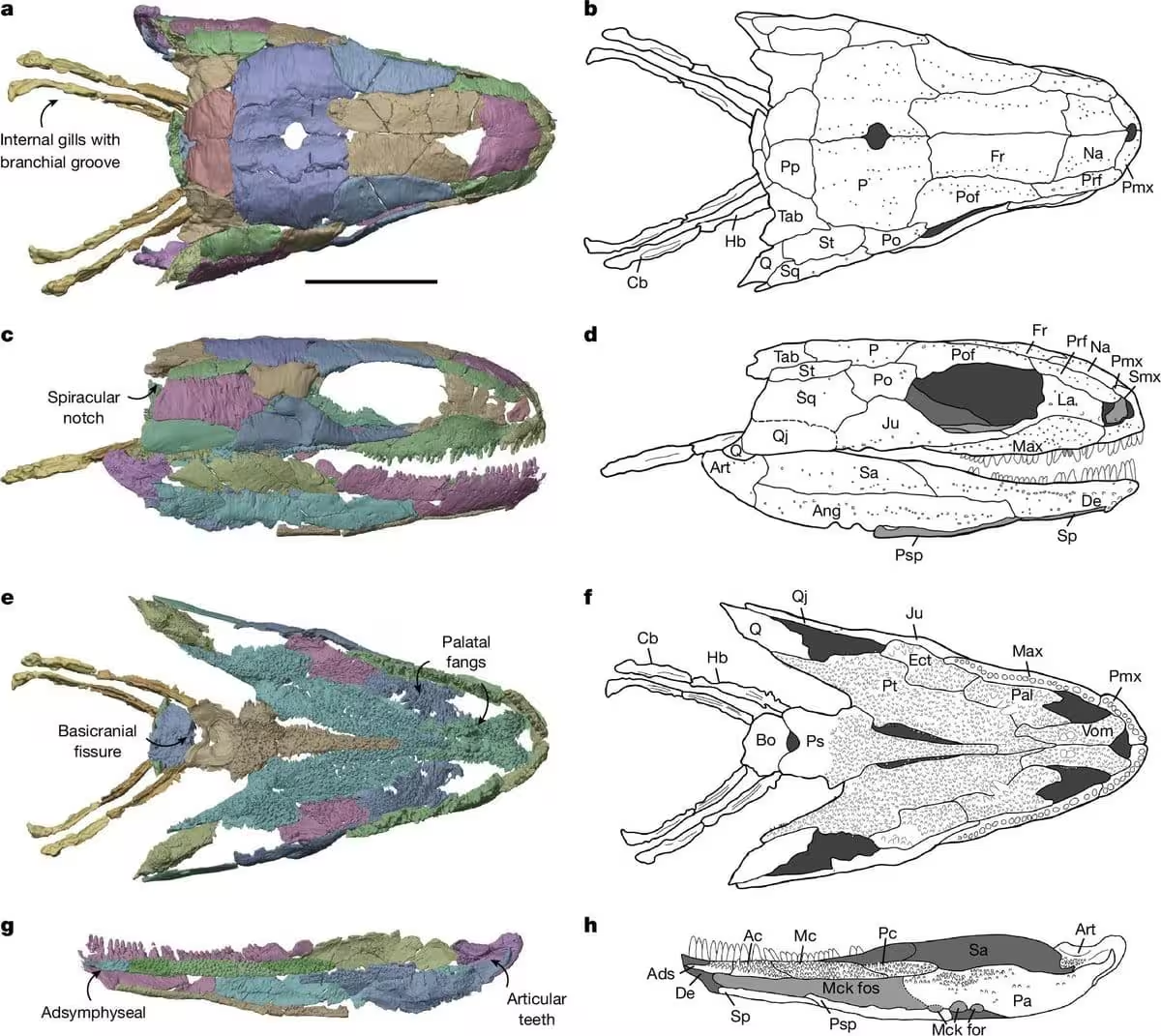
The scan results, published in the journal Nature, paint a vastly different picture of the animal’s biology. The skull lacks the features associated with early reptiles, instead displaying a mouth packed with tiny teeth designed for aquatic prey. Most significant are the clear traces of internal gills, indicating the creature was fully capable of extracting oxygen underwater.
Dr. Ben Igielman, who studied the specimen during his doctoral research at Oxford University, noted that the findings suggest a much older evolutionary lineage than previously theorized. “The surprisingly primitive features of the skull show us that Lizzie was not only not a reptile but belonged to a much more ancient lineage,” he remarked. “It turns out looks can be deceiving, and Lizzie lived a completely different lifestyle than we previously thought.”
Redefining Evolutionary Milestones
While the reclassification strips Westlothiana of its title as the first amniote, it remains an essential specimen for understanding early tetrapod evolution. Researchers now suggest the fossil predates the deep evolutionary split between reptiles and amphibians. It is likely a sister species to Utaherpeton, a group once incorrectly identified as early microsaurs.
Professor Roger Benson of the American Museum of Natural History emphasizes that this shift provides a more nuanced understanding of trait development. “It shows that, although we think of amphibians as being more ‘primitive’ than reptiles today, some of the traits of reptiles were already there in the ancestor of both amphibians and reptiles,” he explained.
This revelation also complicates the interpretation of 359-million-year-old fossil trackways found in Australia. Previously cited as proof of early amniotes due to their claw-like impressions, these prints may have been produced by creatures biologically similar to Westlothiana—tetrapods that possessed “terrestrial” features while remaining tied to the water.
“Terrestrial-looking traits, such as a reptile-like foot, a weight-bearing forelimb and claw-like phalanges, were not unique features of tetrapods, but rather accumulated piecemeal in their close relatives, in animals that were still living in and out of the water,” Jenkins concluded.
This article has been fact checked for accuracy, with information verified against reputable sources. Learn more about us and our editorial process.
Last reviewed on .
Article history
- Latest version
Reference(s)
- <https://www.amnh.org/research/staff-directory/xavier-jenkins>.
- Igielman, Ben. “Evolution of terrestrial anatomy revealed by a derived stem tetrapod - Nature.”, September 30, 2026, pp. 1-7. Nature, doi: 10.1038/s41586-026-11090-6. <https://www.nature.com/articles/s41586-026-11090-6>.
- “Ben Igielman.” <https://www.environmental-research.ox.ac.uk/people/ben-igielman>.
- <https://www.amnh.org/research/staff-directory/roger-benson>.
Cite this page:
- Posted by Hassan Raza