Towering Michigan Dunes Reveal Century-Old Secrets of Forest Growth
Researchers surveying a massive freshwater dune system discover an orderly timeline of plant succession driven by wind and time.
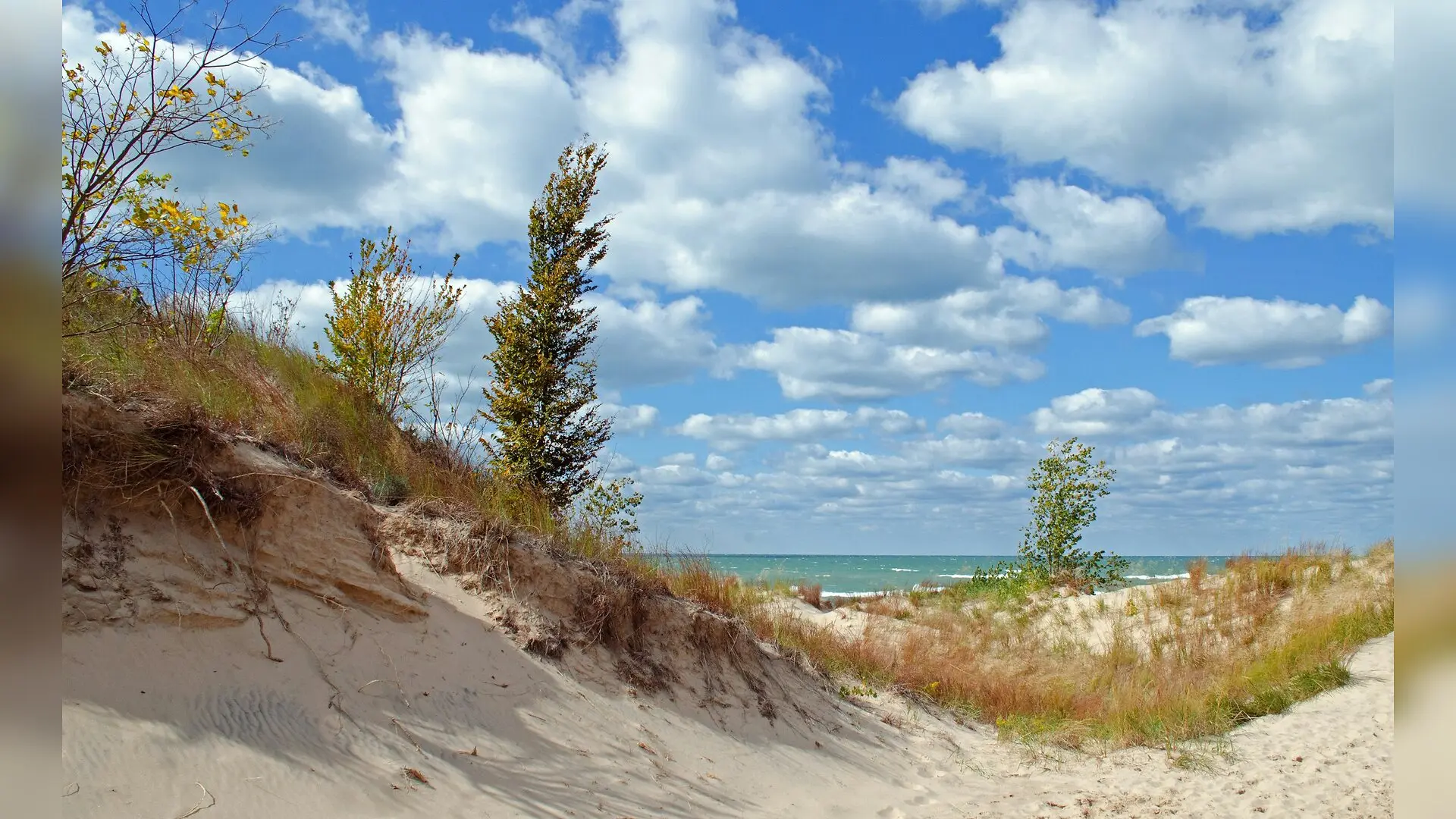
A sweeping 900-hectare perched dune system in Michigan is quietly rewriting the timeline of how plant life reclaims barren sand. Researchers surveying the towering Grand Sable Dunes along the southern shore of Lake Superior found that decades of wind disturbance have created a predictable living staircase of aging forests, where the oldest trees anchor southern boundaries while hardy pioneer grasses colonize northern edges.
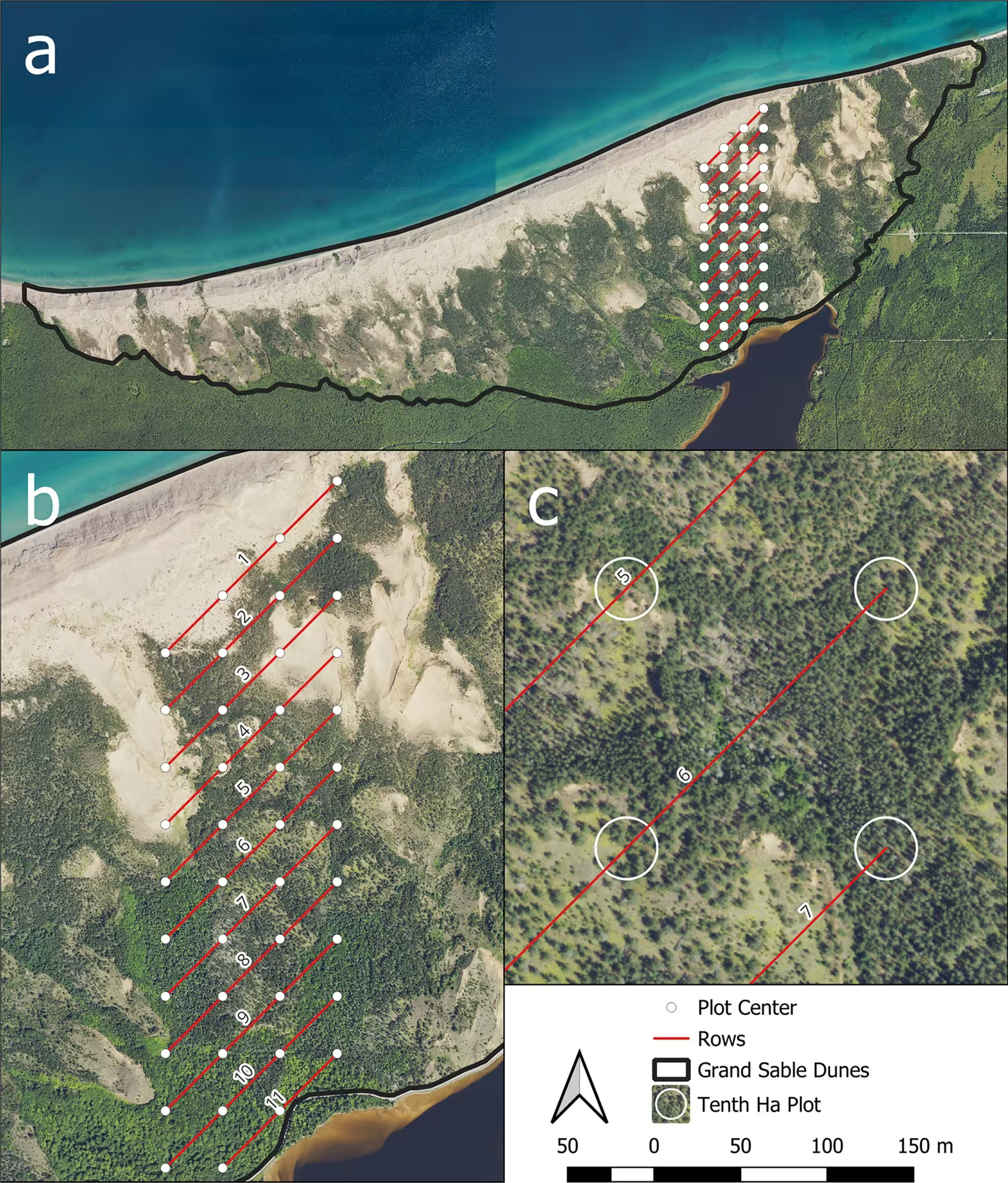
Perched coastal dunes sit high atop bluffs overlooking the water, weathering harsh winter storms that carve out bowl-shaped craters and redistribute massive volumes of sand. In the Grand Sable Dunes, where massive sand sheets tower more than 100 meters above Lake Superior, scientists wanted to understand how forest stands mature as distance from the shoreline increases. The work is published in PLOS One, detailing field surveys conducted across multiple years to map tree rings, vegetation zones, and decaying wood.
By establishing 43 sample plots along parallel transects, the investigators tracked the transition from open, wind-scoured foredunes to dense, closed-canopy northern hardwood forests in the back-dunes. They measured tree diameters, analyzed 254 tree core samples using annual growth ring analysis known as dendrochronology, and quantified accumulations of dead timber. The data revealed a strong linear chronosequence, meaning that forest age increases in an orderly progression moving away from the shoreline.
How Pioneer Plants Lay the Groundwork for Mature Woodlands
The northern edge of the dune system faces relentless wind and shifting sand, limiting early colonizers to resilient species capable of surviving constant burial. American beachgrass, sand cherry, and heartleaf willow dominate these active foredunes, acting as structural anchors that slow wind erosion and trap organic matter. Once these pioneer species stabilize the sand surface, they create hospitable conditions for woody conifers to take root.
Jack pine emerges as the dominant tree species across the mid-dune transition zones, forming open barrens that protect interior ecosystems from intense lake gales. As these pines mature and eventually die, they contribute heavily to the accumulation of coarse woody debris, which provides essential habitat for insects, small mammals, and fungi. The team observed that total wood debris volume increased significantly with distance from the shore, climbing alongside the average age of the forest stands.
Uncovering Centuries of Growth in Hidden Tree Rings
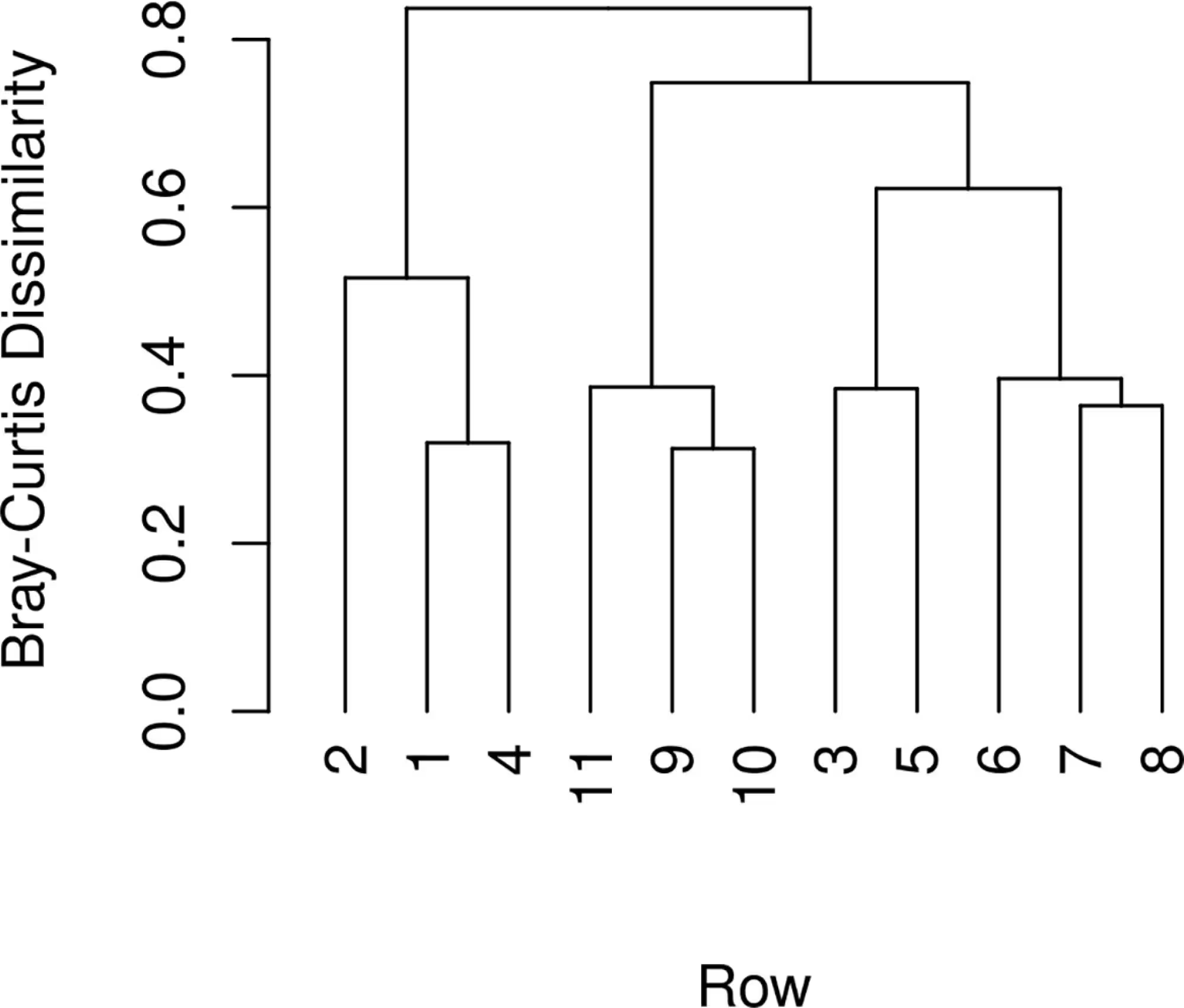
Analyzing annual growth rings from 128 individual trees revealed that while most conifers in the younger zones established in recent decades, some ancient deciduous trees in the protected back-dunes have been growing for centuries. The oldest individual sampled, a sugar maple, reached an estimated age of 229 years, establishing around the late 1790s. Tree ring synchronicity was notably higher among jack pines than among hardwood species, reflecting shared responses to harsh environmental pressures in the open landscape.
The back-dune environment supports a thriving climax forest dominated by sugar maple, American beech, and paper birch, where rich organic soils have accumulated over millennia. Seedling abundance was positively correlated with both stand age and wood debris volume, pointing to active regeneration beneath the shaded canopies. Comparing their findings with historical vegetation surveys from 2005, the authors noted that certain areas once classified as open beachgrass dunes have already transitioned into pine barrens, demonstrating that ecological succession is actively reshaping the landscape.
The research was published in PLOS One on November 16, 2026.
This article has been fact checked for accuracy, with information verified against reputable sources. Learn more about us and our editorial process.
Last reviewed on .
Article history
- Latest version
Reference(s)
- Auckley, Grace W.., et al. “Succession of coast pine barrens to northern hardwoods in a lacustrine sand dune system.” PLOS One, vol. 21, no. 11, November 16, 2026, pp. e0362963 Public Library of Science (PLoS), doi: 10.1371/journal.pone.0362963. <https://doi.org/10.1371/journal.pone.0362963>.
Cite this page:
- Posted by Linda Wilson