Starving Yeast Reveal Surprising Evolutionary Trade-Offs During Long Famines
A new study of half a million barcoded yeast lineages shows that genetic traits helping cells survive early starvation actively harm them later.
When baker’s yeast runs out of food, it enters a dormant state where cells stop dividing and fight for survival in nutrient-starved environments. New research reveals that this stationary phase is far more complex than previously thought, as yeast cells undergo distinct evolutionary trade-offs depending on how long they spend waiting for their next meal.
How Starvation Rewrites Yeast Evolution
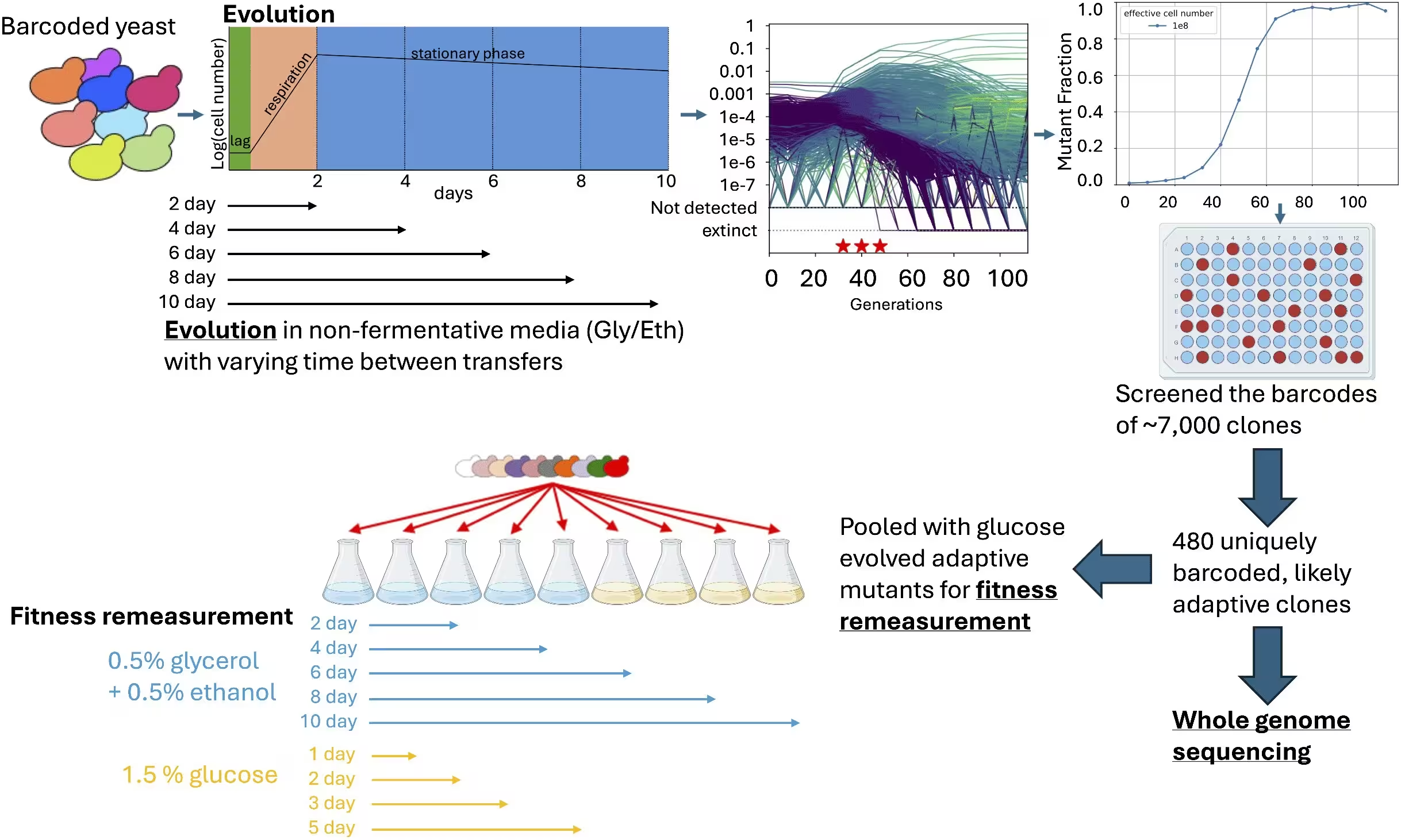
Microbes in nature spend most of their time waiting out periods of starvation rather than actively growing. To understand how this long-term deprivation shapes life at a cellular level, a team of researchers evolved barcoded populations of the common yeast Saccharomyces cerevisiae by varying the time between culture transfers from zero to eight days. By tracking roughly 500,000 distinct genetic lineages, the investigators discovered that longer waiting periods accelerate the loss of genetic diversity while favoring mutations with much larger fitness effects.
The study, published in PLOS Genetics, shows that the genetic strategies yeast uses to survive depend heavily on both the available carbon source and the duration of the starvation period. When populations were transferred every two days, leaving essentially zero time in stationary phase, mutations clustered heavily in the Ras and PKA signaling pathways. But when the starvation window expanded to four days or longer, those pathways largely vanished, replaced by a diverse mix of alternative genetic adaptations.
The Unexpected Cost of Early Success
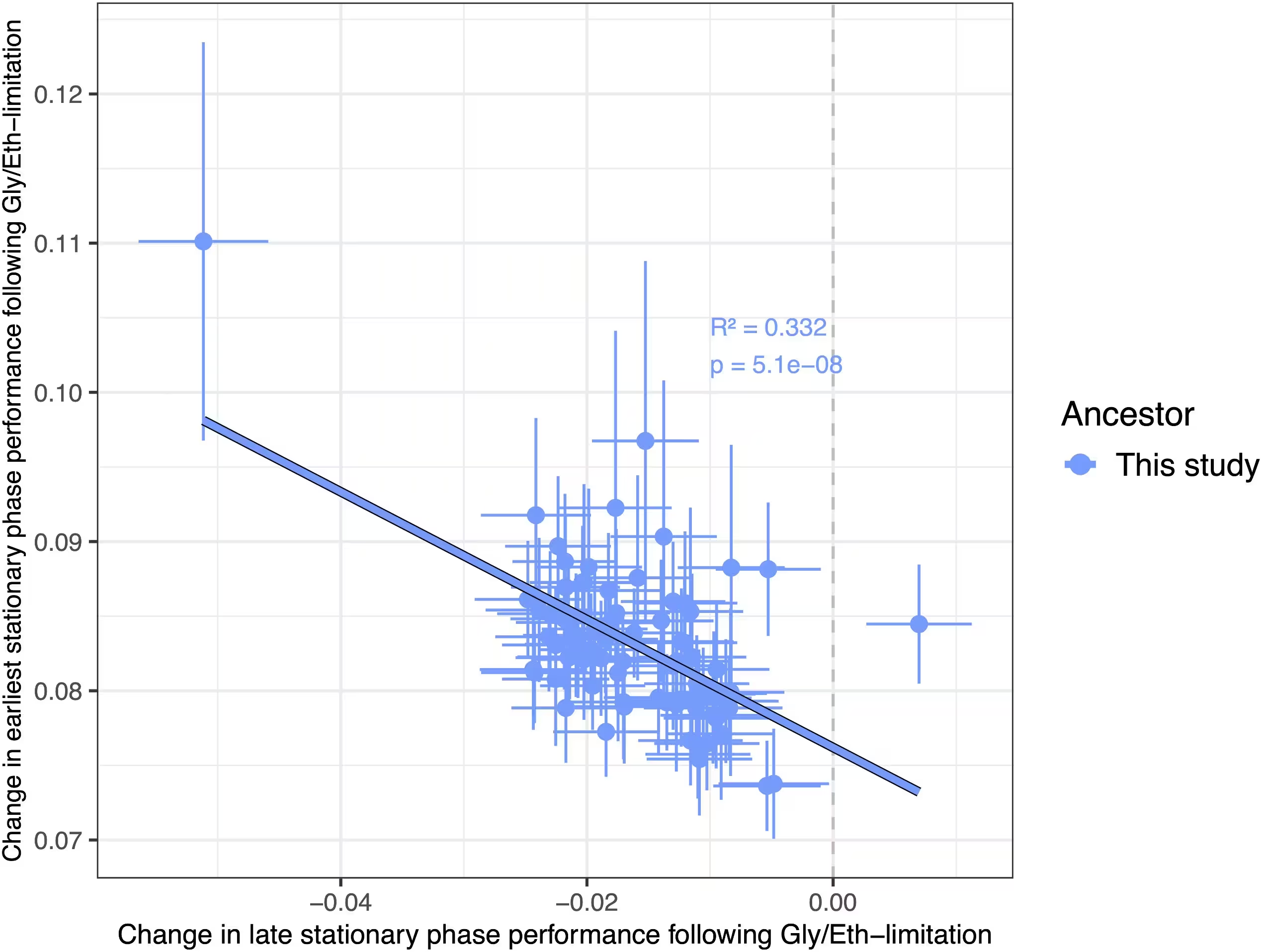
To measure the impact of these evolutionary changes, the team pooled hundreds of adaptive clones and tested their performance across various nutrient-limited schedules. They found that performance in early stationary phase is positively correlated whether the starvation is triggered by glucose or by a mixture of glycerol and ethanol. This indicates a strong overlap in the underlying biological traits needed to survive different types of nutrient exhaustion.
However, the researchers uncovered a striking conflict when looking at different phases of starvation over time. Mutations that granted a strong advantage during the first few days of nutrient depletion often inflicted a severe penalty during later stages of the starvation cycle. This antagonistic relationship suggests that surviving the early hours of scarcity requires physiological tactics that actively compromise long-term endurance.
Inside the Dominant Mutational Targets
Among the most frequent genetic changes observed in populations experiencing extended stationary phases were mutations in SMF2, a gene responsible for managing intracellular manganese levels. Strains carrying these mutations demonstrated massive performance gains during early stationary phase. Yet these same strains typically suffered reduced fitness during the final days of the cycle, highlighting a clear internal trade-off operating within a single gene.
Other winning genotypes included whole-chromosome duplications, specifically involving chromosome 11, which houses the oxidative stress response gene UTH1. These duplications likely help cells cope with reactive oxygen molecules that accumulate during the initial respiratory growth phase. As these reactive compounds naturally break down over time, the advantage of the extra chromosome fades, explaining why such genomic changes peaked specifically in six-day transfer cycles.
What These Trade-Offs Mean for Microbial Ecosystems
These findings challenge the traditional view of stationary phase as a uniform plateau where cells simply hunker down and wait. Instead, the prolonged resource-limited state acts as a dynamic arena where evolution favors conflicting strategies across a temporal timeline. Understanding how microorganisms navigate these shifting survival pressures provides fresh insight into how global biomass maintains resilience in nutrient-poor oceans and soils.
The research was published in PLOS Genetics on November 16, 2026.
This article has been fact checked for accuracy, with information verified against reputable sources. Learn more about us and our editorial process.
Last reviewed on .
Article history
- Latest version
Reference(s)
- Tarkington, Jason., et al. “Experimental evolution of yeast reveals trade-offs between early and late stationary phase.” PLOS Genetics, vol. 22, no. 11, November 16, 2026, pp. e1012350 Public Library of Science (PLoS), doi: 10.1371/journal.pgen.1012350. <https://doi.org/10.1371/journal.pgen.1012350>.
Cite this page:
- Posted by Linda Wilson