Ancient Sauropod Loop Trackway Reveals Possible Limp After 150 Million Years
130 fossil footprints, 150 million years old, reveal a 30‑ton dinosaur’s surprising turns and gait, giving unprecedented insight into its ancient movement.
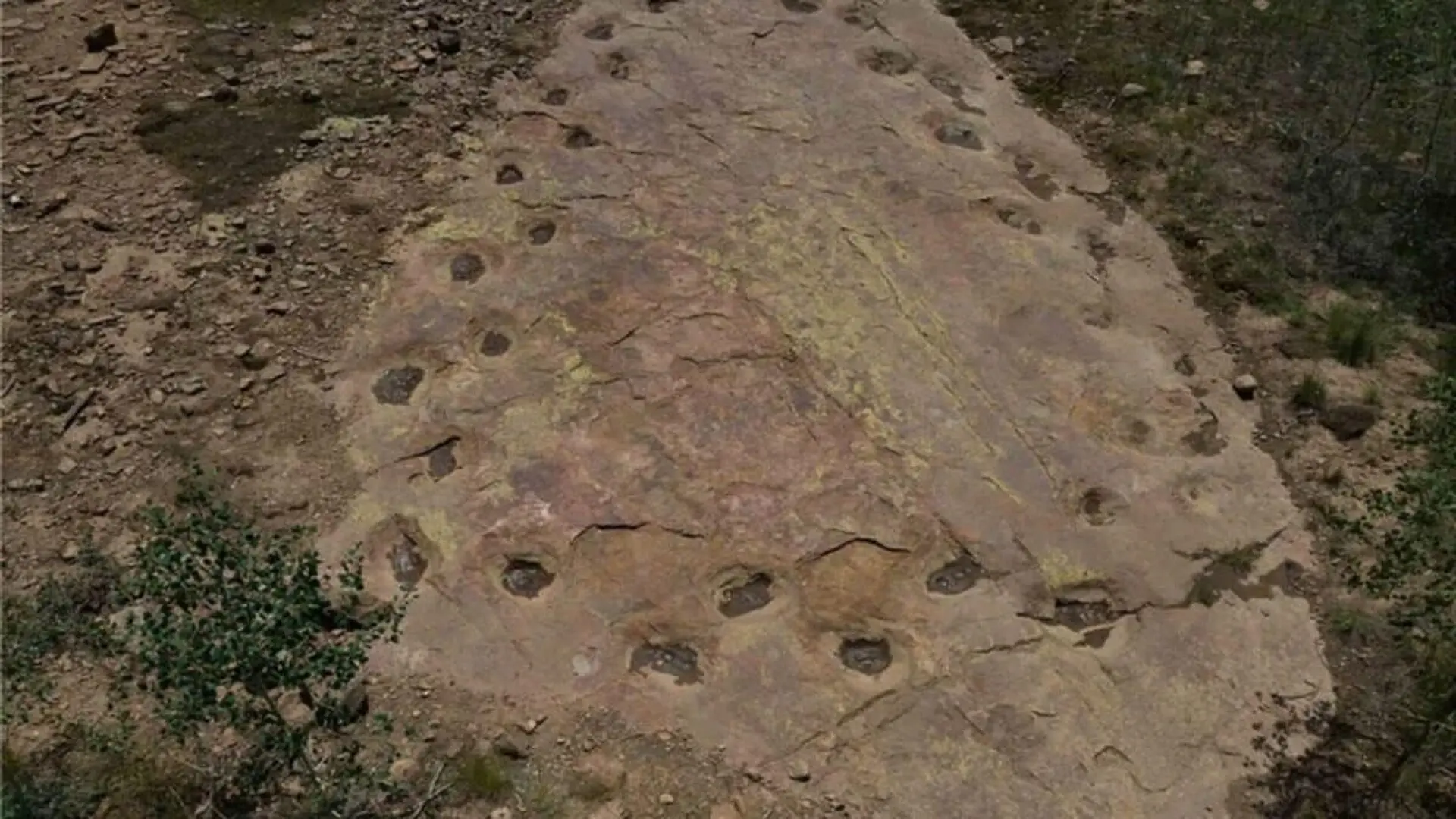
A 150‑million‑year‑old sauropod trackway unearthed near Ouray, Colorado, contains more than 130 footprints that document a complete circular walk. Spanning roughly 95.5 meters, the fossilized path offers an unprecedented glimpse into how a massive long‑necked dinosaur negotiated a tight curve and resumed its original heading.
Complete Loop Captured in a Single Trackway
Researchers determined that the animal began moving toward the northeast, arced around to form a full circle, and then continued forward while still facing the same direction it started from. This rare configuration allows scientists to examine subtle changes in stride and foot placement that are invisible in shorter track sequences.
“This trackway is unique because it is a complete loop,” Dr. Anthony Romilio said. “The preserved path allowed us to examine how a massive sauropod handled a tight curve before returning to its original course.”
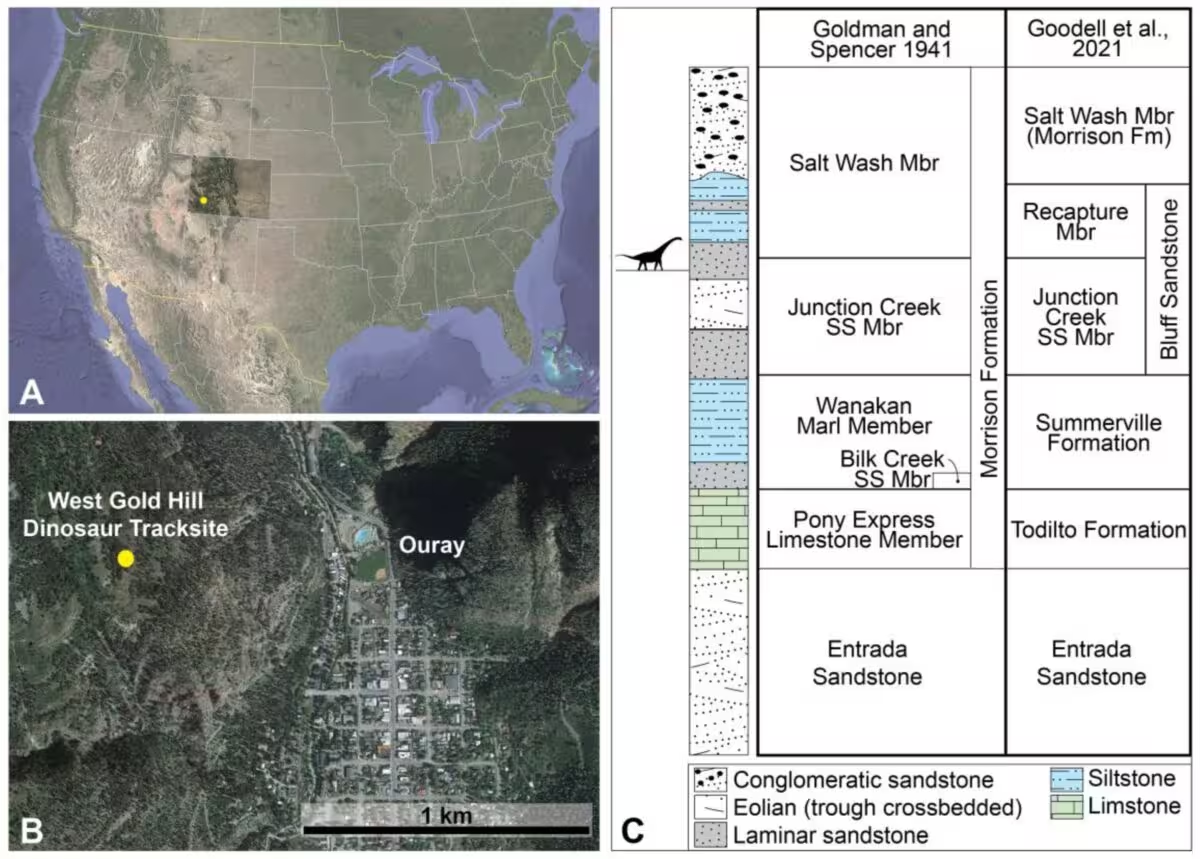
The exact reason the dinosaur executed the circle remains unknown; the footprints do not record any obvious trigger for the directional change, but they preserve a fleeting moment of locomotion in extraordinary detail.
Aerial Imaging Generates a Precise 3‑D Reconstruction
Because the West Gold Hill site stretches over a large area, field teams turned to drone‑borne photography to capture the full layout of the footprints. Dr. Paul Murphey of the San Diego Natural History Museum explained that the aerial data were processed into a high‑resolution three‑dimensional model, enabling millimetre‑scale analysis of each step.
“It has been challenging to document these footprints from the ground because of the size of the trackway,” he said. “With these images we generated a detailed 3D model, which could then be digitally analyzed in the lab at millimeter‑scale accuracy.”
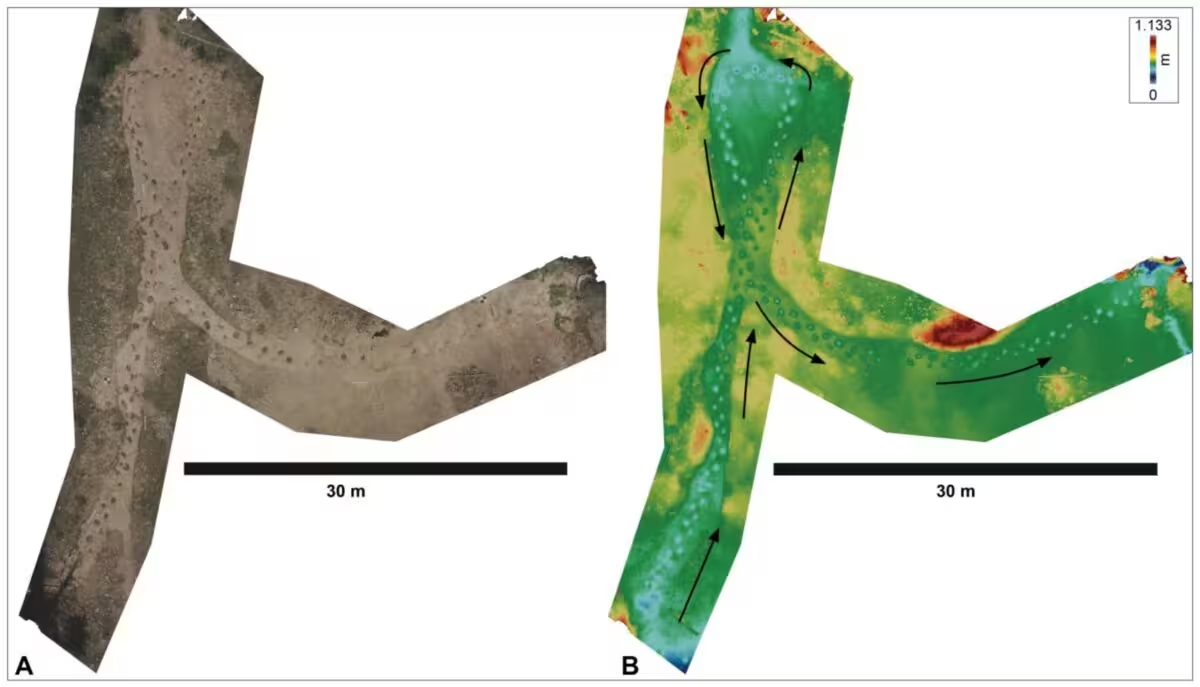
The study, published in Geomatics, demonstrates that a continuous trackway can reveal behavioral nuances lost in fragmented records. By comparing each segment, the team observed how the dinosaur’s gait naturally adjusted while navigating the curve.
Footprint Spacing Suggests Asymmetric Gait
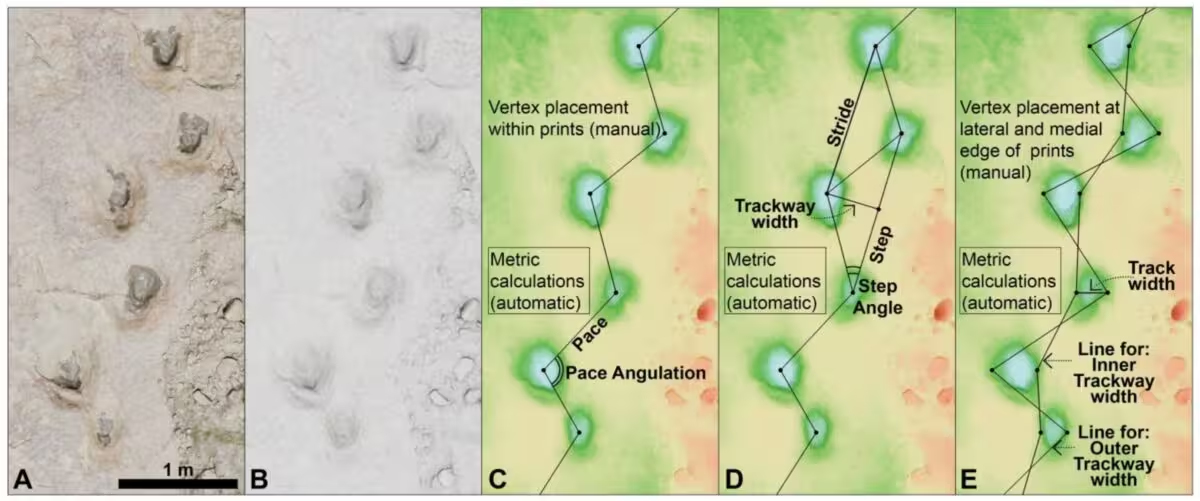
Measurements of the trackway width showed systematic fluctuations, with the distance between left‑ and right‑side prints expanding and contracting along the loop. Moreover, the length of left‑side steps differed consistently from right‑side steps by roughly 10 centimeters (about 4 inches). This subtle asymmetry could indicate a mild limp, a habitual side preference, or simply normal variation in a large animal’s stride.
Supported by the U.S. Forest Service, the research underscores how extensive fossil trackways can serve as behavioral archives, not merely evidence of presence.
“There are many long dinosaur trackways around the world where this method could be applied to extract behavioral information that was previously inaccessible,” concluded Romilio.
This article has been fact checked for accuracy, with information verified against reputable sources. Learn more about us and our editorial process.
Last reviewed on .
Article history
- Latest version
Reference(s)
- Lucas, Spencer. “Anthony Romilio.”, June 2, 2016 <https://dinosaurs.group.uq.edu.au/profile/306/anthony-romilio>.
- <https://www.mdpi.com/2673-7418/5/4/67>.
Cite this page:
- Posted by Hassan Raza