First ever camera trap captures Bornean clouded leopard mother with two cubs
Hidden camera unveils never-before-seen species in Earth’s most remote rainforest
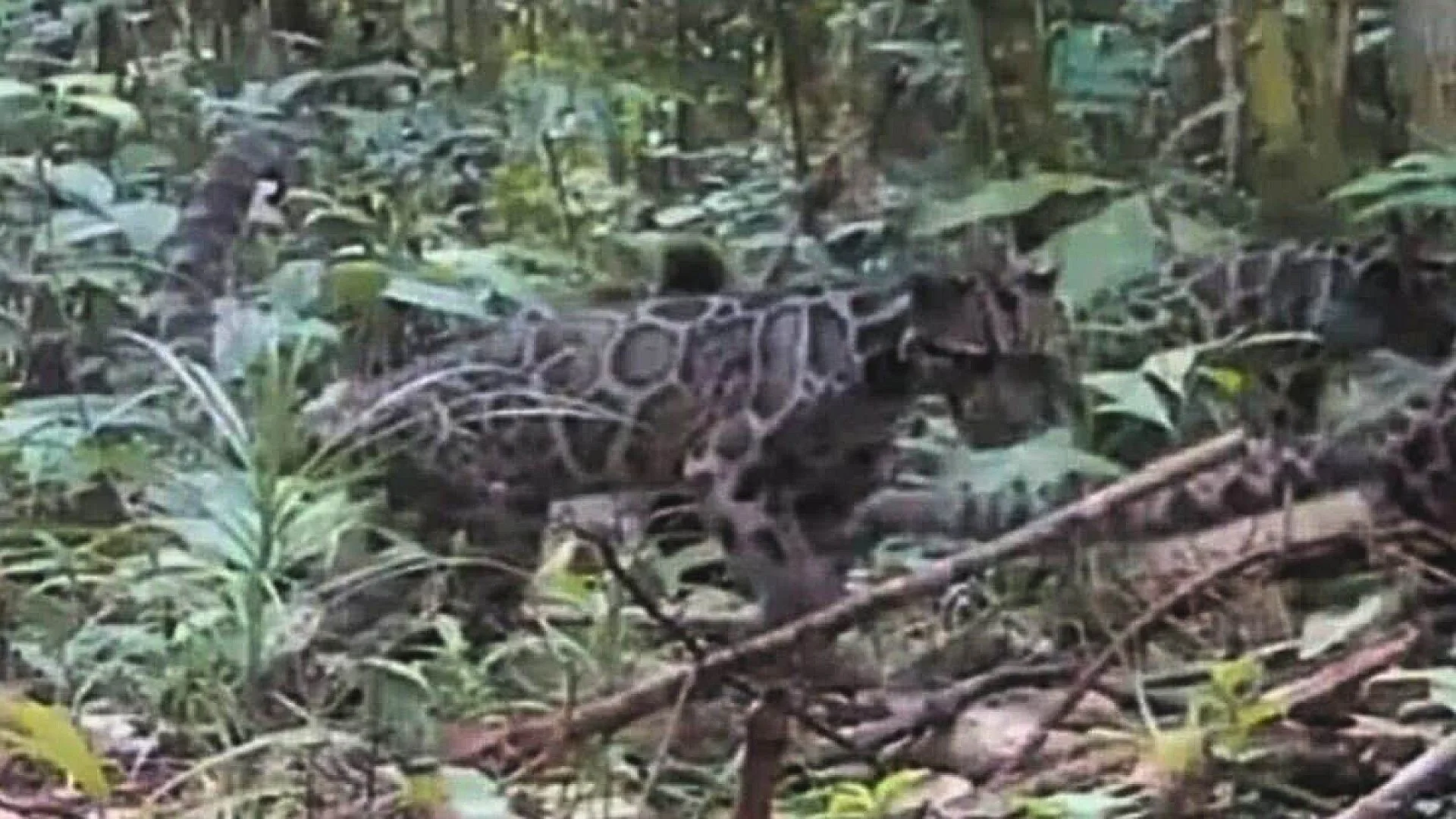
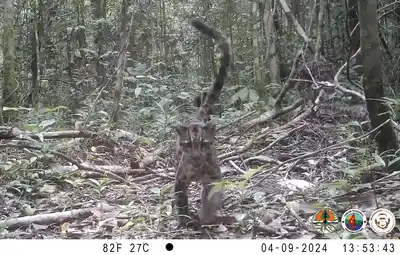
A motion‑activated camera set deep within the tangled understory of Tanjung Puting National Park in Central Kalimantan, Indonesia, captured a rare family scene: a female Bornean clouded leopard moving with two youngsters, one of which froze and stared straight into the lens. The footage, gathered by the Orangutan Foundation in partnership with park authorities, represents the first documented observation of a clouded leopard mother with offspring inside the reserve.
Earlier camera surveys had only logged solitary individuals traversing the forest, but spotting a breeding female alongside two cubs provides concrete proof that the habitat can sustain not just the species’ presence but also successful reproduction and early cub development.
“The clouded leopard is an arboreal predator that also excels on the forest floor, playing a vital role in ecosystem dynamics,” said Anxious Yoga Perdana, Research Manager at the Orangutan Foundation. “Seeing a female with her young confirms that a healthy, breeding population exists in this region.”
New Insights into a Little‑Known Predator
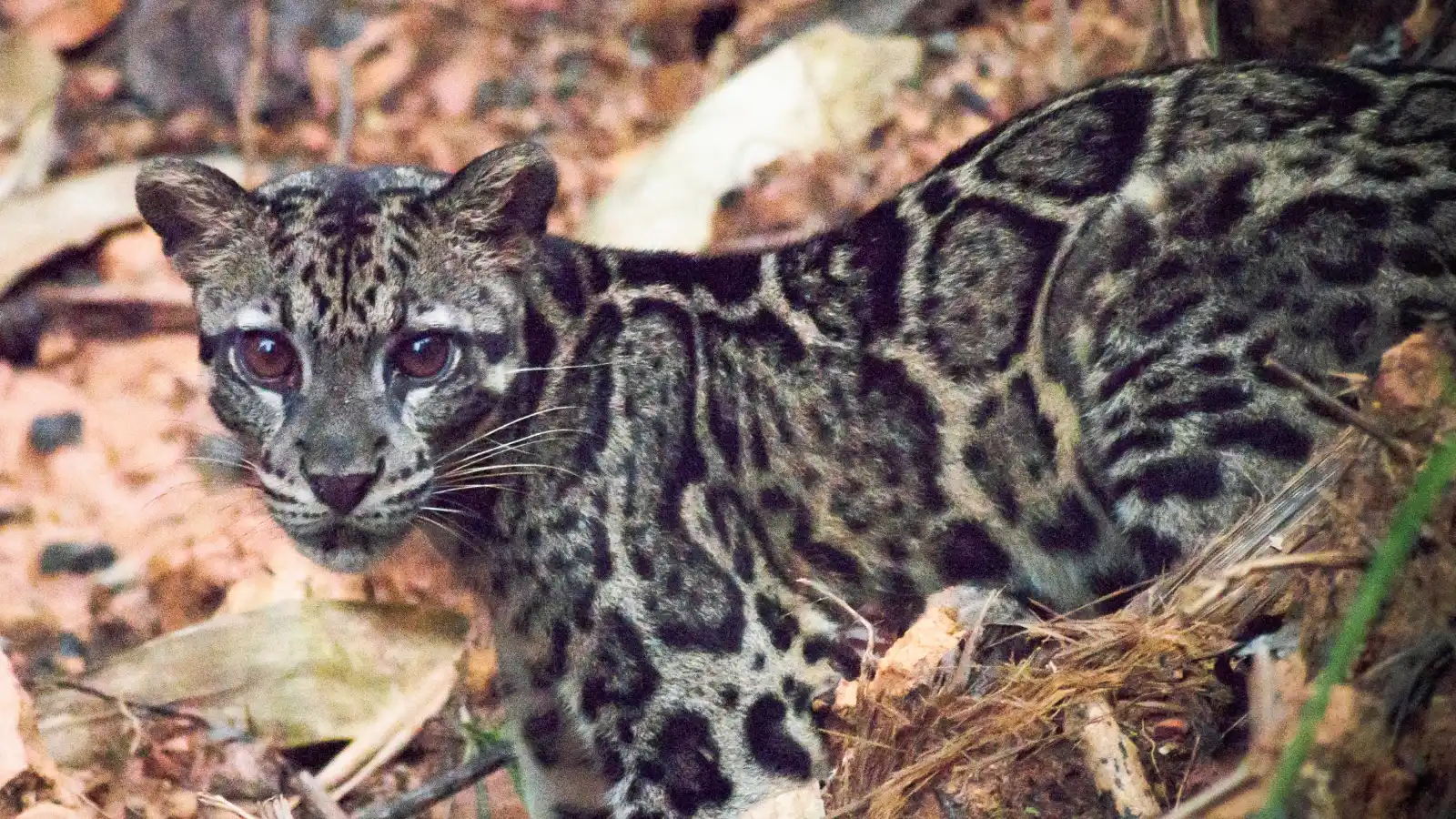
Genetic analyses published in 2007 revealed that the clouded leopards of Borneo and Sumatra form a lineage as distinct from their mainland counterparts as tigers are from jaguars, prompting scientists to recognize them as a separate species, Neofelis diardi. The Bornean subspecies, borneensis, displays a darker coat, denser spotting, reduced cloud markings, and a pronounced double dorsal stripe compared with the mainland form.
Among its most striking adaptations are canine fangs that can exceed two inches—the longest among all felids—and a tail that matches the animal’s body length, giving it exceptional balance for navigating the canopy. On the ground, the cats hunt primates, deer, and wild pigs, while also taking birds and reptiles when the opportunity arises.
The species favors dense lowland and hill forests, and the Felidae Conservation Fund notes that it is highly intolerant of human‑induced disturbance, generally avoiding open areas with sparse canopy cover.
Implications of a Mother‑Cub Encounter for Conservation
The Bornean clouded leopard holds an Endangered rating on the IUCN Red List. Estimates of its total population range from roughly 5,000 to 11,000 individuals on Borneo and 3,000 to 7,000 on Sumatra, reflecting the limited monitoring data available. Conservation agencies warn that numbers have likely fallen by more than a third in recent decades, driven chiefly by the loss of the lowland and hill forests that the cat depends on.
A further challenge is the species’ low recruitment rate: only a small proportion of adults successfully raise offspring to the age of two years, when they become potential breeders. Fragmented forest further narrows this already tight window, making each verified family group in a protected area especially valuable.
According to the Orangutan Foundation, the April footage confirms that Tanjung Putian still provides the full suite of resources needed for a clouded leopard mother to survive, give birth, and raise two cubs to a stage where they can move independently—an indicator of intact, functioning forest.
How Remote Cameras Aid Wildlife Monitoring
For more than three decades the Orangutan Foundation has operated across Indonesian Borneo, focusing on the protection of critically endangered orangutans and the shared tropical forest habitat. As part of its broader conservation strategy, the organization maintains a network of camera traps throughout Tanjung Putian to document species presence and distribution.
While previous camera records from the park captured only solitary leopards, the April 9 capture of a mother with two cubs altered scientists’ understanding of local population dynamics. The foundation emphasizes that preserving forest cover directly supports the conditions needed for a mother, her offspring, and other individuals to survive to adulthood and contribute to future generations.
This article has been fact checked for accuracy, with information verified against reputable sources. Learn more about us and our editorial process.
Last reviewed on .
Article history
- Latest version
Cite this page:
- Posted by Hassan Raza