Cameras Reveal 36 Hidden Feeding Tactics of Whale Sharks From Surface to 70‑Meter Depths
New tech reveals the hidden deep‑sea life of whale sharks, showing what they do after vanishing from the surface.
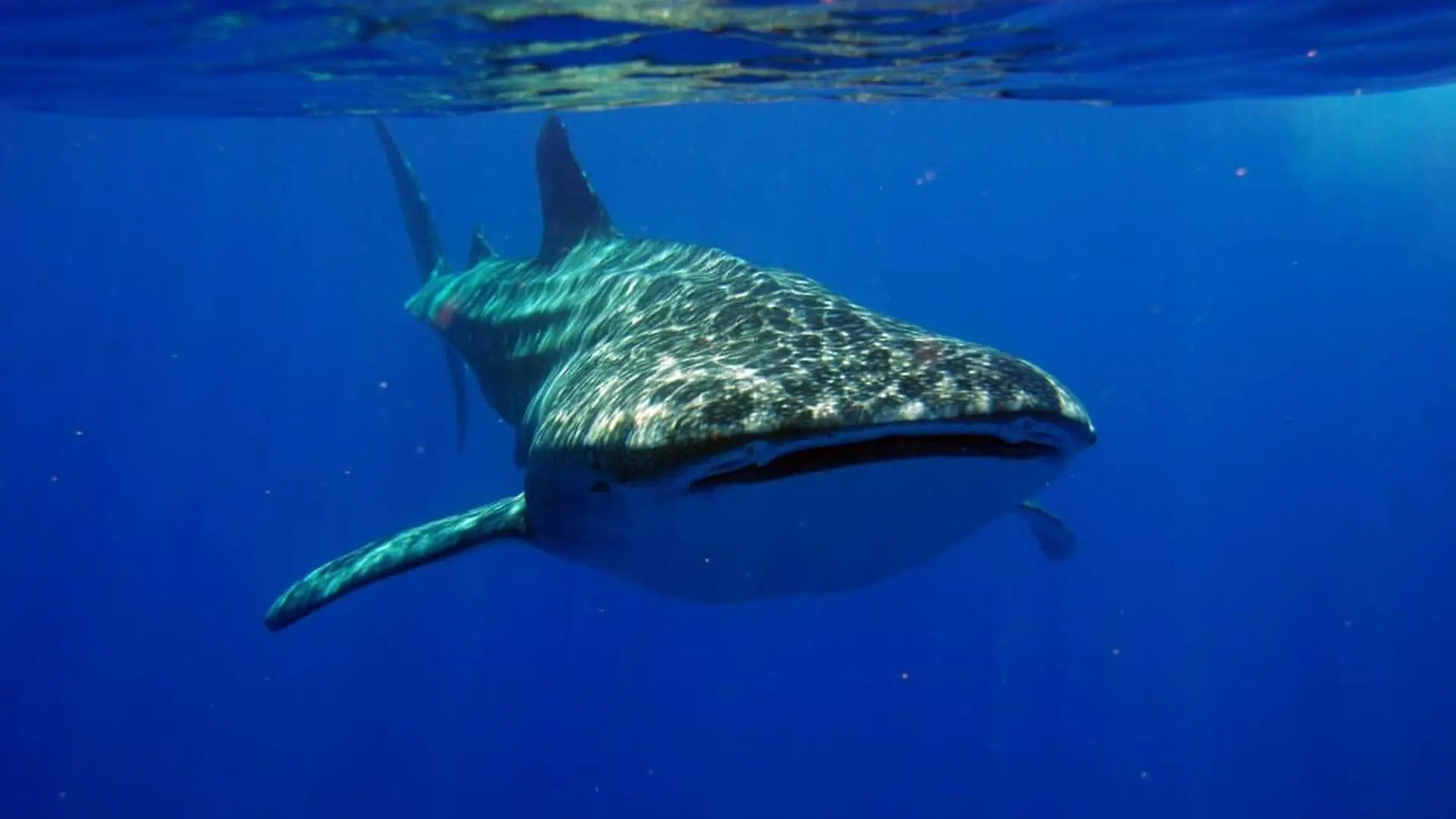
New camera data shows whale sharks employ a broader suite of feeding tactics than previously documented, according to research published in Marine Biology. By capturing footage from the sharks’ own perspective, scientists have uncovered previously invisible behaviors that reshape our understanding of Rhincodon typus foraging strategies in tropical seas.
For decades, observations of these gentle giants have been limited to surface encounters, where they congregate near coastlines. While such sightings have mapped their distribution and basic habits, they reveal only a fraction of the animals’ activity.
Deeper dives have traditionally been monitored with electronic tags that record location and depth but not the actual actions of the sharks. Because prey can be patchily distributed, deciphering how these endangered filter feeders locate food has become a priority for marine ecologists.
Underwater Cameras Capture Elusive Feeding Moves
Researchers equipped dorsal fins with tags that combine high‑resolution cameras and motion sensors to film whale shark behavior beneath the waves. While snorkelling alongside the animals, scientists recorded the frontal view of each shark for roughly 24 hours. After the programmed interval, the tags detached, allowing retrieval of the footage without leaving equipment on the animals.
The study, published in Marine Biology, demonstrates how this approach links specific actions to movement trajectories. Conventional tracking can map routes and dive depths, but it cannot differentiate between feeding, cruising, or other interactions with prey.
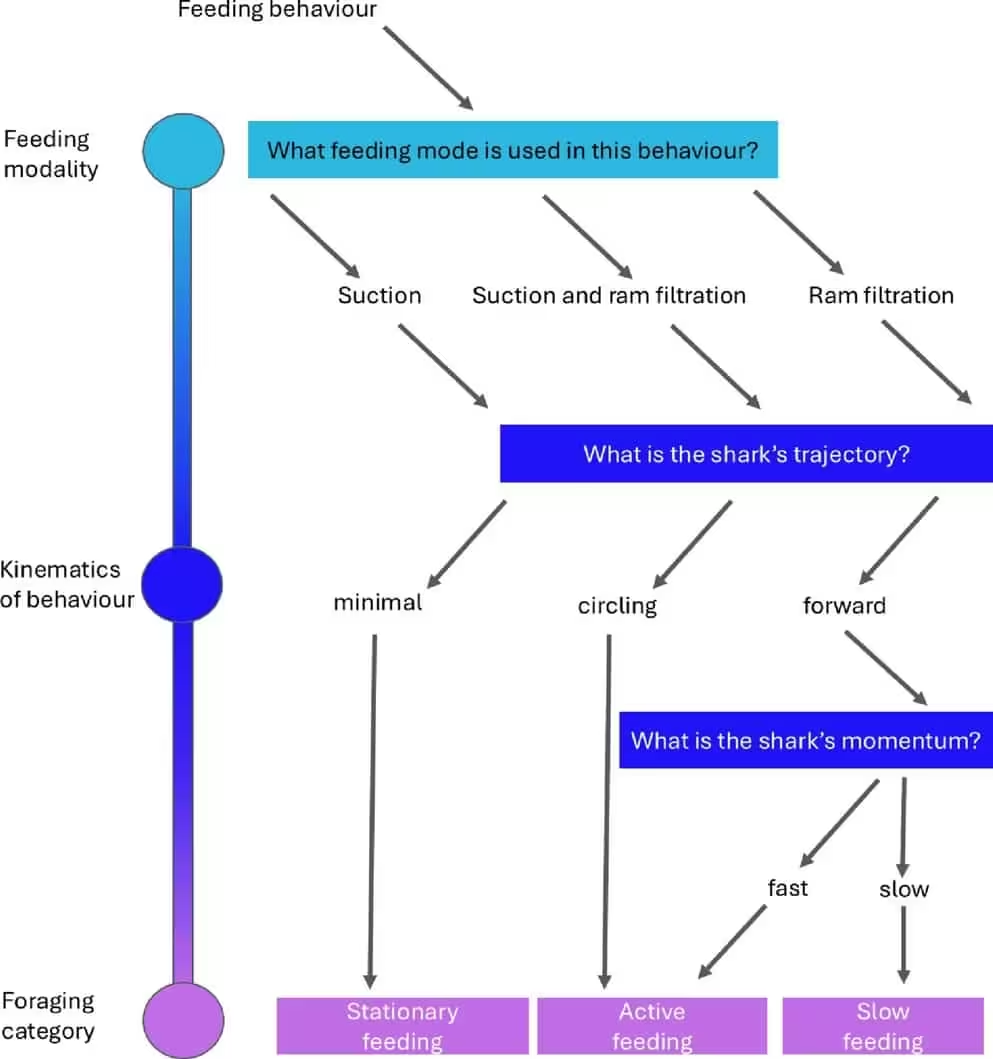
The video evidence revealed a range of actions that were previously invisible, allowing scientists to study feeding events during deep dives rather than relying solely on surface or shallow‑water observations.
Depth‑Dependent Feeding Strategies Unveiled
By merging the new footage with data from over 100 prior studies, the team assembled the most extensive catalog of whale shark behaviors to date, identifying 36 distinct actions.
At a site adjacent to Ningaloo Reef, Western Australia, the sharks were recorded feeding at depths approaching 70 meters. Their tactics ranged from leisurely drifting along the seabed with mouths open to actively pursuing krill near the surface.
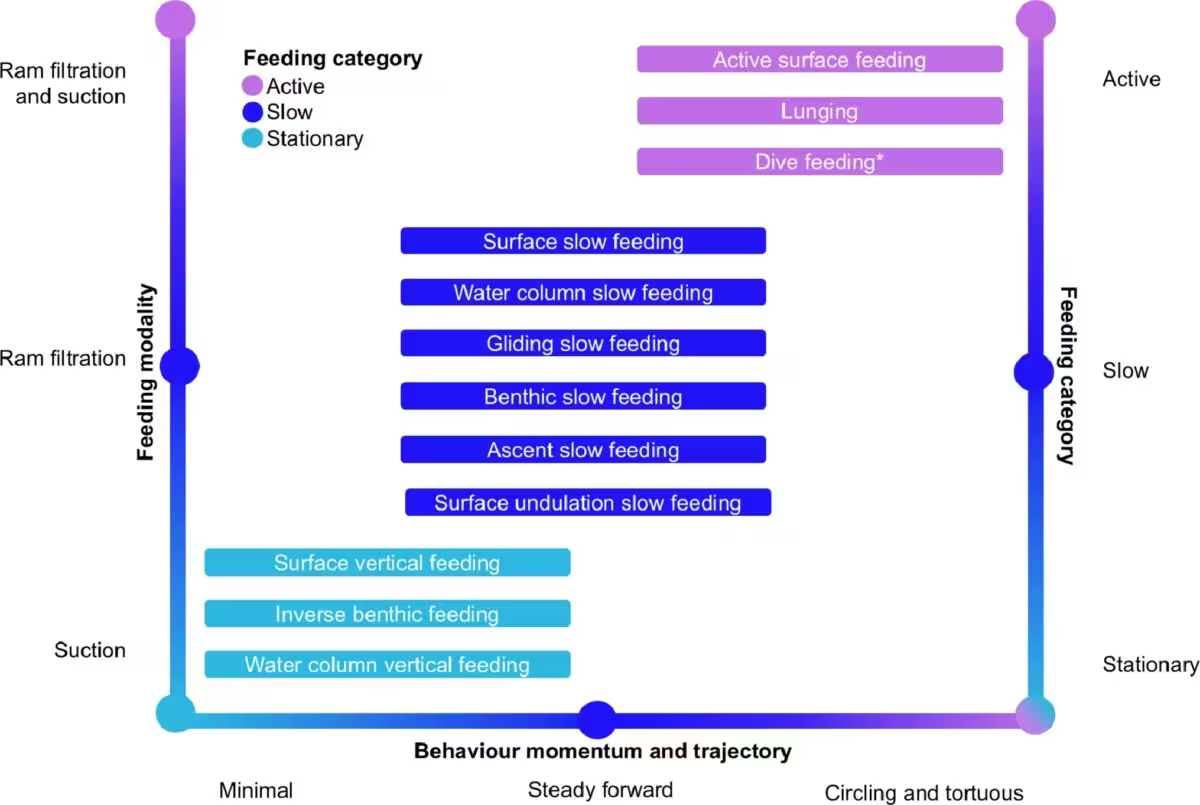
These findings overturn the long‑standing view of whale sharks as primarily surface feeders. The data suggest that individuals shift between low‑energy techniques and more vigorous pursuits depending on prey density, often conserving energy while traversing sparsely populated waters and switching to active feeding when encountering dense krill aggregations.
Flexibility Sets Whale Sharks Apart from Other Filter Feeders
Compared with other large filter feeders such as basking sharks and certain whale species, whale sharks displayed a notably richer repertoire of feeding approaches. This adaptability likely aids their survival in tropical environments where food sources are unevenly distributed.
The study focused on juvenile individuals at a single aggregation site, offering only a snapshot of the species’ broader behavioral landscape. Expanding camera deployments to additional regions could uncover further nuances of their underwater habits.
By bringing the hidden world of whale shark foraging into view, these camera tags are reshaping our ability to monitor the daily lives of these oceanic giants, moving beyond surface sightings to a deeper, more comprehensive understanding.
This article has been fact checked for accuracy, with information verified against reputable sources. Learn more about us and our editorial process.
Last reviewed on .
Article history
- Latest version
Reference(s)
- Barry, Christine., et al. “An ethogram for the whale shark (Rhincodon typus) with insights into foraging plasticity.” Marine Biology, vol. 173, no. 9, July 21, 2026 Springer Science and Business Media LLC, doi: 10.1007/s00227-026-04900-y. <https://link.springer.com/article/10.1007/s00227-026-04900-y>.
Cite this page:
- Posted by Hassan Raza