For 20 Years, No One Noticed This Ordinary School Rock Until Scientists Discovered 66 Dinosaur Footprints Hidden Inside
For many years, these peculiar markings etched into the rock went unnoticed. Now, these footprints have become the focal point of an unexpected breakthrough that has taken the world by surprise.
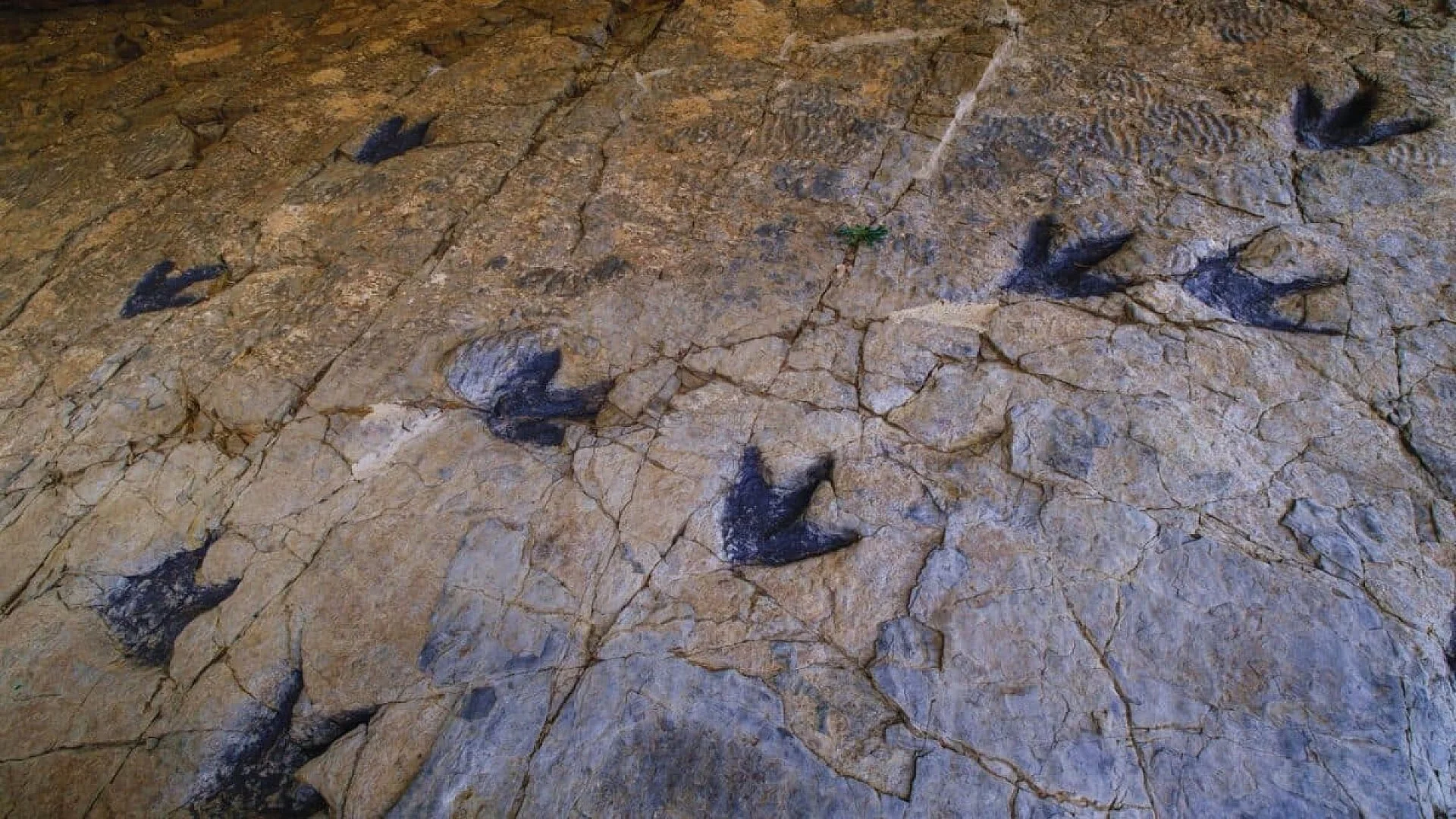
A remarkable discovery has been made in a Queensland school, where a boulder has been found to contain an astonishing 66 dinosaur footprints, dating back millions of years. This incredible find is now considered one of the highest concentrations of tracks ever recorded in Australia, providing a unique window into the lives of these ancient creatures.
The boulder, which originated from the Callide Mine near Biloela, was given to a local high school, where it sat in the foyer for over 20 years. It wasn’t until the community noticed its similarity to nearby fossils that experts were called in to investigate. A team from the University of Queensland took a closer look and confirmed the scale of the discovery, which is significant because Australia has no confirmed dinosaur bones from the Early Jurassic period.
Unveiling a Moment in Time
The boulder holds the footprints of at least 47 dinosaurs, which left their mark on a patch of wet clay. Anthony Romilio, a paleontologist at the University of Queensland, believes the animals were likely moving through the area together or one after another, possibly near a water source. The 3D imaging and light filtering used to bring out the details in the surface helped confirm the number of tracks and made it easier to separate prints that overlap.
“The footprints are from 47 individual dinosaurs which passed across a patch of wet, white clay, possibly walking along or crossing a waterway,” noted Dr. Romilio.
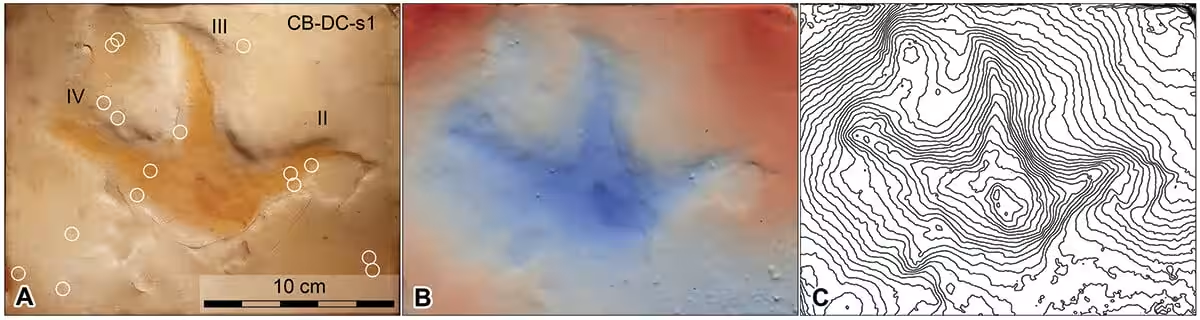
The prints have three toes, linking them to Anomoepus scambus, a small dinosaur with legs between six and 20 inches long. Fossils found in other parts of the world suggest that they were plant-eaters with long legs, a chunky body, short arms, and a small head with a beak.
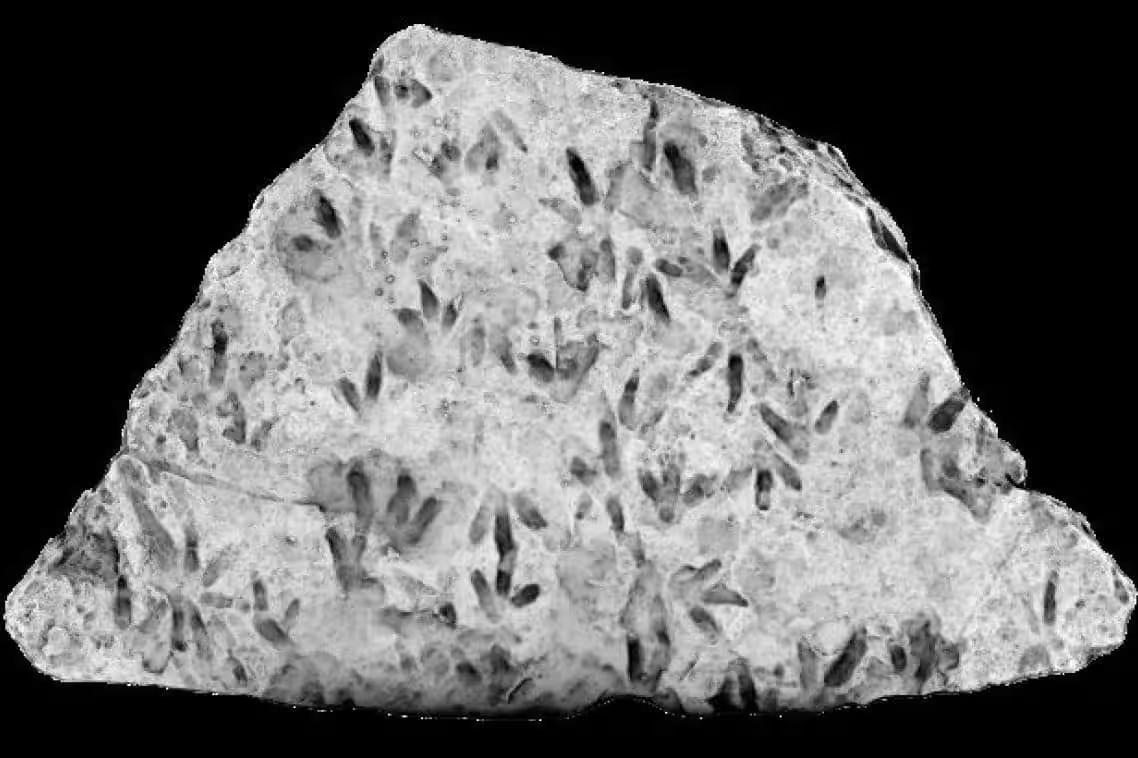
The footprints suggest that the dinosaurs were not moving fast, with estimates putting their speed at under four miles per hour. This pace indicates a normal, steady walk, the kind you would expect from animals simply crossing an area rather than reacting to danger or chasing something.
Uncovering Hidden Details
At first, the footprints were not that obvious, and some of them blended into the rock. To make things clearer, the team used 3D imaging and light filtering to bring out details in the surface. This closer inspection helped confirm the number of tracks and made it easier to separate prints that overlap. It also led to more finds nearby.
“It’s incredible to think that a piece of history this rich was resting in a schoolyard all this time. With advanced 3D imaging and light filters, I was able to reveal hidden details in the footprints,” he added.
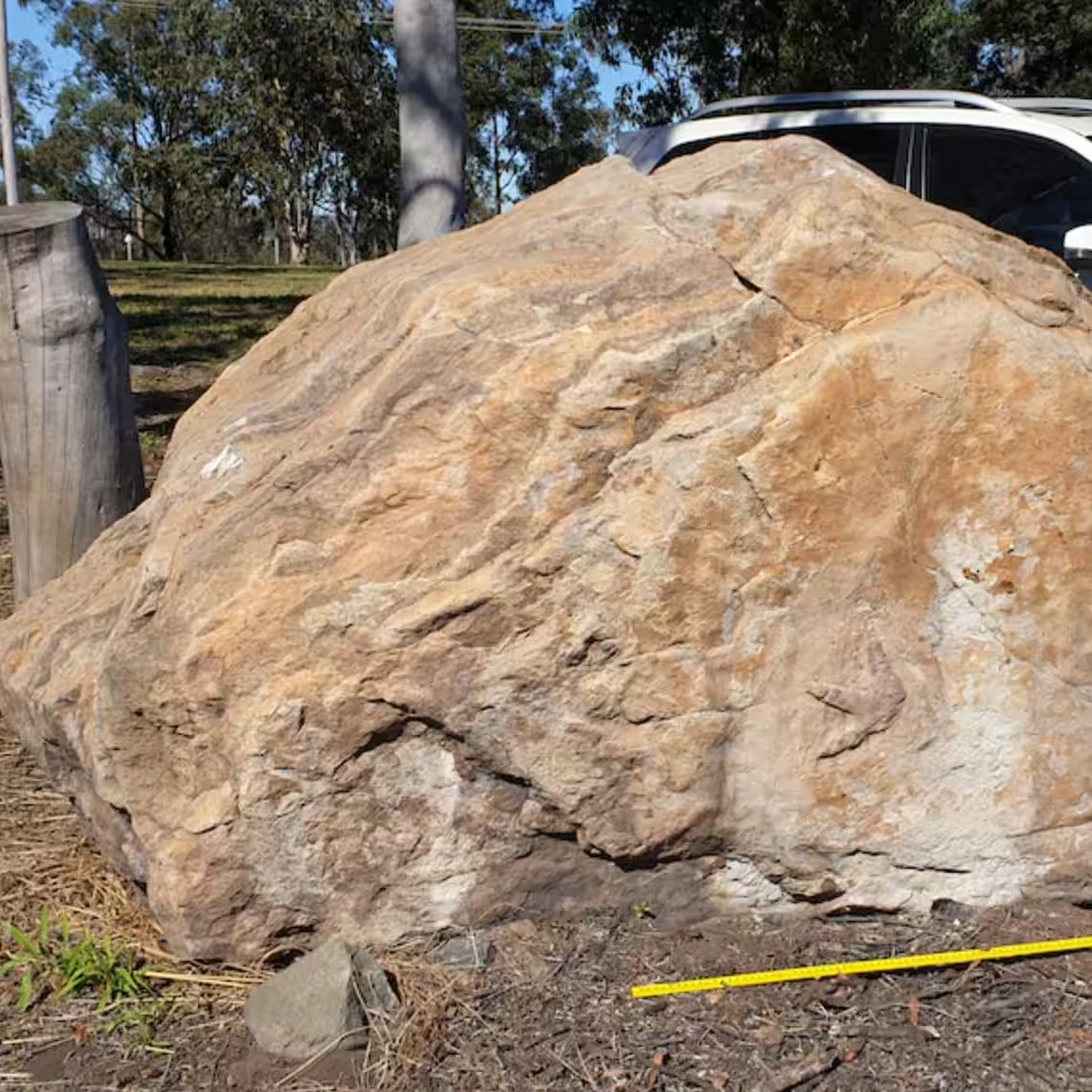
A report from a press release featured by the University of Queensland mentions that Romilio spotted other fossil tracks in the area, including one on a rock used as a bookend and another on a large boulder sitting in a mine parking lot.
“As I’m driving into the car park,” he recalled. “I see one of those car park boulders to stop cars from driving on the lawn. And it’s got this clear-as-day dinosaur fossil. My jaw dropped when I saw that.”
He added that one of those footprints stood out right away when he arrived. It was clearly visible once you knew what to look for, which makes it surprising it had gone unnoticed for so long.
Rare Traces of a Bygone Era
The study published in Historical Biology noted that only one dinosaur track had previously been recorded in the Callide Basin. With no bones from that period found in Australia, footprints like these become especially useful. They show that dinosaurs were there, how many there might have been, and how they moved across the landscape.
They show that dinosaurs were there, how many there might have been, and how they moved across the landscape. With no bones from that period found in Australia, footprints like these become especially useful.
This article has been fact checked for accuracy, with information verified against reputable sources. Learn more about us and our editorial process.
Last reviewed on .
Article history
- Latest version
Reference(s)
- Lucas, Spencer. “Anthony Romilio.”, June 2, 2016 <https://dinosaurs.group.uq.edu.au/profile/306/anthony-romilio>.
- “Dozens of 3-toed dinosaurs leave their mark in Queensland.”, March 11, 2025 The University of Queensland <https://news.uq.edu.au/2025-03-12-dozens-3-toed-dinosaurs-leave-their-mark-queensland>.
- Romilio, Anthony., et al. “Dinosaur footprints from the Lower Jurassic (Hettangian–Sinemurian) Precipice Sandstone of the Callide Basin, Queensland, Australia.” Historical Biology, vol. 38, no. 1, March 10, 2025, pp. 134-145. Informa UK Limited, doi: 10.1080/08912963.2025.2472153. <https://www.tandfonline.com/doi/full/10.1080/08912963.2025.2472153>.
Cite this page:
- Posted by Hassan Raza