These 300kg Stones Have Been Moving On Their Own In This Valley For Years, And Scientists Have Finally Explained How
Following years of intrigue, researchers have finally uncovered the enigma behind the desert stones that glided across the terrain, creating paths devoid of any human or animal involvement.
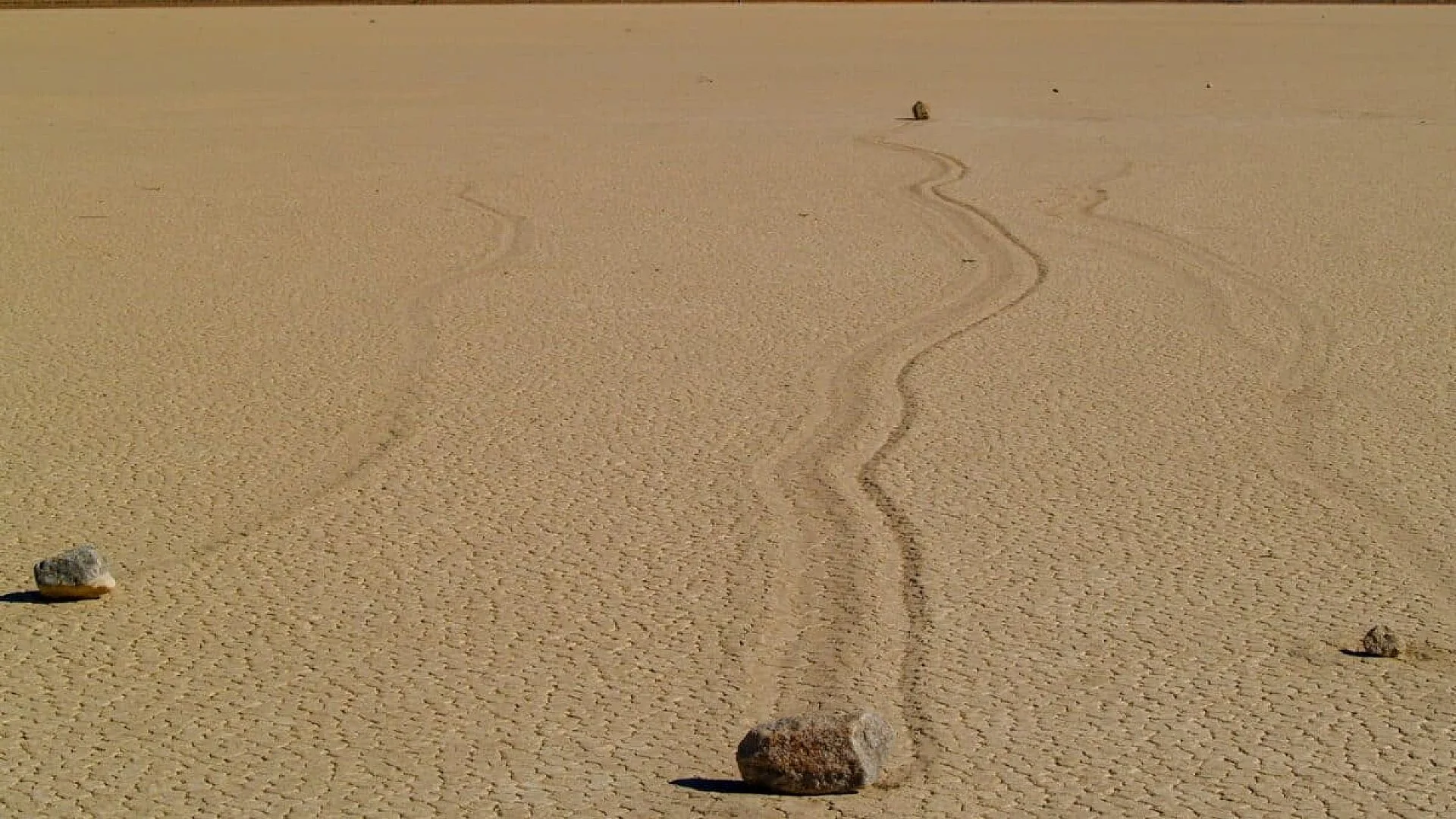
The sailing stones of Racetrack Playa in Death Valley National Park have long been a source of fascination, with scientists finally capturing their movement after more than seven decades of mystery. But what they found is surprisingly straightforward.
These massive rocks, weighing over 300 kilograms each, have left behind a trail of evidence on the dry lakebed, with some paths running parallel to each other and even changing direction suddenly, making it a puzzle that was hard to crack.
For years, researchers had been trying to catch the stones in action, but no one had actually seen them move before. The research led by Dr. Brian Jackson of Boise State University points to the rarity of the right conditions and the extremely slow pace as the main reasons why this phenomenon went unnoticed for so long.
A Patient Setup That Paid Off
Findings published in PLOS ONE describe how this setup allowed scientists to capture real-time data during a rare period when the playa filled with water. As Dr. Richard Norris from the Scripps Institution of Oceanography noted:
“Science sometimes has an element of luck. We expected to wait five or ten years without anything moving, but only two years into the project, we just happened to be there at the right time to see it happen in person.”

Over a period of roughly two and a half months, researchers documented five movement events, with some involving hundreds of stones moving simultaneously.
This dataset finally linked specific weather patterns to stone movement and showed how short and irregular these events are, which helps explain why they were never directly observed before.
Thin Ice And Gentle Winds Drive The Motion
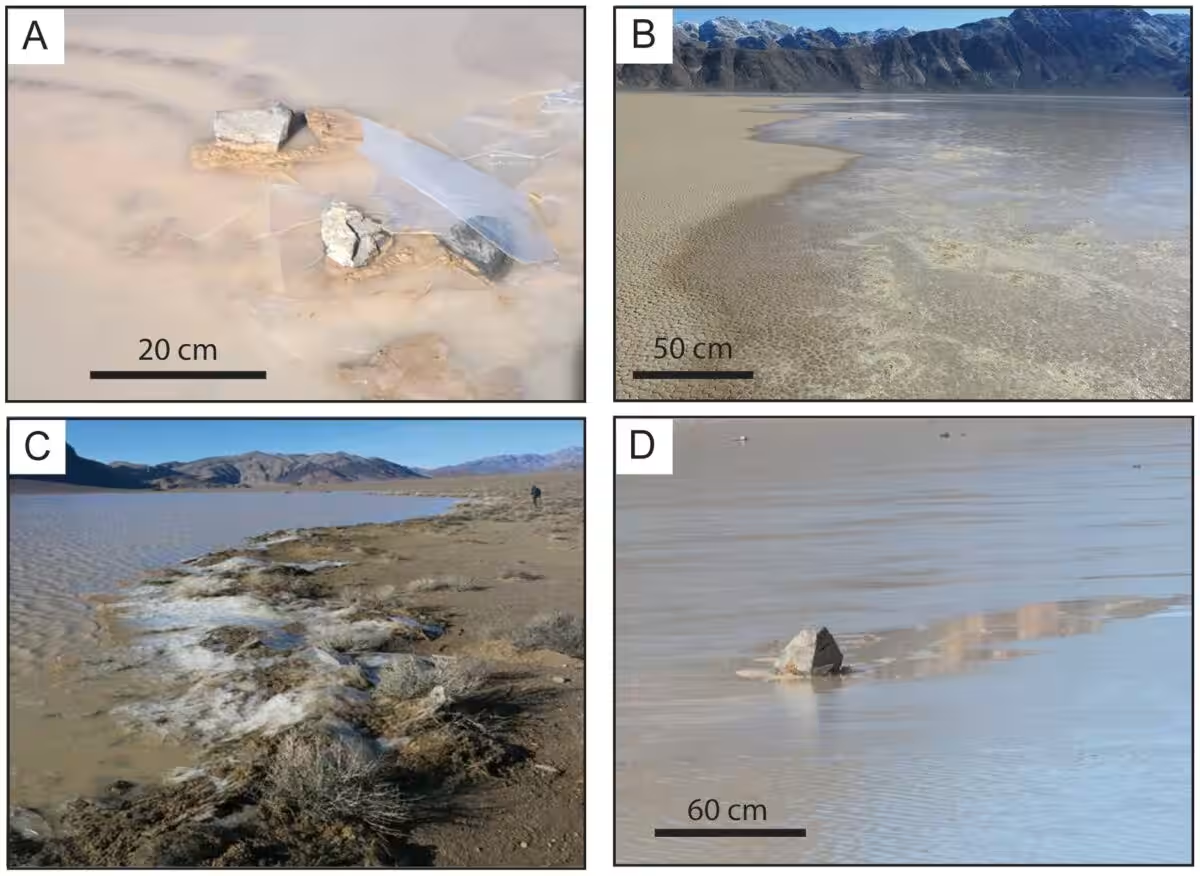
The explanation turns out to be less dramatic than earlier ideas. When the playa floods, cold nights freeze the shallow water into thin ice sheets, just 3 to 5 millimeters thick. When the sun comes up, the ice breaks into large floating pieces.
Work by Dr. Norris shows that these panels are pushed by light winds of only 3 to 5 meters per second, which in turn move the stones across the soft mud. The ice does not lift the rocks. It transfers force as it drifts across the surface. The observations show that even gentle winds can move massive stones when combined with the right surface conditions.
The Pattern That Broke The Mystery
One reason this stayed a mystery for so long is the speed. The stones move at only 2 to 6 meters per minute, which is almost impossible to notice unless you are watching very closely or using instruments.
Some movements last just a few seconds, while others go on for up to 16 minutes. In one case, stones spread across the distance of three football fields started moving at the same time and traveled more than 60 meters.
Researchers noted that this kind of synchronized motion explains the parallel tracks seen across the Racetrack Playa. When it happens, it is subtle and quiet. You could easily be there and not realize anything is moving at all.
This article has been fact checked for accuracy, with information verified against reputable sources. Learn more about us and our editorial process.
Last reviewed on .
Article history
- Latest version
Reference(s)
- Norris, Richard. “Sliding Rocks on Racetrack Playa, Death Valley National Park: First Observation of Rocks in Motion.”, vol. 9, no. 8, pp. e105948, doi: 10.1371/journal.pone.0105948. <https://journals.plos.org/plosone/article?id=10.1371/journal.pone.0105948>.
- “Richard Norris, paleobiology.” RICHARD NORRIS <https://rnorris.scrippsprofiles.ucsd.edu/>.
- “The Racetrack - Death Valley National Park (U.S. National Park Service).” <https://www.nps.gov/deva/planyourvisit/the-racetrack.htm>.
Cite this page:
- Posted by Hassan Raza