Buried Just Inches Beneath Tunisia’s Sahara Sands, a Fully Intact 10-Meter-Long Sea Crocodile Fossil Has Been Found
A long-forgotten, colossal crocodile concealed beneath the desert’s surface is capturing interest for reasons beyond its sheer dimensions.
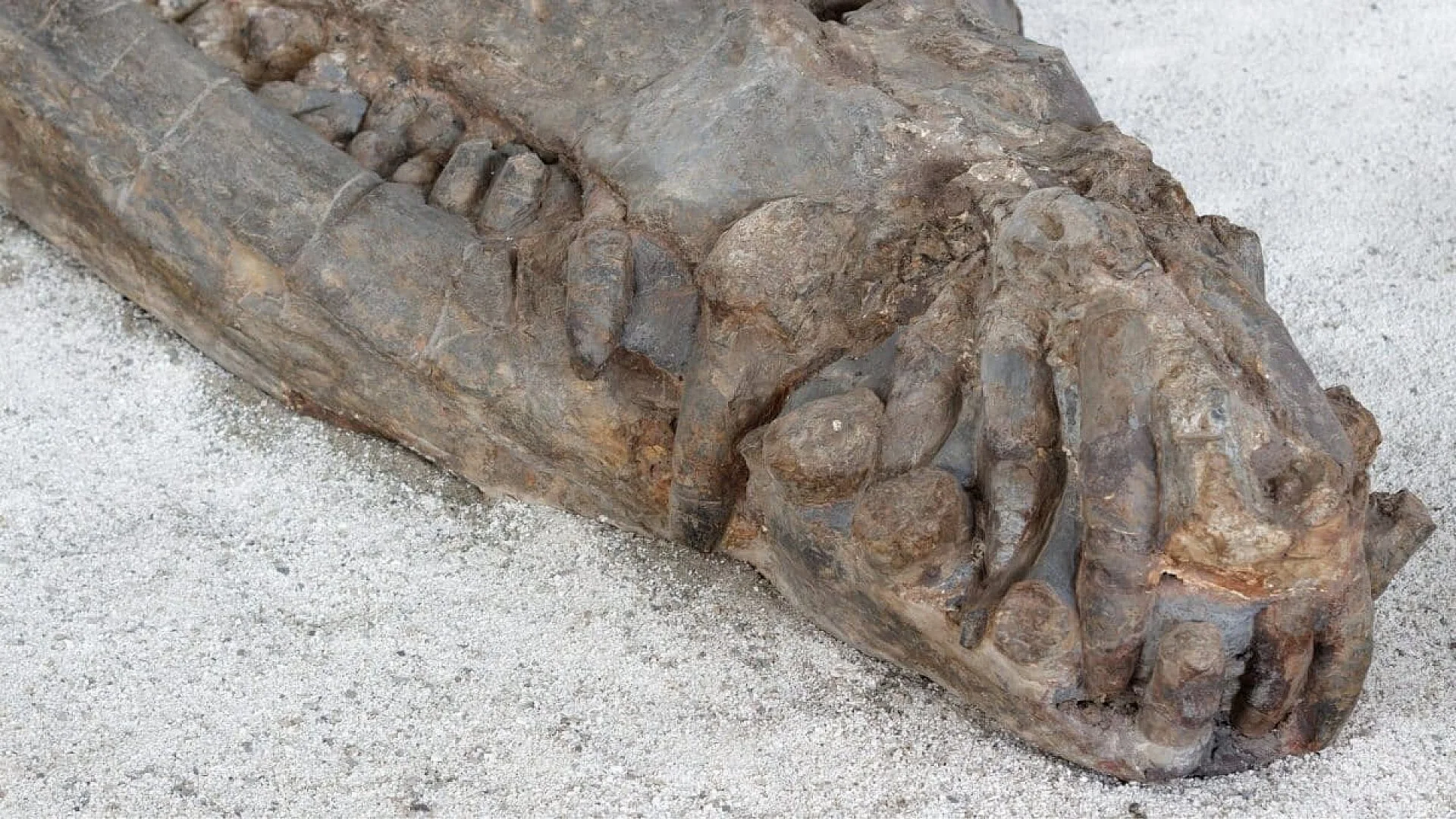
A groundbreaking discovery in Tunisia has sent shockwaves through the scientific community, rewriting the history of ancient life. A colossal marine crocodile, measuring over 30 feet in length, has been unearthed, challenging long-held assumptions about extinction timelines. The species, Machimosaurus rex, has been found to have lived millions of years later than previously believed, raising new questions about the survival of marine crocodiles.
At first glance, the sheer size of this prehistoric creature is awe-inspiring, but it’s the implications of its discovery that are truly remarkable. This find suggests that a group of marine crocodiles may have survived longer than previously thought, forcing researchers to re-examine a pivotal moment in Earth’s history.
Unveiling a Fossil Marvel
The incredible discovery was made by a team led by Federico Fanti from the University of Bologna, who uncovered the fossil in Tunisia, near the edge of the Sahara Desert. According to Cretaceous Research, the remarkably preserved remains were located just a few inches below the surface, allowing for an almost complete skeleton to be recovered.
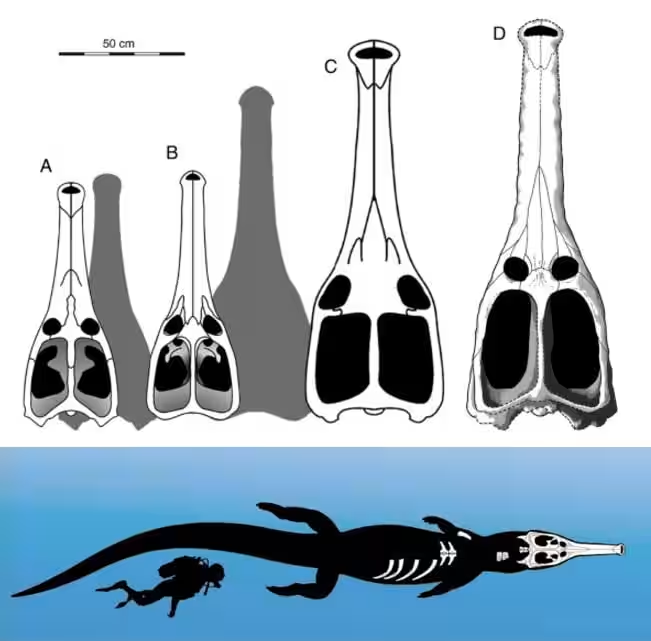
The discovery was made possible by the exceptional preservation of the fossil, which allowed researchers to recover a nearly complete skeleton, including the five-foot-long skull that required two days to fully uncover.
“There was a neck attached to it, and then the back, and the tail, and the limbs sticking out sideways. The whole crocodile was there,” said Tetsuto Miyashita, a doctoral researcher at the University of Alberta.
A Predator Built for Strength
The anatomy of Machimosaurus rex reveals a predator built for strength, rather than speed, with a broad skull and relatively short teeth that suggest a crushing bite force, capable of breaking through tough prey.
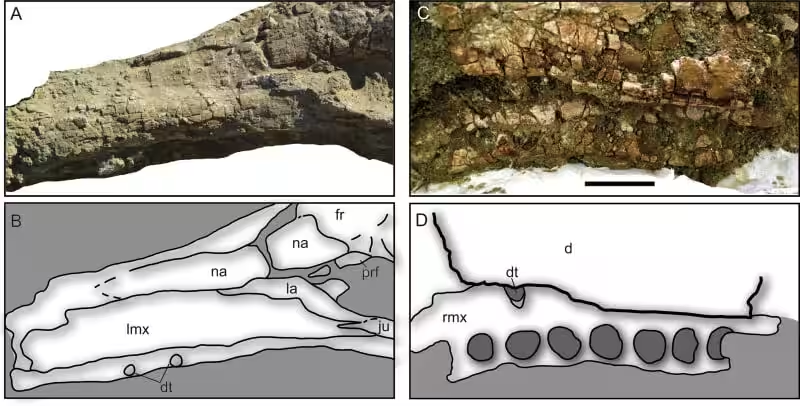
As reported in the research, the diet of Machimosaurus rex likely included turtles, whose remains were found at the same site, and fish, suggesting a diverse ecosystem that supported large predators.
Fanti’s research suggests that this extinction may not have been as definitive as once believed, and that some species persisted beyond that boundary. As he explained:
“That’s leading us to consider the mass extinction theory is wrong and that we should better understand what’s going on at the end of the Jurassic period.”
This article has been fact checked for accuracy, with information verified against reputable sources. Learn more about us and our editorial process.
Last reviewed on .
Article history
- Latest version
Cite this page:
- Posted by Hassan Raza