Scientists Just Found a Nearly Complete 16-Centimeter Fossil Near a Dinosaur Nest
A fossil, no larger than a human palm, has recently been unearthed from a location teeming with colossal predators. Initially, researchers anticipated little from this find, but this diminutive specimen is gradually unveiling insights that were previously concealed.
A groundbreaking discovery in the United States has shed new light on a group of reptiles that once thrived alongside dinosaurs, but has almost completely vanished. Meet Opisthiamimus gregori, a small reptile with a remarkable, nearly complete fossil that is rewriting the history books.
The significance of this find lies in the group it belongs to – the rhynchocephalians, often referred to as ‘living fossils’ due to their status as the last descendants of a dominant group that ruled ecosystems over 240 million years ago. However, they were once far more widespread and diverse, with species occupying various ecological roles.
Research published in the Journal of Systematic Palaeontology reveals that these reptiles split from lizards and snakes around 230 million years ago. During the Jurassic period, they played a vital role in many ecosystems, with some species feeding on fish, others on plants, and some, like Opisthiamimus gregori, likely feeding on insects.
A Dinosaur’s Neighbour
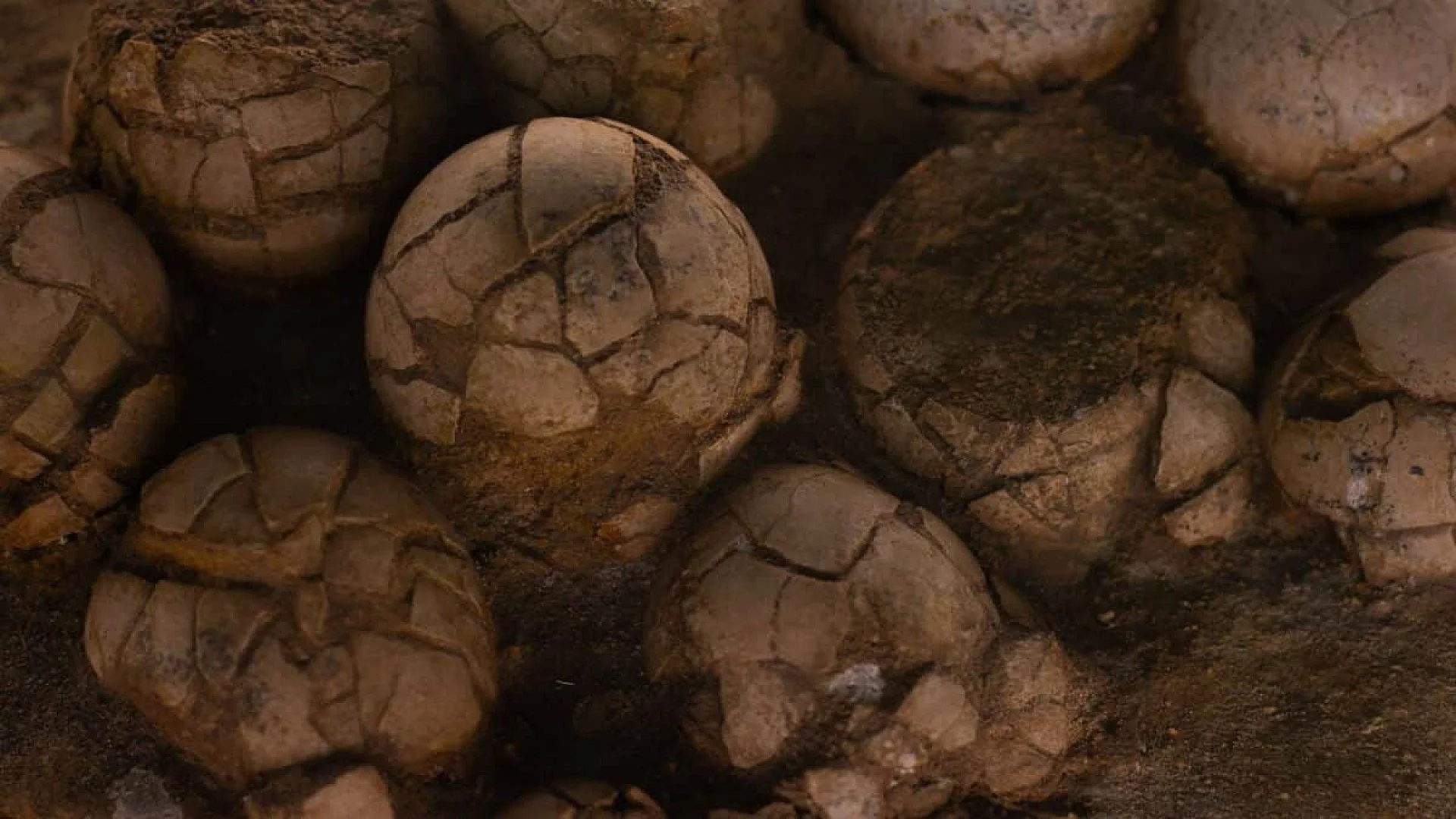
The fossils were uncovered in the Morrison Formation in Wyoming, a renowned site for dinosaur remains. In this case, the bones were found near a nest of Allosaurus, a large predator from the Jurassic, making this discovery even more intriguing.
The condition of the fossil itself is a major highlight, as most rhynchocephalians are known from small fragments. This time, researchers found several specimens, including one that is almost complete, missing only parts of the tail and hind legs.

According to the Smithsonian Institution, the preservation of this fossil is extremely rare for this group. To study it properly, the team used micro-CT scans from three different facilities to build a detailed 3D reconstruction of the skeleton. The animal measured around 16 centimeters long, making it a relatively small species.
“Such a complete specimen has huge potential for making comparisons with fossils collected in the future and for identifying or reclassifying specimens already sitting in a museum drawer somewhere,” research associate David DeMar Jr. explained. “With the 3D models we have, at some point we could also do studies that use software to look at this critter’s jaw mechanics.”
A Unique Feeding Style
As explained in the study, the skull and teeth of Opisthiamimus gregori suggest that it was an insect-eater. It likely fed on insects and maybe harder prey like beetles, thanks to its unique teeth that are part of the jawbone itself.
“Rhynchocephalians are largely known from fragmentary fossils of their teeth and jaws,” noted Smithsonian National Museum of Natural History paleontologist Matthew Carrano.“Opisthiamimus was likely an insectivore with the ability to chew through fairly resistant foods like insect exoskeletons.”

Rhynchocephalians have a unique way of eating, with their teeth being part of the jawbone itself. The tuatara still has this feature today, along with a jaw that moves back and forth in a sawing motion.
This fossil provided scientists with a rare opportunity to study those features in detail. Some parts of the skull were crushed or shifted, but the scans helped reconstruct them accurately. This level of detail is often missing when fossils are incomplete.
Unraveling the Mystery of Their Decline
Despite being successful during the Jurassic period, rhynchocephalians eventually declined while squamates, meaning lizards and snakes, became dominant. The reasons behind this decline are still not fully understood. They had traits that might have helped them survive, like long lifespans up to 100 years for the tuatara and an ability to live in cooler environments. However, none of these factors clearly explains why most of them disappeared.

The study also highlights the potential of this new species to help researchers better classify other fossils that are harder to identify. While it does not provide a definitive answer to the mystery of their decline, it adds a valuable piece to the puzzle.
This article has been fact checked for accuracy, with information verified against reputable sources. Learn more about us and our editorial process.
Last reviewed on .
Article history
- Latest version
Reference(s)
- “The Morrison Formation - Fossils and Paleontology (U.S. National Park Service).” <https://www.nps.gov/subjects/fossils/the-morrison-formation.htm>.
- Black, Riley. “Scientists Discover Bug-Eating Reptile That Lived Among Dinosaurs.”, September 15, 2022 Smithsonian Magazine <https://www.smithsonianmag.com/science-nature/scientists-discover-bug-crunching-reptile-that-lived-among-dinosaurs-180980757/>.
- “David DeMar, Jr. | Department of Biology | University of Washington.” <https://biology.washington.edu/people/david-demar-jr>.
- DeMar, David G.., et al. “A nearly complete skeleton of a new eusphenodontian from the Upper Jurassic Morrison Formation, Wyoming, USA, provides insight into the evolution and diversity of Rhynchocephalia (Reptilia: Lepidosauria).” Journal of Systematic Palaeontology, vol. 20, no. 1, September 15, 2022, pp. 1-64. Informa UK Limited, doi: 10.1080/14772019.2022.2093139. <https://www.tandfonline.com/doi/full/10.1080/14772019.2022.2093139>.
- “Carrano, Matthew.” Smithsonian National Museum of Natural History <https://naturalhistory.si.edu/staff/matthew-carrano>.
Cite this page:
- Posted by Hassan Raza