Drone Footage Just Revealed the Last People on Earth With No Contact With the Outside World for 60,000 Years
Deep within the lush expanse of the Brazilian Amazon, over a hundred communities have deliberately severed all ties with contemporary civilization. Recent drone footage offers a glimpse into their secluded existence, revealing the reality of their hidden world.

Deep within Brazil’s vast Amazon rainforest, a world of mystery and isolation awaits. Drone cameras operated by conservation groups and Brazil’s Indigenous affairs agency FUNAI have captured rare aerial footage of people who have never had contact with the outside world. The footage reveals isolated men and women watching the drones from beneath the forest canopy, some raising bows and arrows toward the hovering devices. The Amazon holds more uncontacted Indigenous peoples than any other place on Earth, with FUNAI counting at least 100 such groups still living in the region.
The remote Javari Valley, bordering Peru, shelters the highest concentration of uncontacted groups. Among them are the Korubo, known locally as “caceteiros” or clubmen, for the heavy wooden clubs they carry. In the Massaco Territory, a separate group of roughly 300 people uses bows so large that one recovered by FUNAI officials measured over four meters, comparable in design to those used by the Sirionó people of neighboring Bolivia. Mounds of tortoise shells at abandoned camps point to turtles as a dietary staple.
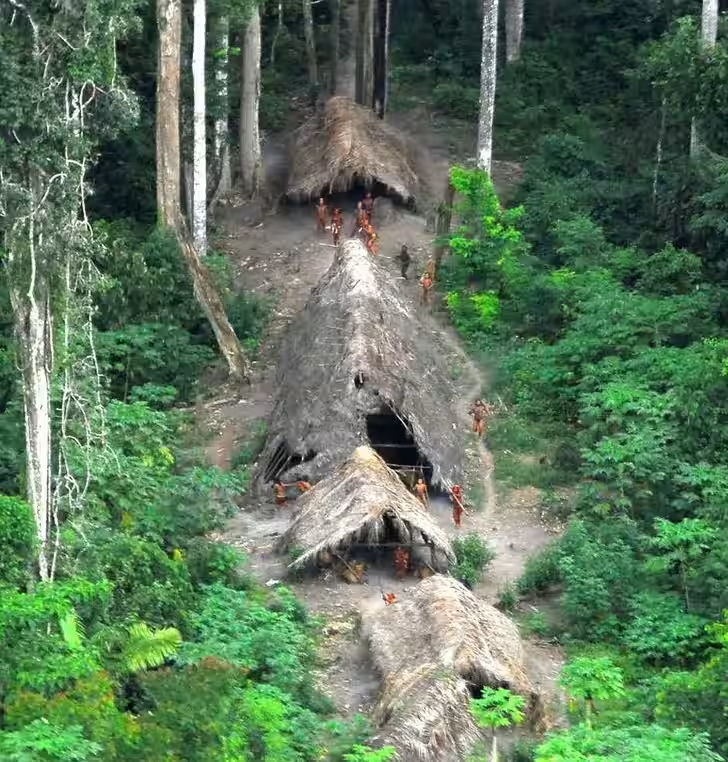
Their isolation is not a result of chance. According to Survival International, a global Indigenous rights organization, it almost certainly reflects earlier catastrophic encounters with outsiders, including the rubber boom era when many Indigenous people were enslaved and survivors fled deep into the forest.
The Uncontacted Awá: A Nomadic People at Risk
Among Brazil’s uncontacted groups, the Awá are considered the most immediately at risk. Nomadic hunter-gatherers of the eastern Amazon, they can build a forest shelter in hours and abandon it days later. Uncontacted Awá hunt with two-meter bows strung with arrows fletched from harpy eagle feathers, tracking game across territories they navigate entirely from memory.
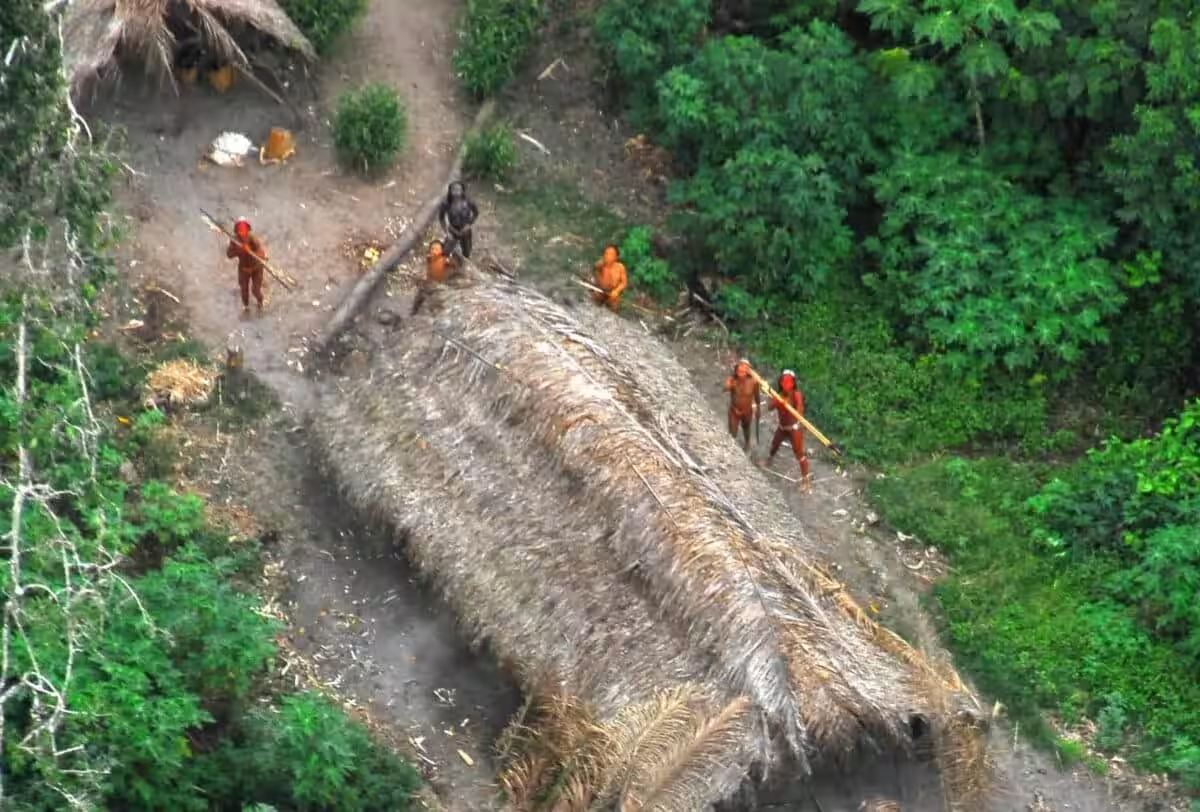
Their family life is remarkable. Most Awá households keep more animals than people, including coatis, wild pigs, king vultures, and monkeys. Capuchin monkeys are particular favorites, known for playing tricks on their owners. Awá women have been documented breastfeeding young agoutis, small rodents they raise alongside their children.
Industry, not nature, is closing in on them. The Carajás mine in Brazil holds seven billion tonnes of iron ore, the largest deposit on the planet. Trains more than two kilometers long run day and night between the mine and the Atlantic coast, passing within meters of forest where uncontacted Awá still live.
When the 900-kilometer railway was built in the 1980s, authorities relocated many Awá communities that stood in its path. Of 91 people in one resettled group, only 25 survived four years later, killed by malaria and flu. As an Awá man named Blade told the Survival International campaign team: “If you destroy the forest, you destroy the Awá too.”
The Dangers of First Contact
The danger of contact is not historical; it is immediate. Because uncontacted peoples have never been exposed to common illnesses like influenza and measles, they carry no biological resistance. Survival International documents that up to 50 percent of a group can die within a year of first contact, from diseases that outsiders transmit without knowing. The Matis lost half their people after contact, including most of their shamans.
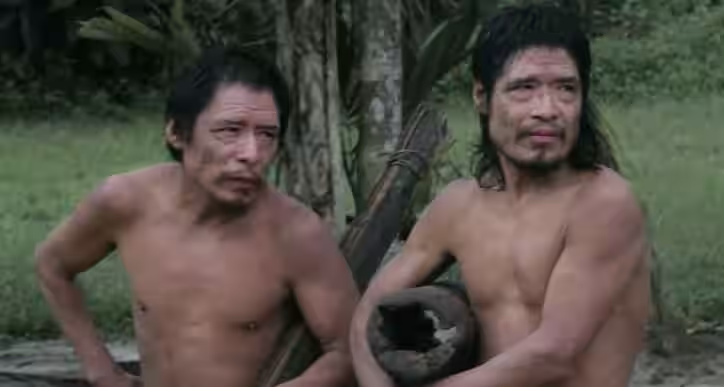
Some groups are down to their last members. The Piripkura, called “butterfly people” by their Gavião neighbors for the way they drift through the forest, numbered around 20 when FUNAI first found them in the late 1980s. Two known survivors remain today, an uncle and nephew, whose hunting trails are being blocked by illegal loggers to cut off their food supply. The Kawahiva of the Rio Pardo, once estimated at 50 to 100 people, may now be smaller still. Researchers believe they have stopped having children because they are always running.
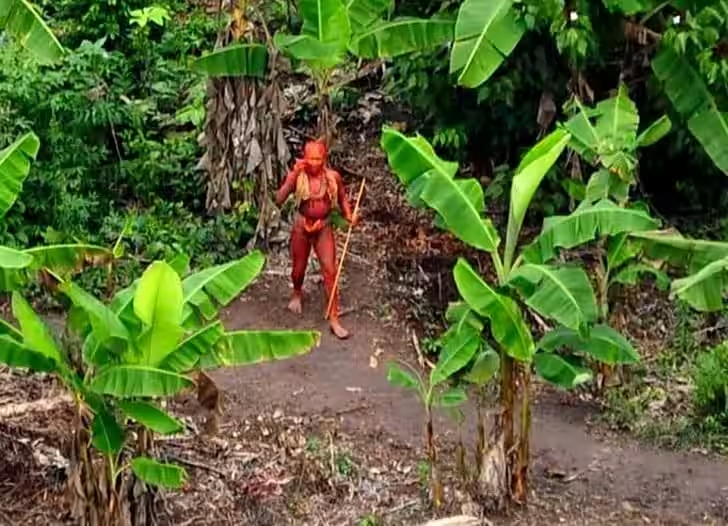
The starkest case is a man from Brazil’s Rondônia state known only as the “Man of the Hole”, named for the pits he dug to hide in or trap animals. Believed to be the last survivor of a people massacred by ranchers, he lived entirely alone for nearly 30 years, refusing every approach FUNAI made. He died of natural causes in August 2022. No one ever learned his name, his language, or which people he came from.
Protecting the Right to Remain Uncontacted
Since 1987, FUNAI has run a department built around a single principle: do not make contact. Rather than sending officials in, the agency stations field teams at protection posts around Indigenous territories to monitor borders and turn back illegal loggers, ranchers, and prospectors. The underlying position, as former Survival International director Stephen Corry has stated, is that the right to remain uncontacted belongs to the people themselves.
Beyond Brazil, India’s Sentinelese represent one of the longest-sustained cases of deliberate isolation anywhere. Inhabitants of North Sentinel Island in the Andaman archipelago, they have kept the outside world at a distance for an estimated 60,000 years. The Indian government enforces a strict exclusion zone around the island. Their population is estimated between 50 and 200 people. Anthropologist T. N. Pandit, among the very few researchers permitted to observe the tribe from offshore, described them as entirely self-sufficient, with no dependency on the outside world.
In 2014, sustained pressure from Survival International pushed the Brazilian government to deploy troops and expel illegal loggers from Awá land, one of the few times enforcement matched the scale of the incursion. The territory of the Kawahiva of the Rio Pardo carries no such legal protection today, leaving its remaining members with no official boundary between them and the logging operations pressing into their forest.
This article has been fact checked for accuracy, with information verified against reputable sources. Learn more about us and our editorial process.
Last reviewed on .
Article history
- Latest version
Reference(s)
- “Uncontacted Indigenous Peoples of Brazil.” <https://www.survivalinternational.org/peoples/uncontacted-brazil>.
Cite this page:
- Posted by Hassan Raza