Paleontologists Uncover Massive Ancient Shark Graveyard Hidden Beneath Egypt’s Desert
Paleontologists in Egypt’s Western Desert have unearthed fossils of an ancient, shark-ruled marine ecosystem that thrived millions of years ago.
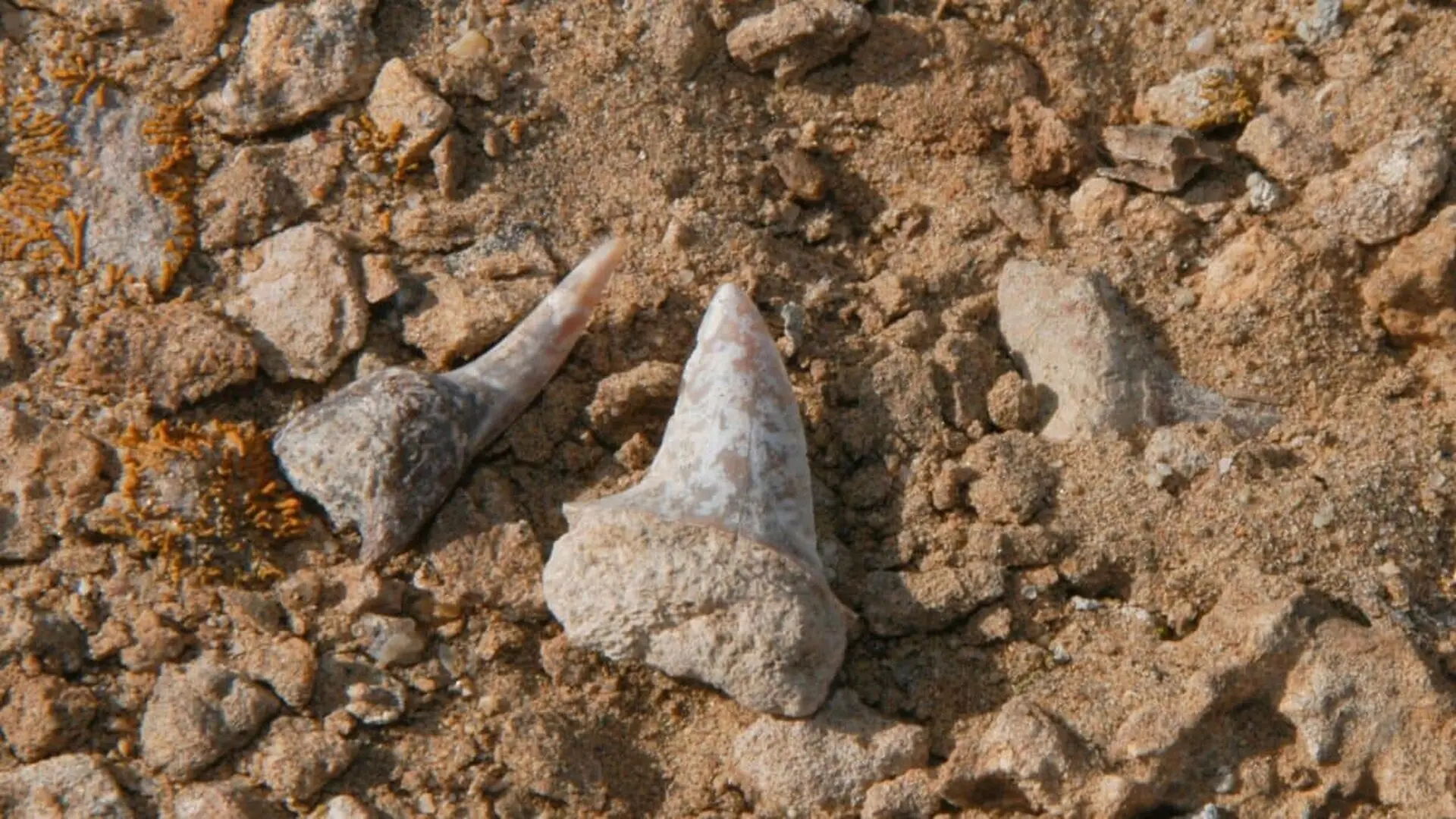
Long before the arid landscapes of Egypt’s Western Desert dominated the region, the area was submerged beneath a sprawling, vibrant marine ecosystem. Recent paleontological excavations at the Abu-Tartur Plateau have unearthed a treasure trove of fossilized shark teeth, confirming that the now-desolate terrain was once a bustling habitat for at least seven distinct species of prehistoric predators.
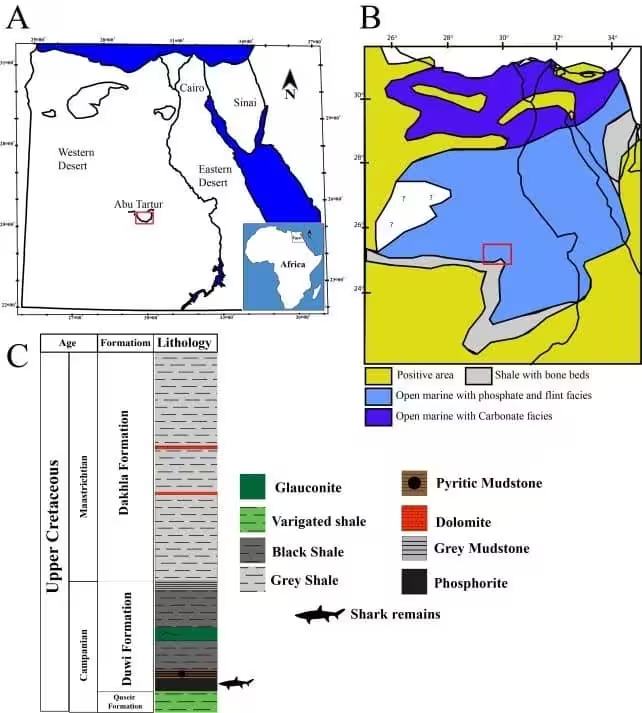
The discovery is centered on the Duwi Formation, a geological layer dating back to the Late Cretaceous period that spans vast sections of Egypt. Researchers have long identified this area as a potential window into the past, as the rock strata are notably rich in phosphorite—a material often deposited by the accumulated remains of marine life. Previous finds in the region, including ancient sea turtles and various marine reptiles, hinted at a productive coastal sea, but the latest results have significantly expanded that understanding.
A Sunlit Ancient Sea
During the Cretaceous period, which lasted from roughly 145 million to 66 million years ago, global temperatures were far higher than today, and sea levels surged as much as 558 feet above current markers. This climate allowed shallow, sun-drenched seas to blanket what is now the Egyptian desert, creating a cradle for marine biodiversity. Tarek Yassin, a paleontologist at Cairo University and lead author of the study, noted that the conditions within this ancient sea were ideal for sustaining complex food webs, citing evidence of balanced water temperatures, light penetration, and oxygenation.
Yassin explained to Live Science that the geological evidence paints a clear picture of a thriving environment. “This study provides evidence that the area now occupied by the plateau was once a sea with flourished marine life, with environmental conditions suitable for its development and prosperity, including favourable temperatures, sunlight, and appropriate oxygen levels,” Yassin stated.
New Additions to the Fossil Record
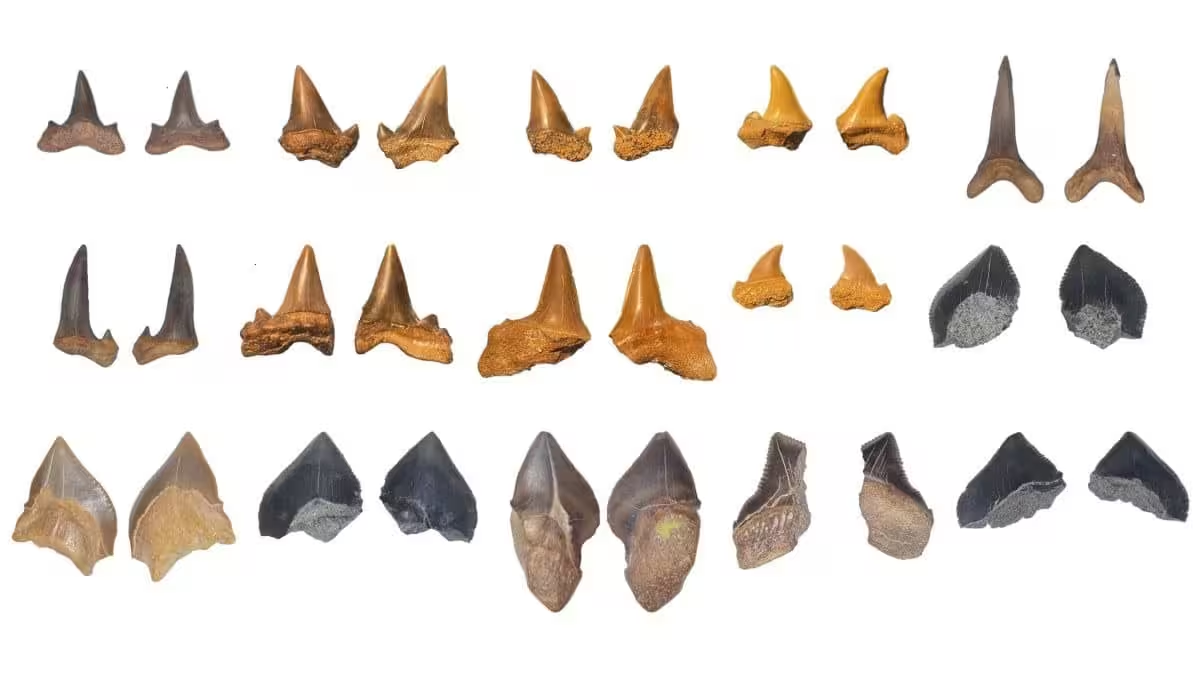
The research, published August 18 in the journal Cretaceous Research, details findings from fieldwork conducted between 2020 and 2022. While initial expeditions had identified two mackerel shark species, the team’s subsequent efforts recovered 14 additional teeth that represent five entirely new species for the site.
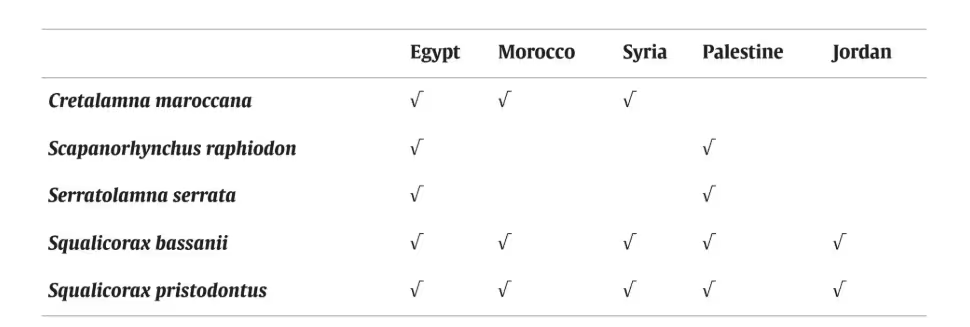
Among the most significant finds is Scapanorhynchus raphiodon, an ancient relative of the modern goblin shark that had never previously been documented in Africa. Additionally, the team identified Serratolamna serrata and Squalicorax bassanii for the first time in Egyptian fossil records. For the researchers, the density of this discovery is particularly noteworthy, as all seven species were recovered from the same localized plateau.
Deciphering the Ancient Accumulation
While the presence of multiple apex predators suggests a highly productive ecosystem, the scientists remain cautious about interpreting the site as a single, static community. It is possible that the fossils represent an accumulation of remains deposited over an extended period rather than a snapshot of a synchronized population. Yassin emphasized that the discovery is significant regardless of the timeframe, noting that the concentration of these fossils provides a unique look at the history of the region.
“Finding teeth belonging to seven different shark species was particularly remarkable, especially because they were all discovered in the same location, in the middle of an entire plateau,” Yassin said. “This discovery is more than simply a large assemblage of shark fossils.” With the potential for further hidden remains, the research team is already coordinating future expeditions to continue mapping the biological history of this long-vanished sea.
This article has been fact checked for accuracy, with information verified against reputable sources. Learn more about us and our editorial process.
Last reviewed on .
Article history
- Latest version
Reference(s)
- <https://www.researchgate.net/profile/Tarek-Yassin-3>.
- Dewan, Pandora. “Ancient shark 'graveyard' uncovered in Egyptian desert.”, August 27, 2026 Live Science <https://www.livescience.com/animals/sharks/an-exciting-surprise-ancient-shark-graveyard-uncovered-in-egyptian-desert>.
- Yassin, Tarek., et al. “Egyptian shark graveyard: New Late Cretaceous lamniform shark assemblage from Duwi Formation of Abu-Tartur area, southwestern Desert, Egypt.” Cretaceous Research, vol. 189, January 1, 2027, pp. 106476 Elsevier BV, doi: 10.1016/j.cretres.2026.106476. <https://doi.org/10.1016/j.cretres.2026.106476>.
Cite this page:
- Posted by Hassan Raza