Incredible 110 Million Year Old Dinosaur Fossil Found With Skin And Armor Intact
An exceptionally preserved armored dinosaur has been unearthed in Alberta, revealing intact skin, scales, and fossilized remnants of its original body.
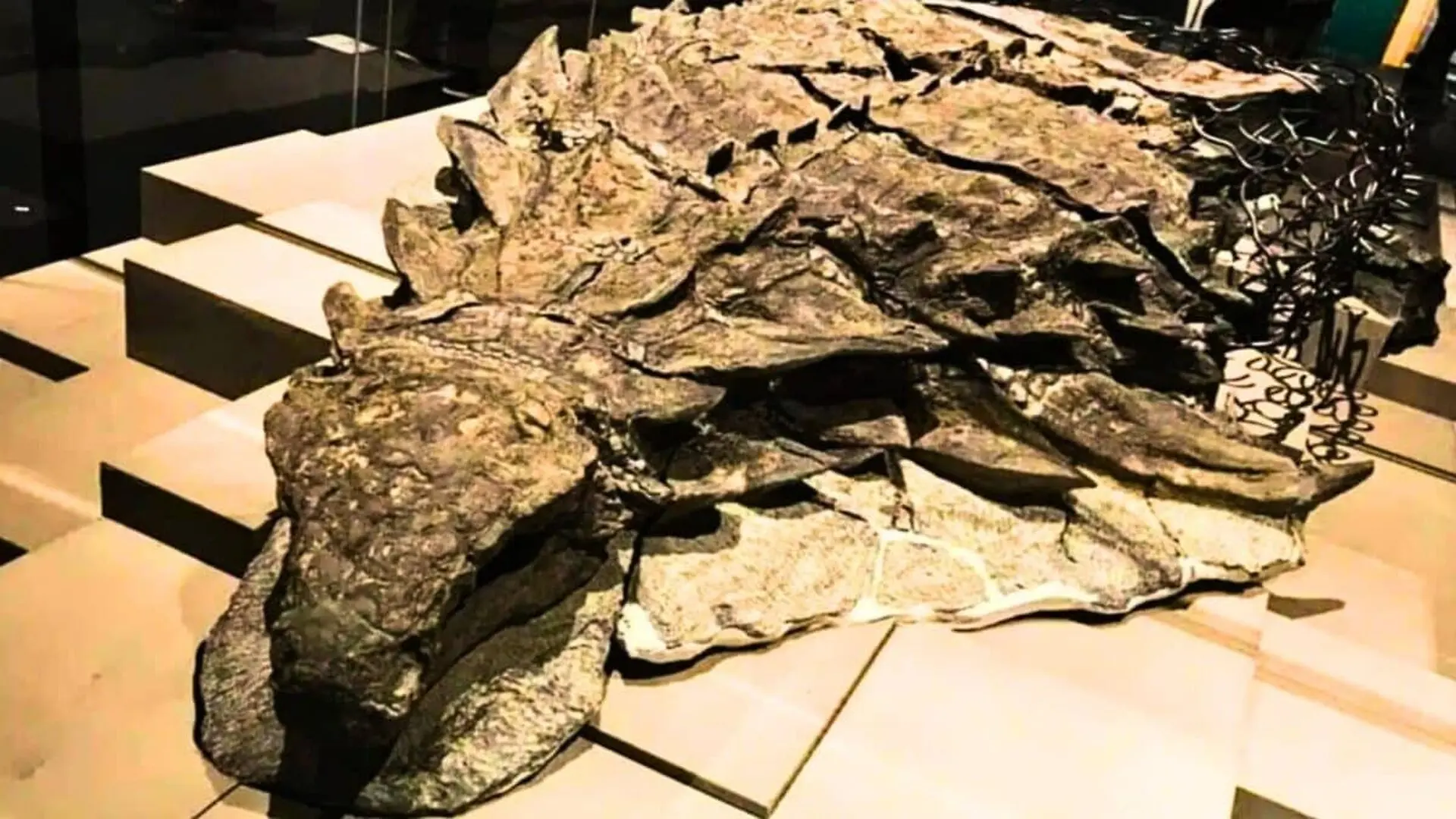
Most dinosaur fossils are mere skeletal echoes of the past, offering paleontologists little more than a fragmented puzzle to assemble. Soft tissues like skin, internal contours, and intricate dermal coverings typically decay long before fossilization can take hold. However, a remarkable discovery in northern Alberta has challenged these limitations, revealing a dinosaur so pristine that it defies conventional preservation expectations.
The specimen, Borealopelta markmitchelli, is a heavily armored herbivore that was unearthed in a three-dimensional state, complete with extensive skin and specialized body coverings still articulated with its skeleton. Published in the journal Current Biology, findings on the fossil describe the presence of epidermal scales, keratinous sheaths, and preserved armor plates, offering an unprecedented look at a creature that roamed the Earth 110 million years ago.
An Accidental Discovery of Ancient Anatomy
The dinosaur was uncovered in March 2011 at the Suncor Millennium Mine near Fort McMurray. A heavy-equipment operator named Shawn Funk spotted something unusual within the rock, setting in motion a recovery mission that would eventually bring this Early Cretaceous inhabitant to the Royal Tyrrell Museum of Palaeontology.
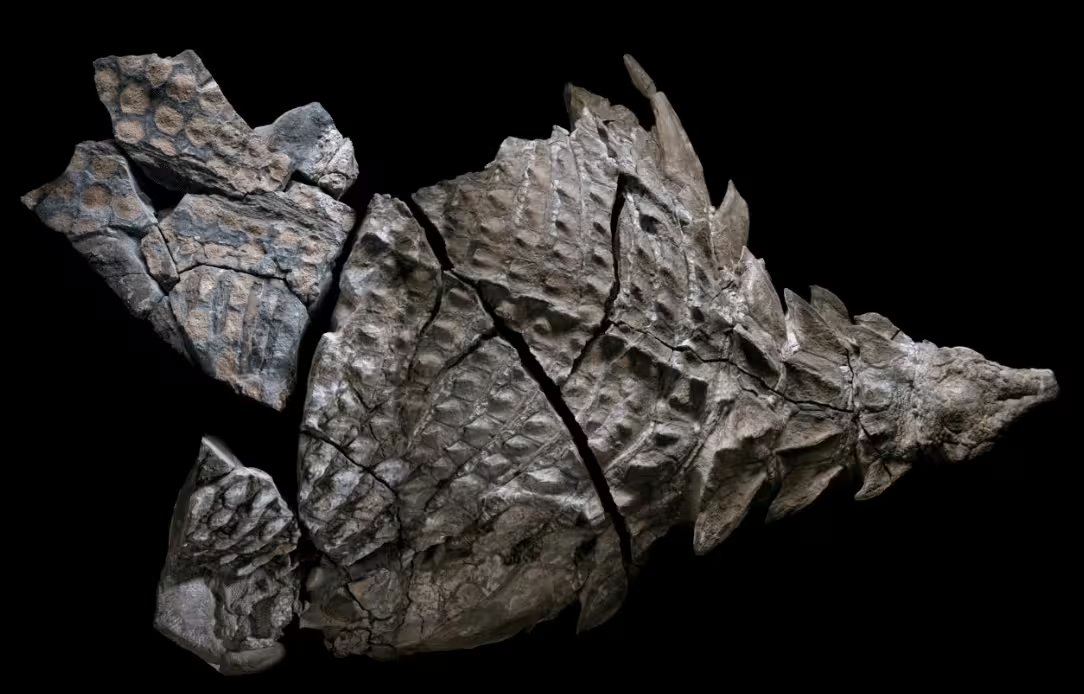
While Borealopelta was a land-dwelling animal, its preservation was likely facilitated by a post-mortem journey into a marine environment. Experts believe the carcass floated offshore before sinking to the seabed, where rapid burial protected it from the typical scavengers and decay processes that claim most terrestrial remains. This accidental “mummification”—a term scientists use loosely, as the internal organs are not intact—preserved the animal’s outer morphology, including its formidable shoulder spines and scales.
Thousands of Hours Spent Uncovering the Past
The path to studying this 15,000-pound block of rock was arduous. The specimen broke during extraction, requiring painstaking reconstruction. Technician Mark Mitchell dedicated more than 7,000 hours over five and a half years to carefully clearing away the matrix, a feat of patience that resulted in the species being named in his honor.
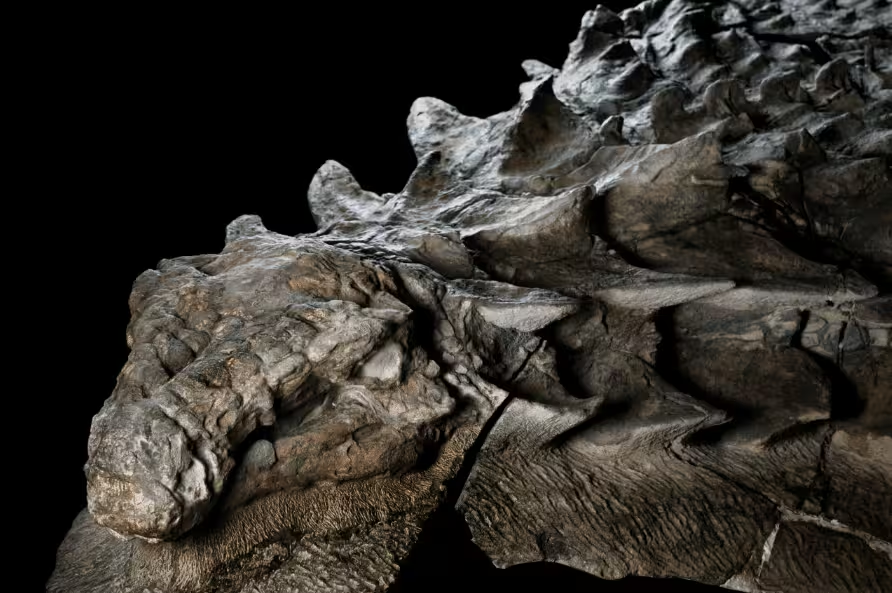
Unlike the flat, compressed fossils found in most collections, this specimen retains its structural integrity. Researchers were able to examine how the armor sat across the neck and shoulders, providing a rare opportunity to study the anatomy of a nodosaur without relying on heavy speculation.
Decoding the Secrets of Camouflage
The preservation extended beyond physical structure into the chemical realm. Analysis of the fossil suggested the presence of reddish-brown pigmentation and a pattern of countershading, where the back was darker than the underside. In modern nature, this pattern breaks up an animal’s silhouette, making it harder for predators to spot. The discovery suggests that even a heavily armored, 2,900-pound dinosaur utilized camouflage, indicating that the threat of predation was significant enough to necessitate both physical armor and visual deception.
However, the interpretation is not without its skeptics. As reported by The Atlantic, researchers like Alison Moyer have noted that chemical signals could potentially be influenced by the marine burial environment or decomposition that occurred prior to burial. Distinguishing between original biological markers and post-mortem chemical degradation remains one of the most complex challenges in modern paleobiology.
Redefining Armored Dinosaur Studies
Despite these debates, Borealopelta remains a benchmark for the field. By observing how scales associated with bony plates, paleontologists have gained a more nuanced understanding of how these dinosaurs appeared in life. There is even evidence suggesting that larger armor structures may have been pigmented differently, hinting at a possible dual role in both defense and visual display.
For the scientific community, this specimen serves as a reminder that the fossil record still holds surprises. Borealopelta is not just a skeleton, but a body that has managed to communicate its form across 110 million years of geological time.
This article has been fact checked for accuracy, with information verified against reputable sources. Learn more about us and our editorial process.
Last reviewed on .
Article history
- Latest version
Reference(s)
- <https://www.cell.com/current-biology/fulltext/S0960-9822(17)30808-4>.
- “Donald Henderson, Ph.D. | Royal Tyrrell Museum.” <https://tyrrellmuseum.com/research/scientists/don_henderson>.
- Yong, Ed. “A Dinosaur So Well Preserved, It Looks Like a Statue.”, August 3, 2017 The Atlantic <https://www.theatlantic.com/science/archive/2017/08/a-dinosaur-so-well-preserved-it-looks-like-a-statue/535782/>.
Cite this page:
- Posted by Hassan Raza