Rare 450 Million Year Old Fossil Found Sitting in a Museum Drawer With Soft Tissue Intact
Scientists have discovered the oldest fossil ever to preserve such rare, intricate details, marking only the second find of its kind among millions.
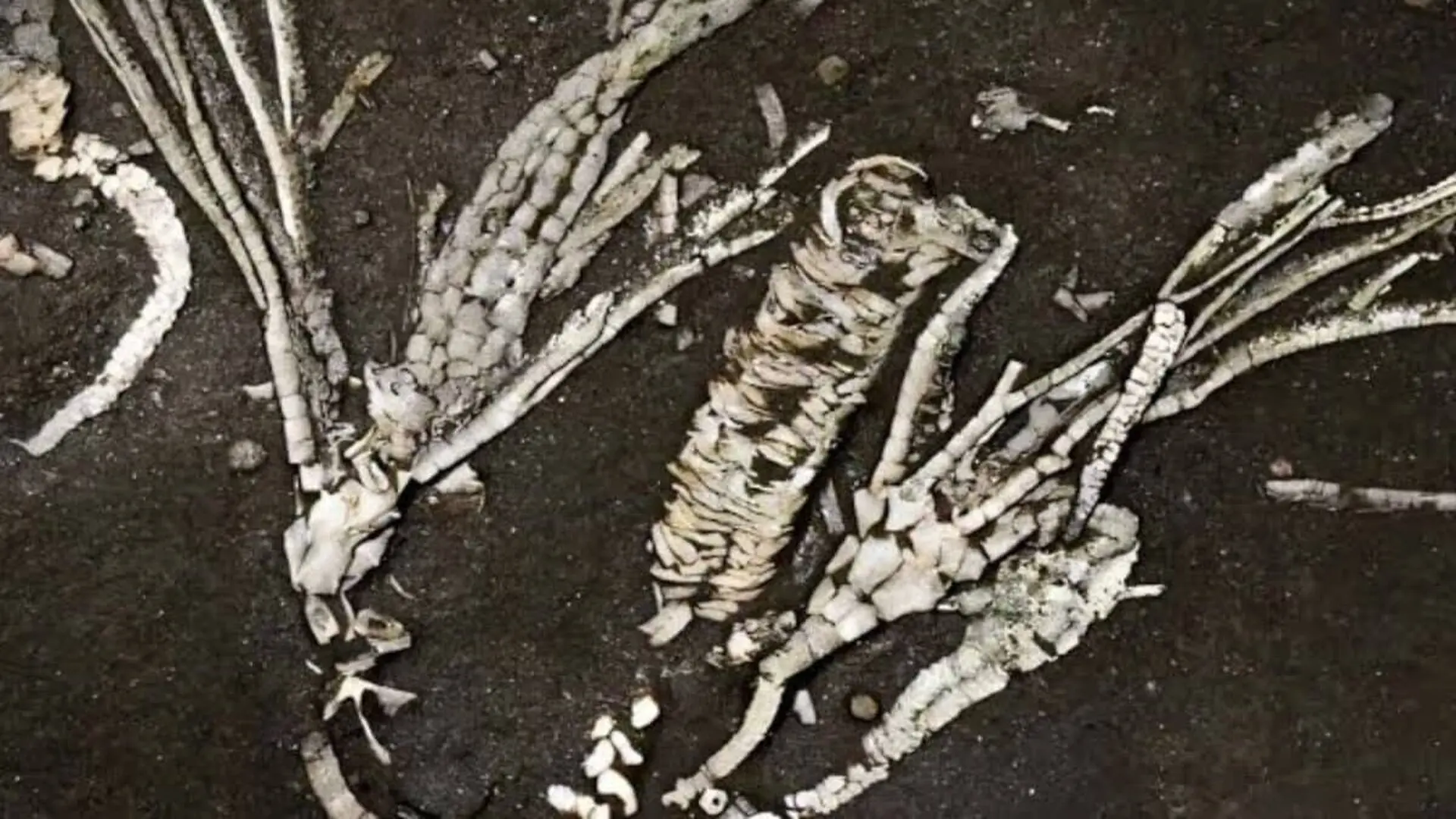
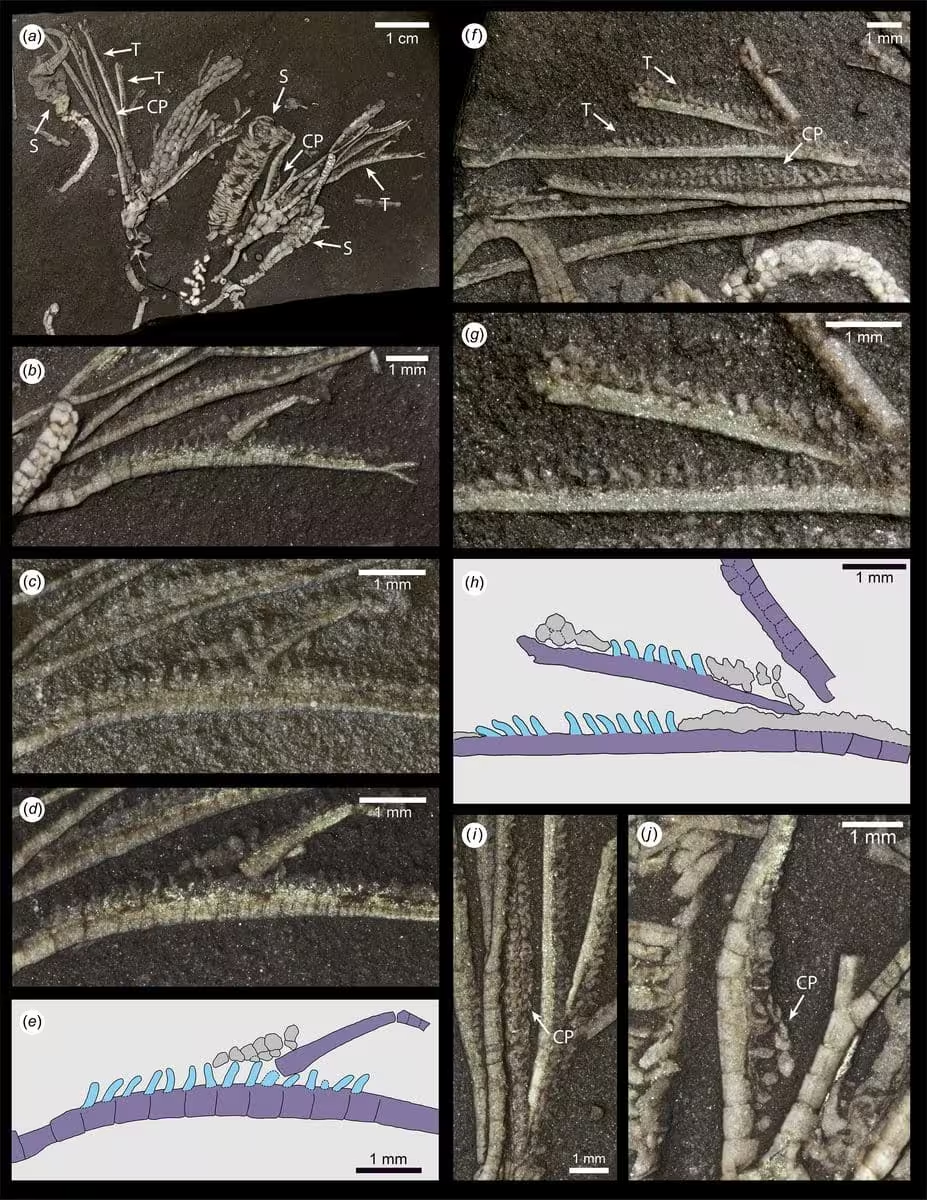
A remarkable fossil hidden in plain sight within a small Montréal museum has provided scientists with a rare window into the ancient world. Researchers from the University of Oklahoma have identified a 450-million-year-old crinoid specimen that preserves delicate soft tissues—specifically its tube feet—a discovery that challenges our understanding of prehistoric marine life.
Crinoids, often described as flower-like animals related to modern starfish, were once abundant inhabitants of early coral reefs. While their hard skeletal plates are common in the fossil record, the preservation of internal anatomy is an extreme rarity. Most soft tissue degrades rapidly following death, making this finding, which dates back more than 200 million years before the appearance of dinosaurs, a significant milestone in paleontology.
An Extraordinary Glimpse into Deep Time
The fossil belongs to the species Dendrocrinus simcoensis. According to Dr. Lena Cole, a paleontologist at the Sam Noble Oklahoma Museum of Natural History, the circumstances required to fossilize such fragile structures are analogous to a natural vacuum-sealer or refrigerator. Such conditions are exceptionally uncommon, which explains why, despite millions of crinoid specimens residing in global collections, this is only the second time soft tissue has been documented.

“Preservation like this is truly one in a million,” noted Dr. Cole. Her co-author, Dr. David Wright, emphasized that this particular find is the oldest of its kind, offering a baseline for how these organisms functioned in the Ordovician period.
Decoding Ancient Feeding Habits
For crinoids, tube feet served as critical tools for gathering food and responding to their immediate aquatic environment. Because the architecture of these feet reflects the animal’s ecological niche, researchers liken them to the diagnostic value of mammalian teeth. By analyzing the structural nuances of the 450-million-year-old feet, the team identified distinct differences between this ancient ancestor and its contemporary descendants, revealing significant evolutionary shifts in how these animals consumed nutrients over geological timescales.
The Undervalued Power of Museum Collections
The discovery highlights a vital truth in science: not all breakthroughs occur on remote field expeditions. This specific specimen had resided in the Musée de paléontologie et de l’évolution in Montréal for years, awaiting the right expert eyes to unlock its secrets. Dr. Wright pointed out that museum archives are dynamic repositories of potential knowledge, where evolving technologies and new analytical frameworks can reveal wonders from specimens collected decades ago.
With millions of items currently sitting in drawers within institutions like the Sam Noble Oklahoma Museum of Natural History, researchers remain optimistic that the next great paleontology discovery may already be resting in a collection, simply waiting to be examined with a modern perspective.
This article has been fact checked for accuracy, with information verified against reputable sources. Learn more about us and our editorial process.
Last reviewed on .
Article history
- Latest version
Reference(s)
- “Selina R. Cole.” <http://www.ou.edu/mcee/geosciences/people/faculty/selina-cole.html>.
- <https://www.ntu.ac.uk/staff-profiles/arts-humanities/david-wright>.
Cite this page:
- Posted by Hassan Raza