Tiny Chicken Sized Predator Discovered in Argentina’s Land of Giants
A remarkable fossil discovery in Patagonia reveals a surprising side of the dinosaur world, showcasing unique creatures that lived alongside ancient giants.
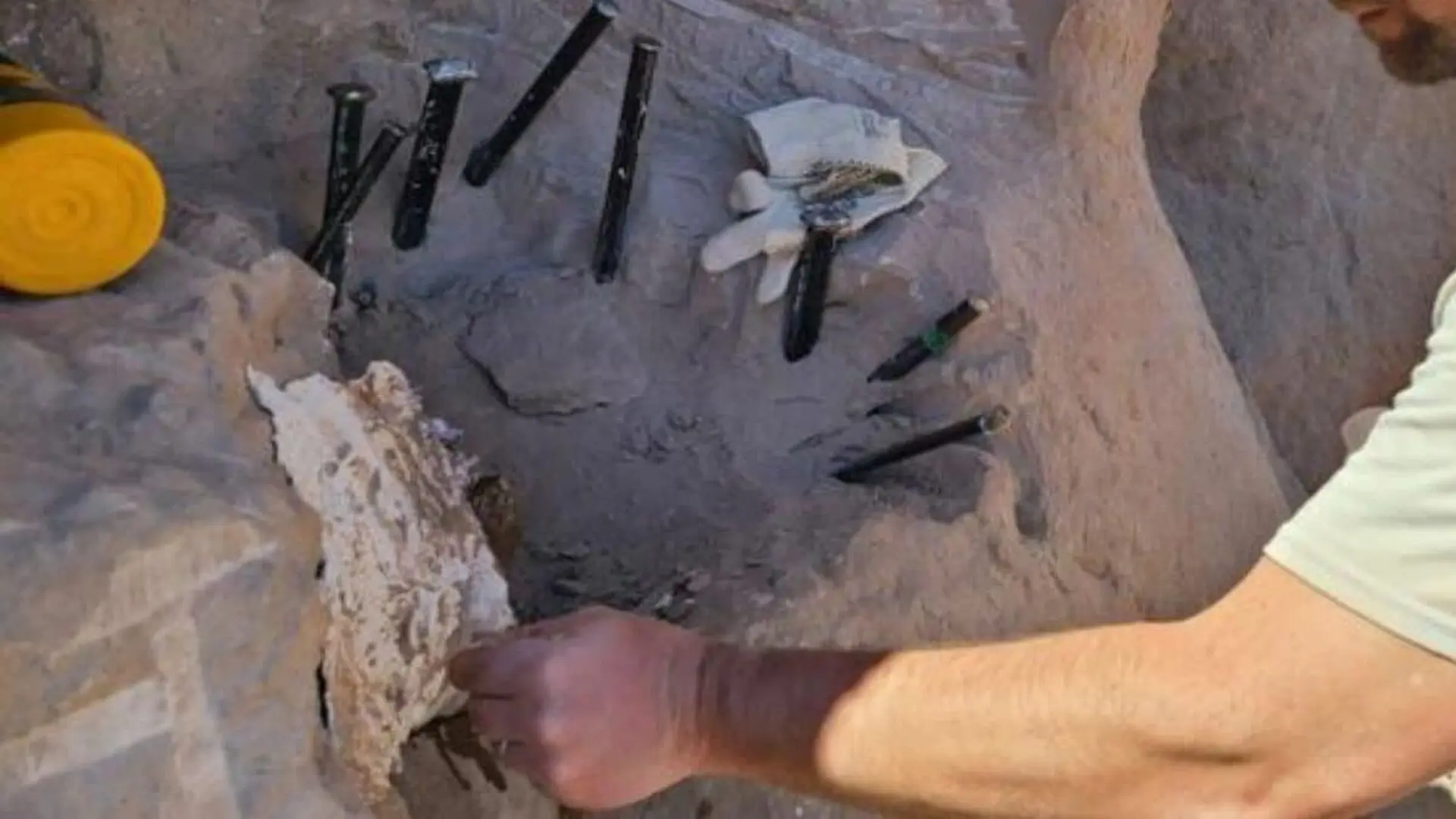
While the prehistoric landscapes of Patagonia are traditionally associated with earth-shaking titans, a remarkable fossil discovery reveals a drastically different inhabitant of the region 95 million years ago. Paleontologists have unearthed the near-complete skeleton of Alnashetri cerropoliciensis, a diminutive predator that was smaller than a common chicken, challenging the singular focus on the “land of giants.”
The findings, detailed in a study published in Nature, provide a rare, high-resolution glimpse into the Alvarezsauria group. Amidst the territory once ruled by massive fauna such as Giganotosaurus and Argentinosaurus, this agile hunter thrived as a specialized, small-bodied resident.
An Exceptionally Preserved Desert Dweller
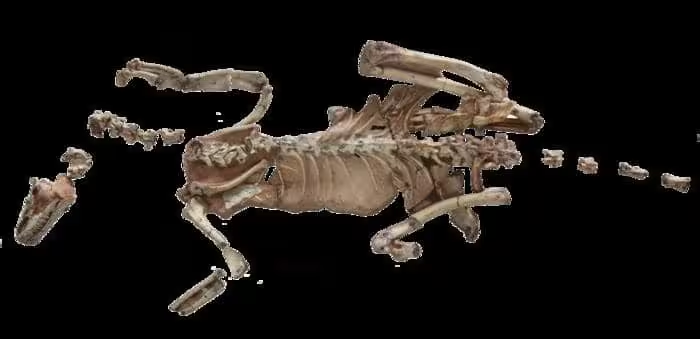
The specimen was recovered from the La Buitrera fossil site in Argentina’s Río Negro Province. Unlike many fossil discoveries that yield only fractured remains, this site provided a nearly complete skeleton, with much of the anatomy still articulated in its original death pose. Experts believe the animal was rapidly entombed by desert sand dunes shortly after death, a process that shielded the delicate remains from erosion and taphonomic damage for millions of years.
The individual, affectionately dubbed “Alna,” was roughly four years old at the time of her death, representing a near-adult growth stage. Measuring about 70 centimeters (28 inches) in length—the majority of which comprised her tail—the creature weighed approximately 0.7 kilograms (1.5 pounds). Peter Makovicky, a paleontologist at the University of Minnesota and the lead researcher, noted that the creature was smaller than a chicken and would not have reached the knee of an average adult human. Microscopic analysis of the bone structure provided the team with unprecedented insight into the dinosaur’s developmental biology.
Agile Anatomy and Evolutionary Context
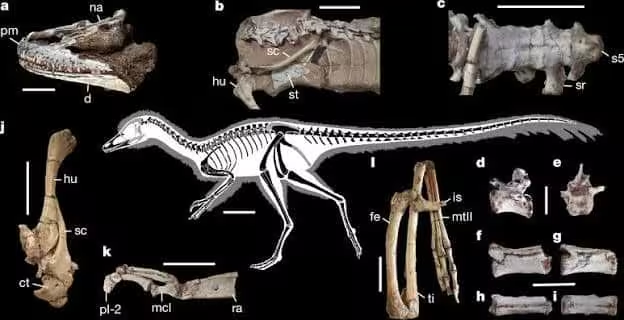
Alnashetri was built for speed, sporting long, slender legs designed for traversing sand dunes. With a set of sharp teeth, it likely occupied an ecological niche as an active hunter of small prey, including insects, lizards, snakes, and early mammals. While later relatives within the alvarezsaur group evolved specialized limbs for digging, this earlier species followed a distinct evolutionary trajectory.
“Although many of the inhabitants of the Kokorkom Desert were burrowers, Alnashetri was a lightweight animal that moved across the dunes on its slender legs. Its body resembled that of a rooster, but with a long tail,” explained Sebastián Apesteguía, affiliated with the Felix de Azara Foundation and CONICET. The discovery highlights a broader trend of body-size diversity within the alvarezsaur lineage.
Redefining the Patagonian Ecosystem
The recovery of Alnashetri corrects a historical bias in the fossil record that favors massive species. The La Buitrera site has proven to be a hotbed for biodiversity, yielding remains of the snake Najash, the saber-toothed mammal Cronopio, the reptile Priosphenodon, and other small dinosaurs like Jakapil and Buitreraptor.
The journey to documenting this species was extensive, beginning with the recovery of two fragmentary legs in 2004. A more complete specimen was unearthed a decade later in 2014, but required an additional 12 years of meticulous preparation and analysis.
“When we think of landscapes with dinosaurs, or through the lens of film fiction, we picture vast expanses with enormous beasts roaming in the distance. But these landscapes are almost always devoid of a crucial component of the ecosystem: medium and small animals,” Apesteguía added, emphasizing that these miniature predators were vital, often overlooked participants in the Cretaceous world.
This article has been fact checked for accuracy, with information verified against reputable sources. Learn more about us and our editorial process.
Last reviewed on .
Article history
- Latest version
Reference(s)
- Makovicky, Peter. “Argentine fossil rewrites evolutionary history of a baffling dinosaur clade - Nature.”, vol. 652, no. 8112, pp. 1240-1244. Nature, doi: 10.1038/s41586-026-10194-3. <https://www.nature.com/articles/s41586-026-10194-3>.
- <https://cse.umn.edu/esci/peter-makovicky>.
- “Explorer Home.” <https://explorers.nationalgeographic.org/directory/sebastian-apesteguia>.
Cite this page:
- Posted by Hassan Raza