Rare Dinosaur Tracks Found in Remote Canadian Delta Reveal Missing Link in History
Paleontologists have uncovered ancient tracks in remote Canada, revealing a long-standing mystery about the dramatic shift in prehistoric ecosystem dominance.
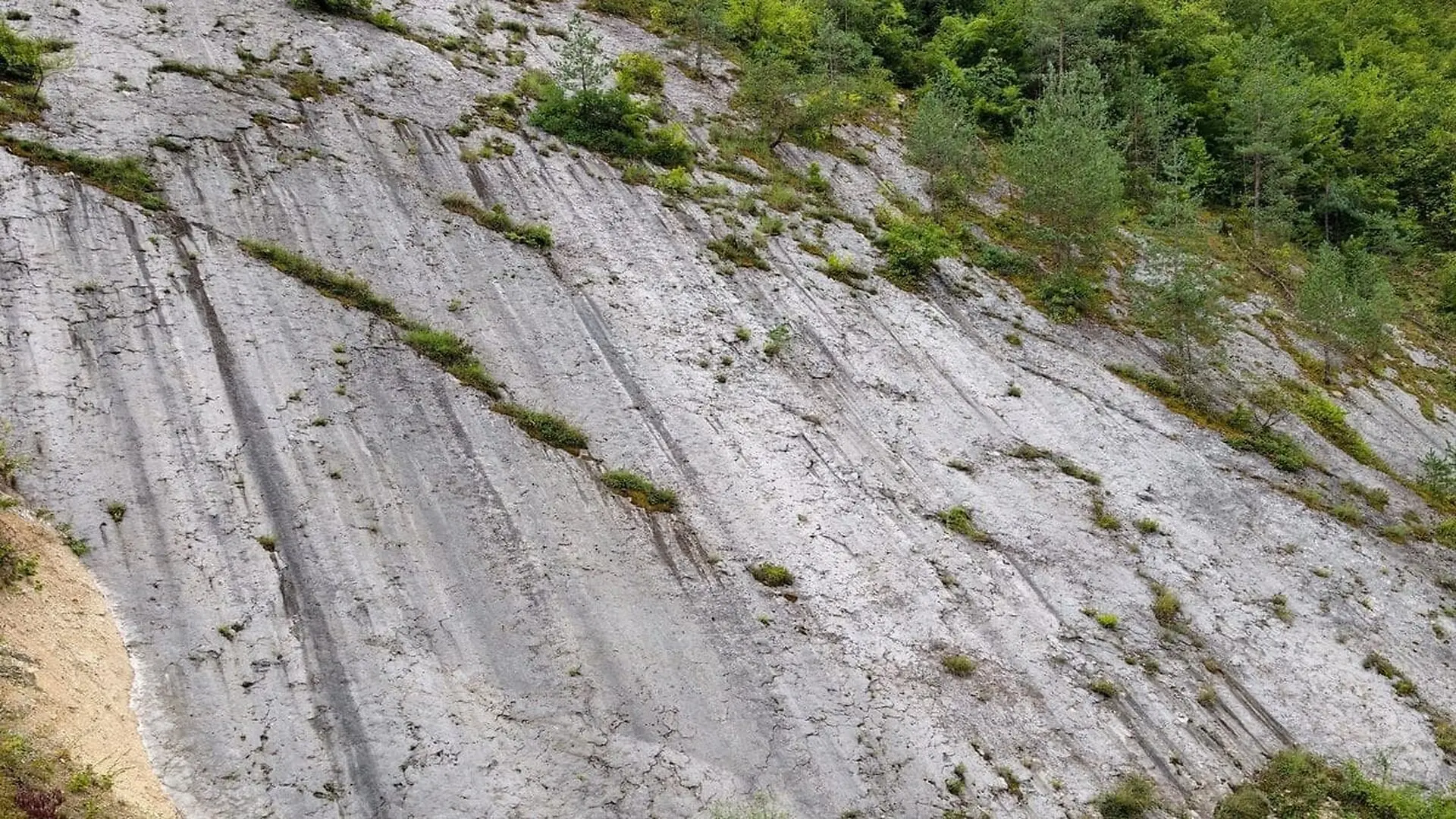
Researchers have identified the first Canadian dinosaur tracks originating from the Coniacian age, a relatively obscure window of the Cretaceous period spanning approximately 89.75 to 86.5 million years ago. These fossilized footprints, located in the rugged Tumbler Ridge region of northeastern British Columbia, provide a rare glimpse into a prehistoric ecosystem that has long remained elusive to paleontologists.
The discovery is particularly significant because Coniacian-era fossils are notoriously scarce across North America. During this interval, global sea levels were roughly 100 meters higher than they are today, driven by a greenhouse climate devoid of polar ice caps. As Guy Plint and Charles Helm note, the ancient shoreline was pushed deep into what is now the foothills of the Rocky Mountains, leaving behind primarily marine rock records. The Tumbler Ridge site serves as a vital terrestrial exception to this oceanic dominance.
A Fossilized Delta Ecosystem
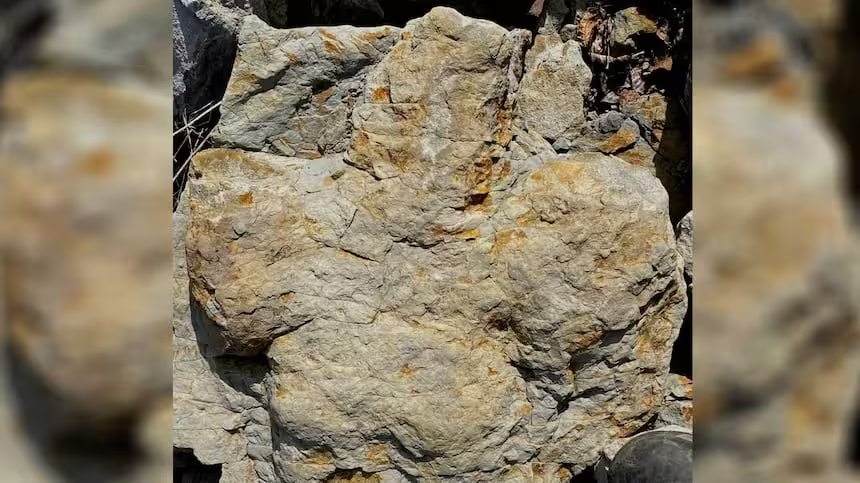
The tracks were found within the Marshybank Formation, which preserves the remnants of an ancient delta system that once extended into the Western Interior Seaway. The environment was characterized by low-lying floodplains, dense forests of conifer trees, and a network of sluggish rivers. Many of the footprints were preserved as natural casts on the undersides of sand sheets that flooded the area, creating a permanent record of the creatures that once navigated the mud.
While the site was first identified by Plint in 1988, its extreme remoteness required helicopter access, which delayed a comprehensive investigation until 2022. The tracks now offer a clear look at the local wildlife of the era.
The Rise of the Ornithopods
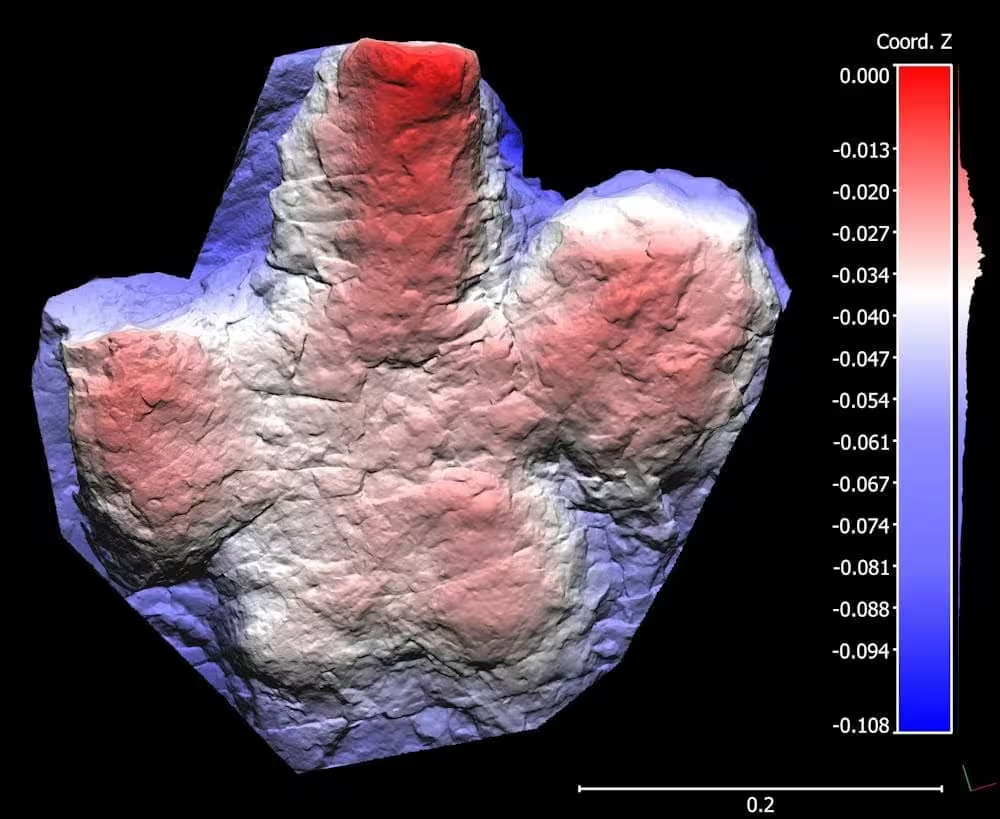
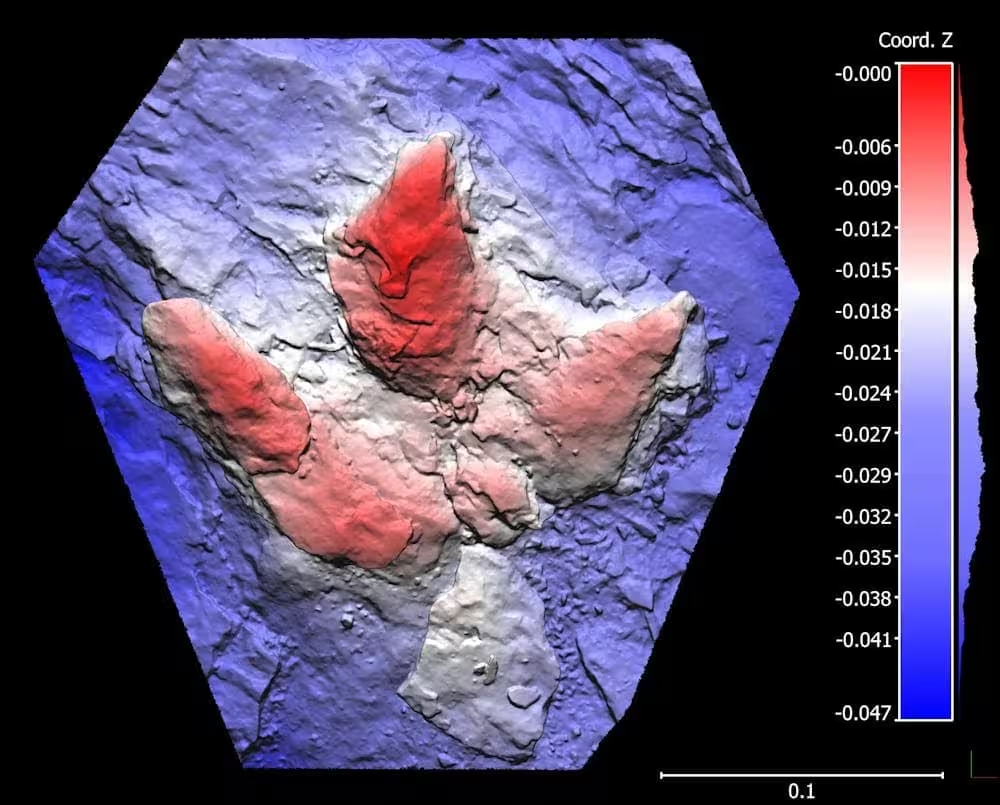
The collection is dominated by ornithopod tracks, or duck-billed dinosaurs. These herbivores, which could move on two or four legs, left behind blunt, three-toed prints measuring between 30 and 50 centimeters in width. Theropod tracks, representing carnivorous hunters with narrow, clawed toes, were the second most common, while a smaller selection of rounder, multi-digit prints likely belong to armored dinosaurs known as ankylosaurs.
This composition marks a distinct departure from older rock formations in the region. Specifically, the Dunvegan Formation (dating to 97–95 million years ago) and the Gates Formation (109–107 million years ago) are defined by a prevalence of ankylosaur prints, suggesting a major shift in the dominant herbivore population during the Coniacian.
Flowering Plants as Evolutionary Catalysts
According to the findings published in the journal Historical Biology, the changing dinosaur landscape may be linked to the rise of angiosperms, or flowering plants. Plant fossils found at the site confirm that while traditional conifers and ferns remained, the landscape was increasingly populated by early relatives of modern willow, poplar, and laurel trees.
Compared to the tougher, less nutritious vegetation that dominated earlier periods, flowering plants were easier for dinosaurs to digest and recovered more quickly after being grazed. Researchers believe this nutritional shift likely facilitated the expansion of ornithopod populations, which in turn supported larger numbers of the theropods that hunted them, forever altering the dynamics of the Cretaceous food web.
This article has been fact checked for accuracy, with information verified against reputable sources. Learn more about us and our editorial process.
Last reviewed on .
Article history
- Latest version
Reference(s)
- “Dr. Guy Plint.” <http://www.uwo.ca/earth/people/emeritus/plint.html>.
- Plint, A. Guy., et al. “An upper Coniacian (Upper Cretaceous) dinosaur track record from a high-latitude delta plain setting, north-east British Columbia, Canada.” Historical Biology, July 24, 2026, pp. 1-38. Informa UK Limited, doi: 10.1080/08912963.2026.2683023. <https://www.tandfonline.com/doi/full/10.1080/08912963.2026.2683023>.
Cite this page:
- Posted by Hassan Raza