Rare Giant Manta Ray Filmed Feeding Just Feet From Busy New York Beach
Rare footage shows a giant oceanic manta ray feeding off the coast of Long Island, marking a surprising appearance for the world’s largest ray species.
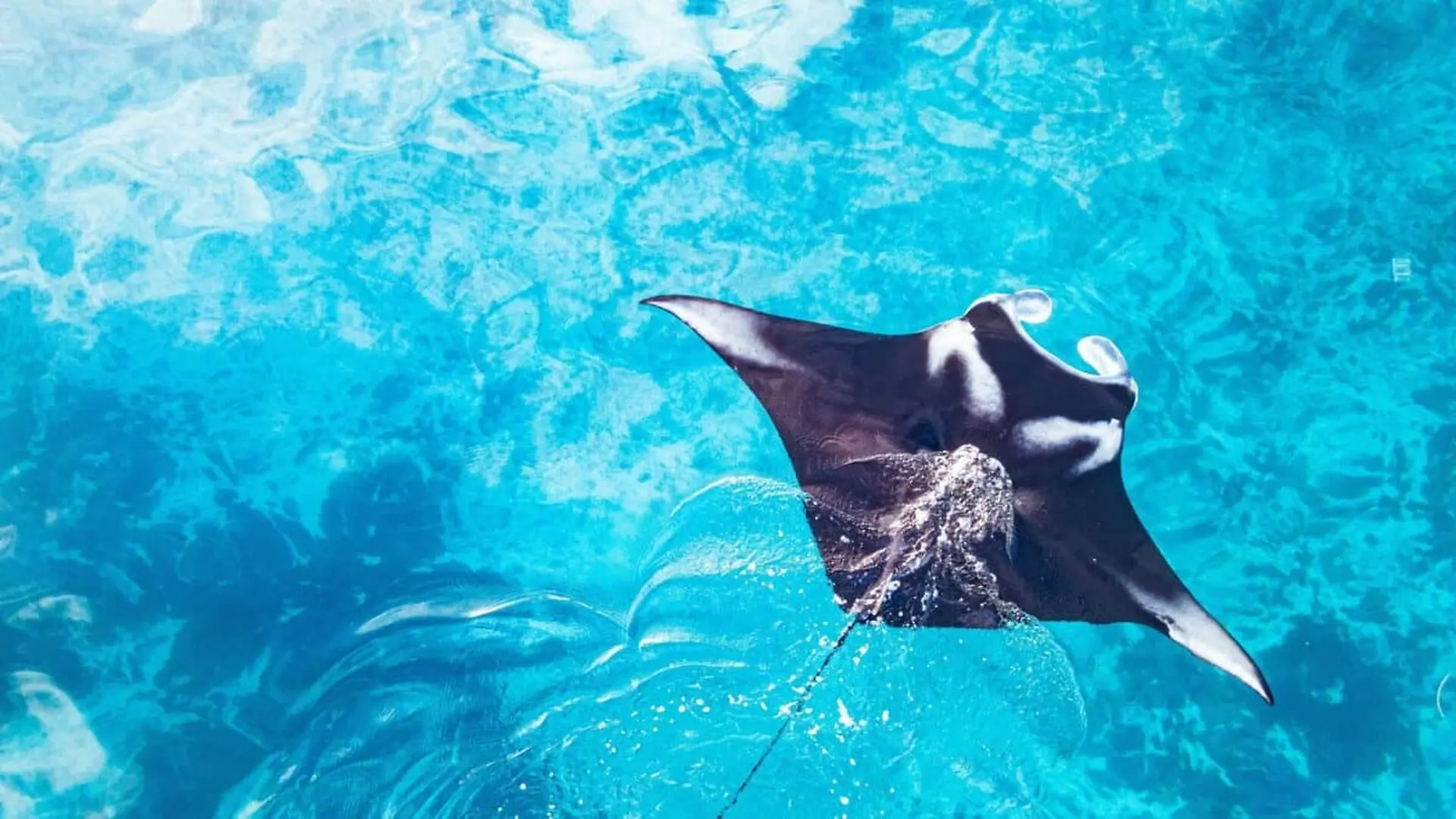
A rare visitor has made a surprise appearance along the shores of New York, providing a brief but striking window into the life of one of the ocean’s most elusive giants. Captured on camera by the New York State Department of Environmental Conservation, a massive manta ray was filmed feeding in the waters near Jones Beach State Park, an area that typically hosts roughly six million visitors annually.
While sightings of these expansive filter feeders are uncommon in such highly trafficked coastal zones, state environmental officials noted that their presence in New York waters during the peak of summer is not entirely unheard of. The footage shows the animal navigating near the surface, accompanied by a smaller, unidentified fish. While observers speculated that the companion could be a shark, experts note that such partnerships are generally opportunistic or antagonistic, rather than collaborative, as larger fish may shadow the rays for protection, for food, or to rub against their skin.
Biological Marvels of the Open Ocean
The giant manta ray (Mobula birostris) is a creature of immense proportions, capable of reaching disc widths of up to 26 feet and weighing as much as 5,300 pounds. Despite their size, they are gentle filter feeders, relying on massive quantities of zooplankton to sustain them. While they are often associated with deep-sea environments, they are known to aggregate in shallow waters of less than 10 meters when food sources are concentrated. However, tagging data has revealed that these animals are just as comfortable in the abyss, frequently diving to depths exceeding 1,000 meters.
According to NOAA Fisheries, the species maintains a wide distribution across tropical, subtropical, and temperate seas. Yet, their long lifespans—which can reach 45 years—and their slow reproductive cycles make them particularly vulnerable to environmental shifts and human activity.
A Species Under Pressure
The encounter at Jones Beach underscores the delicate state of manta ray populations globally. In 2018, the species was officially listed as threatened under the Endangered Species Act. Their recovery is hindered by a remarkably low reproductive rate, with females typically giving birth to only a single pup every two to three years following a roughly year-long gestation period.
Commercial fishing remains the primary driver of their decline. Whether targeted directly or captured as bycatch in gill nets and longlines, the pressure on these rays has led to significant population collapses in regions across the Indo-Pacific and eastern Pacific. Beyond fishing, the species faces an array of modern hazards, including vessel strikes, plastic pollution, entanglement in marine debris, and the pressures of climate change.
Researchers are working to map out critical habitats to better protect these animals. For instance, studies in southeastern Florida have identified a potential nursery ground, where marine biologist Jessica Pate and her team documented dozens of juvenile rays. As conservationists continue to piece together the migratory patterns of these gentle giants, the unexpected appearance near a New York beach serves as a reminder of the vast, wild lives that exist just beyond our coastal horizons.
This article has been fact checked for accuracy, with information verified against reputable sources. Learn more about us and our editorial process.
Last reviewed on .
Article history
- Latest version
Reference(s)
- “Giant Manta Ray.”, October 15, 2024 NOAA <https://www.fisheries.noaa.gov/species/giant-manta-ray>.
- “Laws & Policies : Endangered Species Act | NOAA Fisheries.” <https://www.fisheries.noaa.gov/topic/laws-policies/endangered-species-act>.
Cite this page:
- Posted by Hassan Raza