Scientists Finally Solve the Mystery of Why Fossils from Different Eras Get Mixed Together
Scientists have finally uncovered the hidden process that causes fossils buried side by side to represent vastly different periods of Earth’s history.
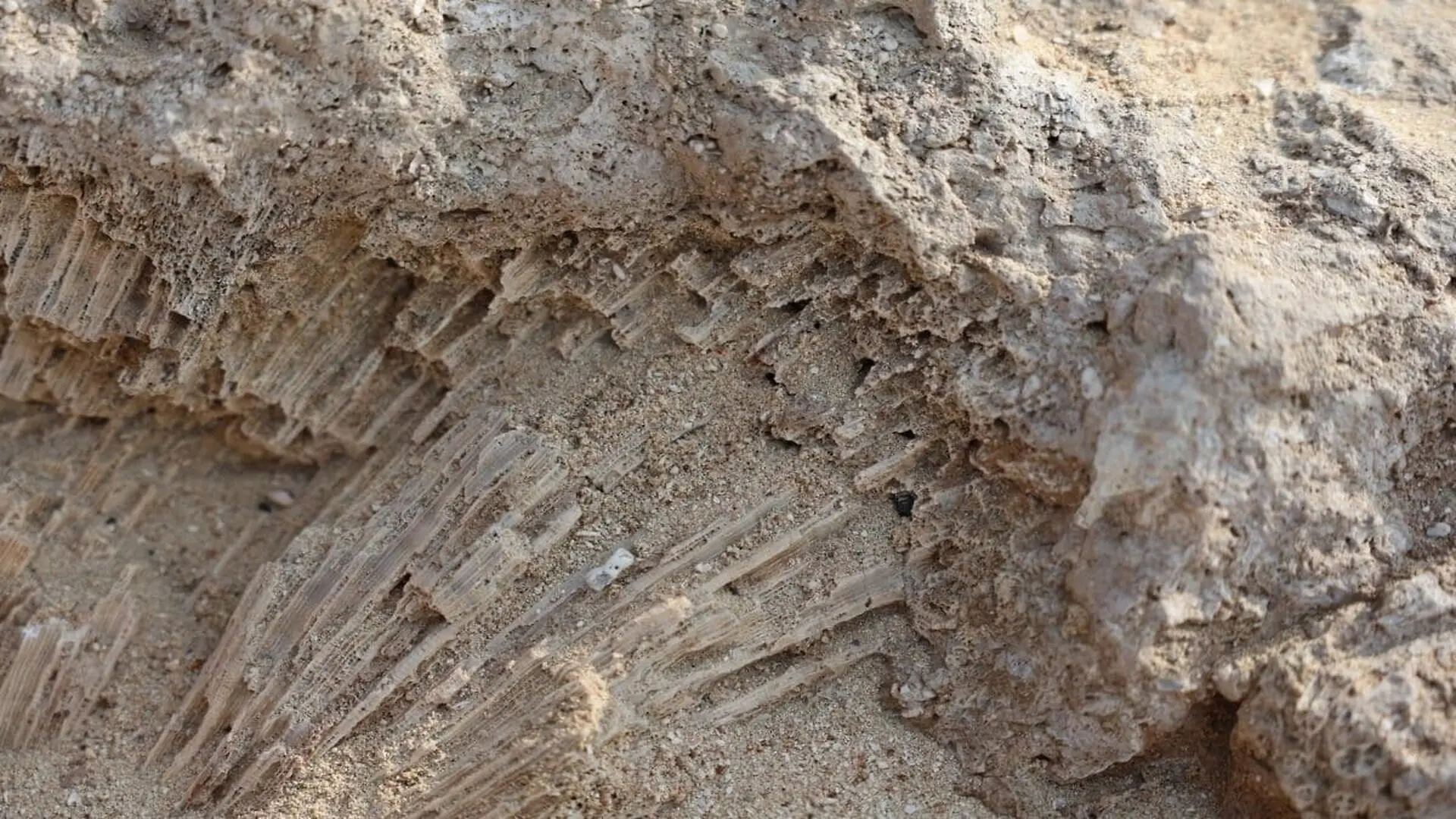
For decades, paleontologists have grappled with a persistent mystery: why do fossils from vastly different chronological periods frequently appear side by side within the same geological layer? A massive, two-decade investigation involving more than 7,500 marine specimens has finally identified the culprit. The study reveals that the primary driver behind this phenomenon, known as time averaging, is the rate at which sediment accumulates on the ocean floor.
Time averaging is a fundamental concept in the study of ancient life. It describes the mixing of biological remains—such as shells and bones—that were deposited at different times into a single, cohesive stratum. When this occurs, the fossil bed loses its ability to function as a clear snapshot of a specific historical moment. Instead, it becomes a condensed, multi-generational archive, complicating the efforts of scientists to interpret the timeline of ecological change.
According to Daniele Scarponi, an associate professor at the University of Bologna, distinguishing between these types of deposits is a prerequisite for any meaningful paleontological research. He notes that some fossil beds act like the ruins of Pompeii, capturing a singular event in time, while others function more like communal graveyards where remains from centuries apart eventually settle together.
The Mechanics of Geological Mixing
The accumulation of fossils is influenced by a variety of environmental pressures. One significant factor is bioturbation, the constant churning of seafloor sediment by organisms like shrimp, clams, worms, and sea stars. As these creatures burrow through the seabed, they physically rearrange the remains buried within the mud and sand.
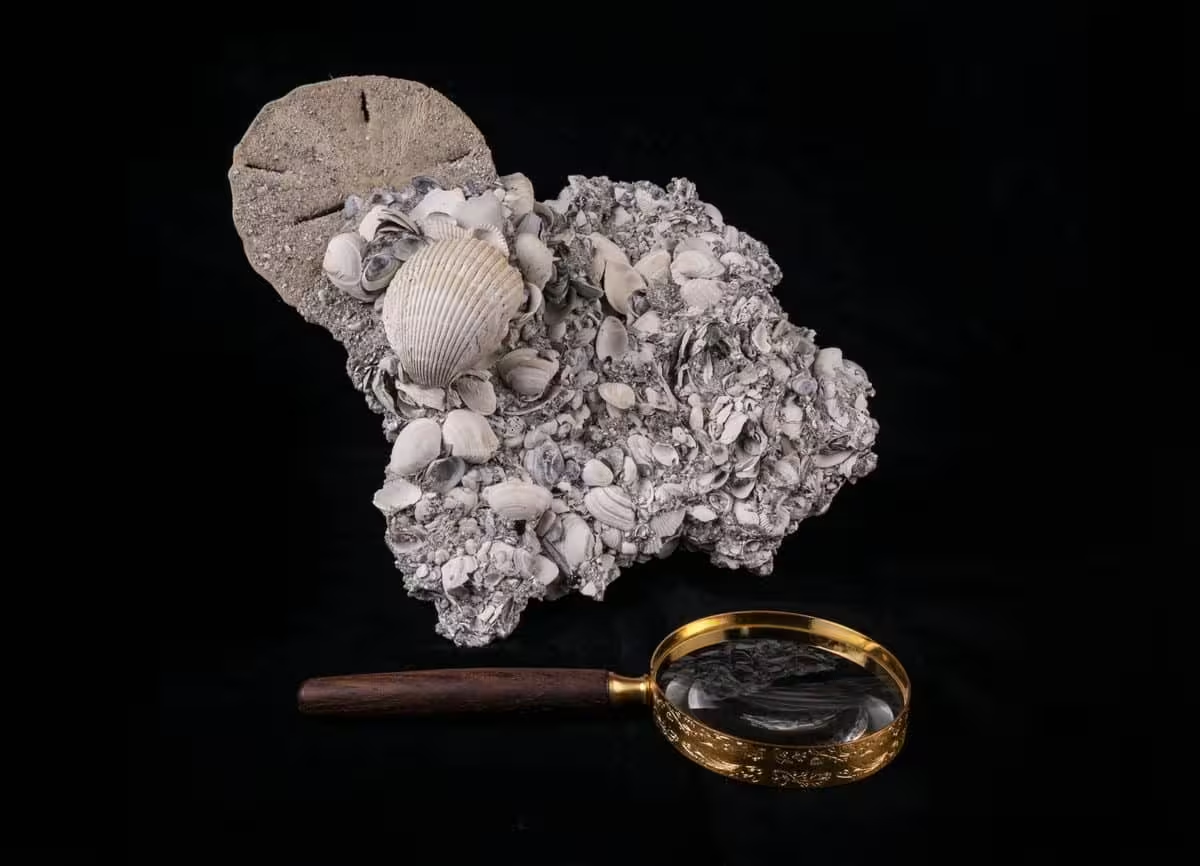
Additionally, the durability of an organism dictates whether it survives long enough to be preserved. Most biological matter decomposes rapidly or is consumed by scavengers, leaving behind only the most resilient components, such as shells and skeletons. While biological productivity at the site also determines the sheer volume of fossils, the research team found that none of these variables exert as much influence as the speed of sedimentation.
A Global Effort to Decode Earth’s History
Analyzing time averaging on a global scale was historically considered impossible due to the high costs associated with radiocarbon and amino acid dating. However, this study succeeded by synthesizing independent research from across the globe, including teams in Australia, Austria, the Bahamas, Brazil, Italy, Germany, Slovakia, and the United States.
Michal Kowalewski, co-lead author and the Thompson chair of invertebrate paleontology at the Florida Museum of Natural History, noted in a recent statement that the collaborative nature of the project was the key to its success. The convergence of diverse datasets allowed for a rigorous evaluation that no single laboratory could have achieved alone.
The Dominance of Sedimentation
To confirm their hypothesis, the researchers performed simulations of fossil age distributions under varying environmental conditions and compared the results to their carbon-dated findings. Published in the Proceedings of the National Academy of Sciences, the study establishes that the sedimentation rate is the most reliable predictor of temporal resolution in a fossil assemblage.
Rafal Nawrot, a paleontologist at the University of Vienna, highlighted the significance of these findings, noting that the degree of temporal mixing in a single layer can span thousands of years. Essentially, the faster material is buried, the more accurate the fossil record becomes, as there is less opportunity for organisms from different generations to be intermingled. For the research team, the clarity of the result was a rewarding conclusion to two decades of meticulous work.
This article has been fact checked for accuracy, with information verified against reputable sources. Learn more about us and our editorial process.
Last reviewed on .
Article history
- Latest version
Reference(s)
- “Daniele Scarponi — University of Bologna — Home Page.” <https://www.unibo.it/sitoweb/daniele.scarponi/en>.
- “Michal Kowalewski.” People <https://www.floridamuseum.ufl.edu/people/michal-kowalewski/>.
- Pinson, Jerald. “Paleontologists spent 20 years carbon-dating thousands of marine fossils, then used them to decode a process fundamental to Earth’s history.”, August 20, 2026 Research News <https://www.floridamuseum.ufl.edu/science/paleontologists-spent-20-years-carbon-dating-thousands-of-marine-fossils-then-used-them-to-decode-a-process-fundamental-to-earths-history/>.
- Kowalewski, Michał., et al. “Sediment accumulation rate predicts the temporal resolution of marine fossil assemblages.” Proceedings of the National Academy of Sciences, vol. 123, no. 31, July 29, 2026 National Academy of Sciences, doi: 10.1073/pnas.2615368123. <https://www.pnas.org/doi/10.1073/pnas.2615368123>.
- <https://www.researchgate.net/profile/Rafal-Nawrot>.
Cite this page:
- Posted by Hassan Raza